
 English
 Chinese
 Dutch
 Arabic
 Spanish
 Portuguese
 Russian
 French
 Italian
 German
 Japanese
A covenant is a solemn promise that binds the one who makes it, and the Bible never says how many God made. A common list has five on it: the covenants with Noah, with Abraham, with Moses at Sinai and with David, and the new covenant that Jeremiah promised and Jesus spoke of at his last supper. It is only a common list, though, and Christians who have counted for themselves have come out at two, at four and at eight.
Whichever way we count them, God binds himself with a promise in each one, and again and again he gives us something to look at. The first time he does it, he tells Noah who will be looking: “the bow shall be in the cloud; and I will look upon it, that I may remember the everlasting covenant between God and every living creature of all flesh” (Genesis 9:16). Most of us have stopped to look at a rainbow, and God says he will look at it and remember.

What does “covenant” mean in the Bible?
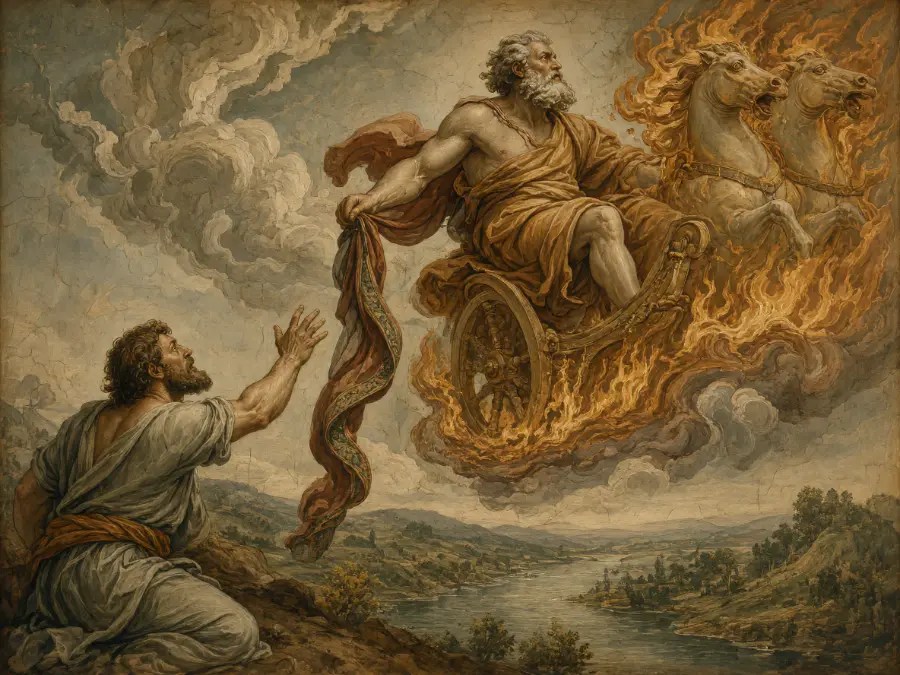
The Hebrew word is berit, and the ordinary way to say that someone made one was to say he “cut” it. The Jewish Encyclopedia describes an old rite that goes with the phrase. A sacrificial animal was cut into two parts, “between which the contracting parties pass, showing thereby that they are bound to each other.” It points to Jeremiah 34:18 and to Genesis 15, and in Genesis 15 we can watch it happen. Abram divides the animals and lays the pieces out. When the sun has gone down, “behold a smoking furnace, and a burning lamp that passed between those pieces,” and “in the same day the Lord made a covenant with Abram” (Genesis 15:17–18). In that story the one who binds himself is God.
When the Old Testament was put into Greek, berit became diathēkē, a word that can mean either a compact or a last will, and that is why the King James Bible speaks in two ways. At the supper Jesus says, “This cup is the new testament in my blood, which is shed for you” (Luke 22:20), and Hebrews, quoting Jeremiah, says “a new covenant” (Hebrews 8:8). The Greek has one word in both places, and the two English words are the translators’ choice.
We counted the word in the King James text and found “covenant” 292 times and “covenants” three times more. The first is God speaking to Noah before the flood, “But with thee will I establish my covenant” (Genesis 6:18), so the first five chapters of Genesis never use the word at all, and yet Irenaeus, the Westminster Confession and the Scofield Reference Bible each find a covenant with Adam all the same.
Which covenants does the Bible name?
Here are the five, in the order the Bible tells them and in the King James Bible’s words.
| Covenant | Made with | The promise | What marks it |
|---|---|---|---|
| Noah (Genesis 9:8–17) | Noah, his sons and “every living creature” | No more flood to destroy all flesh | The rainbow: “I do set my bow in the cloud” |
| Abraham (Genesis 15 and 17) | Abraham and his seed after him | “A father of many nations,” the land of Canaan, and “to be a God unto thee” | Circumcision (Genesis 17:11) |
| Moses at Sinai (Exodus 19 and 24) | The children of Israel | “A peculiar treasure unto me above all people,” a “kingdom of priests, and an holy nation” | Blood sprinkled on the people (Exodus 24:8); the Sabbath (Exodus 31:17) |
| David (2 Samuel 7; Psalm 89) | David and his seed | His throne and kingdom “established for ever” | No token is named in these passages; his throne is likened to the sun and moon (Psalm 89:36–37) |
| The new covenant (Jeremiah 31; Luke 22) | “The house of Israel, and with the house of Judah” | “I will put my law in their inward parts, and write it in their hearts” | The cup at the last supper (Luke 22:20) |
God makes the first of them straight after the flood, and he makes it with more than Noah’s family. He promises that “the waters shall no more become a flood to destroy all flesh” (Genesis 9:15), and he makes that promise to Noah and his sons and to “every living creature that is with you, of the fowl, of the cattle, and of every beast of the earth” (Genesis 9:10), so the bow in the cloud is a promise to the cattle too.
With Abraham the sign comes down out of the sky and onto the body, for God tells him, “thou shalt be a father of many nations,” and then, “Every man child among you shall be circumcised” (Genesis 17:4, 10). We tell the whole story of that promise in what the Abrahamic covenant is, and what the sign meant for Abraham’s household and for the church is in circumcision in the Bible.
At Sinai God reminds the whole people of what he has already done, “how I bare you on eagles’ wings, and brought you unto myself,” and then he offers the covenant: “if ye will obey my voice indeed, and keep my covenant, then ye shall be a peculiar treasure unto me” (Exodus 19:4–5). When Moses reads them the book of the covenant they answer, “All that the Lord hath said will we do” (Exodus 24:7), so this time they have bound themselves too. Moses takes the blood and sprinkles it on them and says, “Behold the blood of the covenant, which the Lord hath made with you concerning all these words” (Exodus 24:8). The ten commandments are called “the words of the covenant” (Exodus 34:28). The week itself carries a sign, for the Sabbath is “a perpetual covenant” and “a sign between me and the children of Israel for ever” (Exodus 31:16–17).
In these passages David is given no token of the kind Noah and Abraham were given, and what he has first is a sworn word. It comes to him through a prophet, “I will stablish the throne of his kingdom for ever” (2 Samuel 7:13), in verses that do not use the word covenant at all. The word arrives later, in the psalm, “I have made a covenant with my chosen, I have sworn unto David my servant” (Psalm 89:3), and from David himself, “he hath made with me an everlasting covenant, ordered in all things, and sure” (2 Samuel 23:5). When Scripture does point to something for David, it points to the sky. His throne will stand “as the sun before me” and “as the moon, and as a faithful witness in heaven” (Psalm 89:36–37). Through Jeremiah God says his covenant with David could be broken only if someone could break “my covenant of the day, and my covenant of the night” (Jeremiah 33:20–21).
Jeremiah then hears God speak of one more. He will “make a new covenant with the house of Israel, and with the house of Judah,” unlike the one he made when he took their fathers by the hand out of Egypt, and this time the writing goes inside: “I will put my law in their inward parts, and write it in their hearts; and will be their God, and they shall be my people” (Jeremiah 31:31–33). We Christians hear that promise in what Jesus said over the cup at the last supper, and the letter to the Hebrews quotes Jeremiah at length (Hebrews 8:8–12). There is more on it in what the new covenant is.
Why do churches count the covenants differently?
Scripture gives no number, so each tradition has counted by the way it reads the whole story. Paul can speak of “the covenants” in the plural (Romans 9:4), Hebrews talks about a first and a second (Hebrews 8:7), and Numbers 25:13 has a “covenant of an everlasting priesthood” that the usual five leave out. BibleProject, whose guide names those five as foundational, says there is “no consensus on the exact number of covenants.”
In the early church Irenaeus had four, and he got there by way of the Gospels. He had just been explaining why there must be four of those. For the same reason, he says, four principal covenants were given to the human race. The first was under Adam before the flood, the second under Noah after it, the third was the law under Moses, and the fourth is the one that “renovates man, and sums up all things in itself by means of the Gospel.” Abraham and David are not on his list.
Reformed churches that hold the Westminster Confession fold the whole story into two. God first made what the Confession calls “a covenant of works” with Adam, promising him life on condition of perfect obedience. After the fall he made “the covenant of grace,” offering life and salvation through Jesus Christ. So for these churches the Old Testament and the New are a single covenant of grace, handled one way under the law and another under the gospel, and the Confession calls it “one and the same, under various dispensations.”
The Scofield Reference Bible of 1909 goes the other way and finds “the eight great covenants of Scripture,” the Edenic, Adamic, Noahic, Abrahamic, Mosaic, Palestinian, Davidic and New. Beside them it sets seven dispensations, and the two lists do different jobs. A dispensation, for Scofield, is a period of time in which people are tested, while the covenants are what, in his words, “condition life and salvation.” Dallas Theological Seminary teaches dispensations today, and its doctrinal statement gives no count of covenants at all. It says the dispensations are not ways of being saved, nor different ways of administering the “Covenant of Grace” that Westminster teaches, and it says the church is distinct from Israel. Westminster and Dallas are reading the same Bible, and you can see why counting verses will not settle it between them.
Why dispensationalists divide biblical history into ages
The Catechism of the Catholic Church gives no number where it tells this story (paragraphs 56–66). It tells it as one line running from Noah, whose covenant “remains in force” until the Gospel has been proclaimed to all, through Abraham and Sinai to the prophets’ hope of a new covenant written on hearts. The Christian covenant it calls “new and definitive,” and of the Old Covenant it says in paragraph 121 that it “has never been revoked.”
The Orthodox theologian George Papademetriou, writing on the website of the Greek Orthodox Archdiocese of America, says the covenant God made at Sinai is “fulfilled on Calvary, sealed with the blood of Christ.”
How do Jewish people understand the covenant with Israel?
Jewish readers have these same chapters in front of them, and the Jewish Encyclopedia, in an article from the years 1903 to 1906, tells them as the story of one covenant that goes on. Of Abraham it says that God “entered into a special relationship with him and his descendants for all time,” and that this covenant “was renewed on Mount Sinai,” with the Sabbath as the sign of the “everlasting” Sinaitic covenant. It records that the rabbis called circumcision “the covenant with our father Abraham,” and that the covenant of Noah “was interpreted by the Rabbis to include all the laws of humanity.”
The late Rabbi Jonathan Sacks, a former Chief Rabbi of the UK, wrote that what is unique about the covenant in Judaism is that God himself is one of the parties, the idea that “God might bind Himself to human beings, linking their destiny to His.” The other party, he says, is the whole people, with every Israelite sharing the responsibility for keeping it. He calls Deuteronomy a copy of that covenant, made at Sinai and renewed again at significant moments of Jewish history, the way a ketubah is the written record of what a husband has undertaken toward his wife. In September 2000 four Jewish scholars published Dabru Emet, “Speak Truth,” a statement on Christians and Christianity that more than 170 rabbis and Jewish intellectuals signed, and that drew both praise and criticism. It says that “God established a covenant with the people Israel.”
On Jeremiah’s promise, Jews and Christians read the same words differently. The Jewish Encyclopedia says that when Jeremiah spoke of a new covenant he “immediately explained his words” by saying God would write his law on their hearts, and it goes on, “Judaism knows of no other than the old Sinaitic covenant. Eternal as the covenant with heaven and earth is God’s covenant with the seed of Jacob.” For that last line it points to the same chapter of Jeremiah we read for David. Its next sentence says, “Christianity, however, interpreted the words of the prophet in such a way as to indicate a new religious dispensation in place of the law of Moses.” The passage it cites ends, straight after Hebrews has quoted Jeremiah, with these words: “In that he saith, A new covenant, he hath made the first old. Now that which decayeth and waxeth old is ready to vanish away” (Hebrews 8:13).
We Christians read that verse as telling us the new covenant has come in Jesus, and we do not all draw the same conclusion from it. Paul called the Israelites “my kinsmen according to the flesh” (Romans 9:3), and he wrote that “as touching the election, they are beloved for the father’s sakes. For the gifts and calling of God are without repentance” (Romans 11:28–29). The Second Vatican Council’s declaration Nostra Aetate echoed him in 1965: “God holds the Jews most dear for the sake of their Fathers.” The Catechism, as we saw, says the Old Covenant “has never been revoked.” Papademetriou, who reads Sinai as fulfilled on Calvary, tells Christians in the same article to remember the “welcome and joyous fact” that God “has neither rejected nor abandoned His people.” The Dallas statement looks for Israel to receive “the realization of God’s covenant promises.”
The scholars of Dabru Emet say that Jews and Christians interpret the Bible differently on many points, and they add, “Such differences must always be respected.”
Is there one promise running through them?
However we count them, one sentence is spoken to Abraham and spoken again through Jeremiah. God tells Abraham he will establish his covenant “to be a God unto thee, and to thy seed after thee” (Genesis 17:7), and he says of those who come after him, “I will be their God” (Genesis 17:8). Jeremiah, speaking of the days to come, hears the same promise: “and will be their God, and they shall be my people” (Jeremiah 31:33).


Leave a Reply