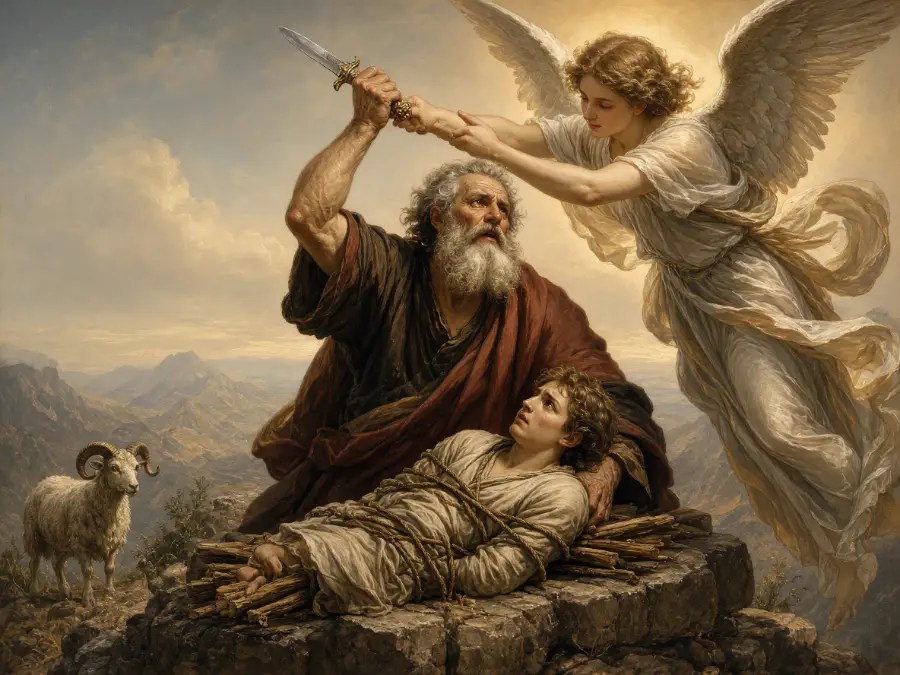
The Bible is filled with incredible wisdom, and today we’re going to explore a topic that shows just how amazing God’s plan has always been: circumcision. This might sound like an old-fashioned subject I believe that as we look into its journey—from the Old Testament, through the life of our Savior Jesus, and into the New Testament and the early Church—you’re going to see God’s goodness and His incredible love for you in a fresh new way! We’re going to understand its special meaning, what it symbolized, and how God, in His perfect timing, shifted things from a physical act to something truly powerful and spiritual in Jesus Christ. Get ready to be uplifted!

Section 1: What is Circumcision, and Why Did God Ask Abraham to Do It? It’s All About Covenant!
Let’s start at the beginning, to understand what circumcision is and why God, in His great wisdom, introduced it to His beloved servant Abraham.
What Does Circumcision Mean?
Simply put, circumcision is when the foreskin of a male is removed.¹ The word itself means “to cut around.”¹ In the beautiful Hebrew language of the Old Testament, they used words like mul (which means to cut or circumcise), basar (flesh), and orlah (foreskin).² But this wasn’t just a physical thing, friends; it was packed with deep spiritual meaning for God’s people.
God’s Special Instruction to Abraham (Genesis 17)
Picture this: Abraham is ninety-nine years young, and God appears to him to establish an amazing covenant, a powerful promise! God said, “This is my covenant, which you shall keep, between me and you and your offspring after you: Every male among you shall be circumcised. You shall circumcise the flesh of your foreskins, and it shall be a sign of the covenant between me and you” (Genesis 17:10–11 ESV).² Isn’t that something? God instructed that every baby boy, whether born into Abraham’s family or welcomed into it, was to be circumcised on the eighth day after birth (Genesis 17:12).² And Abraham, full of faith, obeyed! At ninety-nine, he, along with his son Ishmael and all the men in his household, did just as God asked (Genesis 17:23-26).²
Why This Sign? God Always Has a Purpose!
God, in His infinite wisdom, chose circumcision as the special, visible sign of His incredible covenant with Abraham for some truly powerful reasons:
- A Visible Reminder of God’s Promise: it was the “token,” the clear sign, of the amazing covenant God made with Abraham and all his descendants.¹ This covenant was filled with promises of a great family, land, and a unique, close relationship with God Himself. This sign was so important that God called it “My covenant” (Genesis 17:10).⁴ He wanted them to see and remember His faithfulness!
- A Link to Future Generations: God promised Abraham he would be “a father of many nations” (Genesis 17:4).² And guess what? The sign of circumcision was placed on the very part of the body involved in bringing forth new life! This physically connected the covenant to all of Abraham’s future children and grandchildren.⁴ It’s amazing how God thinks of everything! It’s so beautiful that Isaac, the miracle baby God promised, was born after Abraham and his household were circumcised, showing that this new generation was born right into God’s promise.² The very way the promise of a “seed” would be fulfilled was marked by this covenant.
- A Teaching Moment About Children: Some wise folks, looking at special translations (like the Joseph Smith Translation of Genesis), believe that having circumcision on the eighth day was also God’s way of teaching something important. It was a reminder that little children weren’t seen as accountable for sin before God until they were about eight years old. This gave parents precious time to teach their children about God’s loving ways and His covenant.² See, God cares deeply about how we understand childhood and our responsibilities right from the start!
- A Symbol of Total Commitment: This act of cutting away the foreskin was a powerful picture. It represented a complete, heartfelt, and lasting turning away from old ways and a total dedication to God and His wonderful path.² It was a permanent mark that said, “I belong to God!”
Choosing circumcision, so closely tied to having children, wove God’s promise right into the future of Abraham’s family. It wasn’t just any mark; it was deeply connected to the promise of a “seed” through whom God would do amazing things. And that specific timing, the eighth day, Although It might have had other benefits we don’t even know about, was full of God’s wisdom about childhood and how parents should raise their children in His love.²

What Did Physical Circumcision Mean to the Israelites? It Was About Identity and Heart!
For the Israelites, physical circumcision was so much more than just a ritual. It was at the very heart of who they were, how they showed their love and obedience to God, and how they understood their special relationship with Him.
- A Constant Reminder of God’s Promise: Above all, circumcision was the touchable, lasting sign of God’s amazing covenant with Abraham and his descendants (Genesis 17:11).² It was right there on their bodies, a daily reminder of their unique connection to Yahweh and all the wonderful promises and important responsibilities that came with it. God wants us to always remember His goodness!
- A Mark of Who They Were and Their Separation for God: This special rite set the Israelites apart from the other nations around them who didn’t know God.² sometimes the Bible uses the term “uncircumcised” for those outside the covenant, and it could mean they were seen as “unworthy” or “unclean” (like in Genesis 34:14; Jeremiah 9:25; Isaiah 52:1).² For thousands of years, it was a visible sign, passed down from generation to generation, showing their commitment to God and their identity as His chosen people.² They were set apart for a purpose!
- An Act of Loving Obedience: Choosing to be circumcised was a basic act of obeying God’s clear instruction.² And listen to this: if someone didn’t circumcise their son, it was seen as breaking the covenant, and that person would be “cut off from his people” (Genesis 17:14).⁵ That shows just how important this was to God. Obedience always brings blessing!
- A Picture of Purity and Being Set Apart for God: The physical act of “cutting off” the foreskin was rich with meaning. It pictured cutting away sin, things that weren’t pure, or anything “forbidden” from a person’s life. It meant a dedication to God and a desire to live a holy life.² But this outward act was always meant to point to something happening on the inside. That’s why later on, great prophets like Moses and Jeremiah would talk about a “circumcision of the heart” (Deuteronomy 10:16; Jeremiah 4:4).¹ They were saying that the physical act alone, without a heart truly committed to God, just wasn’t enough. God always looks at the heart!
- Pointing to Even Greater Promises (Blessing and Warning): Circumcision was also like a preview, foreshadowing deeper spiritual truths and the wonderful promises of the gospel.
- It carried a warning of a curse or judgment: the “cutting off” of the foreskin was a picture of God’s judgment on those who broke His covenant. If they turned away from their covenant Lord, they would be “cut off” from His presence, His people, and His blessings.⁴ God is loving He is also just.
- But at the same time, it held a promise of blessing and spiritual newness: it represented cutting away the “filth of our old, sinful human nature.” If people met the covenant’s conditions, God promised He would “cut off the sin of His people.”4 That’s good news!
- It was also a sign involving blood, much like the Passover. Blood had to be shed to deal rightly with sin and corruption, and this pointed forward to the ultimate sacrifice of Jesus Christ, whose precious blood would bring true cleansing and a fresh start for everyone.⁴
This double picture of “cutting off”—both the person cutting sin out of their life and God cutting off those who were unfaithful—created a powerful understanding. It was a constant reminder of the need for a pure life and the serious results of not keeping the covenant. This strengthened their identity as God’s people and their commitment to Him, both as individuals and as a whole community. It’s so important that right from the early days, with Deuteronomy 10:16, the idea of “circumcision of the heart” was there alongside the physical act. It shows that God’s ultimate desire was always for an inward change, so the ritual wouldn’t become just an empty, outward show. This laid the perfect foundation for the New Testament’s powerful message about spiritual circumcision, not just a physical one. God is so wise!

How Was Circumcision Done in the Old Testament? God Gave Specifics!
The Old Testament, gives us some clear details about when and how circumcision was done, though it doesn’t always say who performed it.
When Was It Done?
- The most well-known time for circumcision was the eighth day after a baby boy was born.² God Himself said this to Abraham (Genesis 17:12), and it was repeated in the Law of Moses (Leviticus 12:3). We see this in the stories of Isaac being circumcised (Genesis 21:4) 6 and, much later, John the Baptist (Luke 1:59).¹ God is a God of order!
- And this wasn’t just for some; it was for all males in the household. This meant not only the sons born to Israelites but also servants born in the house or those who were bought from other lands (Genesis 17:12-13).³ God’s embrace is wide!
- there was a special time when things were different. During the forty years the Israelites wandered in the wilderness, those born then weren’t circumcised. But don’t you worry, God had a plan! When they finally entered the Promised Land, God told Joshua to bring back the practice for that generation (Joshua 5:2-5).¹ God always brings things back around!
How Was It Done?
- The physical act involved cutting off “the flesh of your foreskin,” which in Hebrew is unemaltem et basar orlatkem (Genesis 17:11).²
- They used sharp knives for this. When Joshua was told to circumcise the Israelites at a place called Gilgal, God instructed him to “Make thee sharp knives” (Joshua 5:2).²
Who Did It?
- The Bible doesn’t always tell us who performed the circumcision. We know Abraham himself circumcised the men and boys in his household, including his son Ishmael and himself (Genesis 17:23-26).²
- And there’s a very unique story where Zipporah, Moses’ wife, circumcised her son with a sharp stone to save him when God was displeased (Exodus 4:24-26).⁷ That was an urgent moment!
- Since it was a religious act 1, it’s likely that often the head of the family performed it, or other respected individuals in the community. It wasn’t always something only a priest could do.
Did It Continue?
- Even though we don’t have stories about every single circumcision, different mentions throughout history and later practices (like with John the Baptist and Jesus in the New Testament) show us that circumcision was something that continued all through the Old Testament times and into the first century.² God’s people kept the faith!
That big event when Joshua circumcised everyone at Gilgal as they entered Canaan, that was more than just catching up. It was a powerful moment where the whole nation rededicated themselves to God. After a whole generation grew up in the wilderness without this sign, doing this together showed they were renewing their covenant and “rolling away the reproach of Egypt” (Joshua 5:9).² It powerfully declared, “We are God’s people!” right as they were about to receive the Promised Land. This shows that circumcision wasn’t just personal; it was for the whole community, strengthening their commitment to God together.
And isn’t it wonderful that even servants and foreigners who were bought could be included in circumcision (Genesis 17:12-13)? 3 This tells us something amazing! Right from the start, being part of God’s family wasn’t just about who your parents were. People who weren’t born as Abraham’s direct descendants could join God’s people through this sign if they were part of a believing family. This was like a little hint of the even bigger plan God had, a plan that would one day welcome people from all nations into His New Covenant through faith in Jesus. God’s love reaches everyone!

Was Jesus Circumcised?
The story of Jesus being circumcised might be short in the Gospels oh, it is overflowing with wonderful meaning for every single one of us!
It Really Happened!
- The Gospel of Luke tells us that Jesus was circumcised on the eighth day after He was born, just like the Jewish law said. And that’s when He was officially given the precious name Jesus (Luke 2:21).⁴
Why Was This So Important? Let Me Tell You!
- He Fulfilled Every Detail of God’s Law: One of the biggest reasons Jesus was circumcised was to show His complete obedience to God’s Law.¹⁰ The Apostle Paul later wrote that God sent His Son, “born of a woman, born under the law, to redeem those who were under the law” (Galatians 4:4-5).¹¹ Jesus’s circumcision was an act of perfect obedience. He was saying, “I will fulfill every part of the Law for you!”10 Even though He was the Lord over the Law, He lovingly placed Himself under it.
- He Identified with His People: This act officially marked Jesus as a member of God’s chosen people, Israel. He was a true “son of Abraham” and an heir to all the wonderful promises God made to His people.⁸ This Jewish identity was so important for His ministry here on earth, which started by reaching out to “the lost sheep of the house of Israel” (Matthew 15:24).
- It Showed He Was Truly Human: His circumcision was clear proof that He had truly come in human flesh. He wasn’t just a spirit or a vision; He was real!8 He experienced the same physical life that we do.
- The Start of His Work to Save Us / A Glimpse of the Cross:
- Many wise teachers see Jesus’s circumcision as the very first time His precious blood was shed.⁴ This small act was like a preview of His ultimate, loving sacrifice on the cross, where His blood would be poured out to forgive all our sins.⁹
- That idea of “cutting off” in circumcision found its most powerful and awe-inspiring fulfillment when Jesus was “cut off from the land of the living” (Isaiah 53:8) on Calvary, taking the punishment for our sins upon Himself.⁴ He did it all for us!
- Opening the Way for a New Kind of Circumcision: By perfectly fulfilling the Law, including its sign of circumcision, Jesus opened the door for something brand new—the “circumcision of Christ” (Colossians 2:11). This isn’t a physical thing, friends; it’s a spiritual reality that we receive when we believe in Him. It means getting rid of that old sinful nature.¹¹ That’s freedom!
Jesus’s circumcision is such a beautiful example of His incredible humility. Even though He was perfect and sinless and didn’t need a ritual that symbolized cutting away sin for Himself, He willingly did it.⁴ This was part of Him identifying with us in our sinfulness, all part of His mission to rescue those who were trapped by the Law’s demands. It was an early step on His journey of love, where He would carry the burden that we deserved.
And isn’t it wonderful that Jesus was given His name at His circumcision (Luke 2:21)? 8 That name is directly tied to His mission to save us! The name “Jesus” (or Yeshua in Hebrew) means “Yahweh saves” or “The LORD is salvation” (Matthew 1:21).¹¹ So, His circumcision, the first time His blood was shed, was the very first act in God’s amazing plan to fulfill that beautiful name. The sign of the Old Covenant and the first step of His loving obedience are perfectly woven together with the declaration of who He is and His mission to be our Savior. Hallelujah!

Why Was There a Big Discussion About Circumcision for New Believers from Other Nations (Acts 15)?
When people from nations outside of Israel (the Gentiles) started believing in Jesus and joining the early Christian family, it sparked a really important, and potentially challenging, discussion. And it was all centered around this practice of circumcision.
- What Was the Big Question? The main issue was that some Jewish Christians, sometimes called “Judaizers” or “men…from Judea,” were insisting that these new Gentile believers had to be circumcised and follow all the Law of Moses to truly be saved (Acts 15:1, 5).³ this teaching went right against the powerful message of the gospel that apostles like Paul and Barnabas were sharing. Their message was clear: salvation comes by God’s amazing grace, through faith in Jesus Christ alone, not by trying to keep all the rules of the Law.
- What Were the Judaizers (Believing Pharisees) Thinking? Those who wanted Gentiles to be circumcised were looking back at the Old Testament. They pointed out that circumcision and following the Mosaic Law were practices God Himself had set up, and these things had always defined God’s special people.¹³ From their viewpoint, this was the way God had always intended for anyone, including Gentiles, to become part of His family of faith.¹³
- The Important Meeting in Jerusalem (Acts 15): The Jerusalem Council! To solve this critical issue, which was both about belief and how to live, the apostles and elders gathered in Jerusalem (Acts 15).¹ This meeting was a game-changer for the future of the Christian church!
- Peter Spoke Up with Wisdom: Peter reminded everyone how God had chosen him to be the first to share the gospel with the Gentiles (he was talking about Cornelius in Acts 10). He shared his testimony that God showed He accepted their faith by giving them the Holy Spirit, just like He did for Jewish believers, without them needing to be circumcised. Peter said God “made no distinction between us and them, having cleansed their hearts by faith” (Acts 15:7-9).¹³ Then he asked a powerful question: why should they try to “test God by putting a yoke the Law on the neck of the disciples that neither our fathers nor we have been able to bear?” (Acts 15:10).¹³ He finished with this amazing truth: “But we believe that we will be saved through the grace of the Lord Jesus, just as they will” (Acts 15:11).¹³ Grace is for everyone!
- Paul and Barnabas Shared Their Miraculous Stories: After Peter, Paul and Barnabas told about all the “signs and wonders God had done through them among the Gentiles” (Acts 15:12).¹² Their experiences on their missionary journeys were powerful proof that God was working among, and accepting, Gentile believers who hadn’t been circumcised. God was on the move!
- James Gave His Wise Judgment and Suggestion: After listening to all these testimonies, James, who was Jesus’s brother and a key leader in the Jerusalem gave his decision. He connected this welcoming of Gentiles to prophecies in the Old Testament, quoting Amos 9:11-12. This showed it was always God’s plan to rebuild David’s fallen tent so that “the remnant of mankind may seek the Lord, and all the Gentiles who are called by my name” (Acts 15:13-18). Based on this, James suggested that they should “not trouble those of the Gentiles who turn to God” by making them carry the heavy burden of the Mosaic Law, including circumcision (Acts 15:19).¹³ Instead, he proposed they write a letter asking the Gentile believers to stay away from a few specific things: things polluted by idols, sexual immorality, meat from strangled animals, and from blood (Acts 15:20, 29).¹³ These guidelines were probably to help Jewish and Gentile believers live together in harmony and to avoid practices that were especially offensive to Jewish believers or linked to pagan worship. Wisdom and love in action!
- The Council’s Wonderful Decision! The council agreed with James’s wise suggestion. They wrote a letter and sent it with trusted leaders to the Gentile churches, especially in places like Antioch, Syria, and Cilicia. The letter clearly said that the apostles and elders in Jerusalem had not authorized the teaching that was troubling them (the one saying they needed circumcision and to keep the law). It confirmed that salvation was through Jesus Christ, and only asked the Gentile believers to follow the few guidelines James had mentioned (Acts 15:23-29).¹ This decision was huge! It officially declared that salvation is by grace through faith in Christ alone, and that Gentiles didn’t need to become Jewish (by being circumcised and following all the Mosaic Law) to be Christians.¹ Freedom in Christ!
Let’s look at this amazing Jerusalem Council in a simple table, friends:
Table: The Jerusalem Council (Acts 15) – God’s Wisdom Unfolding!
| Who Was Speaking? | What Was Their Main Point or Concern? | What Was Their Reason? | What Did They Suggest or Decide? |
|---|---|---|---|
| Certain Men from Judea/Judaizers | Gentiles must be circumcised and keep the Law of Moses to be saved. | Their understanding of tradition and the Mosaic Law. | Make Gentiles get circumcised and follow the whole Law. |
| Peter | God gave the Holy Spirit to Gentiles by faith, without circumcision; salvation is by grace\! | His own experience (with Cornelius) and God showing him. | Don’t put the heavy Law on Gentiles; declare salvation by grace for everyone\! |
| Paul & Barnabas | God has done miracles among uncircumcised Gentiles, showing He accepts them. | Their missionary work and the miracles God performed. | Support Peter\! Gentiles are free from the Law. |
| James | We shouldn’t make it hard for Gentiles who are turning to God. | Scripture (Amos 9:11-12), pastoral love, and apostolic wisdom. | Don’t require circumcision; just ask Gentiles to avoid a few things for the sake of unity. |
| Final Council Decision (The Letter) | Gentile believers do NOT need to be circumcised or keep the whole Law for salvation. | Agreement of Apostles & Elders, led by the Holy Spirit\! | Gentiles should stay away from food offered to idols, blood, strangled meat, and sexual immorality. |
The Jerusalem Council’s decision was a turning point! It was so important in showing that Christianity is a faith for all people, no matter where they come from, not just a small group within Judaism. This powerful truth that salvation is by grace had a huge impact on how the early Church grew and shared the Good News. That “compromise” of asking Gentiles to avoid a few things wasn’t about adding rules for salvation. No, it was about wisdom and love, helping Jewish and Gentile believers live together with respect. It showed the early Church figuring out how to hold onto the core truth of the gospel (salvation by grace alone!) while also promoting unity in a diverse family. It teaches us that Although the main things of God are set, love and care for our brothers and sisters can guide us in other matters. God is so good!

What Did the Apostle Paul Teach About Physical Circumcision Versus a “Circumcision of the Heart”? God Looks at the Inside!
The Apostle Paul, that great champion of faith, talked a lot about circumcision. And he always made a very clear and powerful distinction between the outward, physical act and the inward, spiritual reality of what he called a “circumcised heart.” Get ready for some good news!
- Physical Circumcision Had Its Place It Wasn’t Everything: Paul understood that physical circumcision was part of God’s plan in the Old Covenant. He wrote in Romans 2:25, “For circumcision is of value if you obey the law if you break the law, your circumcision becomes uncircumcision”.³ What he was saying is that the outward sign was meant to match an inward heart of obedience. But, if someone’s heart was rebellious and they broke God’s Law, that physical mark didn’t mean much anymore. It was as if the circumcised person was no different from an uncircumcised person in God’s eyes.¹⁵ God is looking for more than just outward shows!
- Who Is Truly a Jew? What Is True Circumcision? It’s an Inside Job! This led Paul to a revolutionary understanding of what it truly means to be one of God’s people and what true circumcision is all about. In Romans 2:28-29, he declared something amazing: “For no one is a Jew who is merely one outwardly, nor is circumcision outward and physical. But a Jew is one inwardly, and circumcision is a matter of the heart, by the Spirit, not by the letter. His praise is not from man but from God”.³ Wow! This powerful statement shifts everything from just outward family lines or rituals to an inward change made by the Holy Spirit.¹⁶ True circumcision, Paul teaches, is a spiritual work that transforms your heart. That’s where the real victory is!
- This Wasn’t a New Idea – God Always Wanted the Heart! this idea of “circumcision of the heart” wasn’t something Paul just made up. The Old Testament itself called for this kind of inward reality. Moses told the Israelites, “Circumcise therefore the foreskin of your heart, and be no longer stubborn” (Deuteronomy 10:16).¹ And later, Jeremiah said it too: “Circumcise yourselves to the LORD; remove the foreskin of your hearts” (Jeremiah 4:4).⁶ These verses show us that God always wanted more than just people going through the motions; He wanted hearts that were completely devoted and set apart for Him.¹⁶ He wants your whole heart today!
- Outward Sign or Inward Reality? God Chooses the Heart! Paul always, always put the condition of the heart and genuine faith above just outwardly following rituals.¹ He even argued that a Gentile who wasn’t circumcised but, by God’s grace, lived according to God’s righteous ways (because God had written it on their heart) was in a better spiritual place than a physically circumcised Jew who kept breaking the Law (Romans 2:26-27).³ It’s what’s on the inside that counts with God!
- What’s the Goal of “Circumcision of the Heart”? A Pure and Devoted Life! The purpose of this spiritual circumcision is to have a pure heart, one that is separated from the world and dedicated to God.¹⁶ It’s how we come to “love the LORD your God with all your heart and with all your soul,” just as God promised in Deuteronomy 30:6.⁶ That’s the kind of relationship God wants with you!
Paul’s teaching in Romans 2 completely changes the game on what it means to be one of God’s chosen people. It’s no longer mainly about your family background or rituals you perform. It’s about a spiritual and right-living reality—an inward heart condition changed by the Spirit. This understanding opens the door for anyone, Jew or Gentile, to become a true member of God’s covenant family if they experience this inner work of God. You are included!
And when Paul emphasized the “circumcision of the heart,” he wasn’t throwing out the Old Testament. No! He was shining a light on its deepest meaning and how it’s all fulfilled. He was agreeing with the Old Testament prophets who often spoke out against relying on empty rituals that didn’t come from a genuine, righteous, and devoted heart. So, Paul’s teaching isn’t a total break from the past. It’s a revelation that the New Covenant in Christ, through the power of the Holy Spirit, brings to fullness the very heart-change that the Old Testament always said was most important to God. God’s plan is perfect!

What is the “Circumcision of Christ” in Colossians 2:11-12?
In his powerful letter to the Colossians, the Apostle Paul talks about something truly amazing: the “circumcision of Christ.” this is different from the physical act in the Old Testament, and it’s even a bit different from the “circumcision of the heart” done by the Spirit, though it’s definitely related. Get ready to be encouraged!
- A “Circumcision Made Without Hands” – God’s Doing! Paul writes in Colossians 2:11, “In him Christ also you were circumcised with a circumcision made without hands, by putting off the body of the flesh, by the circumcision of Christ”.³ That phrase “made without hands” is key! It tells us right away this isn’t some physical ritual done by people. No, this is a spiritual work, a divine operation performed by God Himself!21 Only God can do this!
- What Does It Mean? Putting Off That Old Sinful Nature! This spiritual circumcision is described as “putting off the body of the flesh,” or as some wonderful translations say, “the cutting away of your sinful nature” (Colossians 2:11 NLT).¹¹ This means a radical, freeing deliverance from the power and slavery of that old, sinful self that tries to drag us down.²¹ It’s not about removing our physical body about a spiritual liberation from sin’s grip, and it’s all made possible through the incredible work of Christ, especially His death and resurrection.²⁴ You are set free!
- Connected to Baptism – A Beautiful Picture! Paul immediately links this “circumcision of Christ” to Christian baptism in Colossians 2:12: “having been buried with him in baptism, in which you were also raised with him through faith in the working of God, who raised him from the dead”.³ In this light, baptism is shown as the outward sign, the beautiful symbol, that matches this inward spiritual reality. It pictures our identification and union with Christ in His death (being “buried with him,” which is like the “cutting off” of the old life) and in His resurrection (being “raised with him” to a brand new life!).¹¹ Some wonderful Christian traditions see baptism as the New Covenant act that lines up with Old Testament circumcision, with both of them signing and sealing God’s covenant promises in different times of His grace.²⁶ But it’s so important to understand that baptism pictures the spiritual reality—the “circumcision of Christ”—that physical circumcision was always pointing towards.²²
- Done by Christ, Received by Faith – It’s a Gift! This “circumcision of Christ” is absolutely Christ’s work, not something we can achieve on our own. It’s something that happens “in him” (Colossians 2:11). When we believe, we are united with Christ and we get to share in this amazing spiritual reality.²³ And how do we receive it? “Through faith in the working of God” (Colossians 2:12) 11, which just emphasizes that it’s a wonderful gift from God that we receive by faith. Believe and receive!
So, the “circumcision of Christ” is like a powerful spiritual surgery performed by Christ Himself on every believer, all made possible by His loving death and powerful resurrection. It means a definite break with the power of that old sinful nature, a spiritual “cutting away” of everything that tries to separate us from God. This isn’t something we do, friends; it’s something Christ has done for us and gives to us when we are joined to Him by faith. That’s victory!
And linking this spiritual circumcision to baptism in Colossians 2:12 just elevates how special baptism is. It’s not just a simple symbol; it’s a New Covenant act deeply connected with us being part of Christ’s death and resurrection. Through baptism, we ritually show and are sealed in this incredible spiritual change—the “putting off” of the old self and the “putting on” of the new life in Christ—which Christ Himself makes happen. For Paul, it seems baptism is the New Covenant practice that most clearly pictures the spiritual change and the definite setting apart by God that Old Testament circumcision always looked forward to. God’s ways are amazing!

What Did Paul Mean by “Circumcision is Nothing and Uncircumcision is Nothing” (1 Corinthians 7:19, Galatians 5:6)? It’s About What REALLY Matters!
The Apostle Paul made some bold statements in his letters, like “circumcision is nothing and uncircumcision is nothing.” To truly understand his heart and God’s message here, we need to look at these words in their setting. Get ready for some liberating truth!
- It’s All About Salvation by Grace! These powerful statements are found when Paul is passionately defending the glorious gospel truth that we are saved by God’s amazing grace, through faith in Jesus Christ, not by trying to follow a list of rules from the Law.
- In Galatians 5:6, he writes, “For in Christ Jesus neither circumcision nor uncircumcision counts for anything only faith working through love”.³
- And similarly, in 1 Corinthians 7:19, he says, “Circumcision is nothing and uncircumcision is nothing. Keeping God’s commands is what counts”.²⁹ What Paul is powerfully declaring is that a person’s outward physical status—whether they are a circumcised Jew or an uncircumcised Gentile—has absolutely zero impact on their being made right with God, their righteousness, or how they stand before Him.¹ It’s not about externals, friends!
- So, What Truly Matters to God? If physical circumcision (or not being circumcised) is “nothing” when it comes to our salvation, Paul tells us what does light up God’s heart:
- Faith that Works Through Love: This is the beautiful truth in Galatians 5:6.²⁸ Real faith in Christ isn’t just sitting back; it’s an active, living faith that naturally overflows into acts of love towards God and towards others. That’s a faith that moves mountains!
- Keeping God’s Commandments (from a Loving Heart): This is what he highlights in 1 Corinthians 7:19.³⁰ this doesn’t mean a nitpicky, legalistic following of the old ceremonial law to try and earn salvation (Paul was strongly against that!). Instead, it points to obeying God’s moral will, an obedience that flows from a changed heart and is empowered by the Holy Spirit. It’s about living out His love!
- Being a New Creation: In Galatians 6:15, Paul says it so clearly, “For neither circumcision counts for anything, nor uncircumcision a new creation”.²⁹ That inward, spiritual change that God works in a believer’s life—that’s what’s truly important. You are made new in Christ!
- It Doesn’t Help with Salvation or Spiritual Growth: Physical circumcision gives no advantage for getting saved or for growing spiritually in Christ.¹ In fact, Paul warned the believers in Galatia that if they tried to be made right with God by the Law (which included the demand for circumcision from those Judaizers), they would be “estranged from Christ” and would have “fallen from grace” (Galatians 5:2-4).³ Trying to add works like circumcision to faith as a requirement for salvation actually undermines how completely sufficient Christ’s saving work is. Jesus paid it all!
- Your Background vs. Your Obedience to God: In 1 Corinthians 7:18-19, Paul is also talking about practical things, like whether believers should try to change their social or ethnic status when they come to Christ (for example, a circumcised Jewish man trying to appear uncircumcised, or an uncircumcised Gentile man seeking circumcision). He advises believers to generally stay as they were when God called them.³⁰ Why? Because your outward identity (Jew or Gentile, shown by circumcision or uncircumcision) isn’t the real sign of your faithfulness to God. What matters most is a heartfelt dedication to God’s will.³⁴ Here, “circumcision” and “uncircumcision” can also be seen as simple ways of saying “Jew” and “Gentile.”34
Paul’s declarations that physical status is “nothing” are so freeing! They break down any religious or ethnic walls that would make one group seem closer to God than another. Faith in Christ becomes the one and only way to enter God’s family. Everyone is welcome!
And when Paul says “keeping God’s commands is what counts” (1 Corinthians 7:19), don’t misunderstand this as going back to trying to earn God’s favor through rules. Knowing how strongly he argued against being saved by works of the Law, this phrase almost means living by God’s moral law as understood and fulfilled in Christ, lived out through the power of the Spirit. This is different from the ceremonial laws of the Old Covenant (like circumcision) that some were wrongly trying to force on people as necessary for salvation. It points to the wonderful fruit of genuine faith—a life of loving obedience to God—not the root of salvation itself. It’s all about His grace!

What Did the Early Church Fathers Say About Physical Circumcision for Christians? They Pointed to Christ!
Those wise leaders who came after the apostles, known as the early Church Fathers, largely built on the New Testament’s understanding of physical circumcision. Their teachings give us wonderful insight into how the early Church saw this important issue.
- They Agreed: Not Needed for Christians! There was a strong agreement among the most respected Church Fathers: physical circumcision was no longer a religious rule for Christians. They taught that its meaning had been completely fulfilled in Christ and replaced by the amazing realities of the New Covenant.³² Freedom had come!
- Justin Martyr (around 100-165 AD): In his writings, especially a Dialogue with Trypho, Justin Martyr had deep conversations with a Jewish philosopher. He argued that the New Covenant Jesus brought replaces the Old Law, and that includes its ceremonial rules.⁷ Justin said that “the blood of the old circumcision is obsolete” (meaning, no longer needed) and that Christians now trust in the “blood of salvation” offered by Jesus.⁷ He really emphasized the importance of a spiritual “circumcision of the heart,” which he connected to Christian baptism.⁷ For Justin, physical circumcision was a sign given specifically to the Jewish people, maybe because of their “hardness of heart” or as a way to identify them it wasn’t meant for everyone under the New Covenant.³⁷
- Irenaeus (around 130-202 AD): Writing in a book called Against Heresies, Irenaeus taught that God gave circumcision to Abraham’s descendants mainly as a sign to keep their family line recognizable, not as something to make them perfectly righteous.³⁹ A key point for Irenaeus, and other Fathers, was that Abraham himself was made right with God by his faith before he was circumcised (Genesis 15:6).³⁹ This showed that the physical act wasn’t what made someone righteous. Irenaeus saw physical circumcision as a picture, a foreshadowing, of spiritual circumcision—that “circumcision made without hands” Paul talked about (Colossians 2:11) and the “circumcision of the hardness of your heart” the prophets called for.³⁹ It was all pointing to something deeper!
- Tertullian (around 155-220 AD): In his work An Answer to the Jews, Tertullian argued that many righteous people in the Old Testament, like Adam, Abel, and Noah, pleased God and were considered righteous long before the command for circumcision was even given to Abraham.⁴⁰ He repeated that Abraham himself was pleasing to God before his circumcision; so, the ritual was a sign for that specific time and covenant, not an absolute must-have for salvation.⁴⁰ For Christians, Tertullian declared, the true circumcision is spiritual, a circumcision of the heart, just as Jeremiah prophesied (Jeremiah 4:4).³⁷ He saw physical circumcision as something temporary.⁴¹
- John Chrysostom (around 347-407 AD): In his Homily 5 on Galatians, John Chrysostom spoke very strongly against Christians adopting circumcision. He famously said that if believers receive circumcision, “Christ will profit you nothing”.³⁵ His reason? To undergo circumcision (to be saved) shows you don’t fully trust in the sufficiency of God’s grace in Christ, and it puts you back under the obligation to keep the entire Law. This, he argued, would lead to being “severed from Christ” and falling from grace.³⁵ Chrysostom clarified that when Paul circumcised Timothy, it was a practical decision for missionary work, not because he was teaching that circumcision was necessary for salvation.³⁵
- Augustine (around 354-430 AD): Augustine, in his work Contra Faustum (Against Faustus the Manichean), made a very important distinction. He said some Old Testament rules are moral (like the Ten Commandments), and those are still for Christians. But other rules, like circumcision, were symbolic or ceremonial, and those are no longer binding.⁴² He explained that these symbolic practices were “shadows of future things.” Now that Christ—the reality those shadows pointed to—has come, observing the shadows is no longer needed.⁴² Augustine taught that physical circumcision prefigured getting rid of the “fleshly nature,” a reality fulfilled in Christ’s resurrection. He saw baptism as the “improved” sacrament of the New Covenant, corresponding in some ways to the spiritual meaning of circumcision.⁴³
A common thread you see with these wise Church Fathers, was their appeal to how Abraham was declared righteous by faith before he was circumcised. This historical and theological point was a cornerstone in their defense against anyone trying to make circumcision a requirement for Christian believers. If Father Abraham, the very one who received the command, was right with God by faith before the ritual, then the ritual itself couldn’t be the source or the absolute condition for righteousness. This logic was so vital for upholding the Pauline teaching of being made right with God by faith in Christ alone. It’s all about faith!
The Fathers all understood physical circumcision as a type, a foreshadowing. It pointed to deeper spiritual realities: the circumcision of the heart, the transforming work of Christ, and the cleansing pictured by Christian baptism. Once the real thing—Christ and the New Covenant—arrived, the type (physical circumcision) naturally found its fulfillment and, for believers in Christ, became obsolete. This way of understanding allowed the early Church to honor the Old Testament command in its original setting while clearly stating that it was no longer for Christians who have embraced the substance to which the shadow pointed. God’s plan unfolds beautifully!

Conclusion: Embrace the New Life in Christ!
As we’ve journeyed through the Bible, we’ve seen an amazing story unfold about circumcision. It started with Abraham, where physical circumcision was the visible sign of God’s incredible covenant with him and his family. It was a mark of who they were, an act of their loving obedience, and a powerful symbol pointing to purity, being set apart for God, and even foreshadowing God’s judgment on sin and His promise of a fresh start. Our wonderful Savior Jesus, born under the Law, was Himself circumcised. In doing so, He fulfilled the Law perfectly, showed His connection to His Jewish people, and began His mighty work of redemption with the very first shedding of His precious blood.
But then, with the coming of Christ and the establishment of the glorious New Covenant, everything shifted in a wonderful way! The early guided by the apostles and the Holy Spirit, declared at that pivotal Jerusalem Council that physical circumcision was not needed for believers from other nations. The Apostle Paul, with such passion and clarity, taught us that true circumcision isn’t something outward and physical something inward—a “circumcision of the heart” done by the Spirit! He also told us about the “circumcision of Christ,” a spiritual reality where we, as believers united with Christ (often pictured in baptism), experience the “putting off” of that old sinful nature. That’s true freedom!
So, for us as Christians today, physical circumcision is not a religious requirement for salvation or to be part of God’s family. The focus, praise God, is firmly on the spiritual transformation that God brings about through faith in Jesus Christ. What truly “counts” in our Christian walk, what makes God smile, is not an external ritual but being a “new creation,” having a “faith working through love,” and a heart that is completely dedicated to Him. Although the physical sign is no longer a religious obligation for us, the spiritual realities it pointed to—being separate from sin, dedicated to God, and living in our covenant identity—find their ultimate and lasting expression in the person and work of Jesus Christ and in the life of every believer filled with His Spirit. Live in that victory today!