
 English
 Chinese
 Dutch
 Arabic
 Spanish
 Portuguese
 Russian
 French
 Italian
 German
 Japanese
Isaiah foretells the birth in three passages above all. “Behold, a virgin shall conceive, and bear a son” (Isaiah 7:14); “unto us a child is born, unto us a son is given” (Isaiah 9:6); and a shoot shall grow from the stump of Jesse, David’s father (Isaiah 11:1). Matthew quotes the first when he tells of the birth.
Isaiah spoke all three in dark years. Ahaz, the king of David’s line in Jerusalem, trembled as two armies marched on the city. The north of the land, around Galilee, lay in affliction and darkness. And Isaiah pictured David’s family as a tree cut down to the stump. Into each of those moments God promised a child. The child of Bethlehem came with his promises already spoken. Isaiah gave the first of them to Ahaz in about 735 BC, more than seven hundred years before Matthew wrote, “Now all this was done, that it might be fulfilled which was spoken of the Lord by the prophet” (Matthew 1:22).
Where does the New Testament use each passage?
| Isaiah | The words (KJV) | In the New Testament |
|---|---|---|
| 7:14 | “a virgin shall conceive, and bear a son” | Quoted in Matthew 1:22–23 |
| 9:1–2 | “have seen a great light” | Quoted in Matthew 4:13–16 |
| 9:6–7 | “unto us a child is born” | Echoed in Luke 1:32–33 |
| 11:1 | “a rod out of the stem of Jesse” | Linked to Matthew 2:23 |
| 11:10 | “there shall be a root of Jesse” | Quoted in Romans 15:12 |
| 60:6 | “they shall bring gold and incense” | Linked to Matthew 2:11 |
The centuries had not worn these words out; Matthew, Luke and Paul took them up as if Isaiah had written for their own day. Many more verses from the Gospels’ birth stories are gathered in Bible verses about the birth of Jesus.
What does Isaiah 7:14 say, and why did Isaiah say it?
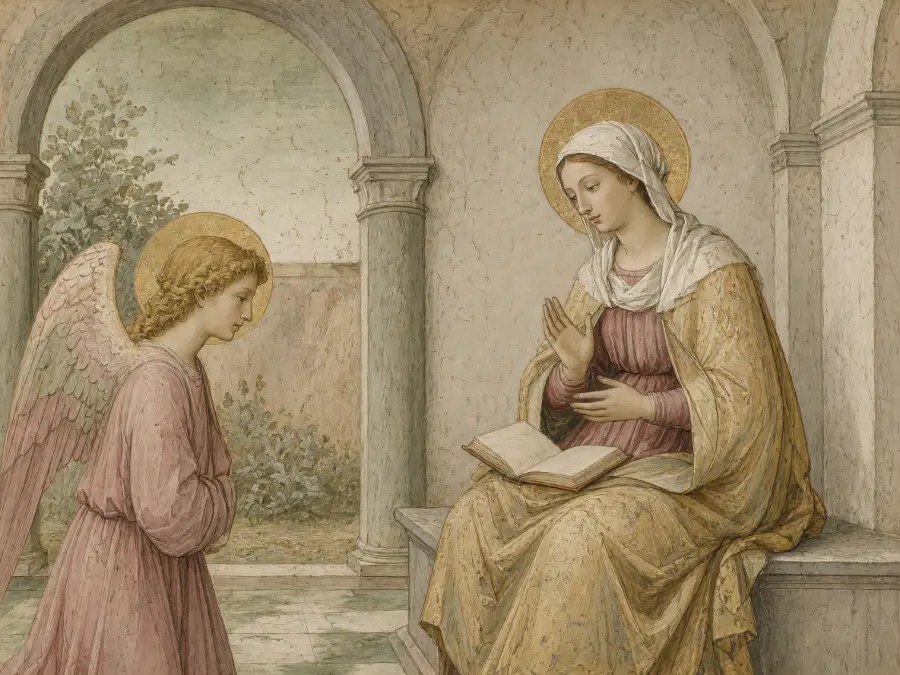
The sign was first given to a frightened king. Rezin of Syria and Pekah of Israel had come up “toward Jerusalem to war against it”, and when the news reached the palace, Ahaz’s heart “was moved, and the heart of his people, as the trees of the wood are moved with the wind” (Isaiah 7:1–2). God sent Isaiah to tell him to be quiet and not to fear, and offered him any sign he liked: “ask it either in the depth, or in the height above” (Isaiah 7:11). Ahaz refused. “I will not ask, neither will I tempt the Lord” (Isaiah 7:12).
So God chose the sign himself. “Therefore the Lord himself shall give you a sign; Behold, a virgin shall conceive, and bear a son, and shall call his name Immanuel” (Isaiah 7:14). Before that child was old enough to “refuse the evil, and choose the good”, Isaiah said, both enemy kings would be gone (Isaiah 7:16). The Catholic New American Bible says in its note that the sign “seeks to reassure Ahaz that he need not fear the invading armies of Syria and Israel”.
Matthew hears the same words again at the birth of Mary’s son. An angel tells Joseph in a dream that the child “is of the Holy Ghost” and is to be called Jesus, and Matthew adds Isaiah’s verse with its meaning spelled out: “they shall call his name Emmanuel, which being interpreted is, God with us” (Matthew 1:20–23). The name, and why no one in the Gospels ever calls Jesus by it, is the subject of what Emmanuel means.
Does the Hebrew word almah mean “virgin”?
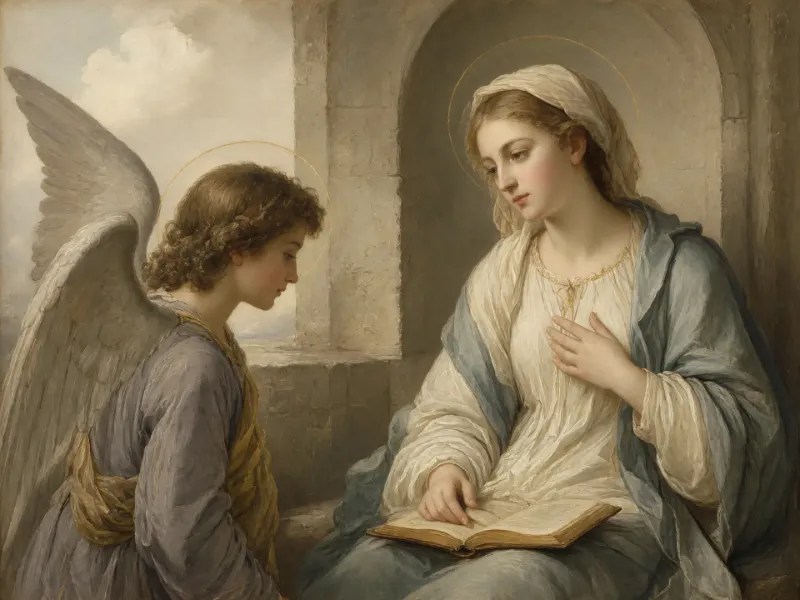
Not exactly. Isaiah’s Hebrew word is almah, a young woman of an age to marry. Hebrew has a more exact word for a virgin, bethulah, and Isaiah did not use it here. The Catholic bishops’ own Bible, the New American Bible, says so in its note: “Hebrew ‘almah designates a young woman of marriageable age without specific reference to virginity.”
Yet look at the girls the Bible calls almah. Abraham’s servant uses the word at the well, praying for the girl who will turn out to be Rebekah: “when the virgin cometh forth to draw water” (Genesis 24:43). It is the word for Moses’ sister, sent running by Pharaoh’s daughter: “And the maid went and called the child’s mother” (Exodus 2:8). In both stories the almah is a girl who has not yet married.
The word “virgin” in Matthew comes to us through Greek, and through Jewish hands. Jewish scholars, beginning in Alexandria, translated their own Scriptures into Greek, and their version is called the Septuagint. Where Isaiah has almah they wrote parthenos, the Greek word that normally means a virgin, and Matthew’s Greek follows theirs; the bishops’ note says the Septuagint’s word “underlies Mt 1:23”. The reading Christians treasure in Matthew was first set down by Jewish translators, most probably before Mary was born.
The Christian belief in the virgin birth does not rest on one Hebrew word. Matthew and Luke tell it outright. Mary herself asks the angel, “How shall this be, seeing I know not a man?” and he answers, “The Holy Ghost shall come upon thee, and the power of the Highest shall overshadow thee” (Luke 1:34–35). Matthew, reading Isaiah in Greek, heard in the sign the child conceived of the Holy Ghost.
How do Jewish readers understand Isaiah 7:14?
Jewish commentators such as Rashi read it as a sign for Ahaz’s own day. The Judaica Press Tanach, a Jewish translation, speaks of “the young woman”. Rashi, the great Jewish commentator on the Bible and the Talmud, born at Troyes in France in 1040, takes her to be Isaiah’s own wife: “My wife will conceive this year. This was the fourth year of Ahaz.” The name Immanuel, he explains, means “that our Rock shall be with us”. And the sign itself, in his reading, was a gift of prophecy: the young woman had never prophesied, yet when she named the child, “Divine inspiration shall rest upon her.” Some interpreters said the child was Ahaz’s son Hezekiah, but the king’s years rule that out, since Hezekiah was already born; that reading, Rashi wrote, “is impossible”.
For Rashi, then, the sign belonged to the king who heard it, and to the few years Isaiah 7:16 speaks of, before both enemy kings were gone. The Catholic note above begins in the same place, with Ahaz and his fear. Christians go on to hear in Isaiah’s words a promise wider than Ahaz knew, kept in the child born of Mary. Rashi’s reading and ours start from the same scene: a prophet telling a trembling king that God was with his people.
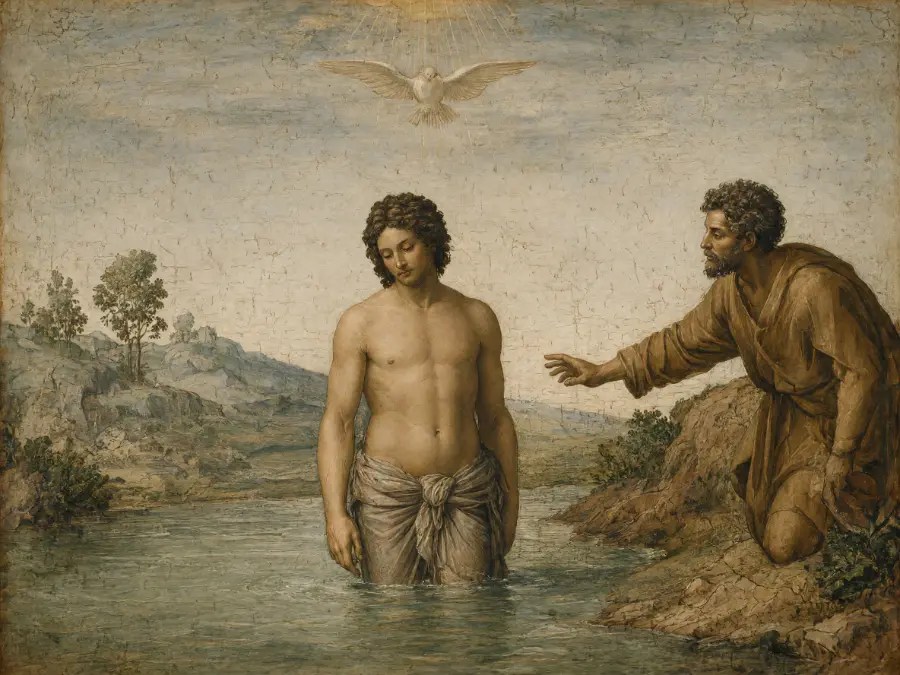
Who is the child in “unto us a child is born” (Isaiah 9:6)?
Isaiah announces this birth as a victory, and who the child is turns on how we hear the names he is given. The chapter opens over the north of the land, “the land of Zebulun and the land of Naphtali”, “Galilee of the nations”, which had been grievously afflicted (Isaiah 9:1). Then the light breaks: “The people that walked in darkness have seen a great light: they that dwell in the land of the shadow of death, upon them hath the light shined” (Isaiah 9:2). The yoke is broken, the garments rolled in blood go into the fire (Isaiah 9:4–5), and the reason is a baby:
“For unto us a child is born, unto us a son is given: and the government shall be upon his shoulder: and his name shall be called Wonderful, Counsellor, The mighty God, The everlasting Father, The Prince of Peace. Of the increase of his government and peace there shall be no end, upon the throne of David, and upon his kingdom, to order it, and to establish it with judgment and with justice from henceforth even for ever.” (Isaiah 9:6–7)
Matthew sees the light of verse 2 dawn when Jesus leaves Nazareth and makes his home in Capernaum, “in the borders of Zabulon and Nephthalim” (Matthew 4:13–16). Luke never quotes the verse, but the angel’s words to Mary sound like it: “the Lord God shall give unto him the throne of his father David: And he shall reign over the house of Jacob for ever; and of his kingdom there shall be no end” (Luke 1:32–33). Handel set both Isaiah 7:14 and 9:6 in the first part of his Messiah, first sung in Dublin on 13 April 1742, so whenever we sing his “For unto us a child is born”, we are singing Isaiah in the King James words.
In Hebrew Bibles Isaiah 9:6 is numbered 9:5. Here Rashi does read the child as Hezekiah, the righteous son “born to him many years ago” who would follow wicked Ahaz on the throne. That is no quarrel with his note on 7:14, where he would not make Hezekiah the child still to be conceived, since Hezekiah was already born; in 9:6 he hears the prophet looking back on a birth. He reads the long name as a sentence about God: “The Holy One, blessed be He, Who gives wondrous counsel, is a mighty God and an everlasting Father, called Hezekiah’s name, ‘the prince of peace,’” because there would be peace in his days. Christians hear all five titles as names of the child himself. When we sing “The mighty God” over the manger, we are saying who we believe lies in it.
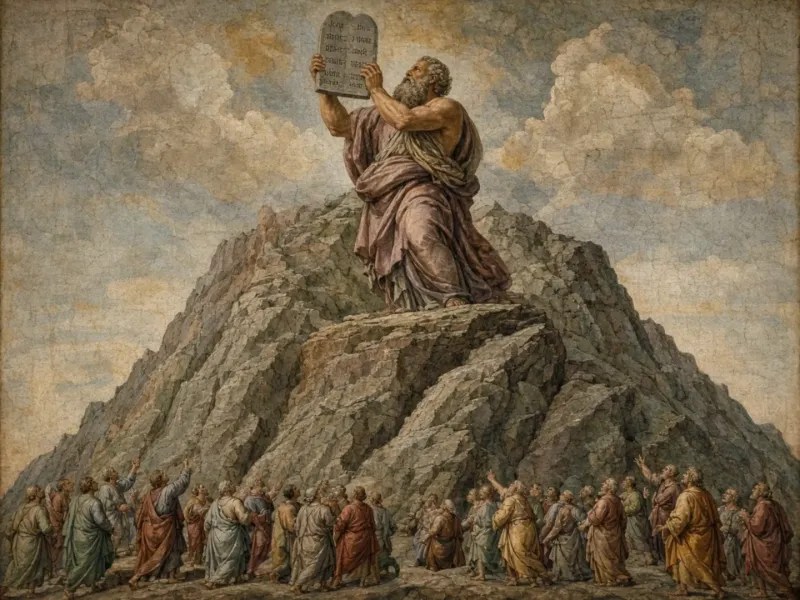
What is the “rod out of the stem of Jesse”?
A green shoot from a stump. Jesse was David’s father, a man of Bethlehem; the book of Ruth says of the son born to Ruth and Boaz, “Obed: he is the father of Jesse, the father of David” (Ruth 4:17). Where the King James Bible says “stem”, Isaiah’s Hebrew word, geza, means the stump left when a tree is cut down. “Branch” is netser, a young shoot. David’s family tree has been felled, and new life comes up from its roots:
“And there shall come forth a rod out of the stem of Jesse, and a Branch shall grow out of his roots: And the spirit of the Lord shall rest upon him, the spirit of wisdom and understanding, the spirit of counsel and might, the spirit of knowledge and of the fear of the Lord.” (Isaiah 11:1–2)
The king who grows from that stump judges the poor with righteousness, and under him the world is made gentle: “The wolf also shall dwell with the lamb, and the leopard shall lie down with the kid; and the calf and the young lion and the fatling together; and a little child shall lead them” (Isaiah 11:6). Paul quotes the end of the passage to say that Christ came for the nations too: “There shall be a root of Jesse, and he that shall rise to reign over the Gentiles; in him shall the Gentiles trust” (Romans 15:12). The New American Bible suggests that Matthew may also have had netser in mind when he wrote that Jesus “shall be called a Nazarene” (Matthew 2:23).
Rashi hears the Messiah in this passage too. He reads the shoot of Jesse as a promise to the exiles of the north: “Eventually, the King Messiah shall come and redeem them.” Christians believe that shoot has already come up, in a child of David’s line born at Bethlehem. The prophecy that names Bethlehem is Micah’s, not Isaiah’s (Micah 5:2), and it is told in why Jesus was born in Bethlehem.
Does Isaiah foretell the wise men and their gifts?
Matthew does not say so, but Christians have long heard Isaiah in the story. Isaiah saw a great caravan coming to Jerusalem’s light: “The multitude of camels shall cover thee, the dromedaries of Midian and Ephah; all they from Sheba shall come: they shall bring gold and incense; and they shall shew forth the praises of the Lord” (Isaiah 60:6). What Matthew tells is quieter: travellers who went on past Jerusalem to a house in Bethlehem and opened their treasures there, “gold, and frankincense and myrrh” (Matthew 2:11). Isaiah’s multitude came to a city; Matthew’s travellers came to a child. The New American Bible notes that this verse and Psalm 72 “led to the interpretation of the magi as kings”.
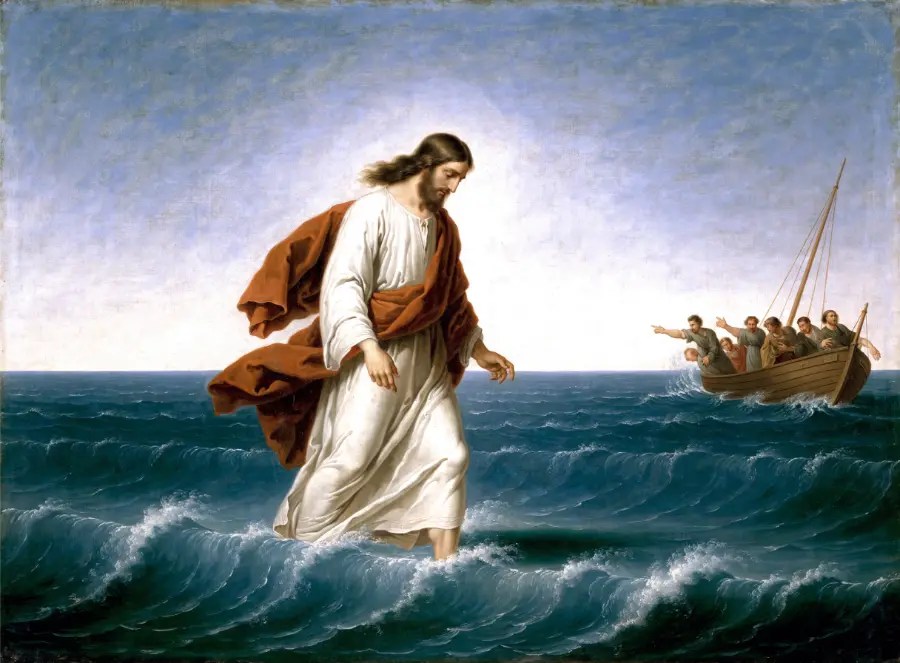
Are Isaiah 40 and Isaiah 53 about Jesus’ birth?
No, though both belong to the same story further on. “The voice of him that crieth in the wilderness, Prepare ye the way of the Lord” (Isaiah 40:3) is the verse Matthew gives to John the Baptist, who prepared the way for the grown Jesus (Matthew 3:3). The servant who “is despised and rejected of men; a man of sorrows, and acquainted with grief” (Isaiah 53:3) Christians read at the cross. We hear one person in Isaiah’s child and Isaiah’s servant: the son promised to a frightened king grows up to be the man of sorrows.
Promises spoken over a stump
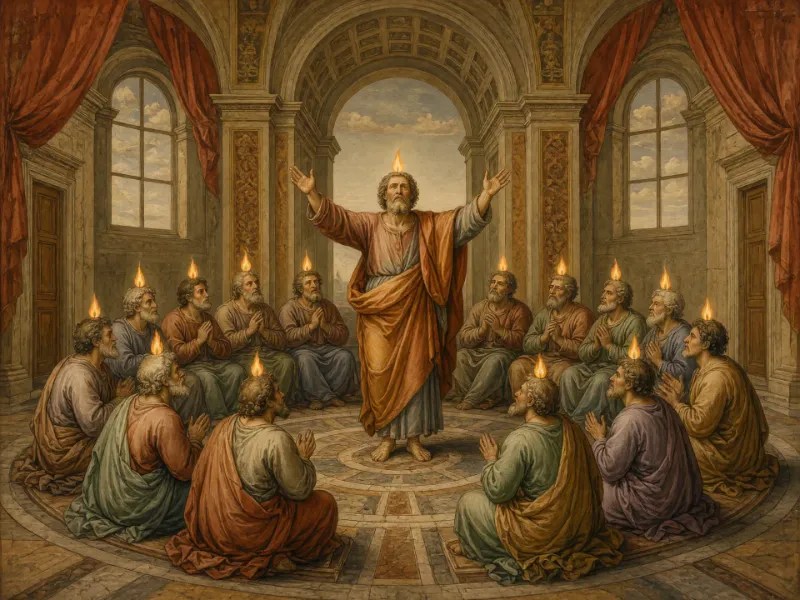
Isaiah’s promises came to people with every reason to give up: a king afraid of two armies, a province in darkness, a royal house cut down to the ground. God answered them with a child, the Son of the Virgin Mary, born in Bethlehem, David’s town, and laid in a manger. We still live in the dark places Isaiah knew, among wars and fears and families that seem past saving, and the same child is given to us there. Isaiah saw it from far off: “and a Branch shall grow out of his roots” (Isaiah 11:1).
Related reading
- Why was Jesus born in Bethlehem?
- Emmanuel means God with us
- Bible verses about the birth of Jesus
- Where is the Christmas story in the Bible?
- What was the Star of Bethlehem?
- Handel’s Messiah and its Scripture words


Leave a Reply