
 English
  Chinese
  Dutch
Dutch  Arabic
  Spanish
  Portuguese
  Russian
  French
  Italian
  German
  Japanese
 Handel’s Messiah is a sacred oratorio whose words come entirely from the Bible. Charles Jennens chose the passages, from the King James Version and the Prayer Book psalms, and Handel set them to music in about 24 days in 1741. It was first sung in Dublin on 13 April 1742, to raise money for prisoners and the sick.
Messiah’s first performance was a charity benefit, and every word it sets is Scripture. The Dublin papers recorded where that day’s money went: to three charities, some £127 each. From the first recitative to the final Amen, Jennens’s wordbook holds nothing but the words of prophets, psalmists, evangelists and apostles.
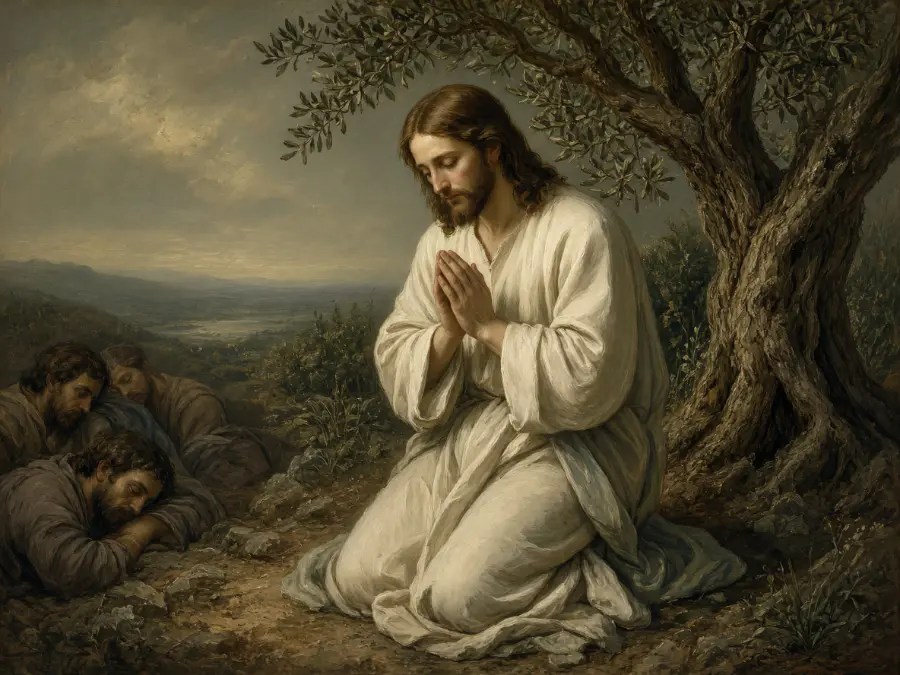
Who wrote the words of Handel’s Messiah?
Charles Jennens, a literary scholar who edited Shakespeare’s plays and had already written the text of Handel’s oratorio Saul, compiled the words. He wrote no verse of his own. He took passages from the King James Version of 1611, and for the psalms he used the older translation printed in the Book of Common Prayer. In July 1741 he told his friend Edward Holdsworth that he hoped to persuade Handel “to set another Scripture Collection I have made for him.” He added, “I hope he will lay out his whole Genius & Skill upon it, that the Composition may excell all his former Compositions, as the Subject excells every other Subject. The Subject is Messiah.”
Most of the text is the King James wording. Isaiah 9:6 reads in the libretto just as it does in that Bible: “For unto us a child is born, unto us a son is given: and the government shall be upon his shoulder: and his name shall be called Wonderful, Counsellor, The mighty God, The everlasting Father, The Prince of Peace.” The English Standard Version has “For to us a child is born, to us a son is given,” but the older phrasing is the one Handel set and the one most people know.
Jennens changed some words. Isaiah 53:3 in the King James Version begins “He is despised and rejected of men,” and Jennens made it past tense: “He was despised and rejected of Men, a Man of Sorrows, and acquainted with Grief.” The Prayer Book psalter shows in two places. Psalm 69 in that psalter says, “Thy rebuke hath broken my heart,” where the King James Version has “Reproach hath broken my heart,” and Jennens put it in the third person: “Thy Rebuke hath broken his Heart.” Psalm 2 in the Prayer Book asks, “Why do the heathen so furiously rage together,” and Messiah sings, “Why do the Nations so furiously rage together”: the phrasing is the Prayer Book’s, and “Nations” for “heathen” is Jennens’s own change, since both the Prayer Book and the King James Version have “heathen.” The title page of the wordbook printed for London carries Virgil’s Latin motto Majora canamus, “let us sing of greater things,” and then Paul’s words in 1 Timothy 3:16: “And without Controversy, great is the Mystery of Godliness.”
How long did Handel take to write Messiah?
About three and a half weeks. Handel dated his manuscript as he went. According to those notes, he began on 22 August 1741, finished Part One on 28 August and Part Two, which ends with the Hallelujah chorus, on 6 September. He wrote “Fine dell’ Oratorio” under Part Three on 12 September and noted that he had filled in the score by 14 September. That is 24 days counting both ends (BBC Music Magazine makes it 23). He worked mainly at his house in Brook Street, London, and he reused some music from his earlier works. The manuscript in his hand is now in the British Library.
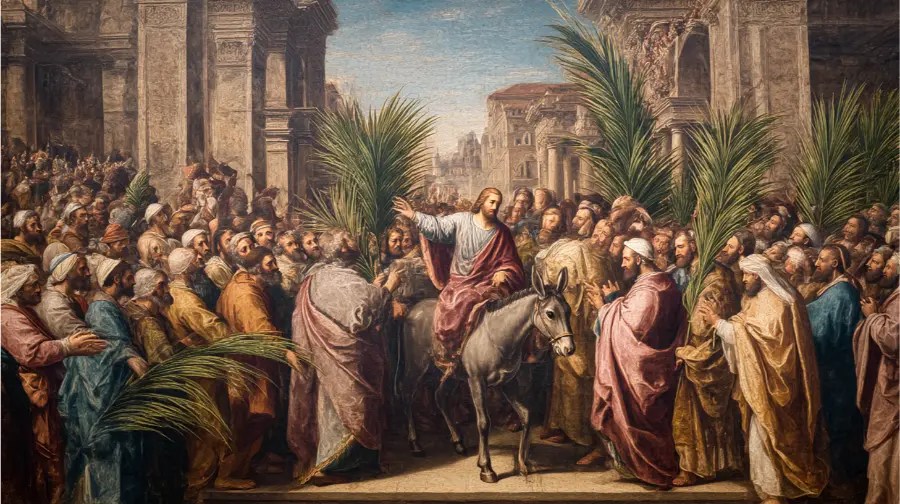
Why was Messiah first performed in Dublin?
Handel may have written it with Dublin in mind. BBC Music Magazine points to the modest scoring, which “suggests that Handel had it in mind for Dublin rather than for the more generous resources of London.” He arrived there on 18 November 1741 to give a season of concerts, possibly at the invitation of the Duke of Devonshire, then Lord Lieutenant of Ireland. His last three operas had failed in London, and Dublin welcomed him. On 29 December he wrote to Jennens that the nobility had subscribed for six nights, “which did fill a Room of 600 Persons, so that I needed not sell one single Ticket at the Door.”
Jennens had hoped for a London performance for Handel’s own benefit. “It was some mortification to me to hear that instead of performing it here he was gone into Ireland with it,” he wrote on 2 December 1741. The Dublin notices of April 1742 called the three charities the cause “for which this Oratorio was composed.” That is the notice’s claim; Horatio Townsend argued for it in 1852 from the dates, but it is not settled.
The first performance, Dublin, 13 April 1742
The first notice appeared in Faulkner’s Dublin Journal on 27 March 1742. It began with the charities, not the music: “For Relief of the Prisoners in the several Gaols, and for the Support of Mercer’s Hospital in Stephen’s street, and of the Charitable Infirmary on the Inn’s Quay.” The performance was set for Monday 12 April and moved to Tuesday 13 April because, as the Dublin News-Letter explained, Monday was “Cathedral Day.” The doors opened at eleven, and the music began at noon.
The hall was the new Musick Hall in Fishamble Street. The Charitable Musical Society, which paid the debts of people held in Dublin’s prisons, had moved into it on its completion in 1741. Mercer’s Hospital, founded in 1734, cared for the city’s poor; the Charitable Infirmary was the first infirmary in Dublin. Singers from the choirs of both cathedrals, Christ Church and St Patrick’s, sang the choruses.
Tickets cost half a guinea. On 10 April the Journal asked that ladies “come without Hoops, as it will greatly encrease the Charity, by making Room for more company.” On the morning of the concert it added, “The Gentlemen are desired to come without their swords.” Handel’s own letter had put the hall’s capacity at 600. The Journal’s report afterwards said: “There were above 700 People in the Room, and the Sum collected for that Noble and Pious Charity, amounted to about £400, out of which £127 goes to each of the three great and pious Charities.”
Three shares of £127 come to £381, and the paper does not say what became of the rest of its “about £400.” Handel took nothing from this performance. The paper said that he “generously gave the Money arising from this Grand Performance” to the three charities, and that the choirs and soloists gave their work on the same terms. In January 1744 the Charitable Musical Society reported that “in the year 1742, they released out of the several Marshalseas in and about this City, 142 Prisoners,” whose debts and fees came to £1,225 17s 1d. That figure covers the society’s whole year. Its £127 from Messiah paid for about a tenth of it, alongside its other income.
The review was warm: “Words are wanting to express the exquisite Delight it afforded to the admiring crouded Audience.” A story told later says that when the contralto Susannah Cibber sang “He was despised,” the clergyman Patrick Delany stood up and cried, “Woman, for this be all thy sins forgiven thee!” The 1742 newspaper reports quoted here do not mention it, so it is best taken as a story.
Handel gave a second Dublin performance on 3 June 1742. BBC Music Magazine records that this one was for the composer’s own benefit.
How is Messiah laid out?
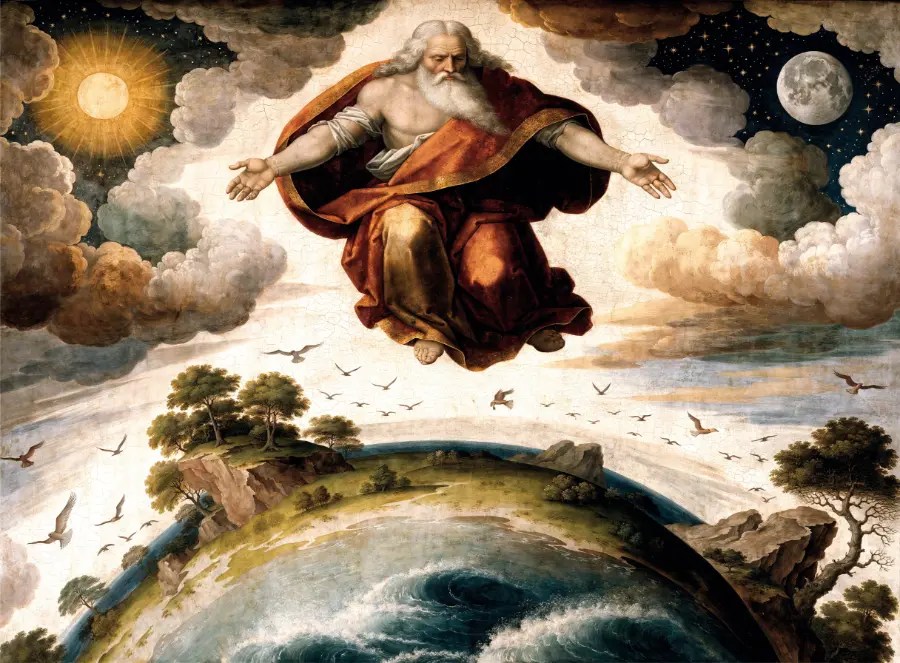
Messiah has three parts and no characters. Nobody plays Jesus. Soloists and chorus sing the prophecies, the Gospel story and the apostles’ teaching in turn, and the music moves from promise to fulfilment to the end of all things.
Part One: the promise and the birth
The tenor opens with Isaiah 40:1, “Comfort ye, comfort ye my people, saith your God.” Isaiah’s prophecies of a coming king lead to the chorus “For unto us a child is born,” and then to the shepherds of Luke 2 and the angels’ “Glory to God in the highest.” The part closes with Christ’s invitation from Matthew 11 and the chorus “His Yoke is easy, and his Burden is light.”
Part Two: the passion, the resurrection and the spread of the Gospel
Part Two begins with John the Baptist’s words, “Behold the Lamb of God, that taketh away the Sin of the World,” and moves through the suffering servant of Isaiah 53 and the psalms of the passion to the resurrection, the ascension and the preaching of the Gospel to the nations. It ends with the Hallelujah chorus. Jennens joined three verses of Revelation for it: “Hallelujah, for the Lord God Omnipotent reigneth” (19:6, where the King James Version spells it “Alleluia”), “The Kingdom of this World is become the Kingdom of our Lord and of his Christ; and he shall reign for ever and ever” (11:15, which the King James Version has in the plural, “The kingdoms of this world are become the kingdoms of our Lord”), and “King of Kings, and Lord of Lords” (19:16).
Part Three: the resurrection of the dead
Part Three opens with a song from Job 19:25, “I know that my Redeemer liveth, and that he shall stand at the latter Day upon the Earth.” The King James Version begins the verse with “For”; the English Standard Version has “For I know that my Redeemer lives.” Jennens ran Job straight into Paul: “For now is Christ risen from the Dead, the first Fruits of them that sleep.” The rest of the part is built from 1 Corinthians 15 and Romans 8, the Bible’s long argument for the resurrection, and it ends in heaven with Revelation 5: “Worthy is the Lamb that was slain,” and the closing Amen chorus.
How did London receive Messiah?
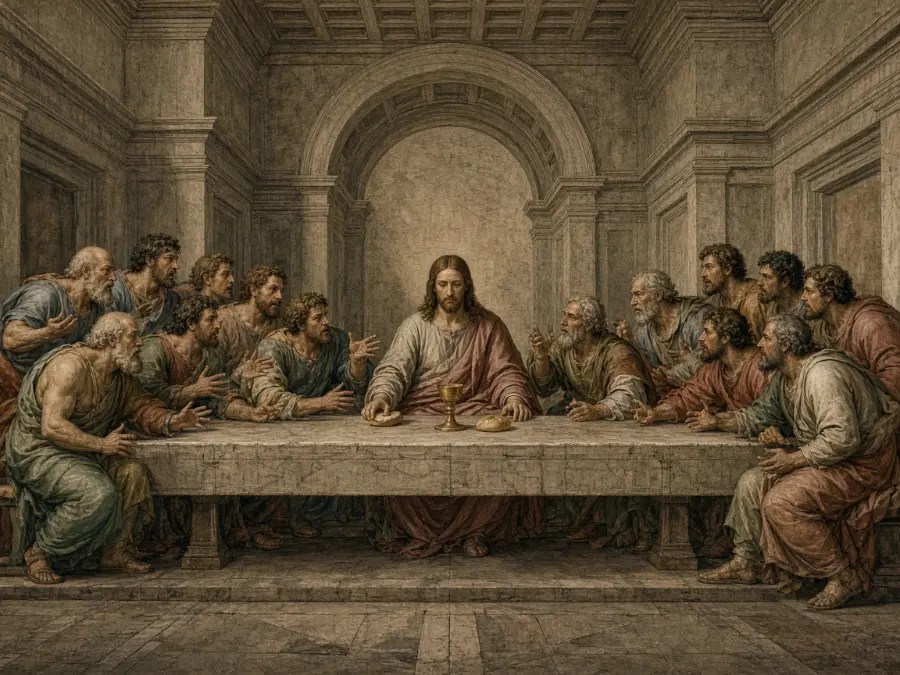
The reception was mixed. Handel gave the London premiere at the Theatre Royal in Covent Garden on 23 March 1743 and two more performances that season. The advertisement did not use the work’s name. It promised only “A NEW SACRED ORATORIO.”
The reason was a quarrel over the place. Four days earlier a writer signing himself Philalethes had asked in the Universal Spectator “if the Playhouse is a fit Temple to perform it in, or a Company of Players fit Ministers of God’s Word.” Jennens told Holdsworth on 24 March that the work had been sung “notwithstanding the clamour rais’d against it,” and that the clamour had only led to its being advertised without its name. He was cross with Handel as well. That January he had complained, “His Messiah has disappointed me, being set in great hast.” After hearing it, he still called it “in the main, a fine Composition, notwithstanding some weak parts.”
Later writers read the season more warmly. Horatio Townsend wrote in 1852, drawing on the music historian Charles Burney, that it was “received with universal admiration and applause,” and Smithsonian Magazine says the Dublin success “was in fact quickly repeated in London.”
Handel, Messiah and the Foundling Hospital
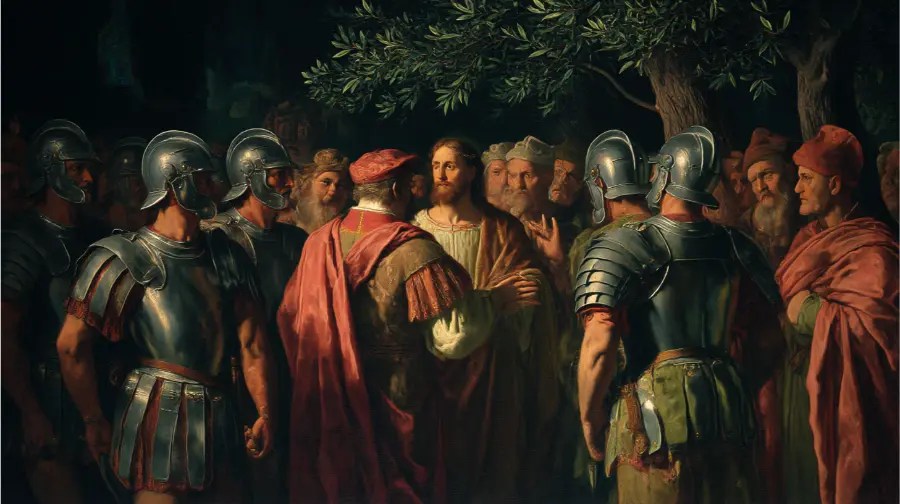
The Foundling Hospital in London cared for abandoned children. In May 1749 Handel gave a benefit concert to help finish its chapel, and the programme ended with the Hallelujah chorus. The hospital made him a governor, and he gave the chapel an organ.
The whole of Messiah was first sung at the Foundling Hospital on 1 May 1750. A London paper counted “upwards of 1200 persons of distinction” in the audience. Handel gave it there every year until he died in 1759, and the performances raised almost £7,000 for the children, by Coram’s count. Coram is the hospital’s successor charity. In a codicil to his will dated 4 August 1757, Handel left the hospital “a fair copy of the Score and all Parts of my oratorio called The Messiah.” That score and the parts are now on loan to the Foundling Museum in London. On 6 April 1759, blind and ill, he went to hear Messiah at Covent Garden. He died eight days later.
Why do people stand for the Hallelujah chorus?
It is a custom, and it was already the fashion in England by 1780. The popular explanation says King George II rose to his feet at the London performance in 1743 and the audience rose with him. No record from 1743 places him at Messiah. He did go to a Handel oratorio at Covent Garden that February, during the run of Samson: a London paper reported that “his Majesty and the rest of the Royal Family were to be at the Oratorio at Covent-Garden Playhouse.”
The earliest written version of the story is a letter the Scottish poet James Beattie wrote in May 1780, nearly forty years later. Beattie had it from Lord Kinnoull. When the chorus began, he wrote, the audience “were so transported, that they all, together with the King, (who happened to be present,) started up, and remained standing till the chorus ended,” and “hence it became the fashion in England for the audience to stand.” Beattie gives no date or place. Taken literally, his words “When Handel’s Messiah was first performed” point to Dublin in 1742, not London; Townsend, reprinting the letter in 1852, read them as the first London performance. The same letter passes on a second story from Kinnoull, that Handel told him, some days after the first performance, “I should be sorry if I only entertained them, I wish to make them better.”
No one is required to stand. The Handel and Haydn Society in Boston calls the royal version a long-standing myth and leaves the choice to each listener.
Is Messiah for Christmas or Easter?
Jennens meant it for the season before Easter. In July 1741 he hoped Handel would “perform it for his own Benefit in Passion Week,” meaning the week before Easter. The Dublin premiere fell in that week. Easter was on 18 April in 1742, and on the morning of the concert Faulkner’s Journal put off a society assembly with the words “This being Passion-Week.” Britain and Ireland still kept the Old Style calendar, eleven days behind the modern one, and began the legal year on 25 March, which is why papers printed early-year dates as “1742-3”; on the modern calendar the premiere fell on 24 April and that Easter on 29 April. The London performances of 1743 came in Lent, and Philalethes complained of oratorios in “this Season or Time of Lent.” Two of its three parts are about the cross, the empty tomb and the resurrection of the dead.
Christmas claimed it later. Part One tells of the birth of Christ, and in the United States the first complete performance was given by the Handel and Haydn Society on Christmas Day 1818, at Boylston Hall in Boston. By the early nineteenth century, Smithsonian Magazine notes, Messiah had become a stronger Christmas tradition in America than in Britain. The same magazine calls it a fixture of the Christmas season.
Messiah after Handel
Dublin kept the charity. After Handel left Ireland in August 1742, the Musick Hall in Fishamble Street soon held yearly charity performances of Messiah, first led by the violinist Matthew Dubourg, who had led the orchestra at the premiere. Mozart rescored the work in 1789, and it has since been sung by small choirs and by thousands at once.
The hall is gone, and only its entrance arch still stands in Fishamble Street. BBC Music Magazine reported in 2024 that a choir has gathered there every 13 April since 1992 to sing from Messiah on the spot where it was first heard.


Leave a Reply