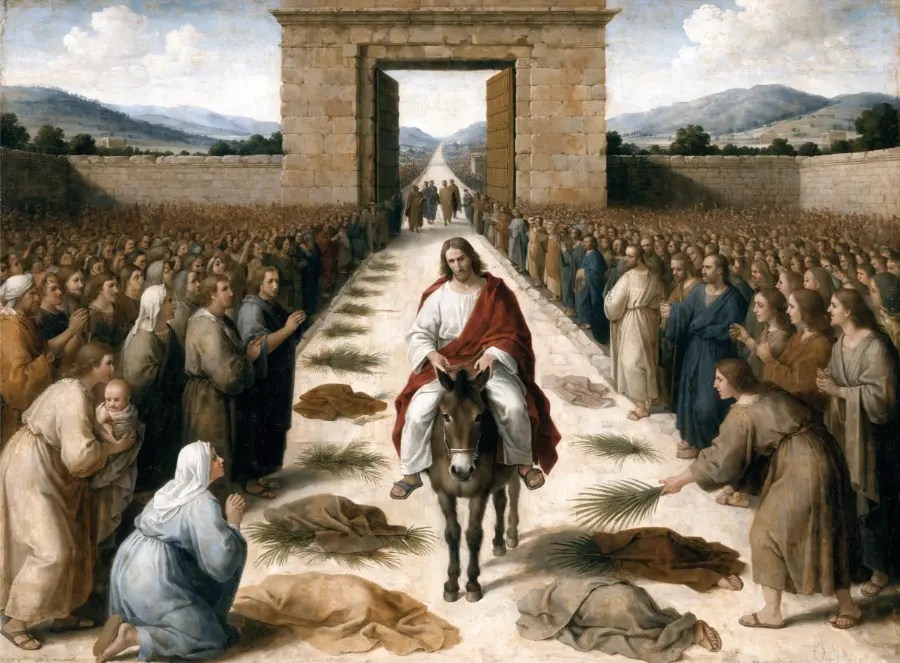
Esta entrada é a parte 17 de 42 da série O Natal como um cristão
Christian Pure Team
Bibliography:
Adams, W. (2016). THE FUNCTIONS OF BIBLICAL HEBREW VERB FORMS AS DETERMINED BY STATISTICAL SAMPLING OF VERBS.
Ambrose, & Glenn. (2006). WHO DO YOU SAY THAT I AM?: THE JESUS QUESTION AT CATHOLIC UNIVERSITIES AND COLLEGES. 1, 15.
Atterbury, A. P. (1905). The Many-Sided Christ. The Biblical World, 25, 450–456.
Barton, J. (2020). The Old Testament. The Oxford Handbook of Christmas.
Bogdanović, J. (2013). Earth, Visual Arts. 7, 144–147.
Carwood, A. (1997). The Feast of the Purification of Our Lady.
Day, A. (2016). Lifted up and glorified: Isaiah’s servant language in the Gospel of John.
Ellens, J., & Rollins, W. G. (2004). Psychology and the Bible¯: a new way to read the Scriptures.
Fried, L. (2002). Cyrus the Messiah? The Historical Background to Isaiah 45:1. Harvard Theological Review, 95, 373–393.
Huggins, R. V. (2019). On Ã…Å¡rÄ«la PrabhupÄÂda’s Insistence that‘Christ’ came from ‘Krishna.’ Journal of Hindu-Christian Studies.
Ihnat, K. (2016). Gary Waller, A Cultural Study of Mary and the Annunciation: From Luke to the Enlightenment (London: Pickering & Chatto, 2015), pp. 256. ISBN 1848935757 (hb). Gender & History, 28.
Khanghah, R. R. (2022). Imam Mahdi, Antichrist Or A Promised Saviour Besides Jesus Christ? Social Science Research Network.
Knights, C. (2017). 31st December: 1st Sunday after Christmas. The Expository Times, 129, 85–87.
Kodell, J. (1983). Luke’s Gospel in a Nutshell (Lk 4:16-30). Biblical Theology Bulletin: A Journal of Bible and Theology, 13, 16–18.
Mceleney, N. J. (1979). Book Review: Mary in the New Testament. Theological Studies, 40, 537–540.
Murray, S. (2007). Hymn Interpretation: Carols for Grown-Ups-"All over Creation".
Pappas, A. (1992). OBSERVATIONS ON THE ANCESTOR CYCLE OF THE SISTINE CHAPEL CEILING. Source, 11, 27–31.
Penner, T. C., & Stichele, C. V. (2009). Rhetorical practice and performance in early Christianity.
Perkinson, J. (2013). Ancestral Invocation: Messianic Traces from Abel to Isaiah.
Rhodea, G. (2013). Did Matthew Conceive a Virgin? Isaiah 7:14 and the Birth of Jesus. Journal of the Evangelical Theological Society, 56, 63.
Schreiber, M. (2009). The Real Suffering Servant: Decoding a Controversial Passage in the Bible. Jewish Bible Quarterly, 37, 35.
Smith, T. C. (1952). Book Review: Baptism in the New Testament. Review & Expositor, 49, 65–67.
Studies, T., Notices, S., & Royaume, L. (1960). Shorter Notices. Theological Studies, 21, 680–701.
Towns, E. (1987). The Names of Jesus.
Witherington, B. (2014). Reading and Understanding the Bible.
àыñðûьчõýúþ, â. Û. (2013). ÑøñûõùÑÂúøù тõúÑÂÑ‚ ò тõúÑÂтõ рþüðýð ä. Óþрõýштõùýð «ÃŸÑÂðûþü».
Akagi, K. (2016). The Light from Galilee: The Narrative Function of Isaiah 8:23-9:6 in John 8:12. Novum Testamentum, 58, 380–393.
Angel, H. (2009). Prophecy as Potential: The Consolations of Isaiah 1-12 in Context. Jewish Bible Quarterly, 37, 3.
Arnal, W. (2008). The Messiah Myth: The Near Eastern Roots of Jesus and David (review). Shofar: An Interdisciplinary Journal of Jewish Studies, 26, 176–179.
Aryeh, D. N. A. (2024). The Motif of Worship, Prayer, and Prophecy in Luke 1:5–25 as a Bridge between the Old Testament and the Gospel of Luke. Scriptura.
Blenkinsopp, J. (2002). Isaiah 40–55.
Branch, R. G. (2004). The Messianic Dimensions of Kingship in Deuteronomy 17:14-20 as fulfilled by Jesus in Matthew. Verbum Et Ecclesia, 25, 378–401.
Brettler, M., & Levine, A. (2019). Isaiah’s Suffering Servant: Before and After Christianity. Interpretation: A Journal of Bible and Theology, 73, 158–173.
Bullock, J. S. (2022). REVEALING THE KINGDOM:AN EXAMINATION OF JESUS’ ANNOUNCEMENT OF THE KINGDOM OF HEAVEN IN MATTHEW’S GOSPEL. BIBLICAL STUDIES JOURNAL.
Cadle, E. H., Cadle, O., & Cadle, B. (1939). What Jesus Means To Me As A Counselor – Isaiah 9:6.
Collins, J. (2008). Isaiah 8:23–9:6 And Its Greek Translation. 205–222.
Cook, S. (2019). Isaiah 14: The Birth of a Zombie Apocalypse? Interpretation: A Journal of Bible and Theology, 73, 130–142.
Docherty, S. (2016). The Birth of the Trinity: Jesus, God and Spirit in New Testament and Early Christian Interpretation of the Old Testament. Irish Theological Quarterly, 81, 427–429.
Gamble, C. (1955). Book Review: Jesus and His Ministry. Interpretation, 9, 373–374.
Gnuse, R. (2019). Book Review: The Oxford Handbook of the Writings of the Hebrew Bible. Biblical Theology Bulletin, 49, 170–171.
Gottlieb, D. J. (2019). Albert van der Heide. Now I Know: Five Centuries of Aqedah Exegesis. Cham, Switzerland: Springer International Publishing, 2017. 504 pp. AJS Review, 43, 463–465.
Haitovsky, D. (1994). A New Look at a Lost Painting: The Hebrew Inscription in Lorenzo Costa’s Presentation in the Temple. Artibus et Historiae, 15, 111–120.
Harel, M. (1963). Desert Landscapes in Isaiah’s Prophecy. Interpretation, 17, 319–323.
Hays, C. B. (2016). The Isaianic Denkschrift and a SocioCultural Crisis in Yehud: A Rereading Of Isaiah 6:1–9:67(#)(#)(#). Alexander V. Prokhorov. FRLANT, 216. Göttingen: Vandenhoeck & Ruprecht, 2015. Pp. 272. €90.00. Religious Studies Review, 42, 103–104.
Hunter, D. (1984). Book Review: Antioch and Rome: New Testament Cradles of Catholic Christianity. Theological Studies, 45, 354–356.
Irudayaraj, D. S. (2012). Idol-taunt in Isaiah 44:9-20 Prophetic Construction or Construction of Prophecy? A Dalit/new Historicist Reading.
Jackson, J. R. (2016). Faithful Leadership: Isaiah 9:6 and the Task of Christian Proclamation. 24, 7.
Jamieson, R., & Fausset, A. (2015). The Error of Denying That the Son Is the Eternal Father in Isaiah 9¯: 61 A Response to.
Martin, D. D. (2022). The Davidic Messiah in the Old Testament Tracing a Theological Trajectory. Perichoresis, 20, 87–96.
Moodie, R. (2004). 009 Jesus, the Mighty God, Isaiah 9:6.
Patrick, D. (1984). Epiphanic Imagery in Second Isaiah’s Portrayal of a New Exodus.
Prokhorov, A. (2015). The Isaianic Denkschrift and a Socio-Cultural Crisis in Yehud: A Rereading of Isaiah 6:1-9:67(#)(#)(#).
Rhodea, G. (2013). Did Matthew Conceive a Virgin? Isaiah 7:14 and the Birth of Jesus. Journal of the Evangelical Theological Society, 56, 63.
Routledge, R. (1992). The Siege and Deliverance of the City of David in Isaiah 29:1–8. Tyndale Bulletin.
Roy, F., & Melugin. (2005). Texts to Transform Life: Reading Isaiah as Christians.
Rust, E. (1957). Book Review: The Messiah in the Old Testament. Review & Expositor, 54, 289–290.
Ruthven, J. (2008). This is My Covenant with Them: Isaiah 59.19-21 as the Programmatic Prophecy of the New Covenant in the Acts of the Apostles (Part II). Journal of Pentecostal Theology, 17, 219–237.
Serebryakov, N. (2024). Now the voice of Isaiah the prophet¦: on the unusual attribution of Old Testament prophecy in Ancient Church hymnography. St. Tikhons’ University Review.
Shipp, M. R. (2003). Of Dead Kings and Dirges: Myth and Meaning in Isaiah 14:4B-21.
Sipahutar, R. C. (2019). ISRAEL BARU (Interpretasi Kritis atas Teologi Paulus tentang Israel di dalam Roma 9:6-8 dan 11:23-24). Jurnal Teologi Cultivation.
Sølvará, H. A. (2017). „Moyggj skal verða við barn … – nøkur orð um bÃÂbliutýðingar og bÃÂbliutulkingar / Some Words on Biblical Translation and Interpretation. 59, 40–62.
Strauss, M. L. (1997). The Davidic Messiah in Luke-Acts¯: the promise and its fulfillment in Lukan Christology. Journal of Biblical Literature, 116, 370.
The Structure of Theological Revolutions: How the Fight over Birth Control Transformed American Catholicism. By Mark S. Massa SJ. New York: Oxford University Press, 2018. viii + 218 pages. $29.95. (n.d.).
Tooman, W. A. (2021). Isaiah in Aramaic.
Wagner, T. (2006). Einleitung Und Forschungsüberblick. 1–41.
âþÿðûþòøћ, Ã’. (2018). Isaiah’s Prophecy of the Birth of Immanuel (Isaiah 7:14) in Matthew’s Account of the Birth of Messiah (Matthew 1:23). 3.
Ã¬ËœÂ¤ÃÆ’ÂØ„. (2012). ì´사야 1-12Ã¬Å¾Â¥Ã¬â€”Â Ã«â€šËœÃÆ’€ë‚Šâ€˜Ã•˜ë‚˜ë‹˜ìÂËœ 왕권’. 37, 129–150.
Inscreva-se agora para continuar a ler e ter acesso ao arquivo completo.