
 English
 Chinese
 Dutch
 Arabic
 Spanish
 Portuguese
 Russian
 French
 Italian
 German
 Japanese
We grow strong in faith by doing together what the first Christians did. At Pentecost those who welcomed Peter’s words were baptized. They went on listening to the apostles, sharing what they had, breaking bread and praying together (Acts 2:41–42). Where do we find the strength to keep at it? “Ye shall receive power,” Jesus told his disciples, “after that the Holy Ghost is come upon you” (Acts 1:8).
One of the men who heard that promise was Peter. On the night Jesus was arrested, Peter followed him to the high priest’s house. Peter sat by the fire in the hall, and a servant girl looked at him and said, “This man was also with him.” Peter answered, “Woman, I know him not” (Luke 22:56–57). Three times he denied knowing Jesus. When the cock crew, the Lord turned and looked at him, and “Peter went out, and wept bitterly” (Luke 22:62).
If you had known Peter only by what he said at that fire, would you have thought to ask him how to follow Jesus? Yet a few weeks later, when the Spirit came at Pentecost, it was Peter who stood up with the eleven and spoke to the crowd in Jerusalem (Acts 2:14).
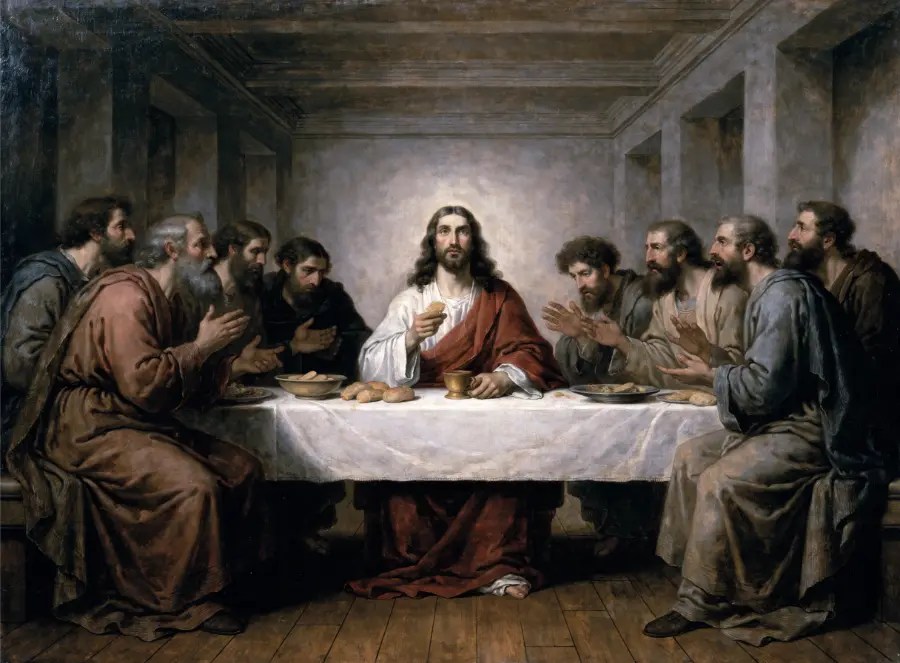
How do you become a Christian?
As the people listened to Peter, “they were pricked in their heart, and said unto Peter and to the rest of the apostles, Men and brethren, what shall we do?” (Acts 2:37). Peter answered them, “Repent, and be baptized every one of you in the name of Jesus Christ for the remission of sins, and ye shall receive the gift of the Holy Ghost” (Acts 2:38). About three thousand people were baptized that day, the day we remember as the beginning of the church. Paul puts into words what it means to trust the Jesus Peter preached. He writes that “if thou shalt confess with thy mouth the Lord Jesus, and shalt believe in thine heart that God hath raised him from the dead, thou shalt be saved” (Romans 10:9).
If this is your question too, you can tell God in your own words that you turn from your sins and trust Jesus as Lord. Many evangelical churches call a prayer like this the sinner’s prayer. Find a church near you and ask about baptism and learning the faith. A Catholic will speak of baptism as “the basis of the whole Christian life, the gateway to life in the Spirit” (Catechism, paragraph 1213). Southern Baptists understand the new birth as a change of heart the Holy Spirit brings about, “to which the sinner responds in repentance toward God and faith in the Lord Jesus Christ,” and baptism follows. They call it “the immersion of a believer,” and “an act of obedience symbolizing the believer’s faith.” You can read more about how the churches welcome someone who wants to become a Christian.
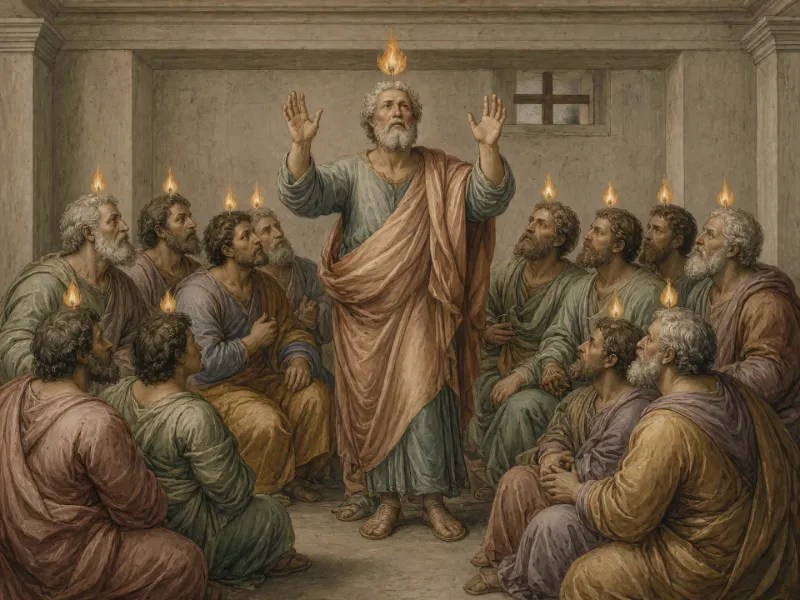
What kind of power does God give us?
Jesus promised that those who believed in him would do “greater works” than his own (John 14:12). I think of Peter and John at the temple gate called Beautiful, where Acts first tells the story of one man’s healing. A man who had been unable to walk since birth asked them for money. Peter answered him, “Silver and gold have I none; but such as I have give I thee: In the name of Jesus Christ of Nazareth rise up and walk” (Acts 3:6). Then Peter took him by the right hand to help him up, and the man went into the temple with them, walking and praising God (Acts 3:7–8).
You can see why the King James translators sometimes used “miracle” for dunamis, the Greek word for “power” in Jesus’ promise. Elsewhere they give us “strength” or “might” for the same word, which Strong’s dictionary defines as “force” and, more particularly, “miraculous power”. What did Jesus want Peter to do with such a gift? He told the disciples, “ye shall be witnesses unto me” (Acts 1:8). What a thing to ask of Peter. A servant girl had given him the chance to say he knew Jesus, and he had denied it. Now a man asking him for help hears the name of Jesus from Peter’s own lips.
But what about the prayer we have offered again and again while the thing that hurts us stays just as it was? Paul asked the Lord three times to take away what he called “a thorn in the flesh,” and he had to go on living with it. The Lord answered him, “My grace is sufficient for thee: for my strength is made perfect in weakness” (2 Corinthians 12:9). Paul came to speak gladly of his weakness so “that the power of Christ may rest upon me,” as he puts it in that same verse. When he says, “for when I am weak, then am I strong” (2 Corinthians 12:10), the thorn is still there.
How did the first believers grow in faith?
Of the people baptized at Pentecost we read that “they continued stedfastly in the apostles’ doctrine and fellowship, and in breaking of bread, and in prayers” (Acts 2:42). They kept at it. That’s the sense of the Greek here, and Strong’s gives “to persevere, be constantly diligent” for proskartereo. What would that have looked like if you’d gone home with one of them? The believers met “daily” and ate in one another’s homes “with gladness and singleness of heart” (Acts 2:46). Even someone baptized only yesterday could make room for another person at supper.
Listening to the apostles
The apostles passed on what they had learned from Jesus, and we can still hear them when we open the New Testament. In Berea the people who heard Paul “searched the scriptures daily” to see for themselves whether what he said was true, and Acts praises them for it (Acts 17:11). If you’re wondering where to begin reading, try Mark, the shortest of the four Gospels. Mark has sixteen chapters. Read one a day and in sixteen days you’ll have followed Jesus from his baptism in the Jordan all the way to the empty tomb. And when you close the book for the day? Presbyterians learn from the Westminster Shorter Catechism to “receive it with faith and love, lay it up in our hearts, and practice it in our lives” (question 90).
Sharing what we have
When Acts says the believers kept fellowship, the Greek word is koinonia. Strong’s gives us “partnership” and “participation”. In Jerusalem, if someone needed help, it mattered to everyone. We read that “all that believed were together, and had all things common” (Acts 2:44). They sold possessions and “parted them to all men, as every man had need” (Acts 2:45). We can begin by going back to the same church often enough to know who needs a meal, and to let someone know when we could use one ourselves. It takes time to know one another that well. Hebrews asks us to give each other that time, saying, “let us consider one another to provoke unto love and to good works: Not forsaking the assembling of ourselves together, as the manner of some is” (Hebrews 10:24–25).
Coming to the Lord’s table
When Paul passes on what he received about the Lord’s Supper, he asks us to remember when it happened. He writes that “the Lord Jesus the same night in which he was betrayed took bread: And when he had given thanks, he brake it, and said, Take, eat: this is my body, which is broken for you: this do in remembrance of me” (1 Corinthians 11:23–24). Peter was there. Jesus knew what Peter would say by the fire later that night, and still he gave him the bread.
Praying together
Jesus taught “that men ought always to pray, and not to faint” (Luke 18:1). Even after Peter had found the courage to speak at Pentecost, he still needed people to pray with him. When the rulers threatened him and John, the believers asked God to help them speak again (Acts 4:29). Long before their time God had told Zechariah, “Not by might, nor by power, but by my spirit, saith the Lord of hosts” (Zechariah 4:6). Hear how God answered those friends as they prayed for courage. “And when they had prayed, the place was shaken where they were assembled together; and they were all filled with the Holy Ghost, and they spake the word of God with boldness” (Acts 4:31).
How do churches today speak about growing in faith?
| Church | Text | In its own words |
|---|---|---|
| Catholic | Catechism, 1392 and 1394 | “This growth in Christian life needs the nourishment of Eucharistic Communion” because “the Eucharist strengthens our charity, which tends to be weakened in daily life” |
| Orthodox | The Orthodox Faith (Orthodox Church in America) | The “very essence of Christian spiritual life” is the “acquisition of the Holy Spirit of God” |
| Presbyterian | Westminster Shorter Catechism, question 88 | Christ works through “his ordinances, especially the word, sacraments, and prayer” |
| Methodist | John Wesley, sermon “The Means of Grace” | “prayer,” “searching the Scriptures,” and “receiving the Lord’s Supper” |
| Southern Baptist | Baptist Faith and Message (2000), articles IV and VII | Growth comes “through the presence and power of the Holy Spirit dwelling in him”. The Supper is “a symbolic act of obedience” in which believers remember “the death of the Redeemer” and look forward to “His second coming.” |
If you grew up hearing Saint Seraphim of Sarov’s name, you may have heard that we can ask God for the gift of his own Spirit. Seraphim helped make this teaching widely known in the nineteenth century. The Orthodox Church in America calls it “the classical teaching of the Orthodox Church.”
John Wesley takes us back to the people who heard Peter preach. His sermon on the means of grace opens with Malachi 3:7. In the first paragraph he recalls how the believers shared what they had (Acts 2:44) before he speaks of the teaching, the bread and the prayers they kept coming back to (Acts 2:42).
The United Methodist Church says that John, his brother Charles and their companions wanted “to grow as disciples of Jesus Christ.” Wesley warned that these practices, “when separate from the end, are less than nothing and vanity,” and by their end he meant “the knowledge and love of God.” We might ask ourselves, after those sixteen days with Mark, what have we come to know and love about Jesus?
How does a strong Christian live?
Peter earned his living casting nets in the Sea of Galilee (Matthew 4:18). Later, when he and John stood before the rulers, elders and scribes in Jerusalem, the men who heard them speak could hardly account for their courage. “When they saw the boldness of Peter and John, and perceived that they were unlearned and ignorant men, they marvelled; and they took knowledge of them, that they had been with Jesus” (Acts 4:13). The servant girl by the fire had recognized that about Peter too. This time he was willing for everyone to know.
Most days the question is simply how to be a good Christian to the people who need us. Jesus says, “whosoever will be great among you, let him be your minister; And whosoever will be chief among you, let him be your servant: Even as the Son of man came not to be ministered unto, but to minister” (Matthew 20:26–28). Think of someone whose troubles you know. What would it mean to be fair to that person, or to show them mercy today? The prophet Micah asks, “what doth the Lord require of thee, but to do justly, and to love mercy, and to walk humbly with thy God?” (Micah 6:8). Jesus tells us where the thanks belong when someone sees what we have done. “Let your light so shine before men, that they may see your good works, and glorify your Father which is in heaven” (Matthew 5:16).
What if I feel too weak to help anyone else?
If all you have strength for today is to ask God for help, Isaiah’s words are for you. “He giveth power to the faint; and to them that have no might he increaseth strength” (Isaiah 40:29). Jesus speaks of a branch drawing its life from the vine when he says, “He that abideth in me, and I in him, the same bringeth forth much fruit: for without me ye can do nothing” (John 15:5). There is room in that promise for those of us who need someone else to pray for us.
Before Peter ever stood up to preach, before he even sat down by the fire, Jesus had told him, “I have prayed for thee, that thy faith fail not: and when thou art converted, strengthen thy brethren” (Luke 22:32). Jesus knew Peter would deny him. Even so, he asked Peter to look after the others when he came back. By the time Peter went outside and wept, Jesus had already prayed for him.


Leave a Reply