
 English
 Chinese
 Dutch
 Arabic
 Spanish
 Portuguese
 Russian
 French
 Italian
 German
 Japanese
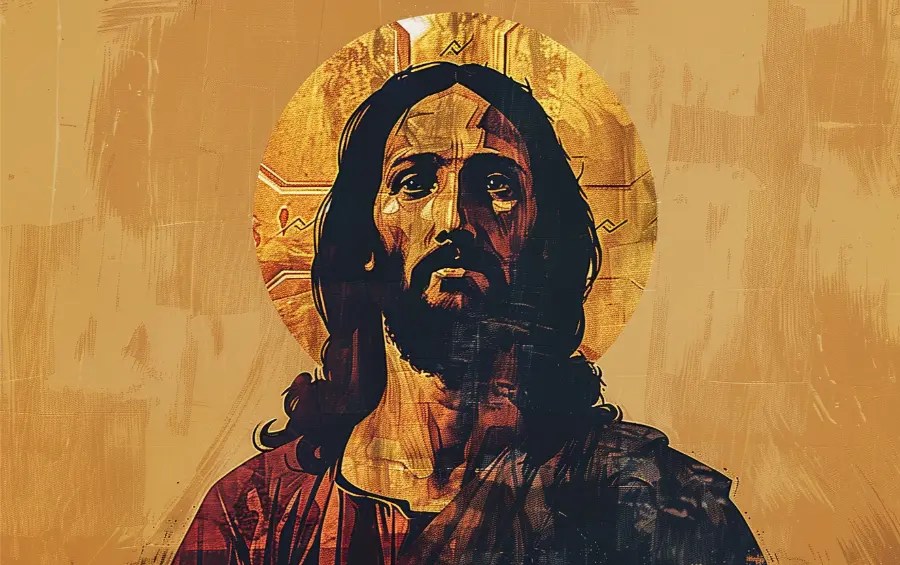
A born-again Christian is someone to whom God has given a new life by his Spirit. Jesus said that everyone needs that birth: “Except a man be born again, he cannot see the kingdom of God” (John 3:3). It is not a separate religion or church. Every Christian tradition teaches the new birth, though they differ over when it happens.
Jesus first said those words at night, to a man who came in secret. “There was a man of the Pharisees, named Nicodemus, a ruler of the Jews: The same came to Jesus by night” (John 3:1–2). He was a respected teacher, and he did not understand. John brings him back twice more in his Gospel, and we can watch what the words did to him.
What did Jesus mean by “born again”?
The Greek word translated “again” is anothen, and it can mean either “again” or “from above.” John uses it in the same chapter for Jesus himself, “He that cometh from above is above all” (John 3:31), and later for the seamless coat Jesus wore, “woven from the top throughout” (John 19:23). Nicodemus heard only “again,” and he took it the hard way: “How can a man be born when he is old? can he enter the second time into his mother’s womb, and be born?” (John 3:4). Both senses fit what Jesus says next. The new birth is a second birth, and it comes down from God.
Jesus went on: “Except a man be born of water and of the Spirit, he cannot enter into the kingdom of God. That which is born of the flesh is flesh; and that which is born of the Spirit is spirit” (John 3:5–6). Our first birth gives us a human life. Only God’s Spirit can give us the life of God. And no one can make it happen, any more than we chose to be born the first time: “The wind bloweth where it listeth, and thou hearest the sound thereof, but canst not tell whence it cometh, and whither it goeth: so is every one that is born of the Spirit” (John 3:8). John had already said the same at the start of his Gospel. Those who receive Christ are born “not of blood, nor of the will of the flesh, nor of the will of man, but of God” (John 1:13).
Nicodemus asked, “How can these things be?” and Jesus answered, “Art thou a master of Israel, and knowest not these things?” (John 3:9–10). A teacher of Israel had read the promise. Through Ezekiel, God had said, “Then will I sprinkle clean water upon you, and ye shall be clean,” and “I will put my spirit within you” (Ezekiel 36:25, 27). Clean water and God’s own Spirit: the prophet had seen what Jesus now offered. Then come the words of John 3:16, whether Jesus spoke them that night or John wrote them as his own comment on it: “For God so loved the world, that he gave his only begotten Son, that whosoever believeth in him should not perish, but have everlasting life” (John 3:16).
Where else does the Bible speak of being born again?
The King James Bible uses the words “born again” three times: twice in Jesus’ talk with Nicodemus (John 3:3, 7) and once in Peter’s first letter, “Being born again, not of corruptible seed, but of incorruptible, by the word of God, which liveth and abideth for ever” (1 Peter 1:23). Peter’s Greek verb, anagennao, means to beget again, and he uses it once more when he blesses God, who “hath begotten us again unto a lively hope by the resurrection of Jesus Christ from the dead” (1 Peter 1:3).
The same truth runs through the letters in other words. James writes, “Of his own will begat he us with the word of truth” (James 1:18). Paul calls it “the washing of regeneration, and renewing of the Holy Ghost” (Titus 3:5), and says, “if any man be in Christ, he is a new creature: old things are passed away; behold, all things are become new” (2 Corinthians 5:17). John puts it most simply: “Whosoever believeth that Jesus is the Christ is born of God” (1 John 5:1).
Is born-again Christianity a separate religion?
No. “Born again” is Jesus’ own phrase, and it belongs to every church that reads the Gospel of John. It is not a denomination, a sect or a cult. In everyday American speech, though, a “born-again Christian” usually means an evangelical Protestant who can point to a time of turning to Christ. Gallup asks about the two words together, and the Southern Baptist confession places the new birth at the moment a sinner “responds in repentance toward God and faith in the Lord Jesus Christ.” In American politics the phrase took hold in 1976. At a campaign stop in North Carolina that March, someone asked Jimmy Carter, “Are you a born again Christian?” He said yes. He had assumed, as he later explained, “that all devout Christians were born again, of the Holy Spirit.” The answer made headlines, Gallup began asking Americans the same question, and in October Newsweek called 1976 “The Year of the Evangelical.”
Gallup has tracked the question for decades, in the words “Would you describe yourself as ‘born-again’ or evangelical?” In 2018 it reported that an average of 41% of Americans had said yes over the previous three years, close to the 42% of 1991 to 1995. In its latest survey Gallup split the sample: the half asked the usual question gave 38%, and the half asked only whether they were “an evangelical” gave 21%. Gallup took it as a sign that “the words ‘born-again’ have more universal applicability than the term evangelical.”
Do Catholics and other churches believe in being born again?
Yes. The churches agree that we must be born again, and they differ over when God does it. Evangelicals usually mean a moment of personal faith, and baptism follows it. Catholic, Orthodox and Lutheran Christians teach that God gives the new birth in baptism. Other churches that baptise infants speak of baptism as a sign of the new birth: the Methodist Articles of Religion call it “a sign of regeneration or the new birth,” and the Reformed Westminster Confession calls it “a sign and seal of the covenant of grace, of his ingrafting into Christ, of regeneration.”
| Church | The new birth comes | Baptism is |
|---|---|---|
| Baptist and many evangelical churches | when a person repents and believes | a sign of the new life already given |
| Catholic Church | in baptism | “the sacrament of regeneration” |
| Orthodox Church | in baptism | where a believer is “born again of the Holy Ghost” |
| Lutheran churches | in baptism, received by faith | “a washing of regeneration in the Holy Ghost” |
The Baptist Faith and Message, the confession of the Southern Baptist Convention, says, “Regeneration, or the new birth, is a work of God’s grace whereby believers become new creatures in Christ Jesus. It is a change of heart wrought by the Holy Spirit through conviction of sin, to which the sinner responds in repentance toward God and faith in the Lord Jesus Christ.” Baptism, it says, is “an act of obedience symbolizing the believer’s faith.”
The Catechism of the Catholic Church teaches that “Through Baptism we are freed from sin and reborn as sons of God,” and calls baptism “the washing of regeneration and renewal by the Holy Spirit,” because it “signifies and actually brings about the birth of water and the Spirit” (paragraphs 1213 and 1215). The Orthodox catechism of St Philaret of Moscow says that in baptism a believer “dies to the carnal life of sin, and is born again of the Holy Ghost to a life spiritual and holy.” Martin Luther’s Small Catechism says that it is “not the water indeed” that does this, “but the word of God which is in and with the water, and faith, which trusts such word of God in the water.” So a Catholic asked whether he has been born again may say yes, and point to the day of his baptism. The two answers are compared side by side in Evangelical vs Catholic.
How is someone born again?
Every tradition says first that God does it. We are born of God, John says, and not by our own will (John 1:13), and the Spirit moves where it pleases, like the wind. And every tradition says that God calls us to answer him. John writes, “as many as received him, to them gave he power to become the sons of God, even to them that believe on his name” (John 1:12). Paul writes, “if thou shalt confess with thy mouth the Lord Jesus, and shalt believe in thine heart that God hath raised him from the dead, thou shalt be saved” (Romans 10:9). On the first day the church preached, Peter told the crowd, “Repent, and be baptized every one of you in the name of Jesus Christ for the remission of sins, and ye shall receive the gift of the Holy Ghost” (Acts 2:38).
Repentance, faith and baptism belong together in the New Testament, whichever order a church teaches. Many people put their first faith into a simple prayer, like the one in The Prayer of Salvation. The words do not do the work. God does, and he hears the prayer.
What changes when someone is born again?
No one can give himself a second birth, and God offers one to anyone. “Whosoever believeth,” says John 3:16, and John wrote that to all who receive Christ he gives “power to become the sons of God” (John 1:12). A new life shows itself the way any life does, by growing. Paul names its fruit: “love, joy, peace, longsuffering, gentleness, goodness, faith, Meekness, temperance” (Galatians 5:22–23). John adds one more sign: “every one that loveth is born of God, and knoweth God” (1 John 4:7).
Being born again does not make anyone perfect. John, who wrote so much about the new birth, also wrote, “If we say that we have no sin, we deceive ourselves,” and at once, “If we confess our sins, he is faithful and just to forgive us our sins” (1 John 1:8–9). A newborn is not yet grown. Peter tells us what to do with the life we have been given: “As newborn babes, desire the sincere milk of the word, that ye may grow thereby” (1 Peter 2:2). The life God began in us is still growing. It grows each morning we come back to him.
We see it in Nicodemus. The man who came by night spoke up for Jesus among the Pharisees: “Doth our law judge any man, before it hear him, and know what he doeth?” (John 7:51). And on the day Jesus died, when Joseph of Arimathea asked Pilate for the body, “there came also Nicodemus, which at the first came to Jesus by night, and brought a mixture of myrrh and aloes, about an hundred pound weight” (John 19:39). With Joseph he carried the Lord’s body to a garden where a new tomb was waiting.
Related reading
- 16 Bible Verses About Being Born Again
- Evangelical vs Catholic: Born Again, Baptism and the Bible Compared
- What Are Evangelical Church Beliefs?
- Do You Need to Be Baptized to Be Saved? Biblical Debates
- The Prayer of Salvation: A Simple Prayer to Receive Jesus Christ
- How do I Know If I’m Saved By Jesus?


Leave a Reply