
 English
 Chinese
 Dutch
 Arabic
 Spanish
 Portuguese
 Russian
 French
 Italian
 German
 Japanese
The Bible gives no meaning to dreams about puppies, or about dogs of any age. No dream in the Bible has a dog in it, and Scripture keeps no list of what dream pictures mean. Where a Bible dream has animals in it, God or someone he sent gave the meaning, and it belonged to that dream alone.
Jacob shows us how that worked. For twenty years he kept his uncle Laban’s flocks in Haran, through drought by day and frost by night, until, as he said, “my sleep departed from mine eyes.” And all that time Laban “changed my wages ten times” (Genesis 31:40–41). Jacob’s pay was the speckled and streaked young of the flock. Then, in the season when the flocks were breeding, Jacob dreamed of the rams, “ringstraked, speckled, and grisled.” The angel of God called him by name and told him why he was seeing them: “for I have seen all that Laban doeth unto thee. I am the God of Bethel … now arise, get thee out from this land” (Genesis 31:12–13). Jacob understood. “God hath taken away the cattle of your father,” he told Rachel and Leah, “and given them to me” (Genesis 31:9). Think of it. A man lost his sleep over another man’s sheep, and in his sleep God told him, I have seen it all.
Is there a dog or a puppy in any dream in the Bible?
No. We looked at every dream in the King James Bible to be sure. It uses “dream” and its other forms 123 times, in 87 verses. If we count only what Scripture itself calls a dream, and count Pharaoh’s two dreams and Joseph’s two in Genesis 37 separately, it tells of 21 dreams. In twelve of them we are told what the dreamer saw: a ladder, rams in a flock, sheaves in a field, the sun and moon and stars, a vine, baskets, cows, ears of grain, a barley loaf, a great statue, a tree, and four beasts from the sea. In the rest, God or an angel simply speaks, or, as with Pilate’s wife, we never learn what was seen. Dogs come up in 40 verses of the King James Bible, and none of those verses tells a dream. So if a page tells you what a puppy in a dream means in the Bible, you can ask it which verse says so. There is no verse to give.
Five of the twelve dreams do have animals in them. Here they are, with the one who gave each meaning:
| Dream | What was seen | Who gave the meaning | What it meant |
|---|---|---|---|
| Jacob in Haran (Genesis 31:10–13) | Speckled and streaked rams in the flock | The angel of God | God had seen Laban’s cheating and was giving the flock to Jacob; go home |
| Pharaoh’s baker (Genesis 40:16–19) | Birds eating bread from a basket on his head | Joseph | In three days Pharaoh would hang him |
| Pharaoh (Genesis 41:1–7, 25–30) | Seven fat cows eaten by seven thin ones | Joseph, who said God had shown it | Seven years of plenty in Egypt, then seven of famine |
| Nebuchadnezzar (Daniel 4:10–22) | A great tree sheltering beasts and birds | Daniel | The tree was the king himself |
| Daniel (Daniel 7:1–17) | Four beasts from the sea, the first like a lion | One of those standing by | Four kings to come |
Read down the last column. Each meaning belongs to its own dream: Jacob’s flock, the baker’s life, the harvests of Egypt, the king himself, the kings to come. There is no dog in any row.
The clearest lesson comes from a prison in Egypt. Pharaoh’s butler and his baker each dreamed “in one night” (Genesis 40:5). The butler saw a vine with three branches. The baker saw three baskets on his head. Joseph told both men that their three meant three days, and he even used the same words for both: Pharaoh would lift up their heads. For the butler that meant Pharaoh would “restore thee unto thy place” (Genesis 40:13). For the baker it meant he would “lift up thy head from off thee, and shall hang thee on a tree” (Genesis 40:19). The same night, the same prison, the same number, the same words. One man was told he would have his place back, and the other that he would hang. How did Joseph know which was which? He had told them before they told him their dreams: “Do not interpretations belong to God?” (Genesis 40:8). The picture did not decide the meaning. God did.
The same is true of the most famous animals in any dream. “The seven good kine are seven years,” Joseph told Pharaoh (Genesis 41:26), and those cows meant fourteen years in Egypt and nothing beyond them. Scripture never takes the meaning of one person’s dream and gives it to someone else’s. It never makes a cow, a bird or a ram into a sign for everyone who dreams of one. If the Bible will not do that with Pharaoh’s cows, we have no reason to do it with our puppies.
Peter’s vision is the nearest the New Testament comes to a dream full of animals. He was praying on a rooftop in Joppa about noon when he “fell into a trance” and saw a great sheet let down from heaven, full of “all manner of fourfooted beasts of the earth, and wild beasts” (Acts 10:10–12). He did not have to work out its meaning by himself. “While Peter thought on the vision, the Spirit said unto him, Behold, three men seek thee” (Acts 10:19). While he was still wondering, the answer was already looking for him. A vision full of animals was about people all along. Peter told the friends and kinsmen whom the centurion Cornelius had gathered what God had shown him: “that I should not call any man common or unclean” (Acts 10:28).
Where do dogs and dreaming meet in the Bible?
In one verse only, and it is a hard one. It is about the leaders of Israel, not about anyone’s dream. Isaiah calls the watchmen of God’s people “dumb dogs, they cannot bark; sleeping, lying down, loving to slumber” (Isaiah 56:10). The Hebrew word behind “sleeping” appears nowhere else in the Bible. It means to dream, or to rave, and so several modern Bibles have the dogs lying there “dreaming.” Picture it: guard dogs, dreaming, when they ought to bark. The verse is a warning to the shepherds of God’s people, and to any of us who are meant to keep watch over others. It tells us nothing about the dogs in our own sleep.
What are puppies and dogs in the Bible?
Mostly they are scavengers in the streets, and “dog” is an insult; what dogs symbolize in the Bible goes through every passage. If there is a puppy anywhere in Scripture, it is under a table near Tyre. A Greek woman begged Jesus to free her young daughter from a demon, and he answered her with a picture from a family meal: “it is not meet to take the children’s bread, and to cast it unto the dogs.” The word Mark records is a small one, “little dog,” the kind that waits under the table. She took up his word at once: “Yes, Lord: yet the dogs under the table eat of the children’s crumbs.” She made the little dog into a prayer, and Jesus answered it. She went home and found her daughter lying on the bed, the demon gone (Mark 7:27–30).
In the book of Tobit, which the Catholic Old Testament includes, a dog simply keeps a young man company. When Tobias set out on his long journey, “the dog followed him” (Tobit 6:1, Douay-Rheims). Anyone who has had a dog at their heels knows that verse.
None of these passages is about a dream. Scripture does not tell us what it would mean to dream of a puppy, a litter, or a dog that chases us. Where the Bible is silent, we do well to be quiet too.
Where do our dreams come from?
Many of them come from our own days, and Scripture says so plainly. “For a dream cometh through the multitude of business,” says the Preacher (Ecclesiastes 5:3). Isaiah describes a dream that anyone who has gone to bed hungry will know: “as when an hungry man dreameth, and, behold, he eateth; but he awaketh, and his soul is empty” (Isaiah 29:8). Our days come back to us at night in the same way. A new litter in the house, a puppy a child has been begging for, or a dog we have buried can all walk into our sleep. We need no list of meanings to bring any of them to God.
Does God still speak through dreams?
He did, many times, and on the day of Pentecost Peter announced that he would again: “your old men shall dream dreams” (Acts 2:17). Whether God still speaks that way, and how much a dream should count, is where Christians differ.
Our Pentecostal neighbours in the Assemblies of God take Peter at his word. They teach that the promise he quoted is for every believer, and that the outpouring of the Spirit it describes “results in prophesying, dreams, and visions.” For them, a dream can still be one of the ways God speaks to his people.
The Catholic Church holds two things together. It has recognised some private revelations over the centuries, and it teaches that none of them adds anything to what Christ revealed; their work is to help us live by it. Its Old Testament also carries Sirach’s warning. We are not to set our hearts on dreams “except it be a vision sent forth from the most High,” for “dreams have deceived many, and they have failed that put their trust in them” (Sirach 34:6–7, Douay-Rheims).
Among the Orthodox, the best-known voice of caution is Saint John Climacus, abbot of Sinai in the seventh century, whom the Orthodox Church remembers on the fourth Sunday of Lent. His book of instruction for monks is called The Ladder, after Jacob’s dream at Bethel. So a book named after a dream teaches us to be careful with dreams. In it Climacus wrote that a man who believes in dreams “is completely inexperienced,” while “he who distrusts all dreams is a wise man.” The only dreams he would have a monk believe were those that warned him of judgment, and not even those if they drove him to despair.
Presbyterian churches hold the Westminster Confession. It teaches that once God had his word written down, “those former ways of God’s revealing his will unto his people” came to an end, and that nothing is to be added to Scripture “by new revelations of the Spirit.” For them, the Bible we already hold is enough, and no dream can add to it.
So, brothers and sisters, we do not all give a dream the same weight. But on the morning after a dream that will not leave us, we all face the same question: how do we test it?
How can a Christian test a dream?
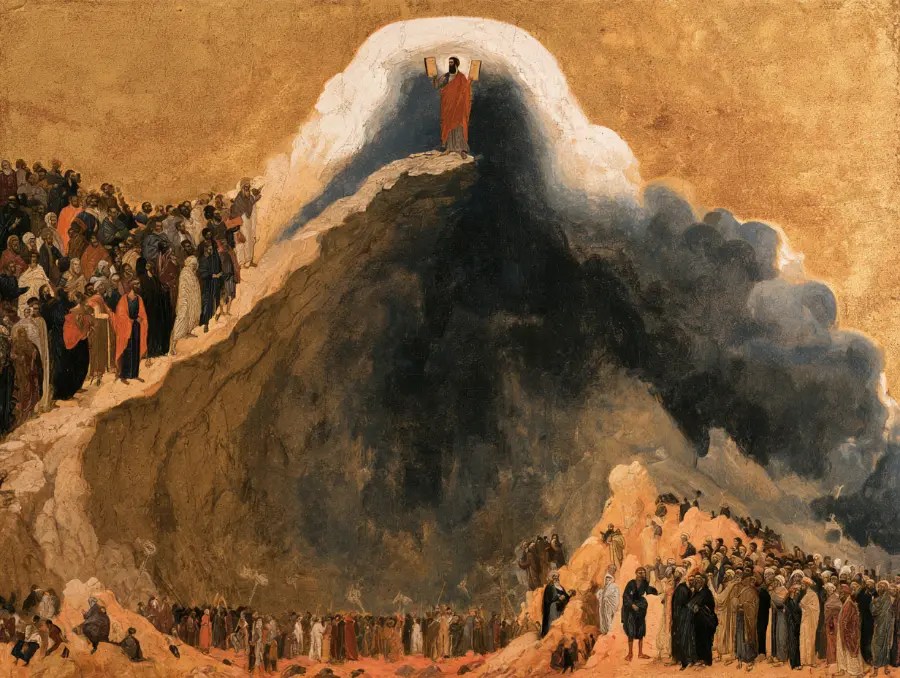
We hold it up to the word God has already given. Moses warned Israel that a “dreamer of dreams” might even give a sign that came true, and if he then said, “Let us go after other gods,” they were not to listen (Deuteronomy 13:1–3). God himself set dreams below plain speech. To a prophet, he said, “I the LORD will make myself known unto him in a vision, and will speak unto him in a dream,” but with Moses he spoke “mouth to mouth, even apparently, and not in dark speeches” (Numbers 12:6–8). Through Jeremiah he put it in a farmer’s words: “The prophet that hath a dream, let him tell a dream; and he that hath my word, let him speak my word faithfully. What is the chaff to the wheat?” (Jeremiah 23:28). Chaff blows away. Wheat becomes bread.
So a dream that stays with us can be prayed over, set beside the Scriptures, and talked through with a pastor or a believer we trust. No dream gives us leave to do what Scripture forbids, and no list can tell us what one meant. If a dream of a frightening dog keeps waking you, there are words for those hours in short prayers for nightmares.
The God who spoke to Jacob among Laban’s flocks had met him first at Bethel. Jacob had gone to sleep there with a stone for a pillow, and he woke and said, “Surely the LORD is in this place; and I knew it not” (Genesis 28:16). Isaiah’s watchdogs slept when they should have watched. The God who met Jacob never sleeps: “Behold, he that keepeth Israel shall neither slumber nor sleep” (Psalm 121:4).
Related reading
- What Do Dogs Symbolize in the Bible? Scavengers, Insults and a Few Good Dogs
- 22 Bible Verses About Dreams
- Dreaming About Wolves: The Bible Gives It No Meaning, but It Warns About Wolves
- Short Prayers for Nightmares: Before Sleep, in the Dark, and After
- Prayers for a Dying Dog and for a Dog That Has Died


Leave a Reply