
 English
 Chinese
 Dutch
 Arabic
 Spanish
 Portuguese
 Russian
 French
 Italian
 German
 Japanese
No rule in the Bible says that a dream of being attacked, or a dream of war, is a spiritual attack, a punishment or a warning of what will happen. Scripture names no such dream and gives it no meaning. If the dream replays something that was done to you, it is not your fault, and help is just below.
Scripture speaks instead to the person who wakes with a pounding heart. One psalm was prayed by a man who really was under attack. Its heading places it in the days when David fled from his own son Absalom, with an army behind him. “LORD, how are they increased that trouble me! many are they that rise up against me,” he begins. Then comes a line no one expects from a hunted man: “I laid me down and slept; I awaked; for the LORD sustained me. I will not be afraid of ten thousands of people, that have set themselves against me round about” (Psalm 3:1, 5–6). David slept with the danger still behind him, because God was his shield, and he woke to find God still there. We can lie down the same way, whatever came at us in the night.
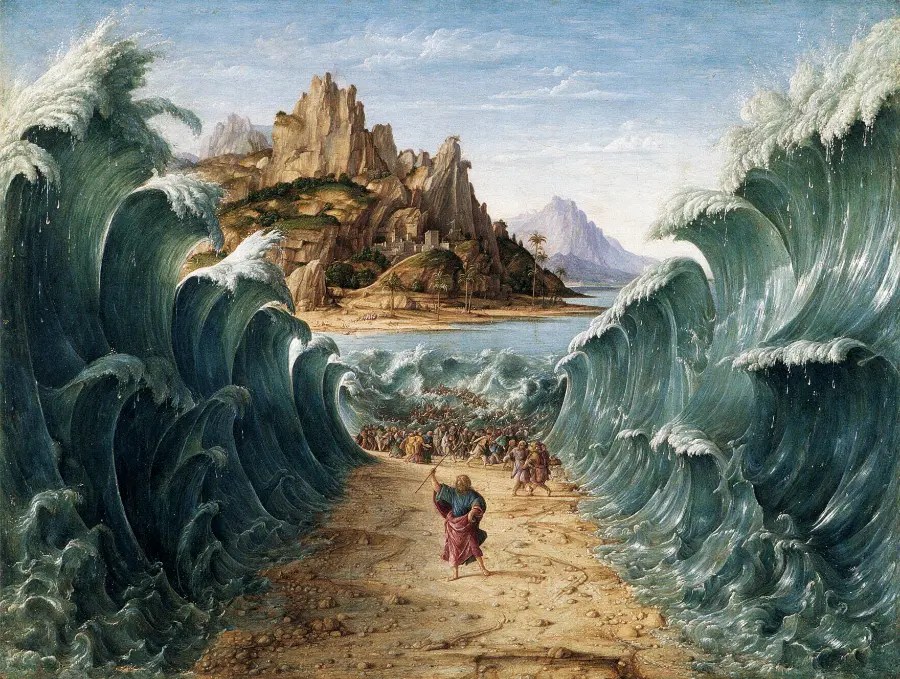
What if the dream replays something that happened to me?
If you are in danger now, call your local emergency number. Then tell someone you trust: a doctor or counsellor, and a pastor if you have one. You are not to blame for the dream, and you need not treat it as a riddle or a sign.
Nightmares are one of the marks that trauma can leave, after an assault, a robbery or years in a violent home, and they are often a replay of what happened. They can be treated. A talking therapy for sleep, cognitive behavioural therapy for insomnia, helps most people who complete it, and research shows it reduces how many nightmares people have and the distress they cause. Scripture’s word for you is plain and near: “The LORD is nigh unto them that are of a broken heart” (Psalm 34:18). Prayers for anyone who has been hurt by another person are gathered in prayers for abuse.

What does it mean to dream of war?
Scripture gives a dream of war no meaning. Jesus told his disciples that the world would hear of wars, and he told them how to hear it: “And ye shall hear of wars and rumours of wars: see that ye be not troubled: for all these things must come to pass, but the end is not yet” (Matthew 24:6). A dream of battle, guns or bombs is no sign that the end has come. If the news has filled our days with war, it is no surprise that it fills our nights. Isaiah gives us something to hold instead, the day when nations “shall beat their swords into plowshares, and their spears into pruninghooks: nation shall not lift up sword against nation, neither shall they learn war any more” (Isaiah 2:4).
Does anyone in the Bible dream of being attacked?
Not in the way we mean, and the Bible’s dreams about danger point another way. When Jacob fled from his uncle Laban, Laban took his kinsmen and pursued him for seven days’ journey, meaning him harm. “And God came to Laban the Syrian in a dream by night, and said unto him, Take heed that thou speak not to Jacob either good or bad” (Genesis 31:24). The next day Laban admitted it to Jacob’s face: “It is in the power of my hand to do you hurt: but the God of your father spake unto me yesternight” (Genesis 31:29). The dream went to the attacker, and it stopped him.
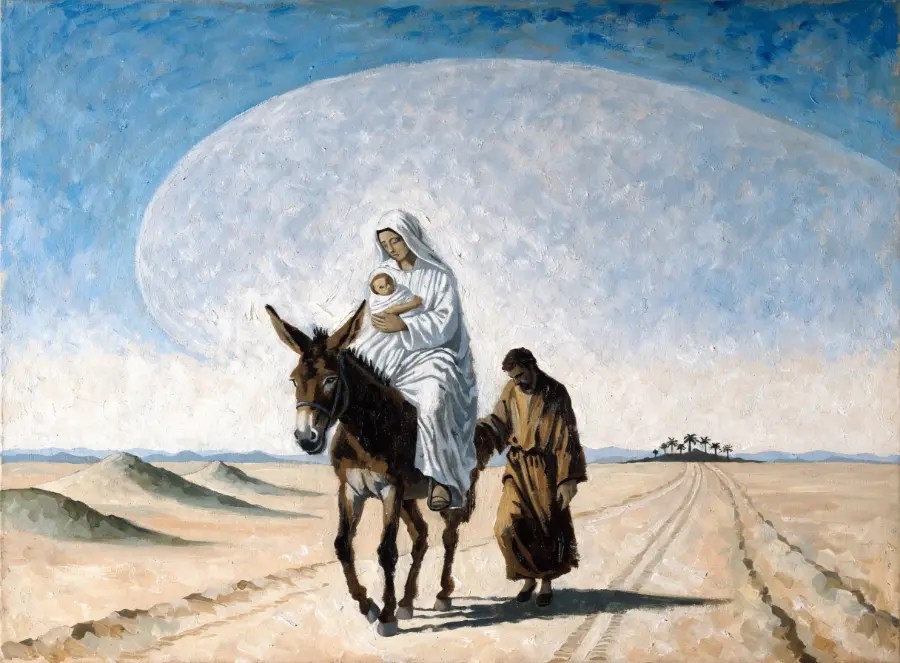
Another dream about danger saved the child Jesus. “The angel of the Lord appeareth to Joseph in a dream, saying, Arise, and take the young child and his mother, and flee into Egypt … for Herod will seek the young child to destroy him” (Matthew 2:13). The dream told Joseph in plain words what to do, and “he arose, he took the young child and his mother by night, and departed into Egypt” (Matthew 2:14). In both stories the warning came to protect.
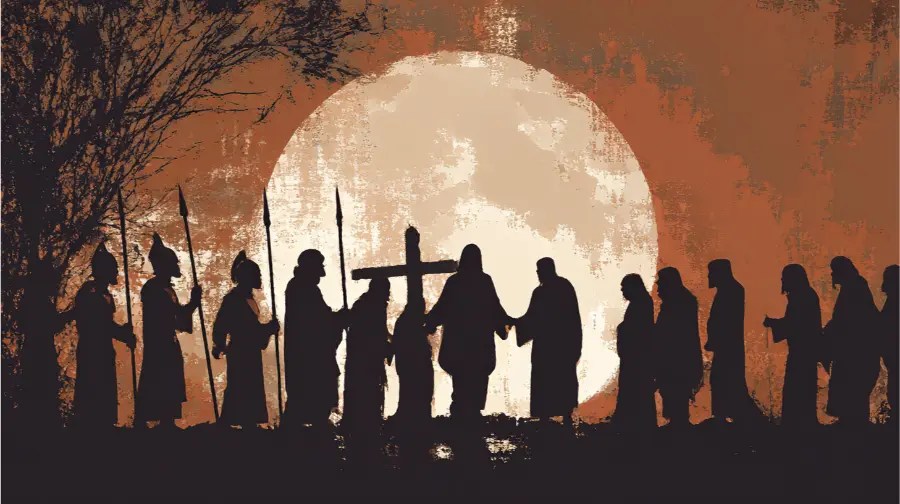
Is a dream of being attacked a spiritual attack?
Scripture gives no test that marks one dream as an attack of the enemy and another as an ordinary bad night. It does not hide that we have an enemy: “For we wrestle not against flesh and blood, but against principalities, against powers, against the rulers of the darkness of this world, against spiritual wickedness in high places” (Ephesians 6:12). And it tells us what to do, by day or by night, without first working out what kind of fear we are in. “Submit yourselves therefore to God. Resist the devil, and he will flee from you” (James 4:7). “Greater is he that is in you, than he that is in the world” (1 John 4:4).
Christians who pray against dreams like these are doing what the church has done at nightfall for centuries, and they need not fear that the enemy holds the night. The Catechism of the Catholic Church puts the limit plainly: “The power of Satan is, nonetheless, not infinite. He is only a creature,” and “He cannot prevent the building up of God’s reign” (paragraph 395). Elisha’s frightened servant woke one morning to find the city surrounded by horses and chariots, and the prophet told him, “Fear not: for they that be with us are more than they that be with them.” Then Elisha prayed that his servant’s eyes would be opened, “and, behold, the mountain was full of horses and chariots of fire round about Elisha” (2 Kings 6:16–17). The fight is real, brothers and sisters, and it is not even. There is more on this in what the Bible says about spiritual warfare.
What if I could not move or felt held down?
If you woke unable to move or speak, feeling that someone was in the room or that something was pressing you down, you may have had sleep paralysis. It happens for a few moments, sometimes minutes, as a person is waking up or falling asleep. The NHS calls it scary but harmless. If it happens often, a doctor can help. Scripture gives no account of it, as sleep paralysis and the Bible explains, and nothing in the Bible teaches that it is a demon sitting on the chest.
How has the church prayed against fear in the night?
For more than a thousand years, Christians have ended the day by asking God to guard their sleep. Compline, the church’s last prayer before sleep, has long been sung with a Latin hymn from around the eighth century, Te lucis ante terminum. In John Mason Neale’s 1852 translation it asks, “From all ill dreams defend our eyes, from nightly fears and fantasies; tread under foot our ghostly foe.” The “ghostly foe” is the devil, the enemy of our souls. The Anglican Book of Common Prayer, in its 1928 American edition, asks the same at Evening Prayer: “Lighten our darkness, we beseech thee, O Lord; and by thy great mercy defend us from all perils and dangers of this night.” Just before it, the church asks that we, “being defended from the fear of our enemies, may pass our time in rest and quietness.”
We can pray those words tonight. We can also pray with David in another psalm: “I sought the LORD, and he heard me, and delivered me from all my fears” (Psalm 34:4).
David’s psalm of the hunted night ends where every frightened night can end: “Salvation belongeth unto the LORD: thy blessing is upon thy people” (Psalm 3:8).
Related reading
- Sleep Paralysis Is Not in the Bible — and Job 4 Is Not About It
- What Is Spiritual Warfare? What the Bible Says and How to Stand
- Night Prayers for Spiritual Warfare and Protection While You Sleep
- Dreaming About Violence: Biblical Dream Interpretation
- 24 Best Bible Verses About Enemy Attacks
- 12 Prayers For Abuse


Leave a Reply