
 English
 Chinese
 Dutch
 Arabic
 Spanish
 Portuguese
 Russian
 French
 Italian
 German
 Japanese
Spiritual warfare is the Christian’s struggle against the devil and the powers of evil, fought with the armour God gives: truth, righteousness, faith, his word and prayer. Paul names the enemy plainly: “For we wrestle not against flesh and blood, but against principalities, against powers, against the rulers of the darkness of this world” (Ephesians 6:12).
Read on in that chapter and one word keeps coming back. Paul tells us to put on the armour “that ye may be able to stand against the wiles of the devil,” to “withstand in the evil day, and having done all, to stand,” and then once more, “Stand therefore” (Ephesians 6:11–14). He never sends us out to win the war. Christ has won it. Our part is to stand where he has put us, and not to be moved.
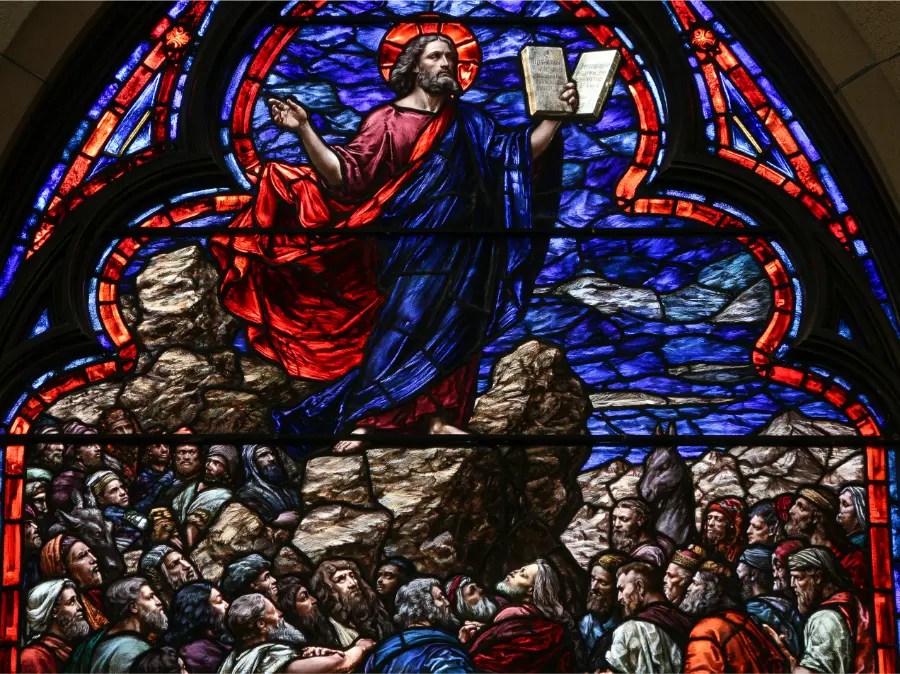
What does the Bible say about spiritual warfare?
The fullest picture is the armour of God in Ephesians 6, and every piece of it is God’s gift: “having your loins girt about with truth, and having on the breastplate of righteousness; and your feet shod with the preparation of the gospel of peace; above all, taking the shield of faith, wherewith ye shall be able to quench all the fiery darts of the wicked. And take the helmet of salvation, and the sword of the Spirit, which is the word of God” (Ephesians 6:14–17). Then Paul adds what holds it all together: “Praying always with all prayer and supplication in the Spirit” (Ephesians 6:18). There is a piece-by-piece study in the armour of God in Ephesians 6.
Paul speaks of the same fight in his letter to Corinth: “For though we walk in the flesh, we do not war after the flesh: (for the weapons of our warfare are not carnal, but mighty through God to the pulling down of strong holds;) casting down imaginations, and every high thing that exalteth itself against the knowledge of God, and bringing into captivity every thought to the obedience of Christ” (2 Corinthians 10:3–5). The battlefield he describes is the mind, where thoughts are taken captive one at a time.
Peter and James give the same two steps in a few words. “Be sober, be vigilant; because your adversary the devil, as a roaring lion, walketh about, seeking whom he may devour: whom resist stedfast in the faith” (1 Peter 5:8–9). “Submit yourselves therefore to God. Resist the devil, and he will flee from you” (James 4:7). The submitting comes first.
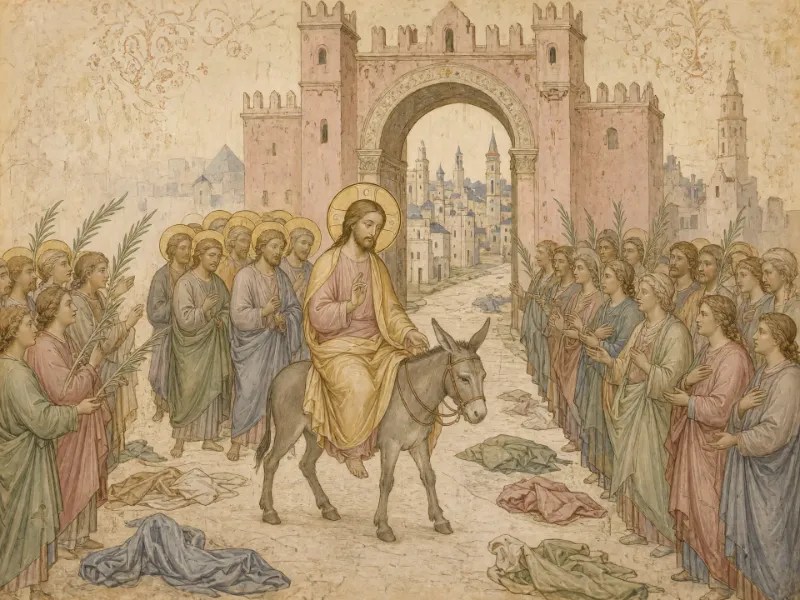
Who are Christians fighting against?
The devil is a real enemy, and Scripture never treats him as a figure of speech. Jesus calls him a thief who “cometh not, but for to steal, and to kill, and to destroy” (John 10:10), and Paul warns that “Satan himself is transformed into an angel of light” (2 Corinthians 11:14). The Catholic Catechism, explaining the last petition of the Lord’s Prayer, says that “evil is not an abstraction, but refers to a person, Satan, the Evil One, the angel who opposes God.”
He is not the only enemy. Christians have long spoken of three: the world, the flesh and the devil. The Westminster Larger Catechism, a Reformed confession, puts them together when it explains “lead us not into temptation”: “Satan, the world, and the flesh, are ready powerfully to draw us aside, and ensnare us.” Paul describes the inner war plainly: “For the flesh lusteth against the Spirit, and the Spirit against the flesh” (Galatians 5:17). And James will not let us blame everything on the devil: “every man is tempted, when he is drawn away of his own lust, and enticed” (James 1:14). Much of our fighting is with ourselves.
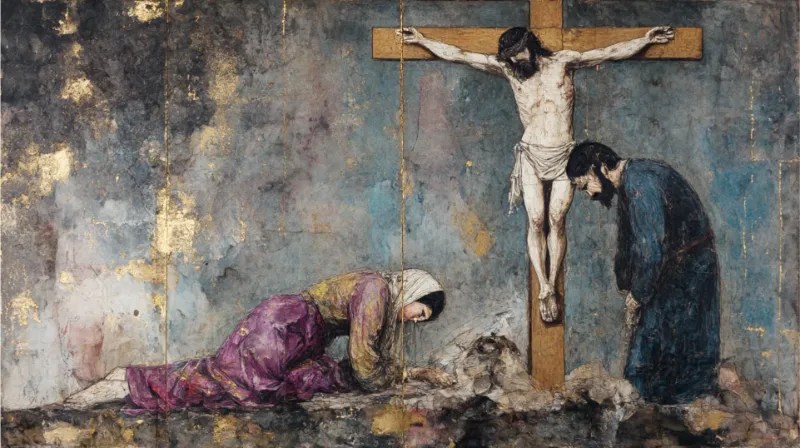
Has the battle already been won?
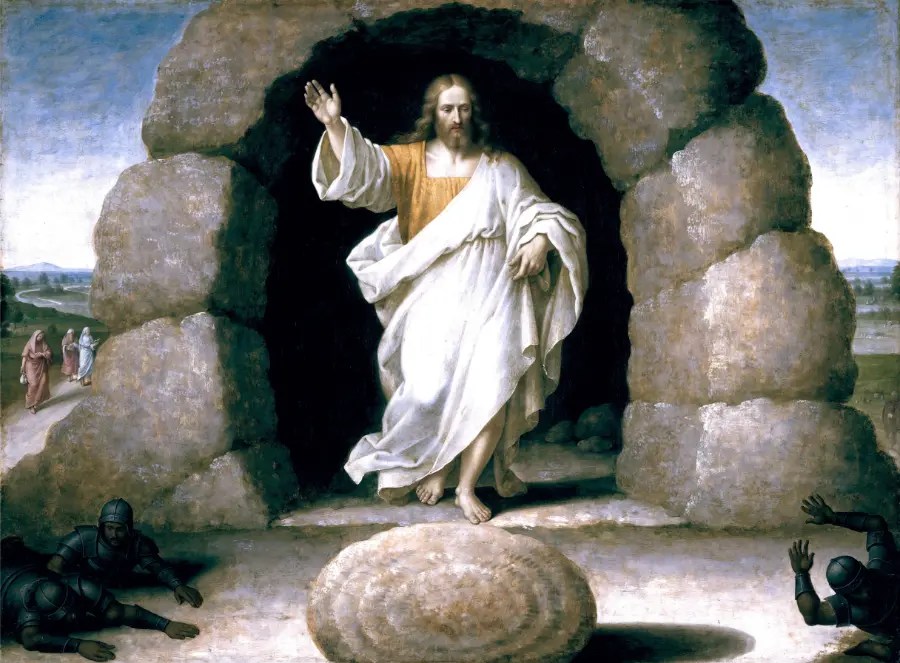
Yes. At the cross Christ “spoiled principalities and powers, he made a shew of them openly, triumphing over them in it” (Colossians 2:15). “For this purpose the Son of God was manifested, that he might destroy the works of the devil” (1 John 3:8). He took our flesh and blood “that through death he might destroy him that had the power of death, that is, the devil; and deliver them who through fear of death were all their lifetime subject to bondage” (Hebrews 2:14–15).
So we fight from a victory already won. When the seventy disciples came back rejoicing that “even the devils are subject unto us through thy name,” Jesus answered, “I beheld Satan as lightning fall from heaven,” and then turned their joy somewhere safer: “rather rejoice, because your names are written in heaven” (Luke 10:17–20). The Catechism says the victory over the prince of this world “was won once for all at the Hour when Jesus freely gave himself up to death to give us his life.” It quotes Saint Ambrose with a sentence worth carrying: “One who entrusts himself to God does not dread the devil.”
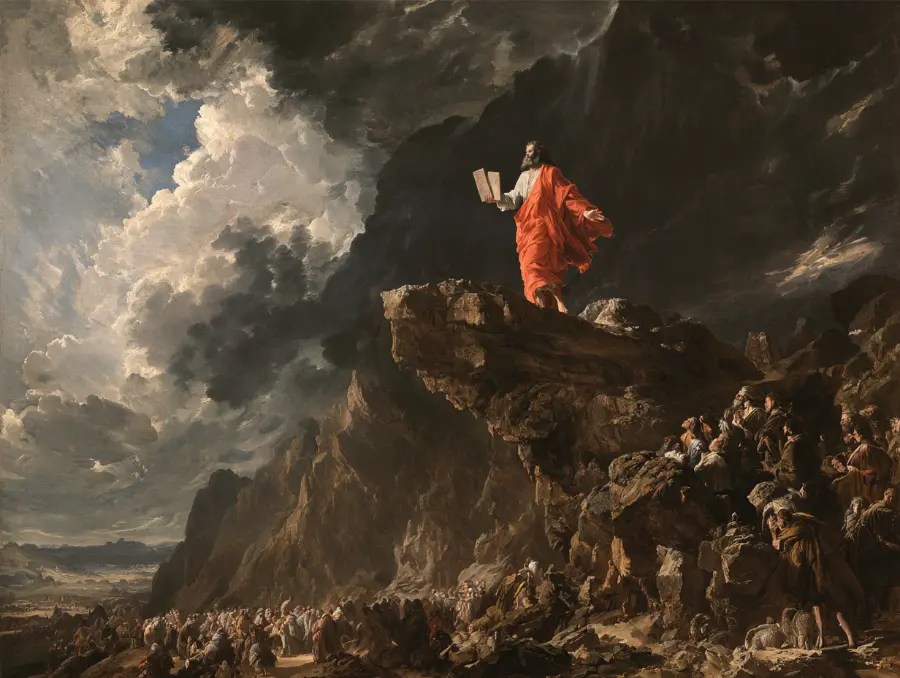
What is a spiritual attack?
Scripture shows the enemy working in a few recurring ways. He tempts, as he tempted Jesus in the wilderness with bread, with a leap from the temple and with “all the kingdoms of the world, and the glory of them” (Matthew 4:1–11). He deceives, dressing evil as light. He accuses: Revelation calls him “the accuser of our brethren,” who “accused them before our God day and night” (Revelation 12:10). And he tries to sift believers until their faith fails. Jesus told Peter, “Satan hath desired to have you, that he may sift you as wheat: but I have prayed for thee, that thy faith fail not” (Luke 22:31–32). Before Peter knew he was under attack, Jesus was already praying for him.
Not every hardship is an attack, and wisdom keeps that in view. Illness, grief and depression come to faithful people in a fallen world. The Catholic Church, which keeps a rite of exorcism, insists that “illness, especially psychological illness, is a very different matter; treating this is the concern of medical science,” and that before any exorcism “it is important to ascertain that one is dealing with the presence of the Evil One, and not an illness.” The British Methodist Conference made the same point in 1976, asking for “a thorough pastoral investigation of the case” and “close and continuing collaboration with those qualified in medicine, psychology and the social services.” If you or someone you love is suffering in mind or body, seeking a doctor’s help is no lack of faith. Pray, and see a doctor.
How do Christians fight spiritual warfare?
We fight the way Jesus fought. In the wilderness he answered the devil three times with Scripture: “It is written, Man shall not live by bread alone, but by every word that proceedeth out of the mouth of God” (Matthew 4:4); “It is written again, Thou shalt not tempt the Lord thy God” (Matthew 4:7); “Get thee hence, Satan: for it is written, Thou shalt worship the Lord thy God, and him only shalt thou serve” (Matthew 4:10). The sword of the Spirit is the word of God, and he used no other.
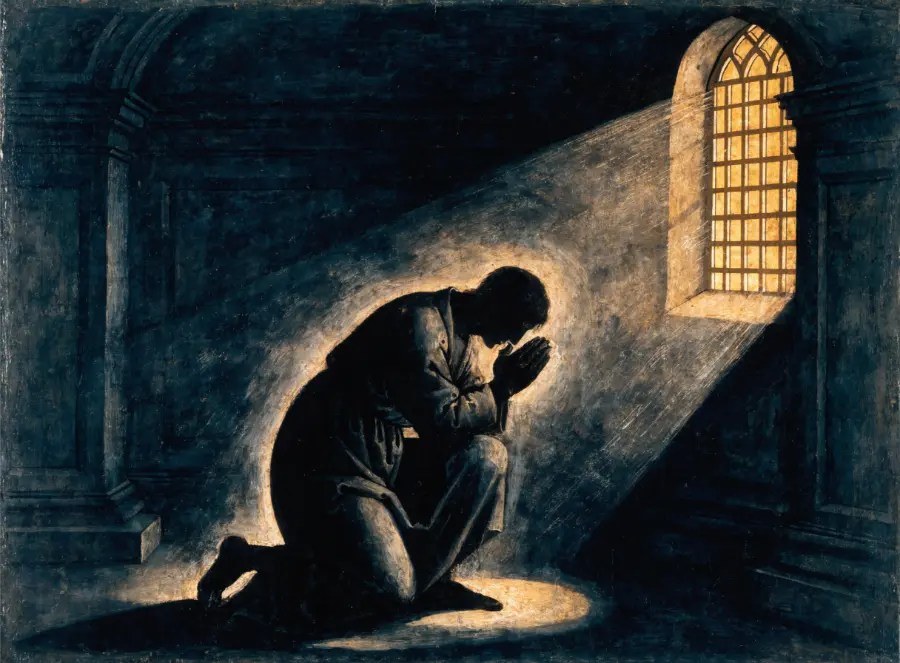
We pray. Jesus taught us to ask, “lead us not into temptation, but deliver us from evil” (Matthew 6:13), and on the night before he died he prayed for his disciples, “I pray not that thou shouldest take them out of the world, but that thou shouldest keep them from the evil” (John 17:15). He told the disciples who could not cast out a spirit, “This kind can come forth by nothing, but by prayer and fasting” (Mark 9:29). The Catechism puts it simply: “Such a battle and such a victory become possible only through prayer.”
We stay awake. “Watch and pray, that ye enter not into temptation: the spirit indeed is willing, but the flesh is weak” (Matthew 26:41). Paul warns that anger nursed overnight opens a door: “let not the sun go down upon your wrath: neither give place to the devil” (Ephesians 4:26–27). And we answer evil with its opposite: “Be not overcome of evil, but overcome evil with good” (Romans 12:21).
We go in the name of Jesus, and never as a magic word. Acts tells of seven sons of Sceva who tried to cast out a spirit “by Jesus whom Paul preacheth,” and the spirit answered, “Jesus I know, and Paul I know; but who are ye?” (Acts 19:13–16). The name belongs to those who belong to him.
The Orthodox classic Unseen Warfare gathers all this into four things to plant in the heart, “as it were arming yourself with invisible weapons”: “never rely on yourself in anything”; “bear always in your heart a perfect and all-daring trust in God alone”; “strive without ceasing”; and “remain constantly in prayer.”

How do the churches differ on spiritual warfare and deliverance?
The historic churches all teach that the devil is real and that the battle against him is real. They differ over how much to say about demons and what to do about them, and most sharply over whether a Christian can need deliverance.
Catholic. The Catechism says plainly, “There is no holiness without renunciation and spiritual battle.” Spiritual progress, it adds, “entails the ascesis and mortification” that lead, little by little, to peace and joy. For the rare case of possession the Church keeps exorcism, and “a major exorcism” can be performed “only by a priest and with the permission of the bishop,” after illness has been ruled out. A simple form of exorcism is also part of the celebration of Baptism.
Orthodox. The Orthodox meet the devil at the font. In the Orthodox Church in America’s order of baptism, the priest prays three exorcisms, beginning, “The Lord puts you under ban, O Devil,” and then asks three times, “Do you renounce Satan, and all his works, and all his angels, and all his service, and all his pride?” The Orthodox also speak of the unseen warfare, after an Italian book first published in 1589, which Saint Nicodemus of the Holy Mountain translated and enlarged many times; the English translation follows the edition of Saint Theophan the Recluse. It tells the fearful to set against “the innumerable hosts of the demons” the far greater power of God, and it places the fight within: “The arena, the field of battle, the site where the fight actually takes place is our own heart and all our inner man. The time of battle is our whole life.”
Reformed. The Westminster standards say less about demons and more about Satan’s hold on the will. The Larger Catechism forbids “all compacts and consulting with the devil, and hearkening to his suggestions,” and the Westminster Confession counts deliverance from “bondage to Satan” among the liberties Christ has won for every believer. The catechism names the same three enemies, the world, the flesh and the devil, and answers them with prayer: that God would “subdue the flesh, and restrain Satan,” until his people are “fully freed from sin, temptation, and all evil, forever.”
Pentecostal and charismatic. Here the difference is sharpest, and it turns on one question: can a Christian need to have a demon cast out? The Assemblies of God in the United States answered in a position paper its General Presbytery approved in 1972: “It seems evident that the term possessed should not be applied to true believers.” Satan and his forces, it says, are foes outside us, and “The call is never for us to get someone to cast the demons out of us.” Many charismatic teachers answer otherwise. Derek Prince, one of the best known, taught that “a true Christian cannot be possessed by the devil,” yet “in many true Christians, there are some areas where they are demonized, where they are afflicted and affected by demons.” The sociologist Stephen Hunt, writing in the evangelical journal Themelios, says that in the charismatic movement “the dispute is all but settled” in favour of that view, which “for the most part” reverses “the earlier teachings of classical Pentecostals.” He adds that Prince also spoke “of dark angelic powers attempting to dominate churches, cities and other geographical areas,” and that Peter Wagner taught along similar lines. There is more on how these movements differ in Pentecostals, charismatics and evangelicals.
The Gospels show where deliverance ends. When Jesus freed the man with the legion, the townspeople came out and found him “sitting, and clothed, and in his right mind” (Mark 5:15), and Luke adds that he sat “at the feet of Jesus” (Luke 8:35). Whatever the churches teach about deliverance, this is the freedom the Gospels hold out: a person at peace, sitting at the feet of Jesus.
Can a Christian be defeated in spiritual warfare?
A Christian can stumble, as Peter did on the night Jesus prayed for him, and can be tempted hard. But no power can take us out of God’s hand. “There hath no temptation taken you but such as is common to man: but God is faithful, who will not suffer you to be tempted above that ye are able; but will with the temptation also make a way to escape” (1 Corinthians 10:13). “Ye are of God, little children, and have overcome them: because greater is he that is in you, than he that is in the world” (1 John 4:4). Paul ran through every power he could name, “nor angels, nor principalities, nor powers,” and said none of them “shall be able to separate us from the love of God, which is in Christ Jesus our Lord” (Romans 8:38–39).
So we stand, brothers and sisters, in armour we did not forge, behind a victory we did not win, and we wait for the end Paul promised the church in Rome: “And the God of peace shall bruise Satan under your feet shortly” (Romans 16:20).



Leave a Reply