
 English
 Chinese
 Dutch
 Arabic
 Spanish
 Portuguese
 Russian
 French
 Italian
 German
 Japanese
The Bible never speaks of dating, so no verse binds a dating couple to stay together. Marriage is different. It is a covenant for life, and Jesus said of it, “What therefore God has joined together, let not man separate” (Mark 10:9). Churches allow a married person to leave only for grave reasons, such as adultery, desertion or abuse.
So the whole question turns on a promise. A dating couple has not made one yet, and the churches guard their freedom not to. A married couple made theirs before God, and the churches ask them to keep it, yet none of them asks anyone to keep it at the cost of their safety. On either road, we are not meant to decide alone.
Dating and engagement
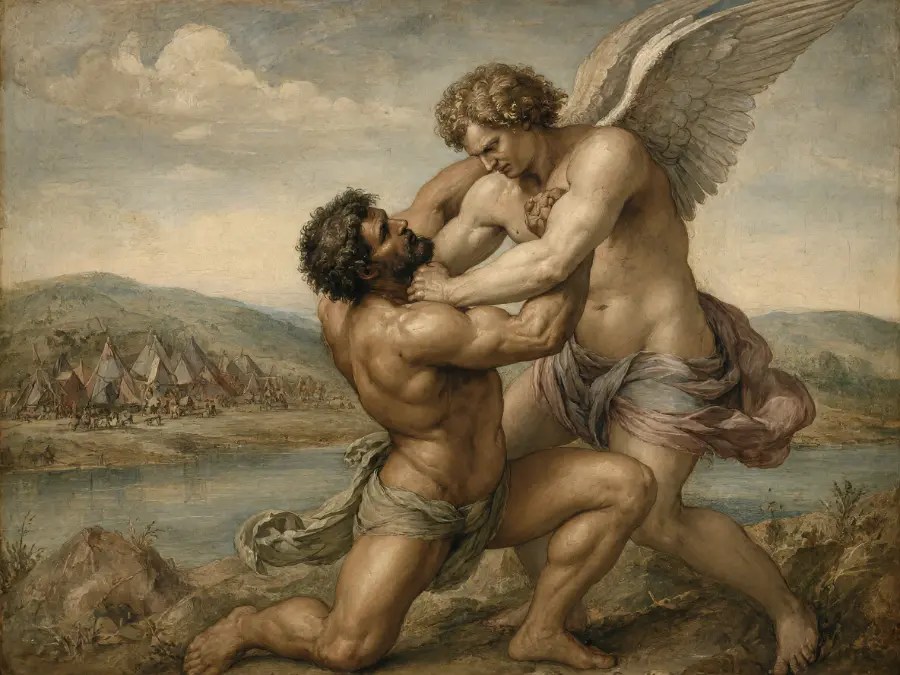
Dating as it is practiced now does not appear in Scripture, and a dating couple has made no vow. The churches protect their freedom to walk away, because a marriage needs a free yes. Consent, in the words of the Catholic Catechism, “must be an act of the will of each of the contracting parties, free of coercion or grave external fear,” and without that freedom “the marriage is invalid” (Catechism 1628). Even an engagement leaves the freedom in place. Catholic canon law says that “a promise to marry does not give rise to an action to seek the celebration of marriage” (canon 1062), and the Catechism calls engagement “this time of testing” (2350). The Westminster Confession, a Presbyterian standard, adds that adultery or fornication discovered during an engagement “giveth just occasion to the innocent party to dissolve that contract” (24.5).
Scripture does speak to the choice of a spouse. Paul told a widow she was free to marry “whom she wishes, only in the Lord” (1 Corinthians 7:39), and warned, “Do not be unequally yoked with unbelievers” (2 Corinthians 6:14). The Westminster Confession states that “it is the duty of Christians to marry only in the Lord” (24.3). Proverbs adds a general rule for decisions: “Without counsel plans fail, but with many advisers they succeed” (Proverbs 15:22).
Mixed feelings are common among people deciding whether to leave. In a 2017 study in Social Psychological and Personality Science, the psychologists Samantha Joel, Geoff MacDonald and Elizabeth Page-Gould collected people’s reasons for wanting to stay in a relationship or leave it and sorted them into 27 reasons to stay, such as emotional intimacy and investment, and 23 reasons to leave, such as conflict and breach of trust. Among participants who were considering a breakup or a divorce, many were motivated both to stay and to leave at the same time.

What Jesus and Paul said about leaving a marriage
When the Pharisees asked Jesus whether a man could divorce his wife “for any cause,” he answered from Genesis: “they are no longer two but one flesh. What therefore God has joined together, let not man separate.” Moses had allowed divorce, he said, “because of your hardness of heart,” and he added, “whoever divorces his wife, except for sexual immorality, and marries another, commits adultery” (Matthew 19:3–9). Mark’s account gives the saying without the exception (Mark 10:11–12).
Paul passed on the same command, “not I, but the Lord,” and allowed for a separation: “the wife should not separate from her husband (but if she does, she should remain unmarried or else be reconciled to her husband), and the husband should not divorce his wife” (1 Corinthians 7:10–11). A believer married to an unbeliever should not seek a divorce, but “if the unbelieving partner separates, let it be so. In such cases the brother or sister is not enslaved” (7:15).
When do churches allow separation or divorce?
The Catholic Church holds that a valid, consummated marriage between baptized persons “can be dissolved by no human power and by no cause, except death” (canon 1141), so it permits separation but not divorce and remarriage. Canon law gives a spouse the right to end common life after the other’s adultery (canon 1152), and when one spouse “causes grave mental or physical danger to the other spouse or to the offspring or otherwise renders common life too difficult,” the other has “a legitimate cause for leaving” (canon 1153). The Catechism adds that a civil divorce “can be tolerated” when it is the only way to secure legal rights or the care of children (2383), and that a spouse who is the innocent victim of a divorce “has not contravened the moral law” (2386). A church tribunal can also examine a marriage and declare its nullity, “that the marriage never existed,” after which both parties are free to marry (1629); this is commonly called an annulment.
The Orthodox Church in America teaches that “the Church does not allow divorce any more than she allows sin,” yet it “sympathizes with couples who must consider the grave alternative of divorce in order to salvage their lives from the tragic circumstances of a broken marriage,” and a bishop may eventually permit a second marriage. The Westminster Confession accepts only two grounds for divorce: “nothing but adultery, or such willful desertion as can no way be remedied by the church, or civil magistrate, is cause sufficient of dissolving the bond of marriage” (24.6).

Is a Christian required to stay in an abusive relationship?
No. In their 2002 statement When I Call for Help, the U.S. Catholic bishops wrote that “no person is expected to stay in an abusive marriage” and that “violence and abuse, not divorce, break up a marriage.” They condemned “the use of the Bible to support abusive behavior in any form” and encouraged abused persons who have divorced to look into an annulment. Catholic canon law names grave danger to a spouse or the children as a cause for leaving (canon 1153). The bishops also warn that some victims “run a high risk of being killed when they leave their abuser,” and they advise a safety plan.
In the United States, the National Domestic Violence Hotline is free, confidential and open 24 hours a day. Call 1-800-799-SAFE (7233), text START to 88788, or chat at thehotline.org.
Does forgiveness mean staying?
Jesus told Peter to forgive “not seven times, but seventy-seven times” (Matthew 18:21–22). The U.S. bishops note that abusers “also cite Scripture to insist that their victims forgive them,” and they answer that “forgiveness does not mean forgetting the abuse or pretending that it did not happen” and “is not permission to repeat the abuse.” In their words, forgiveness “means that the victim decides to let go of the experience and move on with greater insight and conviction not to tolerate abuse of any kind again.”

What about the children?
The Catechism counts among the harms of divorce “children traumatized by the separation of their parents and often torn between them” (2385), and canon law requires that after a separation “the adequate support and education of the children must always be suitably provided” (canon 1154). A 12-year study by the sociologists Paul Amato, Laura Spencer Loomis and Alan Booth, published in Social Forces in 1995, found that the effect of divorce on children depended on how much conflict came before it. In high-conflict families, children had higher well-being as young adults if their parents divorced than if they stayed together. In low-conflict families, children did better if their parents stayed together.
Whatever the parents decide, the children carry it with them. A choice that heavy is not one to make alone, and Scripture says so in a single line: “Without counsel plans fail, but with many advisers they succeed” (Proverbs 15:22).


Leave a Reply