
 English
 Chinese
 Dutch
 Arabic
 Spanish
 Portuguese
 Russian
 French
 Italian
 German
 Japanese
There are no explosions in the Bible. Gunpowder reached the Mediterranean world more than a thousand years after the last book was written, and Scripture has no word for a blast.
What it has instead is a great deal of sudden, loud, terrifying force — and one famous passage arguing that God was not in any of it.
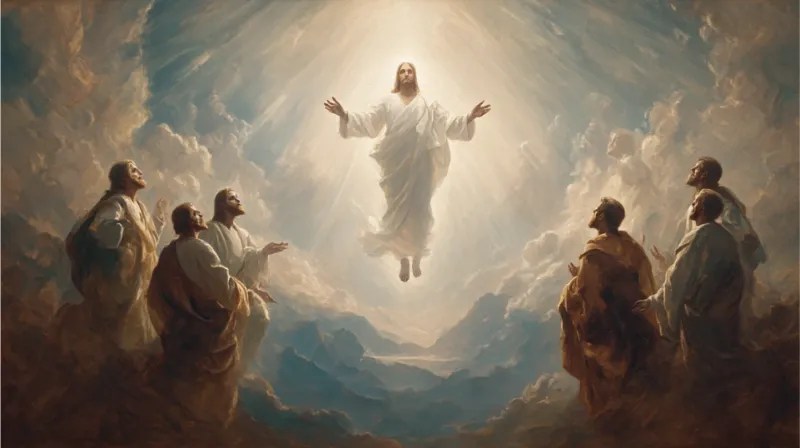
The loud things in Scripture
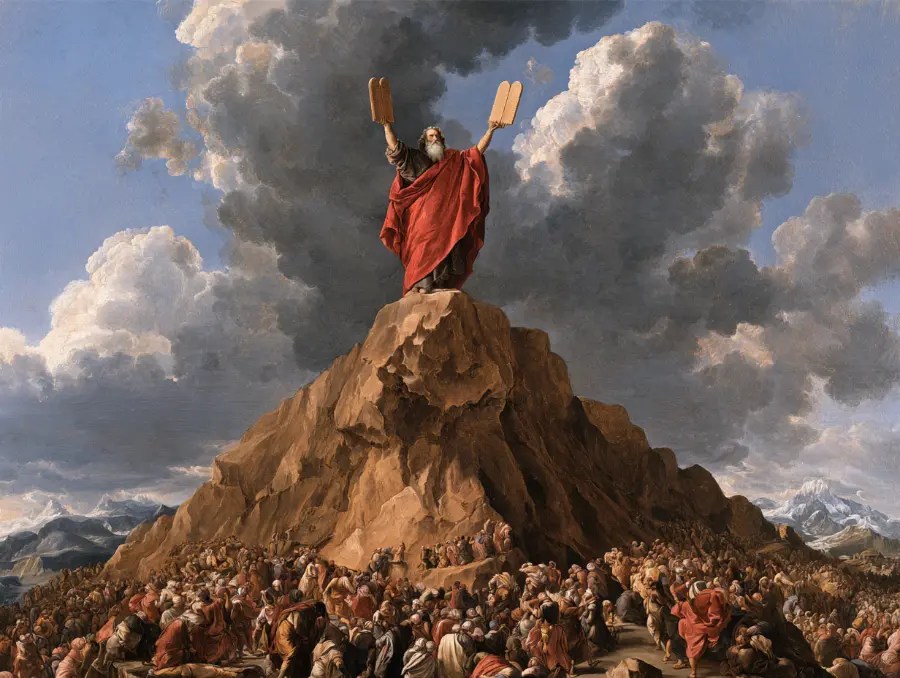
Sinai is the loudest. Mount Sinai was covered with smoke, because the Lord descended on it in fire. The smoke billowed up from it like smoke from a furnace, and the whole mountain trembled violently. (Exodus 19:18)
Fire falls on Sodom (Genesis 19:24). Fire falls on Carmel and consumes the sacrifice, the wood, the stones and the water in the trench (1 Kings 18:38).
The ground opens under Korah and his household and closes over them (Numbers 16:31-33), which is the nearest thing in Scripture to a catastrophe arriving without warning from below.
These are not metaphors in their settings. They are described as events, and they are described as frightening.

The passage that reverses it
And then Elijah, exhausted and hiding in a cave after Carmel, is told to stand on the mountain because the Lord is about to pass by.
Then a great and powerful wind tore the mountains apart and shattered the rocks before the Lord, but the Lord was not in the wind. After the wind there was an earthquake, but the Lord was not in the earthquake. After the earthquake came a fire, but the Lord was not in the fire. And after the fire came a gentle whisper. (1 Kings 19:11-12)
Three displays of exactly the kind of force that had just worked on Carmel, and the text says three times that God was not in them.
This is placed immediately after the most spectacular public miracle in Elijah’s life, and it is placed there deliberately. The fire had convinced a nation and had not been enough to keep Elijah from wanting to die. What reached him was a whisper.
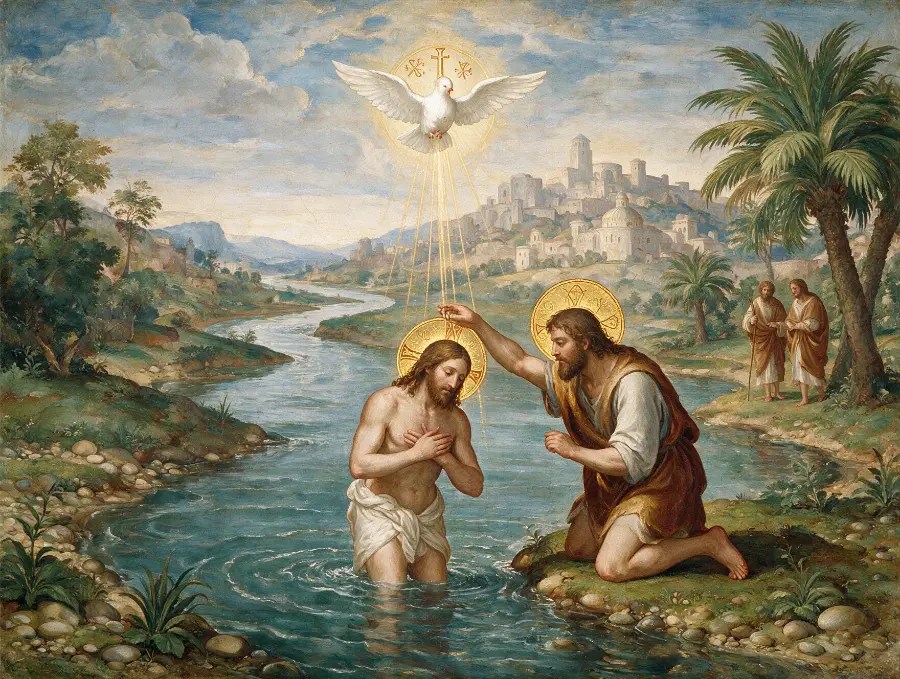
What this means for a dream about an explosion
First, the honest part. Scripture provides no system for interpreting dreams and never implies one exists. Joseph and Daniel both say the interpretation belongs to God rather than to their skill (Genesis 40:8; Daniel 2:27-28). Nobody can say what a dream meant.
Second, and worth saying without qualification: a dream about an explosion is not a warning of one. Scripture gives no warrant for treating a violent dream as a prediction, and people have been badly frightened by pages that suggest otherwise.
What can be offered is what sudden force does in Scripture:
It marks a limit. Sinai is fenced off; people are told not to touch the mountain. Much of the loudness in Scripture is about the distance between God and everything else, not about damage.
It is rarely where God is found. 1 Kings 19 is explicit, three times over.
It often follows a long build-up. Korah’s rebellion, the plagues, Carmel — each is the end of a process rather than a bolt from nowhere. A dream of something blowing up may be about pressure that has been accumulating in daylight.
If the dream frightened us
That is the part worth attending to, more than the imagery.
Fear at night is ordinary and is not a message. Scripture’s instruction in the face of it is consistent and unspectacular: Cast all your anxiety on him because he cares for you. (1 Peter 5:7)
And if frightening dreams are frequent or are wrecking sleep, that is worth raising with a doctor. Saying so is not a failure of faith. Luke was a physician, and Paul told Timothy to take something for his stomach rather than pray harder about it (1 Timothy 5:23).
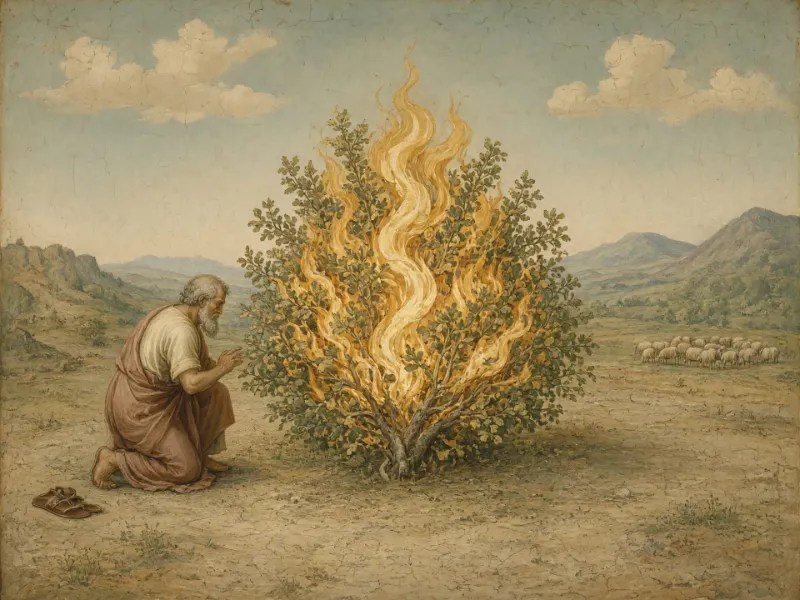
A prayer after a dream like this
Lord, the night was loud and you were not far off.
Where something has been building in us, let it be dealt with before it goes off.
Where we have been listening for you in the noise, teach us to hear a whisper.
And give us, tonight, the sleep you give to those you love.
Frequently asked
Are explosions mentioned in the Bible?
No. Gunpowder reached the Mediterranean world long after Scripture was written, and there is no biblical word for a blast.
Is a dream about an explosion a warning?
Scripture gives no basis for reading it as one. It provides no dream key and says interpretation belongs to God (Genesis 40:8).
What is the closest thing in Scripture?
Sinai in fire and smoke (Exodus 19:18), fire falling on Carmel (1 Kings 18:38), and the ground opening under Korah (Numbers 16:31-33).
Where is God in the loud things?
1 Kings 19:11-12 says three times that he was not in the wind, the earthquake or the fire. What came after was a gentle whisper.
More from this seriesBiblical Dream InterpretationSee all 67 articles

Leave a Reply