
 English
 Chinese
 Dutch
 Arabic
 Spanish
 Portuguese
 Russian
 French
 Italian
 German
 Japanese
In the Bible, lightning almost always belongs to God. It flashes when he comes down on Mount Sinai, it flies as his arrows in the Psalms, it comes with the rain he sends, and it shines from his throne in Revelation. Jesus uses it as a picture twice, for Satan’s fall and for his own return.
The picture to hold comes from God’s questions to Job out of the whirlwind: “Canst thou send lightnings, that they may go and say unto thee, Here we are?” (Job 38:35). Job cannot, and neither can we. But God can, and the question lets us see every flash that splits a summer night as a servant reporting for duty. “He directeth it under the whole heaven, and his lightning unto the ends of the earth” (Job 37:3). Almost everywhere lightning appears in Scripture, it has been sent, and it tells us something about the One who sent it. Nahum, once, borrows only its speed, for chariots that “run like the lightnings” (Nahum 2:4).
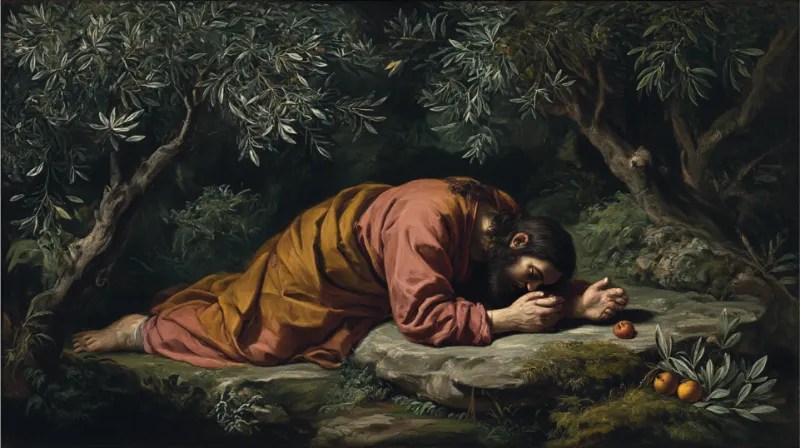
Where does lightning appear in the Bible?
The King James Version says “lightning” 13 times and “lightnings” 14 times, in 27 verses. Other translations word some of these verses differently, so their totals differ a little. The usual Hebrew word is baraq, which can also mean the gleam of a polished sword (“my glittering sword”, Deuteronomy 32:41). It is the name of Barak, the commander Deborah called to lead Israel against Sisera (Judges 4:6). A few verses use other words: chaziz in Job 28:26 and 38:25, bazaq in Ezekiel 1:14, lappid, a torch, in Exodus 20:18, and ‘or, the ordinary word for light, in Job 37:3. The Greek word is astrapē, and Jesus uses it once for the gleam of a lamp in a house: a body full of light is “as when the bright shining of a candle doth give thee light” (Luke 11:36). Here are the main passages:
| Passage | What happens | What it shows |
|---|---|---|
| Exodus 9:23–24 | “Fire” with the hail on Egypt | “The earth is the LORD’s” |
| Exodus 19:16 | Thunder and lightning on Sinai | God is present and holy |
| Psalm 18:14 | God shoots lightnings at David’s enemies | God fights for his people |
| Psalm 135:7 | “He maketh lightnings for the rain” | God rules the weather |
| Job 38:35 | “Canst thou send lightnings?” | Only God commands it |
| Ezekiel 1:13–14 | Living creatures flash like lightning | The glory around God’s throne |
| Matthew 28:3 | The angel at the tomb | A messenger from heaven |
| Luke 10:18 | Satan falls like lightning | The enemy’s defeat |
| Matthew 24:27 | The Son of man comes like lightning | Christ’s return seen by all |
| Revelation 4:5 | Lightnings from the throne | God reigns |
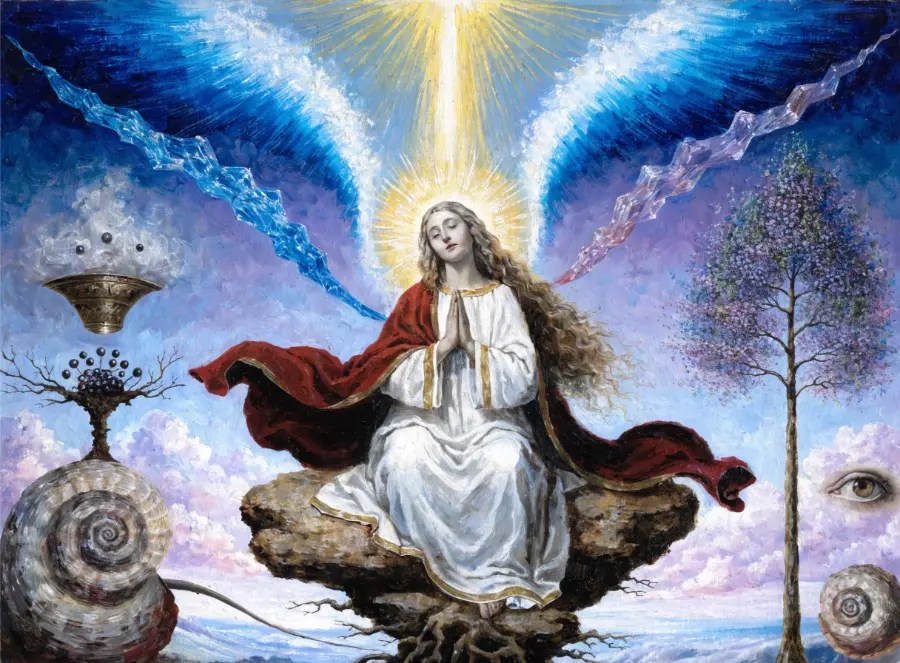
Why were there thunder and lightning at Mount Sinai?
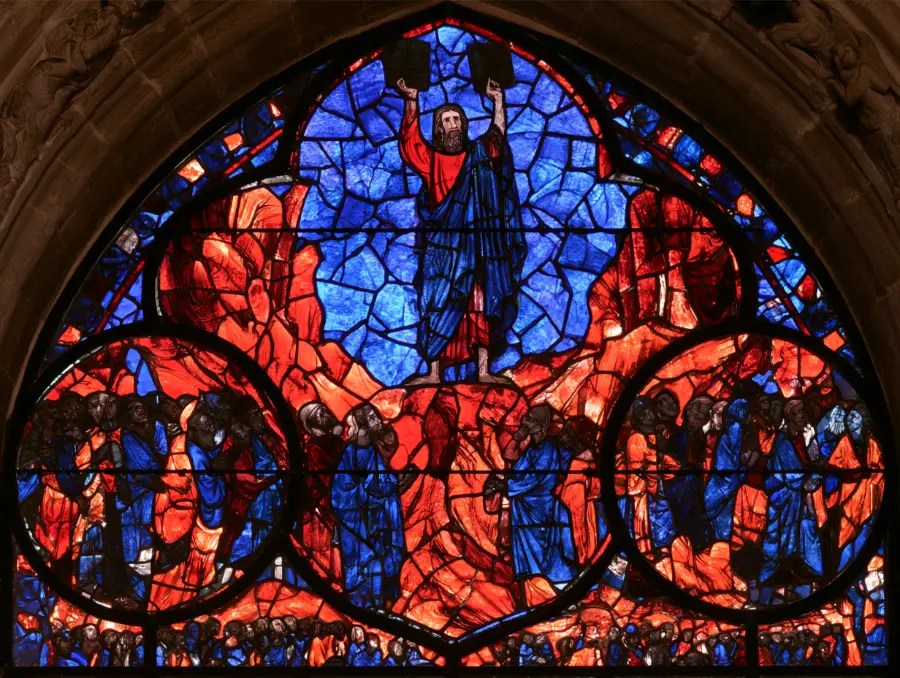
Because God himself had come down. On the third day, in the morning, “there were thunders and lightnings, and a thick cloud upon the mount, and the voice of the trumpet exceeding loud; so that all the people that was in the camp trembled” (Exodus 19:16). The text gives the reason two verses later: “the LORD descended upon it in fire” (Exodus 19:18). The storm is the edge of his presence.
The people understood at once what it meant to stand that close to a holy God. “Speak thou with us, and we will hear,” they begged Moses, “but let not God speak with us, lest we die” (Exodus 20:19). And yet the same chapter tells us that “Moses spake, and God answered him by a voice” (Exodus 19:19). The lightning told them who was speaking, and he spoke to them.
What does thunder mean in the Bible?
Thunder is most often God’s voice. The King James Version has thunder, thunders, thundered, thundereth and thunderings 39 times. Psalm 29 is a whole storm in a song: “The voice of the LORD is upon the waters: the God of glory thundereth” (Psalm 29:3). Elihu tells Job, “God thundereth marvellously with his voice; great things doeth he, which we cannot comprehend” (Job 37:5).
The New Testament keeps the link. When the Father answered Jesus from heaven a few days before the cross, “The people therefore, that stood by, and heard it, said that it thundered: others said, An angel spake to him” (John 12:29). Jesus gave James and John the surname “Boanerges, which is, The sons of thunder” (Mark 3:17). When a Samaritan village would not receive him, those two asked, “Lord, wilt thou that we command fire to come down from heaven, and consume them, even as Elias did?” Jesus turned and rebuked them: “For the Son of man is not come to destroy men’s lives, but to save them” (Luke 9:54–56). The sons of thunder had to learn what kind of power their Master carried.
Why does the Bible call lightning God’s arrows?
Because in the Psalms God fights for his people, and lightning is his weapon. David sings of the day the LORD delivered him from all his enemies: “Yea, he sent out his arrows, and scattered them; and he shot out lightnings, and discomfited them” (Psalm 18:14). Zechariah sees the same Lord going out for Israel: “his arrow shall go forth as the lightning” (Zechariah 9:14).
This had a sharp edge in Israel’s world. The neighbouring peoples worshipped a storm god. Baal, the great god of Canaan, was called the Lord of Rain and Dew and He Who Rides on the Clouds, and the storm gods of the region were linked with rain, thunder and lightning. Israel’s Scriptures give all of that to the LORD alone: “he maketh lightnings for the rain; he bringeth the wind out of his treasuries” (Psalm 135:7). On Mount Carmel, when Elijah prayed, “the fire of the LORD fell, and consumed the burnt sacrifice” (1 Kings 18:38). The text calls it fire, not lightning, but the point is the same, and the people saw it: “The LORD, he is the God” (1 Kings 18:39).
There is mercy folded into these verses. Lightning comes with rain, and rain means bread. “When he uttereth his voice, there is a multitude of waters in the heavens … he maketh lightnings with rain” (Jeremiah 10:13). The same storm that frightens us waters the fields.
Why do angels look like lightning?
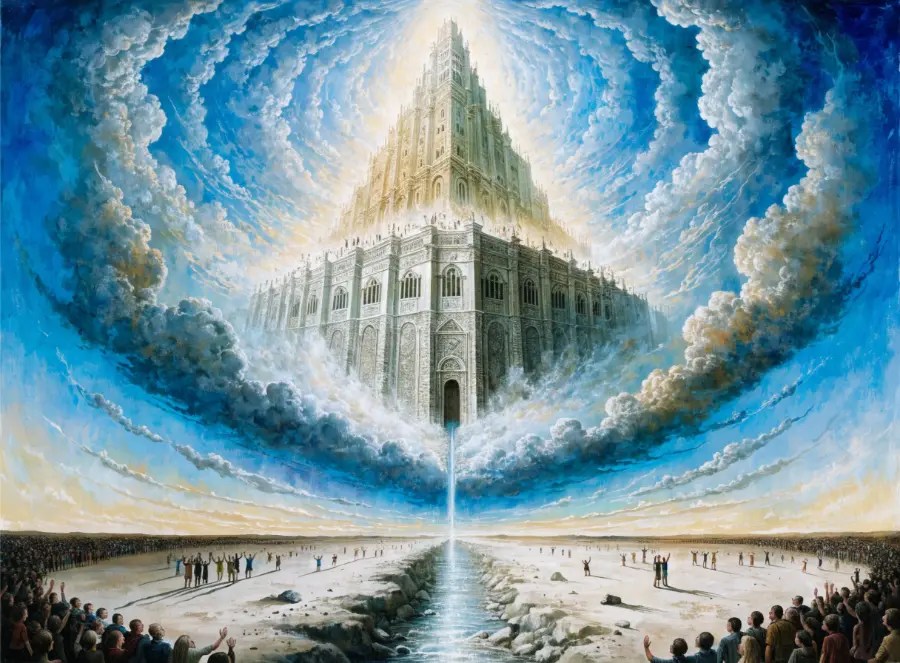
When the prophets try to describe heaven, lightning is one of the words they reach for. Around the throne in Ezekiel’s vision “the fire was bright, and out of the fire went forth lightning,” and the living creatures “ran and returned as the appearance of a flash of lightning” (Ezekiel 1:13–14). The man Daniel saw by the river had a face “as the appearance of lightning” (Daniel 10:6). At the empty tomb the angel’s “countenance was like lightning, and his raiment white as snow,” and the guards shook and “became as dead men” (Matthew 28:3–4). What angels look like varies across Scripture, and lightning is one of its words for their glory.
Why did Jesus say he saw Satan fall like lightning?
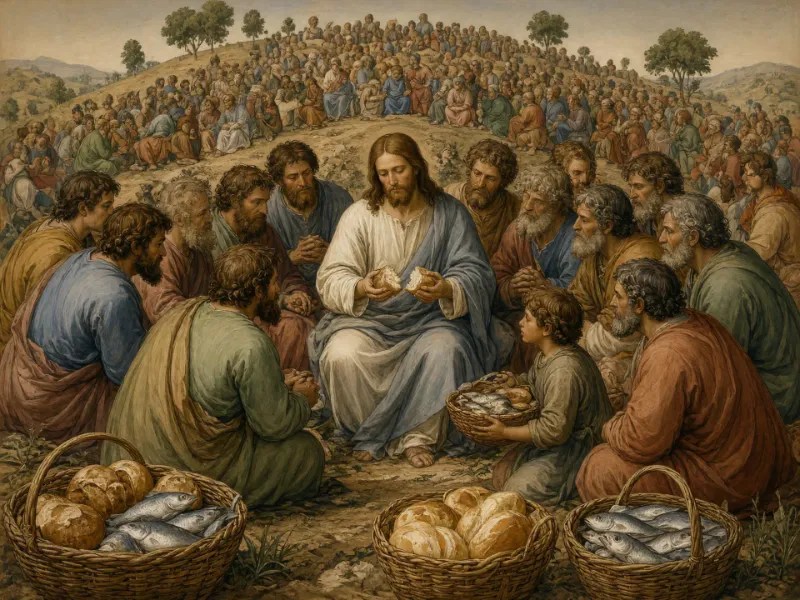
He was answering seventy disciples who came back from their mission amazed: “Lord, even the devils are subject unto us through thy name.” Jesus said, “I beheld Satan as lightning fall from heaven” (Luke 10:17–18). Jesus does not explain the picture, but lightning comes down all at once, and the seventy had just watched the enemy give way before the name of Jesus. Then Jesus turned their joy to something better: “rejoice not, that the spirits are subject unto you; but rather rejoice, because your names are written in heaven” (Luke 10:20). The verse has its own page, Luke 10:18 meaning.

Why will the Son of man come like lightning?
Because no one will need to be told. Jesus warned that false Christs would come, and people would say he was in the desert or in a secret room. “Believe it not,” he said. “For as the lightning cometh out of the east, and shineth even unto the west; so shall also the coming of the Son of man be” (Matthew 24:26–27; see also Luke 17:24).
John Chrysostom, preaching on this verse, put it simply. Lightning, he said, “needs not one to talk of it, it needs not a herald, but even to them that sit in houses, and to them in chambers it shows itself in an instant of time throughout the whole world.” Christians differ on the order of the last things, but most take these plain words of Jesus as they stand: his return will not be a rumour. It will be seen.
Was anyone struck by lightning in the Bible?
No one in Scripture is said to be killed by lightning. In the seventh plague on Egypt, “the LORD sent thunder and hail, and the fire ran along upon the ground,” and the hail “smote throughout all the land of Egypt all that was in the field, both man and beast” (Exodus 9:23, 25). Some modern Bibles, the NIV and NLT among them, translate that fire as lightning; the King James and the ESV keep “fire”. Moses told Pharaoh what it was for: “that thou mayest know how that the earth is the LORD’s” (Exodus 9:29). The nearest to a person struck is in Job, where a messenger runs in with terrible news: “The fire of God is fallen from heaven, and hath burned up the sheep, and the servants, and consumed them” (Job 1:16). The messenger calls it the fire of God, but the reader already knows what Job does not. A few verses earlier the LORD had told Satan, “all that he hath is in thy power” (Job 1:12). The book does not let us read Job’s losses as Job’s punishment. Elijah also called fire down from heaven on soldiers sent to seize him (2 Kings 1:10), and again the text says fire, not lightning.

Is lightning a sign from God today?
Scripture says God rules the storm, and it also forbids us to read a single strike as a verdict on the person it hits. Elihu says of the clouds and their lightning, “He causeth it to come, whether for correction, or for his land, or for mercy” (Job 37:13). We cannot see which. Jesus says the Father “sendeth rain on the just and on the unjust” (Matthew 5:45). When people asked him about eighteen who died when a tower fell in Siloam, he said, “think ye that they were sinners above all men that dwelt in Jerusalem? I tell you, Nay: but, except ye repent, ye shall all likewise perish” (Luke 13:4–5).
So a tree split by lightning, a strike near a house or a dream full of storms has no meaning given in Scripture. The Bible gives no dream dictionary. What it does give is a God who “breaketh the cedars of Lebanon” with his voice (Psalm 29:5), and who can be trusted with every storm, outside or inside us.
Psalm 29 is the Bible’s great thunderstorm. It breaks cedars, shakes the wilderness and strips the forests, and in his temple “doth every one speak of his glory.” Then the storm passes, and the last line is quiet: “The LORD will give strength unto his people; the LORD will bless his people with peace” (Psalm 29:11).


Leave a Reply