
 English
  Chinese
  Dutch
Dutch  Arabic
  Spanish
  Portuguese
  Russian
  French
  Italian
  German
  Japanese
 Picture this: you’re flipping through the pages of the Bible, and suddenly, you stumble across the word Leviathan. Your curiosity perks up, and questions start swirling in your mind—what is a Leviathan? Is this some ancient sea monster, a spiritual symbol, or something else entirely? Maybe you’ve heard whispers about the Leviathan spirit in a sermon or typed Leviathan in the Bible into a search engine late at night, wondering, is the Leviathan real? The biblical Leviathan has a way of grabbing our attention, doesn’t it? It’s this larger-than-life, awe-inspiring creature that feels both mysterious and a little intimidating. In this blog post, we’re going on a deep dive to uncover the Leviathan meaning, explore what is Leviathan in the Bible, and get a clearer picture of the biblically accurate Leviathan. Whether you’re curious about the Bible Leviathan or the spirit of Leviathan in modern discussions, stick with us as we unravel the layers of this fascinating topic. Let’s jump in and see what this ancient creature is all about!
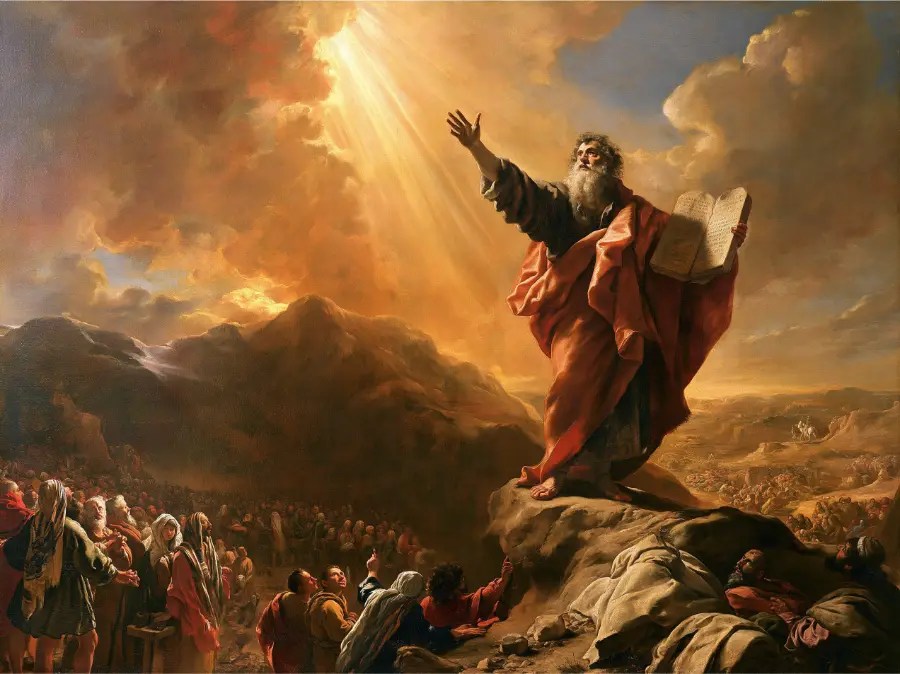
What is the Leviathan Mentioned in the Bible?
When the Bible talks about Leviathan, it’s describing a truly powerful and awe-inspiring creature, primarily found in the poetic and prophetic books of the Old Testament.1 The name itself, from the Hebrew word Livyatan, likely means something like “twisted” or “coiled”.2 Right away, that hints at something serpent-like or perhaps like a mighty dragon of the sea. This connection to serpents is significant because, throughout the Bible, serpents and dragons often carry symbolic weight, reminding us of the serpent in Eden or the enemies of God’s people.6
Where do we encounter this creature in God’s Word?
- The Book of Job: Especially in chapter 41, God Himself gives the most detailed description of Leviathan.3 He uses this incredible creature in His conversation with Job, who was going through immense suffering and questioning God’s ways.10 Leviathan also gets a brief mention in Job chapter 3, where Job, in his despair, links cursing the day of his birth with rousing this fearsome beast.8
- The Psalms: In Psalm 74, the psalmist recalls God’s mighty acts of the past, declaring, “It was you who crushed the heads of Leviathan”.8 This pictures God’s total victory over a powerful foe. But then, in Psalm 104, a beautiful psalm celebrating God’s creation, Leviathan is mentioned differently: “There is the sea, vast and spacious… There the ships go to and fro, and Leviathan, which you formed to frolic there”.3 Here, Leviathan is part of God’s amazing world, a creature made by Him.
- The Book of Isaiah: In Isaiah 27:1, looking toward the future, the prophet declares that God, with His mighty sword, “will punish Leviathan the fleeing serpent, Leviathan that twisted serpent; he will slay the dragon that is in the sea”.1 Here, Leviathan clearly represents God’s powerful enemies, whom He will ultimately judge and defeat.
It’s fascinating how Leviathan appears in these different settings – a creation psalm, a lament remembering God’s power, deep wisdom literature, and future prophecy.1 This variety suggests Leviathan was a potent image for the biblical writers, representing immense power that could be understood in different ways depending on the context. Sometimes it’s seen as a real, powerful sea creature – perhaps a fearsome crocodile, a giant whale, or even a creature like a dinosaur or dragon that lived long ago.2 Other times, it’s clearly used as a symbol – representing chaos, powerful enemies, or even pride itself.4
But here’s the encouraging truth that shines through every mention: whether a literal beast or a powerful symbol, Leviathan always represents a force that is ultimately under God’s sovereign control.3 It’s a picture of power that might seem overwhelming to humans, but it’s never beyond the reach of our Almighty God. He created it, He commands it, and He can defeat it. That’s a reminder for us today – no power, no force, no enemy is greater than our God!
What Does Leviathan Look Like According to the Bible?
If we want the most vivid picture of Leviathan, we need to turn to Job chapter 41.3 Imagine Job, standing there after all his trials, and God Himself begins to speak, challenging Job by describing this absolutely incredible creature. It’s a description meant to inspire awe and highlight God’s unmatched creative power.21
Let’s look at the details God gives:
- Incredible Size and Strength: This is no ordinary animal. God asks Job, “Can you pull in Leviathan with a fishhook or tie down its tongue with a rope?”.8 The answer is clearly no! It’s too mighty for humans to capture or tame.3 It has powerful limbs and a neck where strength resides.8
- Impenetrable Armor: Leviathan is covered in scales described as “rows of shields, tightly sealed together”.9 They are so close that “no air can pass between,” joined so tightly they “cannot be parted”.8 This natural armor makes it invulnerable to human weapons. God asks, “Can you fill its hide with harpoons or its head with fishing spears?”.8 Swords, spears, darts, clubs – they’re all useless against it.2 To Leviathan, iron is like straw, and bronze like rotten wood.9 This emphasis on being impenetrable highlights a power that human effort simply cannot overcome, pointing to forces only God can handle.3
- Fearsome Jaws: God challenges, “Who dares open the doors of its mouth, ringed about with fearsome teeth?”.9 Just imagining those teeth brings a sense of terror.11
- Fiery Presence: This is where the description becomes truly extraordinary. “Its snorting throws out flashes of light; its eyes are like the rays of dawn”.9 Even more startling: “Flames stream from its mouth; sparks of fire shoot out. Smoke pours from its nostrils as from a boiling pot… Its breath sets coals ablaze, and flames dart from its mouth”.9 This fire-breathing aspect goes beyond any normal animal we know today and paints a picture closer to a mythical dragon.
- Dominating the Waters: When Leviathan moves, it makes “the depths churn like a boiling caldron” and stirs up the sea, leaving a “glistening wake behind it”.9 Its underside is described as being like “jagged potsherds,” leaving a trail in the mud.9
- Aura of Fear: Leviathan is terrifying just to look at. “Any hope of subduing it is false; the mere sight of it is overpowering”.8 Even “the mighty are terrified” when it rises up.2 God concludes its description by calling it “a creature without fear” and “king over all that are proud”.8
Interestingly, while Job 41 describes a single creature, Psalm 74:14 mentions God crushing the “heads” (plural) of Leviathan.5 What could this mean? Perhaps “Leviathan” was sometimes used as a general term for giant sea creatures.11 Or maybe the multi-headed imagery in the Psalm is symbolic, possibly drawing from ancient Near Eastern stories about multi-headed sea monsters like Lotan, which symbolized chaos.4
The description in Job 41 intentionally seems to blend features we might recognize from powerful real-world creatures (like the scales and teeth of a crocodile) with elements that seem supernatural or mythical (like breathing fire).11 This powerful mix serves God’s purpose perfectly. The realistic parts anchor Leviathan in God’s tangible creation – something real, yet untamable by humans. The more fantastical parts elevate it beyond anything known, emphasizing its unique, terrifying power and, by extension, magnifying the incredible power of God who created and controls it.21 It pushes the boundaries of our understanding, reminding us that God’s creation holds wonders and powers far beyond our full grasp, all subject to His command.
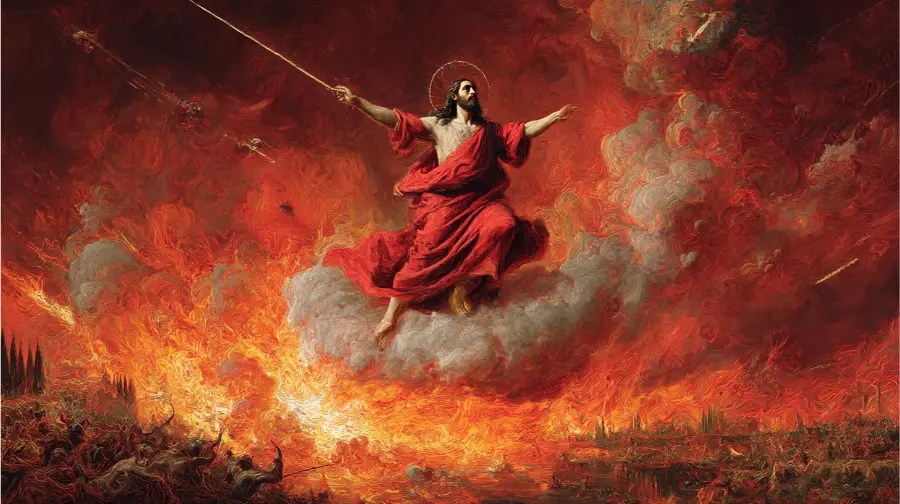
Is the Leviathan a Real Creature, Like a Dinosaur or Crocodile?
This is a question many faithful readers wonder about! When God describes Leviathan in such detail in Job 41, was He talking about a real animal that lived back then? There are good reasons to think so.2
Many point to the crocodile as a likely candidate.2 Think about it: crocodiles are powerful aquatic reptiles with fearsome teeth and tough, scaly armor, matching parts of the description. Some scholars suggest that the “smoke” from its nostrils could be a poetic way of describing its breath steaming in the air, or perhaps the spray of water when it surfaces.11 The description of its impenetrable scales certainly fits a large crocodile.
Others suggest Leviathan might have been a creature we would now call a dinosaur or an extinct marine reptile.2 This view helps explain the immense size and strength described, and perhaps even the more dragon-like features like “breathing fire.” Could God have created creatures with defense mechanisms we haven’t seen, like the bombardier beetle today that produces a chemical explosion?2 Some Christians who believe the earth is relatively young find this explanation fits well with their understanding of history, suggesting humans and such creatures co-existed.2 In the past, some even thought Leviathan might be a whale, especially based on Psalm 104 mentioning it playing in the sea and Genesis 1:21 highlighting God’s creation of “great sea creatures” (sometimes translated “whales”).15
However, there are aspects that make a purely literal identification challenging. The fire-breathing descriptions in Job 41 9 and the mention of multiple heads in Psalm 74:14 4 don’t easily fit any known animal, past or present. Also, we know that in other passages like Isaiah 27:1, Leviathan is clearly used as a symbol for powerful enemies or forces of chaos.3 Furthermore, the idea of a great sea monster representing chaos that is battled by a god was common in the myths of nations surrounding Israel, like the stories of Lotan or Tiamat.4 The Bible writers might have used this familiar imagery to show that their God, the one true God, is the real power over all such forces, whether literal or symbolic.
So, friend, what’s the answer? The Bible gives us this incredible picture! Some faithful scholars see a mighty crocodile, perhaps described with poetic exaggeration.11 Others envision a powerful dinosaur or marine reptile, now lost to time.2 Isn’t God’s creation full of wonders we can barely imagine? Whether Leviathan was an animal Job would have recognized, or a creature whose description blends reality with powerful symbolism, the main point God was making is crystal clear: This creature was awesome, terrifying, and completely beyond human control.9 And if God created that, think how much greater, how much more powerful, how much more majestic our God is! He used Leviathan not just to talk about an animal, but to teach Job (and us!) about His own sovereignty and might. He wants us to stand in awe of Him and trust His strength, not lean on our own limited understanding. The exact identity might remain a mystery, but the message of God’s power rings clear!
It’s helpful to remember that the purpose of mentioning Leviathan often shapes how it’s described. In Job 41, God needs a tangible, believable example of power to make His point to Job.3 In Isaiah 27, the prophet uses the image of Leviathan’s power to represent political enemies God will judge.1 So, asking “What point is being made here?” can be even more fruitful than just asking “Was it a real animal?”
What Does Leviathan Symbolize in Scripture?
Leviathan is such a powerful image in the Bible, and it carries several layers of symbolic meaning. It’s not just about a big sea creature; it represents deeper spiritual truths and realities.
- Chaos and Disorder: Very often, Leviathan stands for the wild, untamed, chaotic forces in the world, especially symbolized by the sea.4 In ancient times, the sea represented the unknown, the dangerous, the uncontrollable. When the Bible says God created Leviathan (Psalm 104:26) 8 or crushed its heads (Psalm 74:14) 8, it’s showing God’s absolute power over chaos itself. He is the one who brings order out of disorder, peace out of turmoil.4
- Powerful Enemies: In prophecies like Isaiah 27:1, Leviathan becomes a symbol for mighty, oppressive nations or empires – think of Assyria, Babylon, or Egypt – that stood against God and His people.1 When God promises to punish or slay Leviathan, He’s promising deliverance and justice for His people, assuring them that no earthly power, no matter how terrifying, can ultimately stand against Him.1
- Pride and Arrogance: Job 41:34 gives us a direct clue: Leviathan “is king over all the children of pride” (or “proud beasts”).8 Its untamable spirit, its seeming invincibility, its refusal to be controlled – these all picture extreme pride, the kind that sets itself up against God and refuses to submit.35 This connects Leviathan to the very root of sin, the pride that caused Lucifer’s fall 8 and separates creatures from their Creator.
- God’s Awesome Power and Creation’s Wildness: Especially in Job 41, Leviathan represents a part of God’s creation that is simply beyond human understanding and control.3 It embodies the wild, untamed aspects of the world that don’t exist just for human convenience but display God’s immense power and wisdom.4 God actually seems to take pride in this fearsome creature He made 2, reminding Job that the universe is far bigger and more complex than he realizes.
- Satan, the Devil, or Evil Forces: Because Leviathan is often depicted as a serpent or dragon 4, associated with chaos and pride 4, and stands in opposition to God 7, many see it as a powerful symbol for Satan, the Devil, or the forces of evil.4 This interpretation became very common in later Jewish belief and especially in Christian tradition.4
It’s important to notice that the symbolism can shift. In Psalm 104, Leviathan seems almost playful, part of God’s good creation.3 But in Psalm 74 and Isaiah 27, it’s a fearsome enemy God destroys.3 In Job 41, it’s presented more as an example of raw power, not necessarily inherently evil in that specific context.2 The key is to see how Leviathan is being used in each passage.
However, the common thread running through all these symbols is the idea of power beyond human control.9 Whether it’s the power of chaos, a mighty empire, overwhelming pride, or the Devil himself, Leviathan represents forces that we, in our own strength, cannot tame or defeat. It points us to the only One who can – our sovereign God. This consistent message underscores God’s ultimate authority and power, no matter how we interpret the specific symbol in each case.
Is Leviathan Another Name for Satan or the Devil?
That’s a great question, and many believers and theologians across history have certainly seen a strong link between Leviathan and Satan, the Devil.4 While the Bible doesn’t have a verse that says “Leviathan is Satan” in those exact words, the connections are compelling.
Why do people make this connection?
- The Serpent and Dragon Connection: This is perhaps the strongest link. Leviathan is called a “serpent” and a “dragon” in Isaiah 27:1.1 Then, when we get to the New Testament, the Book of Revelation explicitly identifies the “dragon” and “that ancient serpent” as “the devil, or Satan” (Revelation 12:9, 20:2).4 This language creates a direct bridge, allowing many to see Leviathan as representing this same ancient enemy.
- Symbol of Chaos and Opposition: Leviathan embodies chaos, disorder, and opposition to God’s perfect will.4 This aligns perfectly with Satan’s role as the “adversary,” the one who opposes God and His plans.
- The Embodiment of Pride: As we saw, Job 41:34 calls Leviathan “king over all the children of pride”.8 Pride is widely understood as Satan’s original sin, the reason for his fall from heaven (based on interpretations of passages like Isaiah 14:12-14 and Ezekiel 28:17).8 So, Leviathan representing the ultimate pride fits the picture of the Devil.
- Destined for Defeat: God promises to ultimately punish and slay Leviathan (Isaiah 27:1, Psalm 74:14).8 This mirrors the final defeat of Satan described so vividly in Revelation, where he is thrown into the lake of fire forever (Revelation 20:10).12 The parallel fates strengthen the identification.
However, we should approach this with a little nuance. In Psalm 104:26, Leviathan seems to be presented simply as a magnificent sea creature God made, part of His diverse creation, frolicking in the ocean.3 It doesn’t carry the same overtly negative tone there. Also, in Job 41, God uses Leviathan primarily as an example of His own creative power to humble Job.2 While some see Leviathan here as a type or picture of Satan 21, others argue it’s distinct from the Satan who appears as the accuser in the beginning of the book.2 Perhaps it’s best to say Leviathan often symbolizes the power, pride, and chaotic nature associated with Satan, even if it’s not always a direct one-to-one name swap in every single verse.
The early Church Fathers, those influential early Christian thinkers, certainly leaned towards interpreting Leviathan as a symbol for the Devil.4 This view has had a long history in Christian thought.
So, is Leviathan the Devil? Many faithful people see a powerful connection! Like a serpent, like a dragon, full of pride, opposing God – it sure sounds like him, doesn’t it?.6 And the Bible clearly shows God defeating Leviathan, just like our Lord Jesus defeated Satan through His death and resurrection!.12 Whether Leviathan is a direct name for the enemy or a powerful symbol of his nature and power, the core message for us is the same: God is infinitely stronger! Satan, like Leviathan, is a created being, subject to God’s ultimate authority, and his fate is sealed.12 You don’t have to live in fear of the enemy. Keep your eyes fixed on Jesus, the Victor, the One who has already overcome!
The identification of Leviathan with Satan really solidified for many Christians when they read the Old Testament through the lens of the New Testament, especially Revelation.4 Revelation 12:9 and 20:2 explicitly link the “dragon” and “ancient serpent” to the Devil. This provided a key for understanding similar serpent and dragon imagery in the Old Testament, like Leviathan, as pointing towards the same spiritual adversary. This shows how God sometimes reveals truths progressively throughout Scripture.
| Interpretation | Key Supporting Scriptures/References | Primary Meaning/Focus |
|---|---|---|
| Literal Creature: Crocodile | Job 41 description (scales, teeth, aquatic); Ancient commentators | Real animal known to ancients, possibly embellished poetically 2 |
| Literal Creature: Dinosaur/Extinct Reptile | Job 41 description (size, strength, fire?); Young Earth views | Real, powerful animal (now extinct) displaying God’s creative power 2 |
| Symbol: Chaos/Disorder | Ps 74:13-14; Isa 27:1; Job 3:8; Sea symbolism; ANE myths (Lotan/Tiamat) | Untamed forces of nature/primordial chaos subdued by God’s power 4 |
| Symbol: Earthly Powers/Empires | Isa 27:1; Ps 74:14 (Egypt); Ezek 29:3 (Pharaoh as dragon) | Oppressive nations (Assyria, Babylon, Egypt) judged by God 7 |
| Symbol: Pride | Job 41:34 (“king over pride”); Isa 14/Ezek 28 (Satan’s pride) | Arrogance, rebellion, self-sufficiency opposing God’s authority 8 |
| Symbol: Satan/Devil | Isa 27:1 (serpent/dragon); Rev 12:9, 20:2; Patristic interpretation | The ultimate spiritual adversary, embodiment of evil and opposition 6 |
| “Spirit of Leviathan” | Modern Charismatic/Deliverance teachings; Interprets Job 41 traits | Specific demonic influence causing pride, confusion, twisted communication 20 |
What is the “Spirit of Leviathan” Some Christians Talk About?
You might hear some Christians, especially in circles focused on prayer, spiritual warfare, and deliverance ministry, talk about something called the “spirit of Leviathan”.5 It’s important to understand that this specific term, used this way, isn’t found directly in the Bible. Instead, it’s a concept developed by interpreting the characteristics of the biblical Leviathan, particularly from Job 41, and applying them to describe a specific type of demonic influence or spirit.
So, what are the main characteristics attributed to this “spirit”?
- Pride is the Core: The absolute central feature linked to the “spirit of Leviathan” is pride.35 This comes directly from Job 41:34, which calls Leviathan “king over all the children of pride”.8 This isn’t just everyday confidence; it’s seen as deep-seated arrogance, haughtiness, self-righteousness, and a stubborn resistance to God’s authority and truth.35 It can even manifest as spiritual pride, like being jealous of others’ spiritual gifts.45
- Twisting Words and Spreading Lies: A key tactic associated with this spirit is twisting communication.20 This includes misinterpreting what people say, spreading gossip and slander, making false accusations, telling lies or half-truths, and generally causing misunderstandings. Like a crocodile hiding beneath the water, this spirit is seen as working subtly, wanting to remain undetected while causing damage with words.45
- Creating Confusion and Division: Where there’s constant confusion, strife, and an inability to find peace, some would say the “spirit of Leviathan” might be at work.5 It aims to divide people, break relationships, destroy covenants (like marriage or church unity), and stir up contention.36
- Blocking Spiritual Connection: This spirit is believed to hinder a person’s relationship with God.36 It might try to block the work of the Holy Spirit, prevent understanding of God’s truth (causing spiritual blindness or deafness), and harden the heart against God.24 Because of the pride involved, it can make it difficult for someone to see their own need for help or receive deliverance.45
- Stubbornness and Resistance: Reflecting Leviathan’s impenetrable scales and unmovable nature in Job 41, this spirit is associated with being stiff-necked, hard-hearted, cold, stubborn, and defiant.36 It resists godly authority and correction.35
- Associated Problems: Sometimes, this spirit is linked to other negative emotions and behaviors like anger, impatience, resentment, fear, depression, self-pity, bitterness, rebellion, and a desire for control.36 Some teachings suggest it can gain entry into someone’s life through past hurts, particularly wounds of rejection.36
Where does this idea come from? It originates from taking the symbolic meaning of Leviathan (representing pride, chaos, Satan) and developing it further into the concept of a specific demonic entity or “principality”.20 The physical traits described in Job 41 are interpreted metaphorically: the hard scales represent impenetrable pride blocking God’s Spirit 24, the twisting movement represents twisted communication 36, and the fearsome presence represents causing division and strife.35 It’s a way of understanding how the spiritual forces of pride and confusion operate in people’s lives and in the church today. While the symbolism of Leviathan has ancient roots, this detailed profile of a specific “spirit” is more common in contemporary teachings on spiritual warfare.
How Can We Overcome the “Spirit of Leviathan” in Our Lives?
Hearing about a spirit associated with pride, confusion, and division might sound discouraging, but here’s the good news: God has already given us the victory through Jesus Christ!.5 Whether we think of Leviathan as a creature, a symbol, or a specific spirit, the Bible is clear that it’s subject to God’s ultimate power and authority.3 We don’t overcome these things in our own strength, but through His!
Since pride is seen as the root issue connected to Leviathan 35, the number one weapon against it is humility.35 What does that look like?
- Honest Self-Examination and Repentance: We need to be willing to look honestly at our own hearts. Ask God to show you any areas of pride, arrogance, self-righteousness, judgmental attitudes, or resistance to His ways. When He reveals it, be quick to repent – that means turning away from it and turning back to God.35 Confessing our sins keeps our hearts soft before Him.57
- Relying Fully on God: Humility means recognizing we can’t do it on our own. We need to depend on God’s strength, His wisdom, His grace, not our own self-reliance.42 It means trusting His sovereignty even when we don’t understand everything.35
- Submitting to Godly Authority: Pride often manifests as rebellion. Humility involves respecting and submitting to the structures and leadership God has placed in our lives (within the bounds of His Word).35
Beyond humility, there are other vital spiritual strategies:
- Walk in Truth and Integrity: Combat the twisting of words, lies, and gossip by committing to speak the truth in love.36 Refuse to participate in slander or false accusations. Seek clarity in communication and try to believe the best about others unless proven otherwise.41 Don’t retaliate with the same tactics; overcome evil with good.41
- Practice Forgiveness: Bitterness, resentment, and unforgiveness are open doors for the enemy.36 Choose to forgive others as Christ has forgiven you. Walk in the freedom of forgiveness, just like Jesus did.41
- Engage in Prayer and Fasting: These are powerful spiritual disciplines that break the enemy’s influence and draw us closer to God, inviting His power into our situations.35 We can specifically pray against the influence of pride and division in our lives and communities.35
- Meditate on God’s Word: Fill your mind and heart with Scripture, especially passages that talk about humility, unity, truth, forgiveness, and God’s mighty power.35 The Word of God is our sword!
- Stay Connected in Community: Pride isolates, but God designed us for fellowship. Stay accountable to trusted fellow believers. Healthy community helps guard against pride and keeps us grounded in truth.35 Work towards unity, not division.35
- Use Your Spiritual Armor: Remember Ephesians 6! God has given us spiritual armor – truth, righteousness, peace, faith, salvation, and the Word of God – to stand firm against all the schemes of the enemy, including principalities linked to pride.5
Friend, don’t let pride, confusion, or division steal your joy or hinder your walk with God! He has equipped you to overcome. Choose humility every day. Speak truth with grace. Walk in forgiveness. Stay rooted in His Word and connected to His people.35 That spirit of pride loses all its power when you are standing strong in the amazing grace and mighty power of Jesus Christ! You are not defeated; you are an overcomer!
What Did the Early Church Fathers Teach About Leviathan?
The Church Fathers were those foundational Christian writers and thinkers in the centuries after the Apostles – names like Augustine, Jerome, Gregory the Great, and others.58 Their teachings, often called Patristics 58, helped shape how Christians understand the Bible and doctrine. When they looked at Leviathan, they often saw deeper spiritual meanings beyond just a literal creature.
The most common interpretation among the Church Fathers was that Leviathan represented the Devil, Satan, or the power of evil.4 They were masters of finding spiritual and allegorical meanings in the Old Testament, often seeing figures and stories as pointing towards Christ and His battle against evil.6
- Gregory the Great (Pope Gregory I): He wrote a massive commentary on the Book of Job called Moralia in Job, and he extensively discusses Leviathan.61 For Gregory, Leviathan is clearly the “ancient enemy,” the Devil.44 He interpreted Leviathan’s fearsome traits symbolically: its strong neck represented the Devil’s pride raising itself against God 44; its impenetrable scales were the Devil’s crafty schemes and hardened resistance to good; the fire and smoke from its mouth were deceptive temptations and false teachings.44 Gregory focused on the Devil’s pride as his core characteristic and emphasized God’s ultimate power to defeat him.44
- Augustine of Hippo: This giant of theology also saw Leviathan primarily as a symbol of the Devil or the embodiment of chaos and evil that God conquers.6 In commenting on Psalm 74, where God crushes Leviathan’s heads, Augustine likely connected this to God’s victory over evil forces – perhaps pagan empires that persecuted the Church, or the Devil himself.64 Augustine taught that the Devil rules an inferior realm that stands in opposition to God’s goodness.6 His interpretation of Psalm 74:14, mentioning Leviathan being given as food to the “Ethiopians,” was allegorical, seeing the Ethiopians (representing the remotest, “darkest” gentiles) being brought to faith (made “light”) through Christ’s victory over the Devil (Leviathan).66
- Jerome: Famous for translating the Bible into Latin (the Vulgate), Jerome was another key Father.58 While the provided snippets don’t give his direct commentary on Leviathan, later writers noted that Jerome also interpreted Leviathan as Satan 7, which fits the overall pattern of the early Church.
An interesting theological idea that emerged from some Church Fathers (like Gregory of Nyssa, though not one of the “Big Four” Western Fathers mentioned above) was the “fishhook theory” of the atonement.51 They took God’s question in Job 41:1, “Can you draw out Leviathan with a hook?” and applied it creatively to Christ’s death. They saw Jesus’ human nature as the “bait” on the divine “hook.” The Devil (Leviathan), thinking he was just swallowing a mere human, was caught and defeated by the hidden power of Christ’s divinity.51 This image, while perhaps seeming unusual to us today 68, showed their deep thinking about how God justly defeated Satan through the Cross. It emphasized that God’s victory wasn’t just raw power, but involved a divine wisdom that outsmarted the enemy.68
Beyond Satan, Leviathan was occasionally linked to other concepts, like the sin of envy 2 or, in some early Gnostic Christian groups, seen as a cosmic serpent encircling the material world.16
Overall, the Church Fathers established a strong tradition of seeing Leviathan not just as a creature, but as a powerful symbol of the spiritual forces opposing God – primarily the Devil, characterized by pride and chaos. This historical interpretation provides a foundation for how many Christians continue to understand Leviathan symbolically today, including the more modern concept of a “spirit of Leviathan” active in the world.

Why Does God Talk So Much About Leviathan to Job?
It might seem strange that, at the very end of the intense and emotional book of Job, after Job has poured out his heart in suffering and questioned God’s justice 10, God spends a whole chapter talking about a fearsome sea creature called Leviathan.46 Why focus on this monster? God’s speech about Leviathan (and Behemoth just before it) isn’t just a random zoology lesson; it’s a powerful and purposeful message designed to bring Job to a place of deeper understanding and trust.
- To Show God’s Unbelievable Power: This is the most obvious reason. God describes Leviathan in detail – its immense strength, impenetrable armor, terrifying teeth, fiery breath – precisely because it’s a creature far beyond any human’s ability to control or conquer.3 God repeatedly asks Job, “Can you do this? Can you tame him?” (Job 41:1-10).9 The implied answer is always “No!” The point is clear: if Job is utterly powerless before just one of God’s creations, how could he possibly stand against or fully comprehend the God who made that creature?.3 It dramatically highlights the infinite gap between the Creator’s power and the creature’s limitations.
- To Humble Job and Adjust His Viewpoint: Job, though righteous, had spoken boldly, sometimes sounding like he was putting God on trial.22 God’s description of Leviathan serves as a gentle but firm rebuke to Job’s presumption.22 It’s meant to humble Job by showing him the vastness of creation and the limits of his own strength, wisdom, and understanding.3 It reminds Job that God’s ways and His running of the universe involve complexities and powers far beyond human grasp.10 God isn’t obligated to explain everything on human terms.
- To Address Chaos and Evil (Indirectly): Leviathan, as we’ve seen, often symbolizes chaos, disorder, and the dangerous, untamed aspects of the world.4 Job had experienced terrible chaos and suffering. By demonstrating His complete mastery and even creative pride over Leviathan 2, God is implicitly saying, “I am in control even of the forces that seem chaotic and terrifying to you”.32 Even the scary parts of creation are within His domain.4 If Leviathan is understood as representing Satan 40, then God is powerfully reminding Job (without explicitly mentioning the accuser from chapters 1-2) that He is sovereign even over the spiritual adversary who brought about the trials.21
- To Inspire Awe, Not Just Fear: While the description is terrifying, the ultimate goal isn’t just to frighten Job into submission. It’s to lead him to a place of profound awe, reverence, and renewed trust in God’s infinite wisdom and power, even when life doesn’t make sense.3 And it works! Job’s final response isn’t one of resentment, but of repentance, humility, and seeing God in a new, more profound way (Job 42:1-6).13
God’s speech about Leviathan brilliantly shifts the focus. Job and his friends were stuck trying to figure out the cause of suffering based on human actions.40 God doesn’t give Job a simple cause-and-effect explanation. Instead, He reveals Himself – His majesty, His power, His sovereignty over everything, including the wild and chaotic.46 The “answer” Job receives isn’t an explanation for his suffering, but a revelation of God, which is ultimately far more satisfying and transformative. Ending with Leviathan, the most formidable creature described, leaves Job with the most potent image of God’s power, driving home the need for humble trust.19
Sometimes we face challenges that feel as big and scary as Leviathan! We cry out, we question, we wonder why things are happening. But God’s message to Job echoes down to us today: “Look at My power! Remember Who I am! I created wonders you can’t even imagine, forces you could never control!”.3 He’s reminding us that He is sovereign. He has a purpose. Even when the “why” is hidden, we can trust the “Who.” We don’t have to have all the answers. We just need to let go of trying to figure everything out and rest securely in His mighty, loving, and all-powerful hands.19
What is the Ultimate Fate of Leviathan?
After hearing about the incredible power of Leviathan, whether as a creature or a symbol, it’s natural to ask: what happens to it in the end? Does this mighty force last forever? The Bible gives a clear and encouraging answer: God is completely victorious over Leviathan!.3
Scripture speaks of Leviathan’s defeat in both past and future terms:
- A Past Victory Recalled: Psalm 74:14 looks back and declares that God already “crushed the heads of Leviathan”.4 This is often understood symbolically. It could refer to God’s victory over the forces of chaos when He created the world, bringing order out of the formless deep. Or, it’s frequently interpreted as representing God’s mighty deliverance of Israel from Egypt during the Exodus – Pharaoh and his powerful army, sometimes symbolized by the Egyptian crocodile (Leviathan), were utterly defeated at the Red Sea.14 The psalm says God “gave him as food to the people inhabiting the wilderness”.8 Whether this means literal desert creatures eating the washed-up bodies of the Egyptians, or it’s symbolic of Israel rejoicing over their enemy’s total destruction, the message is one of complete and decisive defeat.14 God’s past victories over forces represented by Leviathan serve as a powerful reminder of His saving strength.
- A Future Judgment Prophesied: Isaiah 27:1 points to a specific time in the future, “In that day,” when “the LORD with His severe sword, great and strong, will punish Leviathan the…source that twisted serpent; and He will slay the dragon that is in the sea”.1 This prophecy looks forward to God’s final judgment on all opposing powers – whether they are earthly empires that persecute His people or the spiritual forces of evil themselves. The language is strong and decisive: “punish,” “slay,” using a “severe, great, and strong sword”.7 This assures us that evil will not have the last word.
- Connection to Satan’s Final Defeat: This future defeat of Leviathan in Isaiah strongly connects to the ultimate fate of Satan described in the Book of Revelation.1 Revelation speaks of the great “dragon,” identified as “that ancient serpent, who is called the devil and Satan,” being cast out of heaven and finally thrown into the eternal lake of fire (Revelation 12:9, 20:2, 20:10).6 Significantly, in the new heaven and new earth God creates, Revelation 21:1 tells us “the sea was no more”.12 The very domain of Leviathan, the symbol of chaos, will be gone forever in God’s perfect new creation.
- Echoes in Tradition: Later Jewish traditions also pictured a final end for Leviathan, imagining that God would slay both Leviathan (the sea monster) and Behemoth (the land monster) and serve them as a great feast for the righteous in the age of the Messiah.16
What does this mean for us as believers today? The ultimate defeat of Leviathan is a powerful symbol of hope! It represents God’s final, absolute triumph over every force that opposes Him – chaos, evil, pride, oppressive powers, and Satan himself.4 It’s a rock-solid promise that God’s purposes will prevail, and His kingdom will stand forever. The God who demonstrated His power over chaos in the past is the same God who guarantees victory in the future.
Let me tell you, friend, no matter how big the challenge looks today, no matter how fierce the storm seems, God gets the final word! The Bible promises that one day, God will deal with Leviathan – that symbol of chaos, pride, and opposition – once and for all!.8 Just like He crushed its head in the past 8, He has a future victory planned that is absolutely certain! That old serpent, the Devil, the ultimate Leviathan, is already defeated by the work of Jesus on the cross, and his time is running out!.12 So live with confidence! Live with hope! Live with boldness! Your God is the ultimate Victor, and His triumph is your triumph!
Living Fearless in God’s Mighty Hand
Wow! What an incredible journey exploring the biblical Leviathan! We’ve seen it described as a creature of immense power, perhaps a real animal from long ago, perhaps a potent symbol.2 We’ve seen it represent the untamed chaos of the sea, the crushing might of enemy empires, the destructive force of pride, and even the spiritual opposition of Satan himself.4 But through every description, every symbol, one truth shines brighter than anything else: Our God is sovereign over it all!.3
He created Leviathan.8 He controls Leviathan.3 He has defeated Leviathan in the past, and He promises to utterly vanquish every force it represents in the future.7
What does this powerful truth mean for you and me today? It means we don’t have to live in fear! Fear of the unknown future? Fear of overwhelming challenges? Fear of difficult circumstances? Fear of the enemy’s attacks? Cast that fear aside! The God who can handle Leviathan can handle anything and everything you are facing.22 He is bigger than your problems. He is stronger than your adversaries. He is wiser than any confusion the world throws at you.
Like Job, we may not always understand the “why” behind our struggles.13 God didn’t give Job a neat little explanation for his suffering. Instead, He revealed Himself – His awesome power, His incredible wisdom, His absolute sovereignty. That encounter changed Job, leading him to humility, repentance, and a deeper trust.13 That’s what God wants for us too.
So, let’s choose to walk in humility, acknowledging His greatness and our dependence on Him. Let’s trust His power and wisdom, even when the path isn’t clear. Let’s keep our focus firmly on the victory that Jesus Christ has already won for us at the cross. Let’s live with faith, not fear. Let’s live with hope, not despair. Because the Creator of Leviathan, the Conqueror of chaos, the King of kings and Lord of lords is your loving Heavenly Father. He holds you securely, today and always, in His mighty, victorious hand! You are His child, and you are destined to reign with Him


Leave a Reply