
 English
 Chinese
 Dutch
 Arabic
 Spanish
 Portuguese
 Russian
 French
 Italian
 German
 Japanese
The Bible says that people judge by appearances and God judges the heart, so a wrong human verdict is not the final one. The LORD tells Samuel as much in 1 Samuel 16:7, and Paul leaves his own case to the Lord in 1 Corinthians 4:3-5.
The psalms give the words of people facing false witnesses (Psalm 27:12, Psalm 35:11), Job answers friends who blamed him for his own suffering (Job 19), and Peter points to Jesus, who “entrusted himself to him who judges justly” (1 Peter 2:23). Alongside the promises of vindication in Psalm 37:5-6, Isaiah 50:7-9 and Romans 8:33, the New Testament tells the person wrongly judged not to take revenge (Romans 12:19) and to be ready to give the reason for their hope “with gentleness and respect” (1 Peter 3:15-16). When a crowd called Jesus demon-possessed, he told his hearers to stop judging by mere appearances (John 7:24).
What God sees that people miss
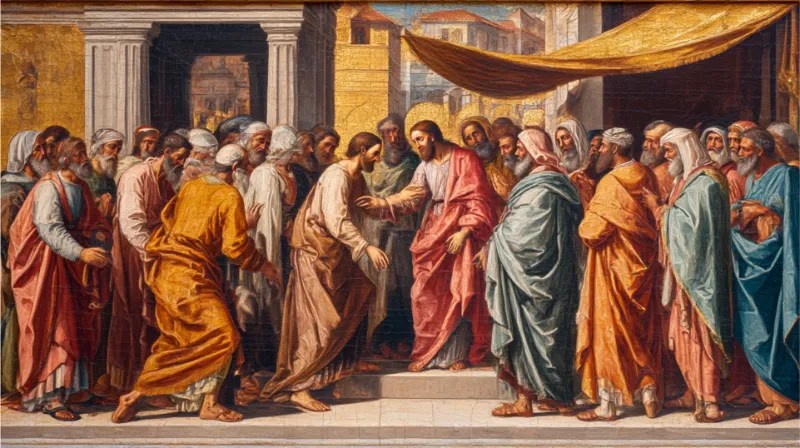
1 Samuel 16:7
“But the LORD said to Samuel, ‘Do not consider his appearance or his height, for I have rejected him. The LORD does not look at the things people look at. People look at the outward appearance, but the LORD looks at the heart.’”
Reflection: Samuel has come to Bethlehem to anoint one of Jesse’s sons as king, and the moment he sees the eldest, Eliab, he thinks, “Surely the LORD’s anointed stands here” (16:6). The LORD corrects him. Seven sons pass before Samuel and none is chosen; the one anointed is David, the youngest, who had been left tending the sheep (16:11-13). The misjudgment in this chapter is a prophet’s, made in good faith.

Proverbs 16:2
“All a person’s ways seem pure to them, but motives are weighed by the LORD.”
Reflection: The proverb turns the question on the one being judged. A person’s own ways “seem pure to them,” and the LORD weighs the motives. Being judged wrongly by others does not settle whether one’s own verdict on oneself is right; the weighing belongs to God.

1 Corinthians 4:3-5
“I care very little if I am judged by you or by any human court; indeed, I do not even judge myself. My conscience is clear, but that does not make me innocent. It is the Lord who judges me. Therefore judge nothing before the appointed time; wait until the Lord comes. He will bring to light what is hidden in darkness and will expose the motives of the heart. At that time each will receive their praise from God.”
Reflection: The Corinthian church was divided into parties, one saying “I follow Paul” and another “I follow Apollos” (3:4), and Paul had been weighed and found wanting by some of them. He calls himself a servant who must prove faithful (4:1-2) and declines both their verdict and his own: a clear conscience “does not make me innocent.” The judgment is deferred until the Lord comes, when he “will expose the motives of the heart,” and each will receive praise from God.

John 7:24
“Stop judging by mere appearances, but instead judge correctly.”
Reflection: Here Jesus is the one being judged wrongly. The crowd has just told him, “You are demon-possessed” (7:20), and some are angry that he healed a man on the Sabbath. He points out that they circumcise a boy on the Sabbath without objection (7:22-23) and tells them to judge correctly instead of by appearances.
When the accusation is false

Psalm 35:11
“Ruthless witnesses come forward; they question me on things I know nothing about.”
Reflection: The psalmist describes enemies who hid a net for him “without cause” (35:7) and now bring witnesses with questions about things he knows nothing about. They “repay me evil for good” (35:12). Later in the psalm he names their method, “false accusations against those who live quietly in the land” (35:20), and asks God, “Awake, and rise to my defense! Contend for me” (35:23).

Psalm 27:1-3
“The LORD is my light and my salvation—whom shall I fear? The LORD is the stronghold of my life—of whom shall I be afraid? When the wicked advance against me to devour me, it is my enemies and my foes who will stumble and fall. Though an army besiege me, my heart will not fear; though war break out against me, even then I will be confident.”
Reflection: The opening of this psalm of David speaks of enemies and of an army, and verse 12 adds false witnesses, “spouting malicious accusations.” The confidence of the first three verses is stated before any answer comes. The psalm ends still waiting: “Wait for the LORD; be strong and take heart” (27:14).

Matthew 5:11-12
“Blessed are you when people insult you, persecute you and falsely say all kinds of evil against you because of me. Rejoice and be glad, because great is your reward in heaven, for in the same way they persecuted the prophets who were before you.”
Reflection: Jesus follows the blessing on those “persecuted because of righteousness” (5:10) with a direct address to his hearers. The blessing is for insults and evil said “falsely” and “because of me,” and the prophets before them are named as people treated the same way. The reward is placed in heaven.

1 Peter 4:12-14
“Dear friends, do not be surprised at the fiery ordeal that has come on you to test you, as though something strange were happening to you. But rejoice inasmuch as you participate in the sufferings of Christ, so that you may be overjoyed when his glory is revealed. If you are insulted because of the name of Christ, you are blessed, for the Spirit of glory and of God rests on you.”
Reflection: Peter writes to Christians who should not be surprised by a “fiery ordeal.” He draws a line in the next verses: suffering “as a murderer or thief or any other kind of criminal, or even as a meddler” carries no blessing, while one who suffers “as a Christian” should “not be ashamed” (4:15-16). The blessing in verse 14 is for being insulted because of the name of Christ, not for being insulted in general.

Job 19:25-27
“I know that my redeemer lives, and that in the end he will stand on the earth. And after my skin has been destroyed, yet in my flesh I will see God; I myself will see him with my own eyes—I, and not another. How my heart yearns within me!”
Reflection: Job’s friends have argued that his suffering proves his guilt, and he answers, “How long will you torment me and crush me with words? Ten times now you have reproached me” (19:2-3). He wishes his words were cut into rock (19:24) and then states his confidence that his redeemer lives and that he will see God himself. He ends the speech by warning the friends who say “the root of the trouble lies in him” (19:28). At the end of the book God tells Eliphaz, “you have not spoken the truth about me, as my servant Job has” (42:7).
How to answer an unjust charge

1 Peter 2:23
“When they hurled their insults at him, he did not retaliate; when he suffered, he made no threats. Instead, he entrusted himself to him who judges justly.”
Reflection: Peter is writing about “unjust suffering” (2:19) and gives Jesus as the example to follow (2:21). Jesus faced false witnesses before the Sanhedrin (Matthew 26:59-60), and Peter describes how he met the insults: no retaliation, no threats, and his case handed to the one “who judges justly.”

Romans 12:19
“Do not take revenge, my dear friends, but leave room for God’s wrath, for it is written: ‘It is mine to avenge; I will repay,’ says the Lord.”
Reflection: Paul quotes the Lord’s own words, “It is mine to avenge; I will repay,” as the reason to leave revenge alone. The verses around it set out what to do instead: “Do not repay anyone evil for evil” (12:17), feed a hungry enemy (12:20), and “overcome evil with good” (12:21).

1 Peter 3:15-16
“But in your hearts revere Christ as Lord. Always be prepared to give an answer to everyone who asks you to give the reason for the hope that you have. But do this with gentleness and respect, keeping a clear conscience, so that those who speak maliciously against your good behavior in Christ may be ashamed of their slander.”
Reflection: What Peter asks his readers to be ready to give is “the reason for the hope that you have,” to anyone who asks, with gentleness and respect. A clear conscience is what leaves those who speak maliciously against their good behavior ashamed of their slander. Earlier in the chapter he has said, “Do not repay evil with evil or insult with insult” (3:9), and the next verse adds, “it is better, if it is God’s will, to suffer for doing good than for doing evil” (3:17).
God as the one who vindicates

Psalm 7:8
“Let the LORD judge the peoples. Vindicate me, LORD, according to my righteousness, according to my integrity, O Most High.”
Reflection: The heading ties this psalm of David to “Cush, a Benjamite,” about whom nothing more is recorded. David puts himself under oath first: if there is guilt on his hands, “let my enemy pursue and overtake me” (7:3-5). Only then does he ask to be vindicated “according to my integrity,” appealing to “the righteous God who probes minds and hearts” (7:9).

Psalm 37:5-6
“Commit your way to the LORD; trust in him and he will do this: He will make your righteous reward shine like the dawn, your vindication like the noonday sun.”
Reflection: David opens the psalm with “Do not fret because of those who are evil” (37:1). The promise in these verses is that God will make the righteous person’s vindication as plain as the sun at noon. The next verse tells what to do until then: “Be still before the LORD and wait patiently for him” (37:7).

Isaiah 50:7-9
“Because the Sovereign LORD helps me, I will not be disgraced. Therefore have I set my face like flint, and I know I will not be put to shame. He who vindicates me is near. Who then will bring charges against me? Let us face each other! Who is my accuser? Let him confront me! It is the Sovereign LORD who helps me. Who will condemn me? They will all wear out like a garment; the moths will eat them up.”
Reflection: The speaker has offered his back to those who beat him and has not hidden his face “from mocking and spitting” (50:6). He then speaks in the language of a court: “Who then will bring charges against me? … Who is my accuser? Let him confront me!” His accusers, he says, “will all wear out like a garment.”

Isaiah 54:17
“‘no weapon forged against you will prevail, and you will refute every tongue that accuses you. This is the heritage of the servants of the LORD, and this is their vindication from me,’ declares the LORD.”
Reflection: God speaks to his people and claims authority over both the blacksmith who forges a weapon and “the destroyer” (54:16). The promise covers accusation as well as attack: “you will refute every tongue that accuses you.” The vindication is named as coming “from me.”

Romans 8:33
“Who will bring any charge against those whom God has chosen? It is God who justifies.”
Reflection: Paul asks a question about charges against God’s people and answers that God is the one who justifies. The next verse continues, “Who then is the one who condemns? No one,” because Christ “is at the right hand of God and is also interceding for us” (8:34). The questions are close to those of Isaiah 50:8-9.
Praying while the charge stands
Psalm 7:8 and Psalm 35:23-24 are prayers addressed to God, asking him to vindicate the one praying, and both can be prayed as written. Psalm 7 sets an example in its order: David first asks to be punished if he is guilty (7:3-5) and only then asks to be vindicated.
Several of the passages place the verdict later. Psalm 27 ends with “Wait for the LORD,” 1 Corinthians 4:5 tells the church to judge nothing “before the appointed time,” and Job’s friends are rebuked only at the end of the book, in Job 42:7.


Leave a Reply