
 English
 Chinese
 Dutch
 Arabic
 Spanish
 Portuguese
 Russian
 French
 Italian
 German
 Japanese
The Nephilim are named twice in Scripture, once in the days before the flood and once in a spies’ report on the promised land, where they are people of great size. The passages are Genesis 6:4 and Numbers 13:33.
Deuteronomy, Joshua and Samuel add the tall peoples linked with them, the Anakites and the Rephaites (Deuteronomy 2:10-11; Joshua 11:21-22), and the descendants of Rapha at Gath (2 Samuel 21:20-22). The Hebrew word, Strong’s 5303, occurs three times, once in Genesis 6:4 and twice in Numbers 13:33, and the King James Version translates it “giants” each time. In the New Testament, Jude 1:6 and 2 Peter 2:4 speak of angels held in chains for judgment, next to references to Enoch and to the flood.
The Nephilim before the flood

Genesis 6:1-2
“When human beings began to increase in number on the earth and daughters were born to them, the sons of God saw that the daughters of humans were beautiful, and they married any of them they chose.”
Reflection: Genesis 6 opens with the human race multiplying and “the sons of God” taking wives from “the daughters of humans.” The chapter does not say who the sons of God were. Verse 3, which follows, gives the Lord’s words: “My Spirit will not contend with humans forever, for they are mortal; their days will be a hundred and twenty years” (Genesis 6:3).
Genesis 6:4
“The Nephilim were on the earth in those days—and also afterward—when the sons of God went to the daughters of humans and had children by them. They were the heroes of old, men of renown.”
Reflection: Here the word Nephilim first appears. The verse sets them on the earth “in those days—and also afterward,” at the time the sons of God had children by human women, though it does not state outright that the Nephilim were those children. Strong’s derives the noun from naphal and glosses it “a feller, i.e. a bully or tyrant”; the Brown-Driver-Briggs lexicon gives “giants,” the sense of the Greek Septuagint’s gigantes, and the KJV reads “There were giants in the earth in those days.”
Genesis 6:5-7
“The Lord saw how great the wickedness of the human race had become on the earth, and that every inclination of the thoughts of the human heart was only evil all the time. The Lord regretted that he had made human beings on the earth, and his heart was deeply troubled. So the Lord said, ‘I will wipe from the face of the earth the human race I have created—and with them the animals, the birds and the creatures that move along the ground—for I regret that I have made them.’”
Reflection: Straight after the Nephilim, Genesis turns to the whole human race. The reason given for the flood is that “every inclination of the thoughts of the human heart was only evil all the time”; the Nephilim are not named in it. Verse 8 gives the exception: “But Noah found favor in the eyes of the Lord.”
The Anakites, the Rephaites and other tall peoples

Numbers 13:32-33
“And they spread among the Israelites a bad report about the land they had explored. They said, ‘The land we explored devours those living in it. All the people we saw there are of great size. We saw the Nephilim there (the descendants of Anak come from the Nephilim). We seemed like grasshoppers in our own eyes, and we looked the same to them.’”
Reflection: The men Moses sent to explore Canaan came back divided. Caleb said, “We should go up and take possession of the land, for we can certainly do it” (13:30), and the others answered with what the narrator calls “a bad report.” Their words use the same Hebrew word as Genesis 6:4 and trace “the descendants of Anak,” whom they had found living at Hebron (13:22), to the Nephilim. The KJV renders it “there we saw the giants, the sons of Anak, which come of the giants.”
Deuteronomy 2:10-11
“The Emites used to live there—a people strong and numerous, and as tall as the Anakites. Like the Anakites, they too were considered Rephaites, but the Moabites called them Emites.”
Reflection: In Moses’ account of Israel’s route past Moab, this aside, printed in parentheses in the NIV, describes the land’s earlier people. The Emites were “as tall as the Anakites” and counted among the Rephaites, and the Lord had given their land, Ar, to the descendants of Lot (2:9). Rephaim is Strong’s 7497, which Brown-Driver-Briggs describes as an old race of giants.
Deuteronomy 2:20-21
“(That too was considered a land of the Rephaites, who used to live there; but the Ammonites called them Zamzummites. They were a people strong and numerous, and as tall as the Anakites. The Lord destroyed them from before the Ammonites, who drove them out and settled in their place.)”
Reflection: A second aside covers the land of Ammon. Its earlier inhabitants were Rephaites, called Zamzummites by the Ammonites, and “the Lord destroyed them from before the Ammonites.” Verse 22 adds that the Lord had done the same for the descendants of Esau when he destroyed the Horites before them in Seir.
Deuteronomy 3:11
“Og king of Bashan was the last of the Rephaites. His bed was decorated with iron and was more than nine cubits long and four cubits wide. It is still in Rabbah of the Ammonites.”
Reflection: Og king of Bashan marched out against Israel at Edrei, and the Lord told Moses, “Do not be afraid of him, for I have delivered him into your hands” (3:2). This note calls Og the last of the Rephaites and gives the size of his iron-decorated bed, more than nine cubits long and four wide, adding that it was still in Rabbah of the Ammonites.
Amos 2:9
“Yet I destroyed the Amorites before them, though they were tall as the cedars and strong as the oaks. I destroyed their fruit above and their roots below.”
Reflection: Amos lists Israel’s sins: selling the needy for a pair of sandals, trampling the poor, denying justice to the oppressed. The Lord then recalls, “Yet I destroyed the Amorites before them, though they were tall as the cedars and strong as the oaks.” The next verse continues with the exodus and the forty years in the wilderness, “to give you the land of the Amorites.”
The Anakites and the giants of Gath
Joshua 11:21-22
“At that time Joshua went and destroyed the Anakites from the hill country: from Hebron, Debir and Anab, from all the hill country of Judah, and from all the hill country of Israel. Joshua totally destroyed them and their towns. No Anakites were left in Israelite territory; only in Gaza, Gath and Ashdod did any survive.”
Reflection: Joshua’s campaigns end with the Anakites destroyed from Hebron, Debir, Anab and the hill country of Judah and Israel. The last line leaves survivors “only in Gaza, Gath and Ashdod.” Gath is the home of Goliath in 1 Samuel 17:4 and of the descendants of Rapha in 2 Samuel 21:22.
1 Samuel 17:4
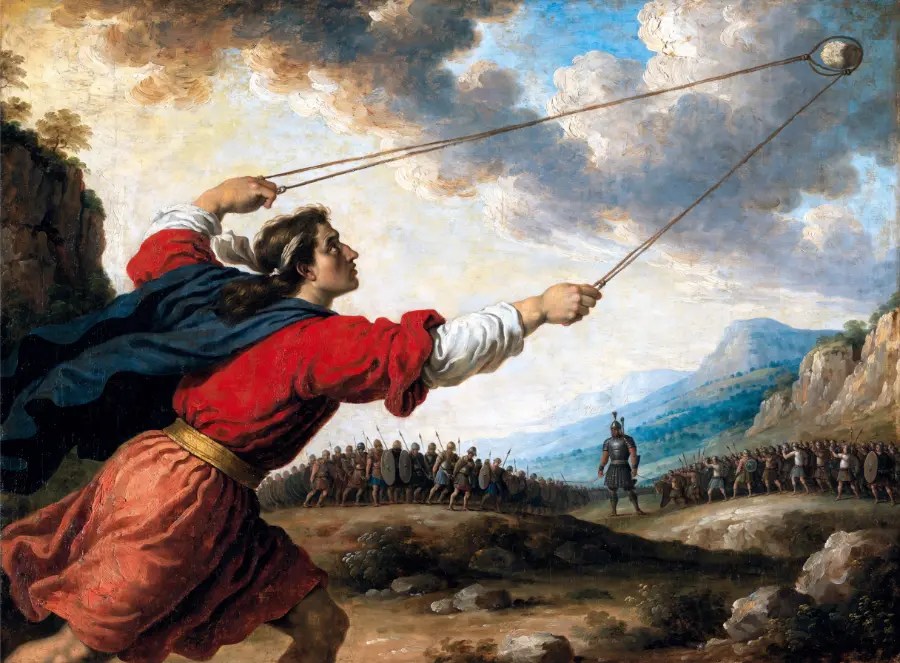
“A champion named Goliath, who was from Gath, came out of the Philistine camp. His height was six cubits and a span.”
Reflection: Goliath came out of the Philistine camp from Gath, one of the three towns where Joshua 11:22 says Anakites survived, and his height is given as six cubits and a span. The following verses describe his equipment: a coat of scale armor weighing five thousand shekels, a spear shaft “like a weaver’s rod,” and an iron point of six hundred shekels.
2 Samuel 21:20-22
“In still another battle, which took place at Gath, there was a huge man with six fingers on each hand and six toes on each foot—twenty-four in all. He also was descended from Rapha. When he taunted Israel, Jonathan son of Shimeah, David’s brother, killed him. These four were descendants of Rapha in Gath, and they fell at the hands of David and his men.”
Reflection: Second Samuel 21 closes a list of battles with the Philistines with a man at Gath who had six fingers on each hand and six toes on each foot. Like the others in the list he was “descended from Rapha,” and Jonathan, the son of David’s brother Shimeah, killed him. The KJV translates Rapha in these verses as “the giant” (Strong’s 7497), and verse 19 names another of the four as the brother of Goliath the Gittite.
The New Testament’s angels and the days of Noah
Jude 1:6
“And the angels who did not keep their positions of authority but abandoned their proper dwelling—these he has kept in darkness, bound with everlasting chains for judgment on the great Day.”
Reflection: Jude describes angels who “did not keep their positions of authority but abandoned their proper dwelling,” now held in darkness for judgment. The next verse opens “In a similar way” and moves to Sodom and Gomorrah, which “gave themselves up to sexual immorality and perversion.” A few verses later Jude quotes “Enoch, the seventh from Adam” (1:14-15), in words that closely follow 1 Enoch 1:9.
2 Peter 2:4
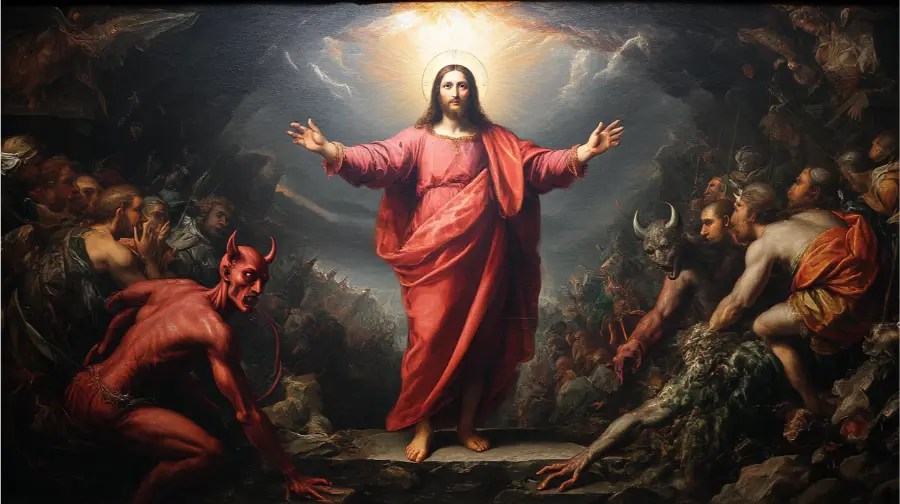
“For if God did not spare angels when they sinned, but sent them to hell, putting them in chains of darkness to be held for judgment.”
Reflection: The verb translated “sent them to hell” is tartaroo, to cast into Tartarus (Strong’s 5020). Peter sets the sinning angels at the head of a list of judgments, and the next example is the flood: God “did not spare the ancient world when he brought the flood on its ungodly people, but protected Noah, a preacher of righteousness, and seven others” (2:5).
Matthew 24:37
“As it was in the days of Noah, so it will be at the coming of the Son of Man.”
Reflection: On the Mount of Olives the disciples asked about “the sign of your coming and of the end of the age” (24:3). Jesus explains the comparison in the next two verses: people were “eating and drinking, marrying and giving in marriage” and “knew nothing about what would happen until the flood came and took them all away.” The likeness he draws is ordinary life carrying on unaware; he does not mention the Nephilim or the sons of God. Luke 17:26-27 records the same saying.
Who the sons of God were
Genesis 6:2 does not identify the sons of God, and ancient writers did not agree. The Book of Enoch calls them angels, “the children of the heaven,” who took wives and fathered “great giants” (1 Enoch 6-7). Josephus wrote in Antiquities 1.3.1 that “many angels of God accompanied with women,” and that their sons did what resembled the acts of those the Greeks called giants.
Augustine, in The City of God 15.23, read the passage differently: the sons of God were men, and the verse describes the time when “the sons of Seth formed a connection with the daughters of Cain.” He held that “Scripture itself decides, which unambiguously declares that they were men.” Jude 1:6 and 2 Peter 2:4 speak of angels who sinned and are held for judgment, but neither names Genesis 6.


Leave a Reply