
 English
 Chinese
 Dutch
 Arabic
 Spanish
 Portuguese
 Russian
 French
 Italian
 German
 Japanese
The Bible never says what the number 40 itself means, though it comes back again and again to forty days or forty years as a time of testing, waiting or getting ready. We counted the word “forty” through all 66 books of the King James Bible and found it 158 times in 145 verses. A few of those verses say why a particular stretch came to forty or what it was for, and none of them tells us what the number means.
Moses tells Israel what their own forty years were for. “And thou shalt remember all the way which the Lord thy God led thee these forty years in the wilderness, to humble thee, and to prove thee, to know what was in thine heart, whether thou wouldest keep his commandments, or no” (Deuteronomy 8:2). Then he says how God did it, and he talks about food. God “suffered thee to hunger, and fed thee with manna,” so that they would know “that man doth not live by bread only, but by every word that proceedeth out of the mouth of the Lord doth man live” (Deuteronomy 8:3).
Jesus “had fasted forty days and forty nights” in the wilderness and “was afterward an hungred” (Matthew 4:2) when the tempter came to him and said, “If thou be the Son of God, command that these stones be made bread” (Matthew 4:3). He said “It is written,” and gave back the sentence Moses had spoken about Israel’s hunger and the manna: “Man shall not live by bread alone, but by every word that proceedeth out of the mouth of God” (Matthew 4:4). God had let a whole people go hungry so that they would know that sentence. After forty days without food, the Son of God says it to the tempter, and it is his whole answer. We tell the longer story of his fast in how long Jesus fasted.

Where does the number 40 appear in the Bible?
Here are ten of the forties Scripture marks off, in the order the Bible gives them.
| Who | Passage | The forty |
|---|---|---|
| Noah | Genesis 7:12 | Forty days and forty nights of rain on the earth |
| Moses | Exodus 24:18; 34:28 | Forty days and forty nights with God on the mountain, twice |
| The spies and Israel | Numbers 13:25; 14:34 | Forty days searching the land, then forty years in the wilderness |
| Israel | Deuteronomy 8:2; Joshua 5:6 | Forty years in the wilderness |
| Goliath | 1 Samuel 17:16 | Forty days of challenging Israel’s army |
| Elijah | 1 Kings 19:8 | Forty days and forty nights to Horeb |
| Ezekiel | Ezekiel 4:6 | Forty days lying on his right side, bearing Judah’s guilt |
| Nineveh | Jonah 3:4 | Forty days’ warning before the city’s overthrow |
| Jesus | Matthew 4:2; Mark 1:13; Luke 4:2 | Forty days in the wilderness, tempted |
| The risen Jesus | Acts 1:3 | Forty days among his disciples |
The rain was only the beginning of Noah’s time in the ark, and we go through the rest of it in how long Noah was on the ark. Moses and Elijah bring us back to food, because Moses on the mountain “did neither eat bread, nor drink water” (Exodus 34:28), while Elijah, with the whole road to Horeb ahead of him, “did eat and drink, and went in the strength of that meat forty days and forty nights unto Horeb the mount of God” (1 Kings 19:8). One man goes without and the other is fed for the road, and those are the two things Moses said God had done with Israel.
In Numbers, God himself says why the years came to forty. The spies came back “after forty days” (Numbers 13:25), and the word to Israel was, “After the number of the days in which ye searched the land, even forty days, each day for a year, shall ye bear your iniquities, even forty years” (Numbers 14:34). Ezekiel is given the same reckoning for his forty days, “I have appointed thee each day for a year” (Ezekiel 4:6). So the years were forty because the days were forty, and when we have done that sum we still have not been told what forty means.
How many times does the Bible say forty?
The word “forty” comes 158 times in 145 verses of the King James Version, counting its 66 books without the Apocrypha. “Forty days” is in 22 of those verses and “forty years” in 45, and Numbers 14:34 has both, so 66 verses use one phrase or the other. “Fortieth” comes four more times and is not in that count.
Isaac “was forty years old when he took Rebekah to wife” (Genesis 25:20) and Esau was forty when he married (Genesis 26:34), so even those 66 verses are not all solemn. In the other 79, forty is often nothing more than somebody counting. The tribe of Reuben numbered “forty and six thousand and five hundred” (Numbers 1:21), and among those who went up out of the captivity were the “children of Zattu, nine hundred forty and five” (Ezra 2:1, 2:8). The tabernacle’s twenty boards stood on “forty sockets of silver” (Exodus 26:19), and Jacob’s gift of animals included “forty kine” (Genesis 32:15), which is forty cows. Nobody is being tested in those verses, and we would have to strain to find a hidden lesson in forty sockets of silver.
The law also used forty as a ceiling on punishment: “Forty stripes he may give him, and not exceed” (Deuteronomy 25:3). Paul took that punishment five times and gives us the number exactly, “Of the Jews five times received I forty stripes save one” (2 Corinthians 11:24), and Rabbi Yehuda Hausman notes on TheTorah.com that the rabbinic tradition caps the actual number of lashes at 39, which fits Paul’s “save one.”
Paul’s own account of his floggings and shipwrecks
Does 40 always mean testing?
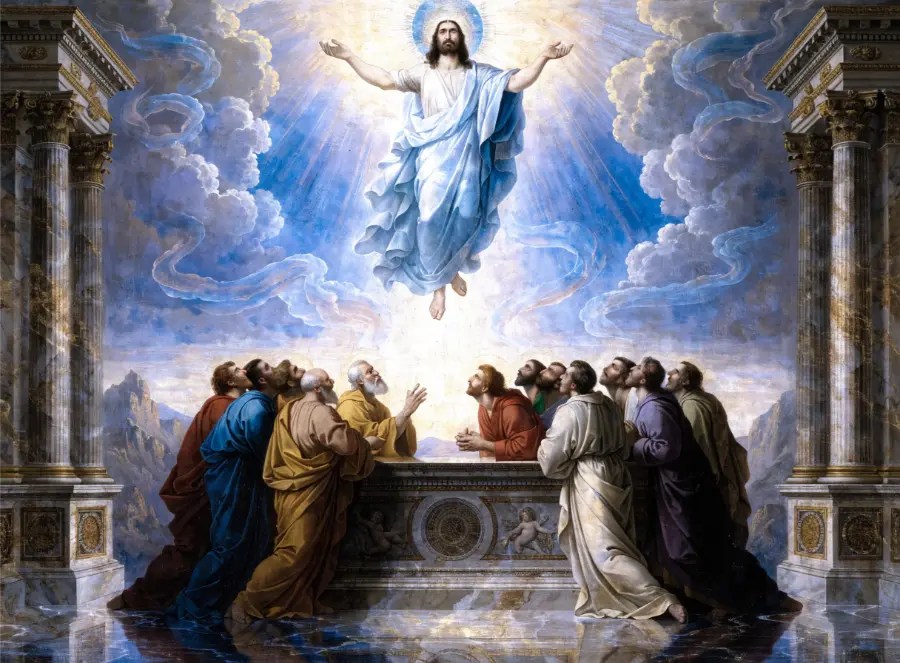
Forty comes round again after Easter, this time with good news, when Jesus “shewed himself alive after his passion by many infallible proofs, being seen of them forty days, and speaking of the things pertaining to the kingdom of God” (Acts 1:3), and we tell what he did in those weeks in what Jesus did in the 40 days after his resurrection. In the book of Judges “the land had rest forty years” under Othniel (Judges 3:11). David “reigned forty years” (2 Samuel 5:4), and so did Solomon, for “the time that Solomon reigned in Jerusalem over all Israel was forty years” (1 Kings 11:42). Even Jonah’s forty days of warning were answered when “the people of Nineveh believed God, and proclaimed a fast, and put on sackcloth, from the greatest of them even to the least of them” (Jonah 3:5).
The hard forties are there as well, when the Lord delivered Israel “into the hand of the Philistines forty years” (Judges 13:1) and when Goliath “drew near morning and evening, and presented himself forty days” (1 Samuel 17:16). Testing and waiting keep coming back, and they do not come back every time, so anyone who tells us forty always means one thing has some explaining to do.
What have Christians and Jews said about 40?
No writer of Scripture takes forty apart to see what is inside it, and the people who have tried have had to do the multiplying themselves. Augustine did it in a letter New Advent dates to the year 400, and he begins modestly with “it seems to me.” For him ten holds “the perfection of our blessedness”, because it is seven, the creature, added to three, the Creator, and the creature “cleaves to the Creator” in a world “swept by four winds, constituted of four elements, and experiencing the changes of four seasons in the year.” Four times ten makes forty, which he calls “a fit symbol for this life”, this life of “toil and self-control.”
E. W. Bullinger tried again in Number in Scripture in 1894. Forty, he says, is “the product of 5 and 8”, grace leading to renewal, and it goes with “a period of probation, trial, and chastisement”. Fifteen periods of forty years are on his list, and for those that look nothing like a trial he has an answer. Othniel’s rest and the reigns of David and Solomon are “Probation by Prosperity”, and where forty has to do with dominion or rule it works, he says, “in virtue of its factors 4 and 10.”
The International Standard Bible Encyclopedia does not look inside the number at all, because it takes forty for a round number, and it reaches outside the Bible for its proof. The inscription on the Moabite Stone puts the Israelite occupation of Medeba by Omri and his son at 40 years, when by the encyclopedia’s reckoning from 1 Kings the period “extended to only 23 years at the most.” It treats the Bible’s forties as “conventional use”, which “may have originated, partly at any rate, in the idea that 40 years constituted a generation,” and it says “it can hardly be supposed that the number in each of these cases, and in others which might be mentioned, was exactly 40.” One of those cases is Moses, whose life it divides “in three periods of 40 years each”: he was “full forty years old” when he went to visit his brethren (Acts 7:23), “fourscore years old” before Pharaoh (Exodus 7:7), and “an hundred and twenty years old when he died” (Deuteronomy 34:7).
Rabbi Yehuda Hausman comes out close to that in “Forty: A Biblical Symbol of Completeness” on TheTorah.com, where the span of forty days or forty years “is rarely a measure of precise time” and “holds symbolic significance.”
Is Lent forty days because of this?
Augustine thought so, and he sounds much surer of himself here than he did about the four winds. “The Fast of Forty Days has its warrant both in the Old Testament,” he writes, in the fasting of Moses and Elijah, “and in the Gospel from the fact that our Lord fasted the same number of days.” For him Moses stands for the Law and Elijah for the Prophets, so the Lord’s fast shows “that the Gospel is not at variance with the Law and the Prophets,” and as for “the observance of the forty days before Easter,” he says, “this has been confirmed by the practice of the Church.”
The forty years Moses spoke of come up once more in the book of Nehemiah. Israel had gone hungry, as he told them, and they “did eat manna forty years, until they came to a land inhabited” (Exodus 16:35). When the Levites call the people to “Stand up and bless the Lord your God for ever and ever” (Nehemiah 9:5), this is what they say to him about those same years: “Yea, forty years didst thou sustain them in the wilderness, so that they lacked nothing; their clothes waxed not old, and their feet swelled not” (Nehemiah 9:21).


Leave a Reply