
 English
 Chinese
 Dutch
 Arabic
 Spanish
 Portuguese
 Russian
 French
 Italian
 German
 Japanese
The Bible does not give Jeremiah’s age. When God called him, in the thirteenth year of King Josiah, about 627 BC, Jeremiah answered, “I am a child” (Jeremiah 1:6). The Hebrew word, na’ar, covers anyone from a baby to a young man. One common estimate is about twenty, and no one can be sure.
What we do have is the conversation itself, and it is one of the tenderest in the prophets. God tells the young man that he was known before he was born: “Before I formed thee in the belly I knew thee; and before thou camest forth out of the womb I sanctified thee, and I ordained thee a prophet unto the nations” (Jeremiah 1:5). Jeremiah answers with his youth. “Ah, Lord GOD! behold, I cannot speak: for I am a child.” And God does not argue with his age. He sets it aside. “Say not, I am a child: for thou shalt go to all that I shall send thee, and whatsoever I command thee thou shalt speak. Be not afraid of their faces: for I am with thee to deliver thee” (Jeremiah 1:7–8). Then he reaches out and touches the young man’s mouth.
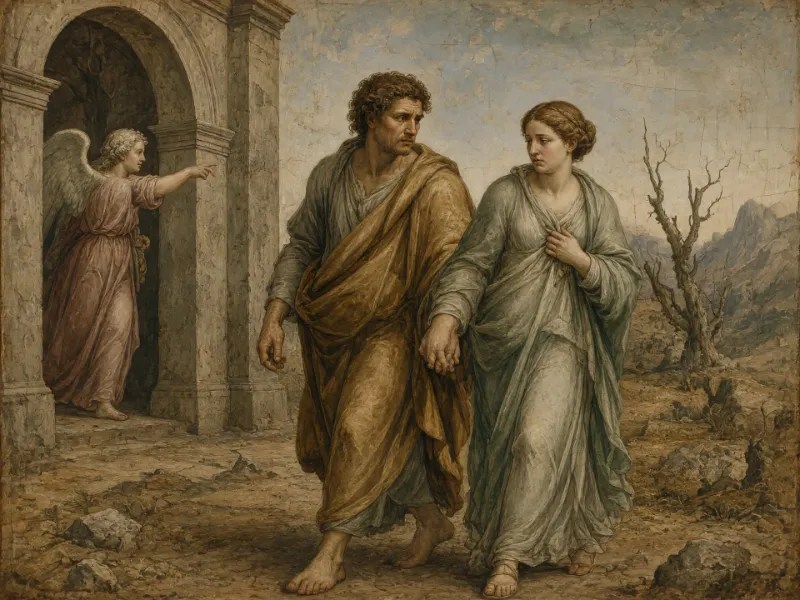
What does “I am a child” mean in Jeremiah 1:6?
The King James Bible says “child”. The English Standard Version has “only a youth”, and the New International Version “too young”. Behind them all is na’ar. Strong’s concordance defines it as a boy “from the age of infancy to adolescence”, and the Bible uses it across that whole span. The baby Moses is a na’ar when Pharaoh’s daughter opens the basket: “behold, the babe wept” (Exodus 2:6). So is Joseph at seventeen, “the lad” feeding his father’s flocks (Genesis 37:2). So is Absalom, a grown man leading an army against his father, when David pleads, “Deal gently for my sake with the young man” (2 Samuel 18:5).
The word can even describe how a man feels rather than how old he is. When Solomon became king, he prayed, “I am but a little child: I know not how to go out or come in” (1 Kings 3:7), and the Hebrew again is na’ar. Solomon was no child. He reigned forty years (1 Kings 11:42), and his son Rehoboam was forty-one when he took the throne (1 Kings 14:21), so Solomon was probably already a father when he became king. In his mouth “a little child” meant: I am not ready for this.
So Jeremiah’s word tells us two things. He was young. And he felt far too small for what God was asking. It is the second that God answers.
When was Jeremiah called to be a prophet?
The book dates the call itself. The word of the Lord came to Jeremiah “in the days of Josiah the son of Amon king of Judah, in the thirteenth year of his reign” (Jeremiah 1:2). That was about 627 BC. Twenty-three years later Jeremiah could still count back to it: “From the thirteenth year of Josiah … even unto this day, that is the three and twentieth year, the word of the LORD hath come unto me” (Jeremiah 25:3).
The dates hold one more detail. Josiah “was eight years old when he began to reign” (2 Kings 22:1), so in the thirteenth year of his reign the king was about twenty himself. Judah had a young king and, in a priests’ village three miles from Jerusalem, a young prophet. Jeremiah was “the son of Hilkiah, of the priests that were in Anathoth in the land of Benjamin” (Jeremiah 1:1).
One standard reference, the International Standard Bible Encyclopedia of 1915, puts him at about twenty. It says Jeremiah was called “while still a youth (1:6) about 20 years of age”. Older Bible dictionaries say only that he was “very young” or “still young”. The Hebrew word would allow a younger boy as well.
Scholars still debate the date of the call itself. Some have proposed a later year. Zdzisław Małecki of the University of Silesia calls it “another convincing suggestion” that the thirteenth year of Josiah was the year Jeremiah was born. That reading takes the date with “before thou camest forth out of the womb” in verse 5. Robert Hastings, in a doctoral thesis at the University of St Andrews, argued for the date the book itself gives, 627.
How long did Jeremiah prophesy?
About forty years in Jerusalem, and more after it fell. His ministry ran from Josiah’s thirteenth year “unto the end of the eleventh year of Zedekiah … unto the carrying away of Jerusalem captive in the fifth month” (Jeremiah 1:3), when the Babylonians took the city in 586 BC. Even then he did not stop. Against his advice, the survivors fled to Egypt and took “Jeremiah the prophet, and Baruch the son of Neriah” with them (Jeremiah 43:6–7), and he went on speaking there. The encyclopedia reckons his work at “about 50 years in all”, and it calls the man who was led away to Egypt “the aged prophet”. The young man who said he could not speak left us the book with more words than any other in the Hebrew Bible, the longest book in its original language.

Was Jeremiah the youngest prophet?
Probably not. Samuel seems to have been younger. He was a boy sleeping in the house of the Lord when he heard his name called in the night, and “the child Samuel ministered unto the LORD before Eli” (1 Samuel 3:1). Most prophets’ ages are never given at all, and for the best known Scripture tells us this much:
| Prophet | Age when called | What the Bible says |
|---|---|---|
| Samuel | A boy | “the child Samuel” (1 Samuel 3:1) |
| Jeremiah | Young, perhaps about 20 | “I am a child” (Jeremiah 1:6) |
| Ezekiel | Perhaps 30 | “in the thirtieth year” (Ezekiel 1:1) |
| Isaiah | Not given | “In the year that king Uzziah died” (Isaiah 6:1) |
| Amos | Not given; a grown herdsman | “I was an herdman” (Amos 7:14) |
| Moses | 80 when he went to Pharaoh | “Moses was fourscore years old” (Exodus 7:7) |
Ezekiel’s “thirtieth year” is usually taken as his age, though some older commentators counted it from another starting point. Moses’ eighty years are counted at the time he and Aaron “spake unto Pharaoh”, not long after God called him “out of the midst of the bush” at Horeb (Exodus 3:4).
Set side by side, the calls are more alike than their ages. Moses said, “I am slow of speech, and of a slow tongue,” and God answered, “I will be with thy mouth, and teach thee what thou shalt say” (Exodus 4:10–12). Isaiah cried, “I am a man of unclean lips,” and a seraph touched his mouth with a live coal from the altar (Isaiah 6:5–7). Jeremiah said, “I cannot speak,” and the Lord himself “put forth his hand, and touched my mouth. And the LORD said unto me, Behold, I have put my words in thy mouth” (Jeremiah 1:9). A shepherd keeping his father-in-law’s flock, a man who saw the Lord in the temple, and a priest’s son from a village: each thought his mouth was the problem, and God answered at the mouth.
Why did God call someone so young?
The book never says why, and we should not invent a reason. What it does show is that God’s answer had nothing to do with Jeremiah’s readiness. He did not tell him he was older than he thought, or wiser, or more gifted. He told him who was sending him and who would be beside him: “for I am with thee to deliver thee”. The promise comes again at the end of the chapter, after God has warned that kings, princes and priests will fight him: “they shall not prevail against thee; for I am with thee, saith the LORD, to deliver thee” (Jeremiah 1:19).
Paul’s word to Timothy carries the same confidence into the church. “Let no man despise thy youth; but be thou an example of the believers, in word, in conversation, in charity, in spirit, in faith, in purity” (1 Timothy 4:12). Samuel was a boy and Moses was eighty. Whatever our years, the call asks the same of us that it asked of Jeremiah: to go where we are sent and to speak what we are given.
What was Jeremiah’s life like after his call?
Hard, and he tells us so. God asked him not to marry: “Thou shalt not take thee a wife, neither shalt thou have sons or daughters in this place” (Jeremiah 16:2). He was mocked for the message he carried, and once he tried to stop speaking altogether. “I am in derision daily, every one mocketh me,” he says, and then, “I will not make mention of him, nor speak any more in his name. But his word was in mine heart as a burning fire shut up in my bones, and I was weary with forbearing, and I could not stay” (Jeremiah 20:7–9). The young man who said he could not speak found he could not keep quiet.
And there was joy in it, too, the joy of a man who had been fed. “Thy words were found, and I did eat them; and thy word was unto me the joy and rejoicing of mine heart” (Jeremiah 15:16). The words God put in his mouth on the day of his call were the bread he lived on for fifty years.
The book of Lamentations carries no author’s name, but Jewish tradition and the ancient Greek translation give it to Jeremiah, who had once mourned for King Josiah (2 Chronicles 35:25). Whoever wrote it had watched Jerusalem burn and still could say, “It is good for a man that he bear the yoke in his youth.” A few lines earlier comes the verse that the old prophet’s whole life showed to be true, from the day a young man said “I am a child” to the day he was carried into Egypt: “his compassions fail not. They are new every morning: great is thy faithfulness” (Lamentations 3:22–23).



Leave a Reply