
 English
 Chinese
 Dutch
 Arabic
 Spanish
 Portuguese
 Russian
 French
 Italian
 German
 Japanese
Jesus was about thirty years old when he began his ministry. Luke gives the age in the only verse of the Gospels that tells us how old Jesus was as a grown man: “Jesus himself began to be about thirty years of age” (Luke 3:23). By our calendar he was probably a little older, somewhere in his early thirties.
Thirty years is a long wait for so short a ministry, and Scripture passes over almost all of it in one line: he “increased in wisdom and stature, and in favour with God and man” (Luke 2:52). The Son of God spent most of his life in a small town in Galilee, working with his hands. When he came home and taught in its synagogue, the people who had watched him grow up could not take it in. “Is not this the carpenter, the son of Mary?” they asked (Mark 6:3). They had known him since he was a boy. They had seen a neighbour at his trade, and God had been among them the whole time.
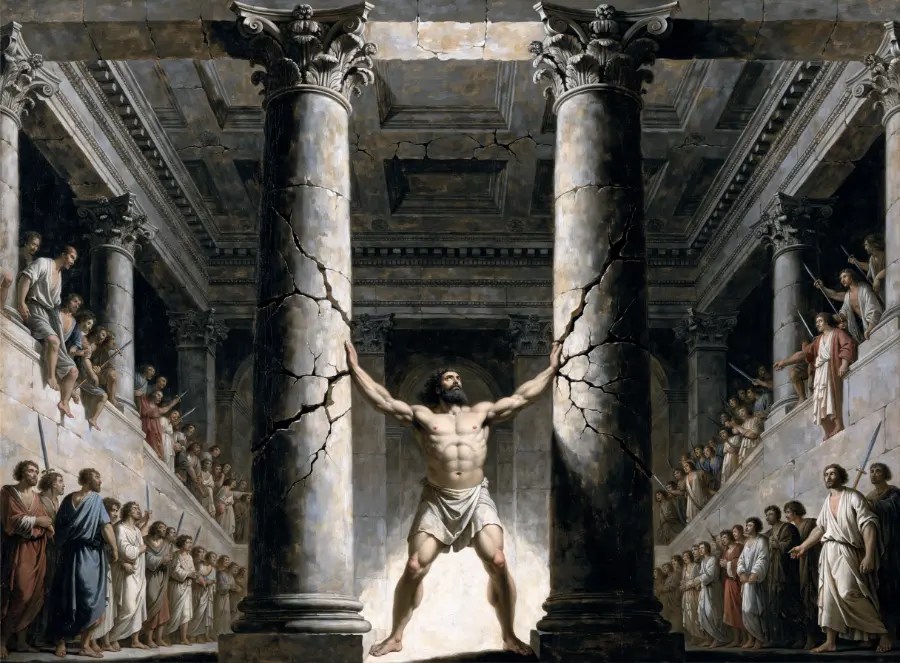
What does Luke 3:23 say about Jesus’ age?
Luke sets the line straight after the baptism. The heavens open, the Spirit comes down like a dove, the Father speaks, and then Luke stops to tell us who this is and how old he was, before tracing his family back to Adam. “And Jesus himself began to be about thirty years of age, being (as was supposed) the son of Joseph” (Luke 3:23). The King James wording “began to be” points to a beginning, and the Revised Standard Version spells it out: “Jesus, when he began his ministry, was about thirty years of age.”
The word that matters is “about”. Luke is giving a round number, the way we still say someone is “about forty”. Irenaeus of Lyons, writing around AD 180, read the words closely: Jesus “had not yet completed His thirtieth year” when he was baptized. Yet he did not think the ministry stopped there. From the words of Jesus’ opponents, “Thou art not yet fifty years old” (John 8:57), Irenaeus concluded that Jesus taught on past forty: “He did not then want much of being fifty years old.” The Catholic Encyclopedia counts that reading among the “two extreme views” of how long Jesus taught. On most reckonings Jesus was still in his thirties when he heard those words; the historian Paul Maier put him at “no older than thirty-six,” and judged that Luke’s “about thirty” “surely is not violated by his being almost thirty-three in fact.”
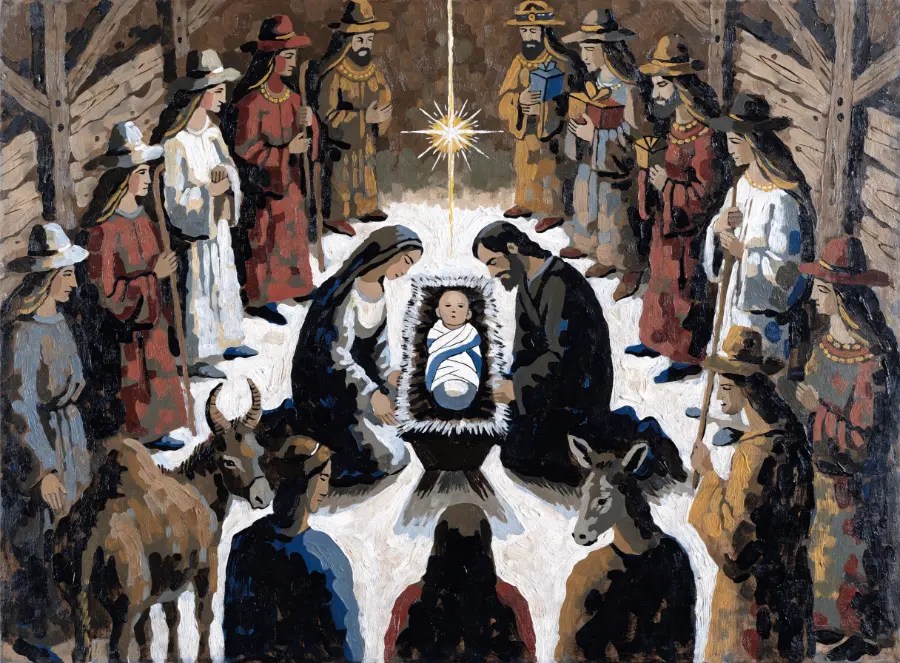
How old was Jesus by our calendar?
To turn “about thirty” into years, we need two dates, and the Gospels give us neither exactly. For the beginning of the ministry, Luke supplies the most careful date in the New Testament: “the fifteenth year of the reign of Tiberius Caesar” (Luke 3:1). Tiberius followed Augustus as emperor in August of AD 14. Counted from Tiberius’s accession in AD 14, his fifteenth year falls in AD 28 or 29: AD 29 on the Roman historians’ usual count, AD 28 if the part-year of AD 14 is counted as the first. That is when John began to preach, and Jesus came to him for baptism that same year or soon after. Some scholars count from AD 12, when Tiberius began to share power with Augustus, which would move the baptism back to AD 26 or 27. Andrew Steinmann surveyed the coins, inscriptions and writers of the first two centuries in 2022 and found no support for dating Tiberius’s reign that way.
The birth is harder. Matthew says Jesus was born “in the days of Herod the king” (Matthew 2:1), and most historians date Herod’s death to 4 BC, which puts the birth around 6 to 4 BC. A smaller group argues that Herod died in 1 BC, which would allow a birth in 2 BC. Put the two ends together and the answer comes out in the early thirties. Maier reckoned that a child born in 5 or 4 BC “would have been almost 33” in AD 29. With a later birth, or an earlier start, Jesus would have been nearer thirty. Luke’s “about” covers every one of these, and no Gospel gives the year of his birth. The likely years are weighed in when Jesus was born.

Why did Jesus wait until he was about thirty?
Scripture never says, but it does show us that he knew his calling long before. At twelve, Jesus stayed behind in the Temple after the Passover, “sitting in the midst of the doctors, both hearing them, and asking them questions,” and “all that heard him were astonished at his understanding and answers” (Luke 2:46–47). When his frightened parents found him, he answered, “wist ye not that I must be about my Father’s business?” (Luke 2:49). Then comes the verse that tells us most about the years that followed: “he went down with them, and came to Nazareth, and was subject unto them” (Luke 2:51). He knew whose Son he was, and he went home and obeyed his mother and Joseph for another eighteen years or so.
Thirty also stands at other beginnings in Scripture, and readers have long noticed them. “Joseph was thirty years old when he stood before Pharaoh king of Egypt” (Genesis 41:46). “David was thirty years old when he began to reign” (2 Samuel 5:4). The Levites who did the work of the tabernacle served “from thirty years old and upward even until fifty years old” (Numbers 4:3), though another passage sets their start at twenty-five (Numbers 8:24). Luke draws none of these lines himself. They are echoes, and they help us hear the age as a time of readiness. No verse of Scripture makes thirty the age at which a teacher may begin.
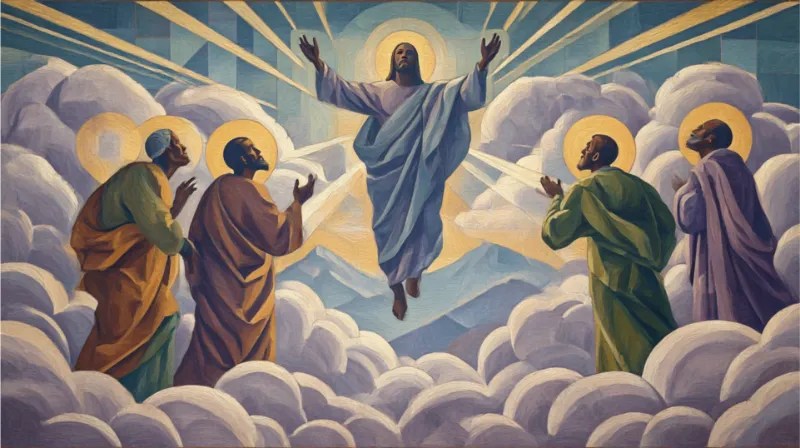
How did Jesus spend the years before his ministry?
He grew up in Nazareth, and he worked. In Mark’s Gospel his neighbours call him “the carpenter” (Mark 6:3), so the trade was his own as well as Joseph’s. His family went up to Jerusalem “every year at the feast of the passover” (Luke 2:41), and at Nazareth he went to the synagogue on the sabbath “as his custom was” (Luke 4:16). Beyond that the Gospels are silent. Every story that fills these years comes from outside them.
The silence teaches something. The greater part of our Lord’s life on earth looked ordinary: a workshop, a family, the yearly feasts, the weekly prayers. Most of our lives look the same, and he lived that kind of life first.

When did Jesus start preaching and working miracles?
Straight after his baptism, at the same age of about thirty. The Spirit led him into the wilderness for forty days (Luke 4:1–2), and then “Jesus returned in the power of the Spirit into Galilee” and “taught in their synagogues” (Luke 4:14–15). Mark gives his first preaching in a sentence: “The time is fulfilled, and the kingdom of God is at hand: repent ye, and believe the gospel” (Mark 1:15).
John tells us where the signs began. A few days after the first disciples followed him, Jesus was at a wedding in Cana, and the water became wine. “This beginning of miracles did Jesus in Cana of Galilee, and manifested forth his glory; and his disciples believed on him” (John 2:11). So the first miracle, too, came when he was about thirty; there is more on that day in why Jesus turned water into wine.
From that beginning the ministry lasted somewhere between two and three and a half years, depending on how the Passovers in John’s Gospel are counted, and it ended at the cross with Jesus still in his thirties. The years of his death are weighed in how old Jesus was when he died.

What happened when Jesus preached in his home town?
Luke lets us see the day he came home. Jesus came back “to Nazareth, where he had been brought up,” and on the sabbath he stood to read. He was handed the scroll of Isaiah and found the place: “The Spirit of the Lord is upon me, because he hath anointed me to preach the gospel to the poor; he hath sent me to heal the brokenhearted” (Luke 4:18). He rolled up the scroll and sat down, “And the eyes of all them that were in the synagogue were fastened on him” (Luke 4:20).
They knew that face. “Is not this Joseph’s son?” they said (Luke 4:22). He had grown up among them, and now the carpenter told them that the prophet’s words had come true in front of them. The waiting was over, and the first thing he said was this: “This day is this scripture fulfilled in your ears” (Luke 4:21).

Related reading
- How long was Jesus’ ministry?
- When was Jesus baptized, and at what age?
- How old was Jesus when he died?
- Was Jesus really a carpenter?
- When was Jesus born?


Leave a Reply