
 English
 Chinese
 Dutch
 Arabic
 Spanish
 Portuguese
 Russian
 French
 Italian
 German
 Japanese
Nowhere does the Bible tell us what the number six means. The closest it comes is the shape of the week, six days of work and then a day to stop: “Six days shalt thou labour, and do all thy work: But the seventh day is the sabbath of the Lord thy God” (Exodus 20:9–10, KJV). God made man on the sixth day (Genesis 1:26–31), so many readers have called six “the number of man,” and we can see how they got there, but the nearest any verse comes to saying so is Revelation 13:18, and that verse is speaking of 666.
Before we hang anything on the number, it is worth looking at how the sixth day ended. God had just made man in his own image, and then “God saw every thing that he had made, and, behold, it was very good. And the evening and the morning were the sixth day” (Genesis 1:31). So the sixth day was very good, and there was still a seventh to come.
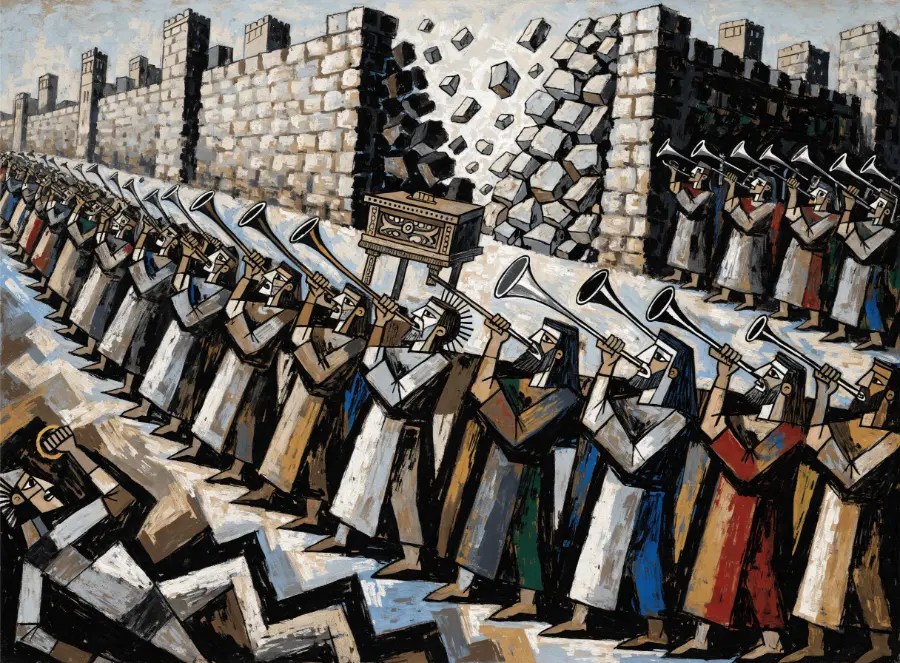
Why is six called the number of man?
It starts in Genesis and does not take long to tell. On the sixth day God said, “Let us make man in our image, after our likeness” (Genesis 1:26), and on the next “God ended his work which he had made; and he rested on the seventh day from all his work” (Genesis 2:2). When the Law comes it hands that same order on to Israel, “For in six days the Lord made heaven and earth, the sea, and all that in them is, and rested the seventh day” (Exodus 20:11), and so Israel is given six days for work and a seventh to lay it down. Man was made on the sixth day and works through the six, and people have put the two together. It is a fair thing to notice, though Genesis never draws the line itself.
How many times does the Bible say “six”?
We went through the King James Bible and counted, using the Project Gutenberg text with no Apocrypha, and the word “six” comes 202 times in 190 verses. That is the word standing on its own, so “sixteen” and “sixty” are not in the number. “Sixth” comes another 47 times in 44 verses, and if you want something to set beside it, “seven”, counted the same way, comes 463 times in 391 verses.
Most of those 190 verses have no lesson in them about six, and we would not expect them to. Numbers, Ezra and Nehemiah alone hold 47 of them, mostly census totals and the lists of families who came back from exile, and only 13 of the 190 are in the New Testament. When someone wrote down a tribe’s head count and it had a six in it, he was telling us how many people there were, and we can let him do that.
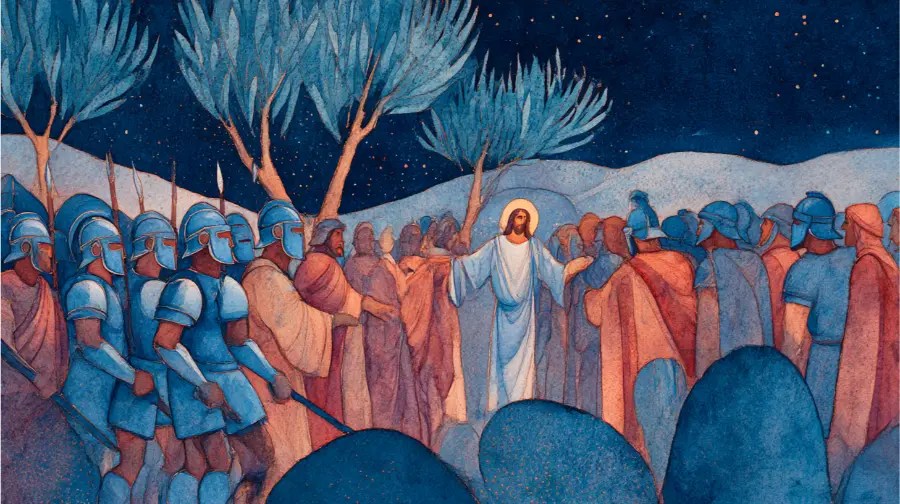
Where does six come up in Scripture?
Where six does seem to be doing something is when a seventh comes right behind it. A Hebrew servant “six years he shall serve: and in the seventh he shall go out free for nothing” (Exodus 21:2), and Deuteronomy 15:12 says the same. The farmer lives by that count too: “Six years thou shalt sow thy field, and six years thou shalt prune thy vineyard,” and then “in the seventh year shall be a sabbath of rest unto the land” (Leviticus 25:3–4). Even on Sinai the cloud “covered it six days: and the seventh day he called unto Moses” (Exodus 24:16). Six is the long part. On the seventh the servant goes free, the ground gets its rest, and Moses hears God call him.
Israel’s cities of refuge have no seventh coming after them: “there shall be six cities for refuge,” so that “every one that killeth any person unawares may flee thither” (Numbers 35:6, 15). At the wedding at Cana “there were set there six waterpots of stone, after the manner of the purifying of the Jews” (John 2:6), and John never says why there were six. He is far more interested in what Jesus did with them: “This beginning of miracles did Jesus in Cana of Galilee, and manifested forth his glory; and his disciples believed on him” (John 2:11). When we are told that Goliath’s “height was six cubits and a span” (1 Samuel 17:4), or that Nebuchadnezzar’s image of gold was “threescore cubits” high and “the breadth thereof six cubits” (Daniel 3:1), we are being told how big they were, and the story moves on.
Does six always mean something bad?
It cannot, when we find it on the wings of the seraphim. Isaiah saw them at the throne of God: “Above it stood the seraphims: each one had six wings; with twain he covered his face, and with twain he covered his feet, and with twain he did fly” (Isaiah 6:2). John saw four beasts, as the King James calls them, that “had each of them six wings about him,” and “they rest not day and night, saying, Holy, holy, holy, Lord God Almighty” (Revelation 4:8). If six were simply the number of man without God, we would have to ask what it was doing up there.
You might think otherwise after reading “These six things doth the Lord hate: yea, seven are an abomination unto him” (Proverbs 6:16), but read on and the list that follows has seven things on it, from a proud look to “he that soweth discord among brethren” (Proverbs 6:17–19). The writer says six and goes up to seven to press his point, and six is not the thing God hates. Job 5:19 counts the same way, and there it is a comfort: “He shall deliver thee in six troubles: yea, in seven there shall no evil touch thee.”
Is six a perfect number or an imperfect one?
Two readers went to those same six days and came back with opposite answers, and it helps to hear them one after the other. Augustine, in The City of God, says God did not need all that time. The works of creation are “recorded to have been completed in six days,” he writes, “because six is a perfect number,” and he shows his working: a sixth of six is one, a third of it is two, half of it is three, and one and two and three make six again (City of God 11.30). He gets there by arithmetic, and no verse says six is perfect, though he tells us we must not despise “the science of numbers,” which he calls “of eminent service to the careful interpreter.” Of the seventh day, where the rest of God is set forth, he says that seven is perfect too, “though for another reason” (11.31).
E. W. Bullinger, in the 1894 edition of Number in Scripture, takes the six days the other way and calls six “the number of imperfection; the human number.” He gets there by more than one road, four and two, or five and one, or seven less one, and “In any case” he says it comes out at man. He adds that man was created on the sixth day, and that the Sixth Commandment, in his numbering, is the one about murder. So one man heard perfect and the other imperfect, and Genesis does not choose between them.
What about 666?
The six most people have heard about is in Revelation 13: “Here is wisdom. Let him that hath understanding count the number of the beast: for it is the number of a man; and his number is Six hundred threescore and six” (Revelation 13:18). John says that number belongs to a man. He says nothing there about the waterpots at Cana or the wings of the seraphim, and we should not make him.
Christians have read the verse in more than one way. Ellicott’s Commentary for English Readers, to take one, notes that some manuscripts read 616, and it takes 666 as a symbol of what human wisdom and power can reach without God: “with all its vaunted perfection, it is imperfect.” It also sets out other readings that add up the letters of a name, Nero Caesar and Lateinos, the second of which Irenaeus mentioned. There is more on the manuscripts in 616 in the Bible, and on the mark itself in What is the mark of the beast?
Six days and then the seventh
Six is the days we work and the years a servant served, the cities where someone could run for safety and the wings over the seraphim’s faces, and none of those verses curses it. People have heard “man” in it because man was made on the sixth day, the same day that ended with God calling everything he had made very good.
The week has one more day in it, which we take up in the number 7 in the Bible, and Genesis rounds off the six with these words: “And God blessed the seventh day, and sanctified it” (Genesis 2:3).


Leave a Reply