
 English
 Chinese
 Dutch
 Arabic
 Spanish
 Portuguese
 Russian
 French
 Italian
 German
 Japanese
The Bible never says what the number twelve means, and it uses twelve to count God’s people: the twelve tribes of Israel, the twelve apostles, and the twelve gates and foundations of the holy city in Revelation 21. It starts with Jacob’s sons, and it ends with the names of the tribes on the city’s gates and the names of the apostles in its foundations.
We went through the Project Gutenberg text of the King James Version counting the word “twelve” on its own, without “twelfth”, and it comes 188 times in 164 verses, 113 times in the Old Testament and 75 in the New. The count on biblestudy.org is one higher, 189 times in 165 verses, 114 of those times in the Old Testament. We read our 164, right down to the temple singers of 1 Chronicles 25, where the word comes 23 times in one chapter, and not one of them says what the number itself stands for.
A few do say what one particular twelve is for. Moses’s twelve pillars (Exodus 24:4), the high priest’s twelve stones (Exodus 28:21) and Elijah’s twelve stones (1 Kings 18:31) are for the tribes, the twelve thrones are for judging the tribes (Matthew 19:28), and the city’s gates and foundations carry the names of the tribes and the apostles (Revelation 21:12, 14). Those verses explain those twelves, and the number itself is left unexplained. What Scripture does with it, from its first book to its last, is put names to it.
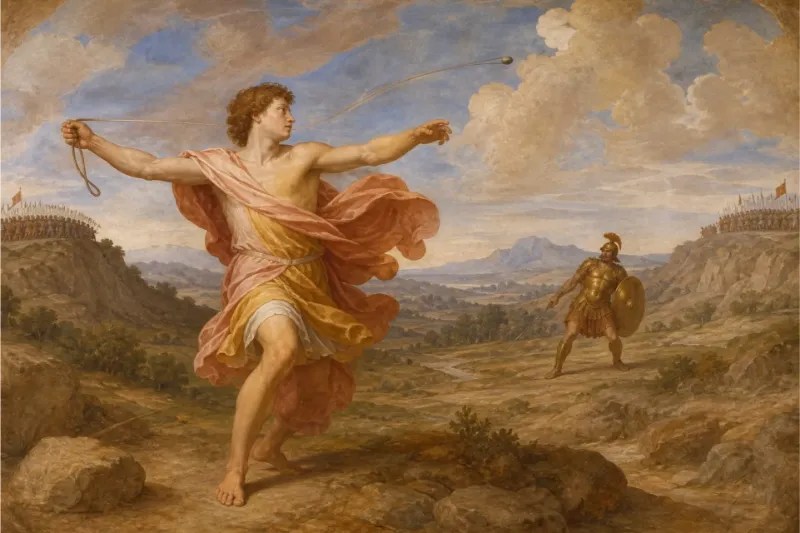
Why are there twelve tribes of Israel?
Because Jacob had twelve sons, and the verse that first says so is worth reading right through, since Genesis makes no effort to tidy it: “Reuben went and lay with Bilhah his father’s concubine: and Israel heard it. Now the sons of Jacob were twelve” (Genesis 35:22). The firstborn’s sin and the family count come in one breath. Then Genesis reads out the names by their mothers, Reuben, Simeon, Levi, Judah, Issachar and Zebulun from Leah, Joseph and Benjamin from Rachel, Dan and Naphtali from Bilhah, Gad and Asher from Zilpah (Genesis 35:23–26).
The brothers went on calling themselves twelve after they had sold Joseph into Egypt (Genesis 45:4). Years later they stand before the governor of that land and tell him, “Thy servants are twelve brethren, the sons of one man in the land of Canaan; and, behold, the youngest is this day with our father, and one is not” (Genesis 42:13). The governor is Joseph, and they do not know him (Genesis 42:8), so the one who is not is standing in front of them, listening.
At the end of his life Jacob blesses them, and Genesis says of the whole family, “All these are the twelve tribes of Israel” (Genesis 49:28). God had promised the same number to Ishmael, “twelve princes shall he beget, and I will make him a great nation” (Genesis 17:20), and Genesis writes those sons down as well: “These are the sons of Ishmael, and these are their names” (Genesis 25:16).
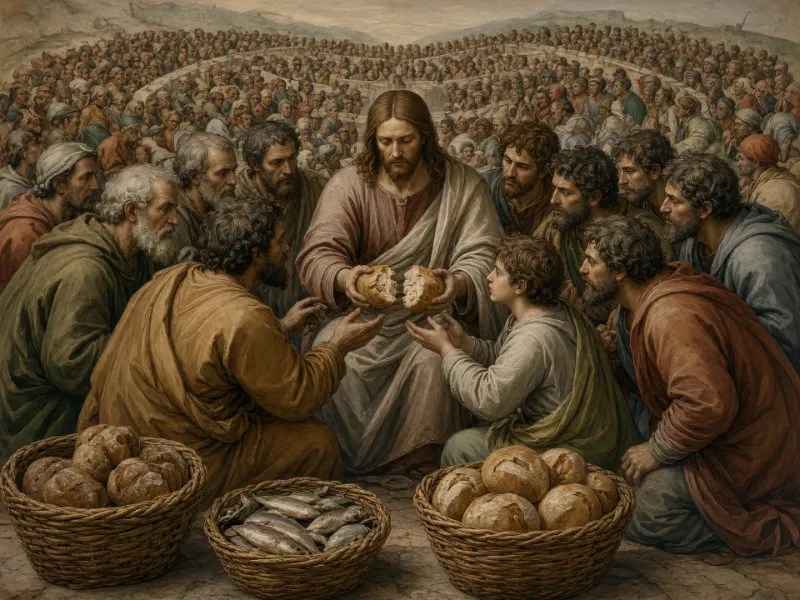
What were the twelve stones and pillars for?
Every time Scripture gives a reason for a twelve in Israel’s worship the reason is the tribes, and their names come along with them. The high priest wears stones “with the names of the children of Israel, twelve, according to their names,” and before the verse is over it says it again, “every one with his name shall they be according to the twelve tribes” (Exodus 28:21). Elijah takes “twelve stones, according to the number of the tribes of the sons of Jacob, unto whom the word of the Lord came, saying, Israel shall be thy name” (1 Kings 18:31), and there is the name again, the one God gave the man himself.
The Bible even has someone ask very nearly what we are asking. When all the people have crossed the Jordan, twelve men each take up a stone “according unto the number of the tribes of the children of Israel” (Joshua 4:5), and the stones are set there so that one day the children will ask their fathers, “What mean ye by these stones?” (Joshua 4:6). The answer the fathers are told to give has no arithmetic in it. They are to say “That the waters of Jordan were cut off before the ark of the covenant of the Lord” (Joshua 4:7). Twelve is how many stones there are, one for each tribe, and what they mean is what happened at the river.
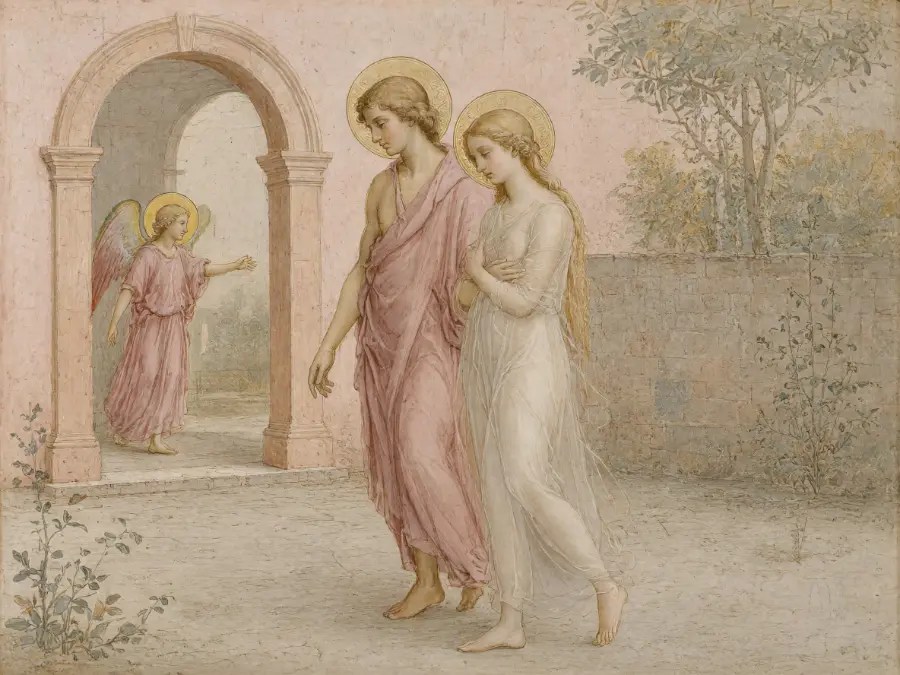
Are the twelve tribes always the same twelve?
When John hears the sealed counted out in Revelation 7, twelve thousand from each of twelve tribes, the roll runs Juda, Reuben, Gad, Aser, Nephthalim, Manasses, Simeon, Levi, Issachar, Zabulon, Joseph and Benjamin (Revelation 7:5–8), which is not quite the family Genesis read out. Dan is gone, Manasses has come in, and there is Reuben, second in line. E. W. Bullinger, who wrote a whole book on numbers in the Bible, says of the sons of Israel, “though actually thirteen in number, there are never more than twelve names in any one list,” and Augustine mentions in passing “the tribe of Levi, which is the thirteenth.” So there were thirteen to choose from, and on Bullinger’s reckoning the list always comes out at twelve.
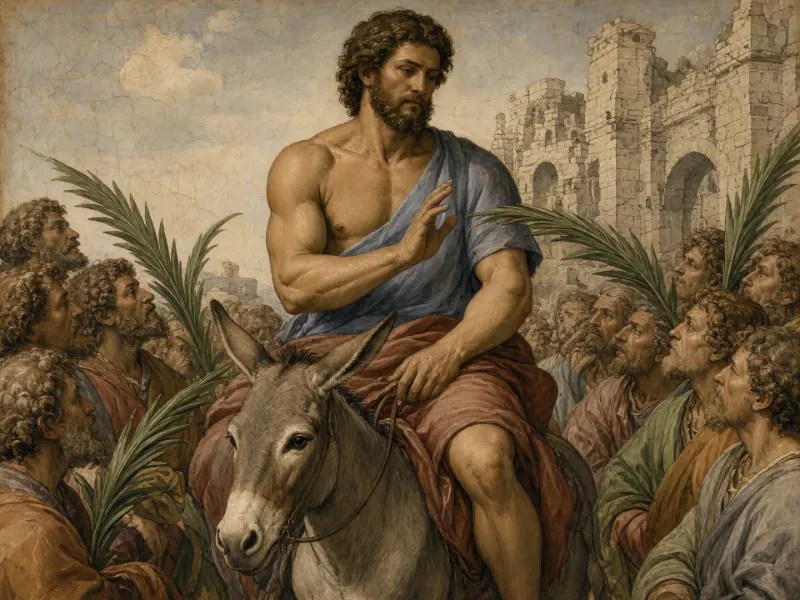
Why did Jesus choose twelve apostles?
Jesus went up into a mountain, Mark tells us, “and he ordained twelve, that they should be with him, and that he might send them forth to preach” (Mark 3:14). He ties the number to Jacob’s family himself: “ye also shall sit upon twelve thrones, judging the twelve tribes of Israel” (Matthew 19:28). He says it again at the supper, where Luke has him promise that they will “sit on thrones judging the twelve tribes of Israel” (Luke 22:30).
Matthew does what Genesis did and sets them down by name: “Now the names of the twelve apostles are these” (Matthew 10:2). He is no tidier about it than Genesis was, and the last man on his list is “Judas Iscariot, who also betrayed him” (Matthew 10:4). Our page on the twelve apostles goes through them one by one.
Why was Matthias chosen to replace Judas?
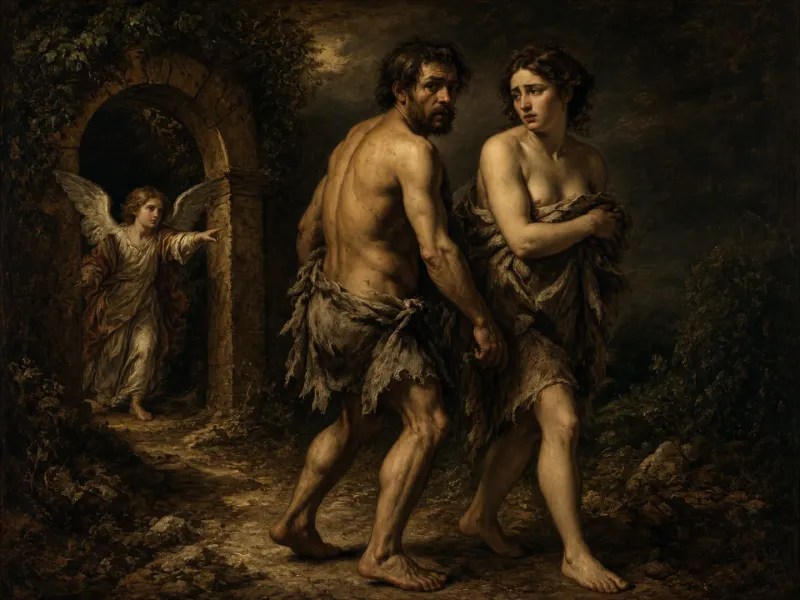
Once Judas was gone, Peter stood up among the disciples and went to the Psalms, “his bishoprick let another take” (Acts 1:20). The man who took it had to be someone who had been with them “from the baptism of John, unto that same day that he was taken up,” and he was to be “ordained to be a witness with us of his resurrection” (Acts 1:22). They put forward two names, “Joseph called Barsabas, who was surnamed Justus, and Matthias” (Acts 1:23). They prayed, the lot fell, and Matthias “was numbered with the eleven apostles” (Acts 1:26).
Luke does not tell us in so many words that this was done to get back to twelve, and we should say no more than he does, though Paul, writing later, still calls the company by its number when he says the risen Jesus “was seen of Cephas, then of the twelve” (1 Corinthians 15:5). Count Paul as well and there are thirteen, and Augustine saw the difficulty: since “Matthias was ordained an apostle in the room of Judas the traitor,” twelve thrones for twelve men would leave Paul with “no throne of judgment,” so he would not take the twelve for a head count.
Later on, when Herod “killed James the brother of John with the sword” (Acts 12:2), the next verses turn to Peter’s arrest and name no one to take James’s place. So Luke shows us the gap Judas left being filled, he shows nobody filling the gap Herod’s sword left, and he does not tell us why. Our page on how the apostles died looks at what the Bible does and does not record about the rest.
What does 12 mean in Revelation?
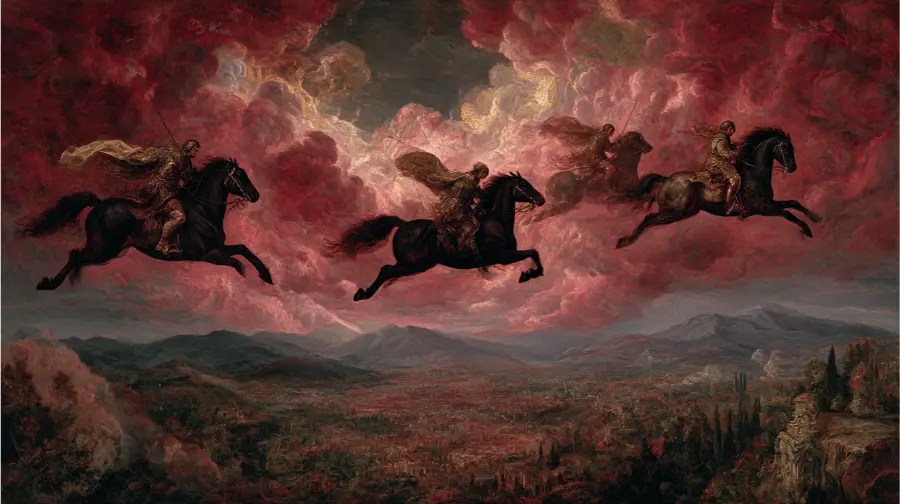
The word comes 22 times in Revelation, and eight of those are in chapter 21, where John is shown “that great city, the holy Jerusalem” (Revelation 21:10). It has “a wall great and high, and had twelve gates, and at the gates twelve angels, and names written thereon, which are the names of the twelve tribes of the children of Israel” (Revelation 21:12), and “the wall of the city had twelve foundations, and in them the names of the twelve apostles of the Lamb” (Revelation 21:14). The measurements run in twelves too, down to a wall of “an hundred and forty and four cubits” (Revelation 21:17), twelve times twelve, but it is the names we want to stay with.
So in Revelation twelve goes on doing what it has done all along, counting the people of God, the tribes and the apostles together in one city, by name. John does not read the names out to us, but we have met these people. On the gates are the tribes of that family in Genesis, with the firstborn who lay with his father’s concubine and the brothers who sold Joseph. In the foundations are the apostles of the Lamb, the men of whom Matthew says, on the night Jesus was taken, “all the disciples forsook him, and fled” (Matthew 26:56). Those are the names written on the walls of the holy city.
How did the early church writers read twelve?
Two of the old readers left us what they saw in the number, each speaking for himself. Victorinus, bishop of Pettau, who probably died a martyr in 303 under Diocletian, looked at the woman of Revelation 12 with twelve stars on her head and saw the forefathers of Jesus: “the crown of twelve stars signifies the choir of fathers, according to the fleshly birth, of whom Christ was to take flesh.” If he is right, the family we began with ends up as stars.
Augustine, who lived from 354 to 430, looked at the thrones of Matthew 19:28 and saw a crowd on them. In the City of God he will not suppose “that only twelve men shall judge,” because “by the number twelve is signified the completeness of the multitude of those who shall judge.” Then he leaves the door open behind him: “There are other meanings, too, in this number twelve.”
Does 12 mean “governmental perfection”?
That is Bullinger’s answer, and number pages still repeat it. In Number in Scripture he wrote that twelve “is a perfect number, signifying perfection of government, or of governmental perfection,” and he reached it by multiplying: “Twelve is the product of 3 (the perfectly Divine and heavenly number) and 4 (the earthly, the number of what is material and organic).” It suits the tribes and the apostles on their thrones well enough. No verse does that sum, though, and the pattern has to reach for twelves the text only counts. Jesus’s “more than twelve legions of angels” (Matthew 26:53) becomes “the perfection of angelic powers,” and Jesus at twelve “when He first appears in public” (Luke 2:42) goes on the list, while Mark gives the same number to a woman who had been ill for as long as the girl in the same chapter had been alive (Mark 5:25, 42) and says nothing about it.
Which twelves does the Bible leave unexplained?
A good many of the 188, and that goes for the chapter that says the word more often than any other in the Bible. It is 1 Chronicles 25, a list of singers “for song in the house of the Lord” (1 Chronicles 25:6), and “they cast lots, ward against ward, as well the small as the great, the teacher as the scholar” (1 Chronicles 25:8). Then come twenty-four lots with a man’s name on each, and twenty-three verses in a row end on the same word. “The third to Zaccur, he, his sons, and his brethren, were twelve,” the list says (1 Chronicles 25:10), and it is still saying it at “The four and twentieth to Romamtiezer, he, his sons, and his brethren, were twelve” (1 Chronicles 25:31). Verse 7 gives the whole company as “two hundred fourscore and eight.” If the Bible were going to explain twelve anywhere, we might look for it here, and the writer gives us the names and the total and leaves it at that.
The twelve rods go the same way. The verse does not say why twelve, and the instruction God gives Moses is about names: “write thou every man’s name upon his rod” (Numbers 17:2). Others are plainer still. The words “twelve years” come 13 times, and at Elim there were “twelve wells of water, and threescore and ten palm trees,” and all we are told is that “they encamped there by the waters” (Exodus 15:27).
The twelve baskets after the feeding of the five thousand look as though they ought to mean something. The disciples “took up of the fragments that remained twelve baskets full” (Matthew 14:20), and later Jesus asks them for the count, “how many baskets full of fragments took ye up? They say unto him, Twelve” (Mark 8:19). When they have given him the numbers he asks, “How is it that ye do not understand?” (Mark 8:21). The numbers plainly matter to him, and no Gospel says what the twelve means.
None of us will find our own name on those gates or in those foundations. At the end of the same chapter, though, John tells us who will go in: “they which are written in the Lamb’s book of life” (Revelation 21:27). And in the street of that city, he says, is “the tree of life, which bare twelve manner of fruits, and yielded her fruit every month: and the leaves of the tree were for the healing of the nations” (Revelation 22:2).


Leave a Reply