
 English
 Chinese
 Dutch
 Arabic
 Spanish
 Portuguese
 Russian
 French
 Italian
 German
 Japanese
The Bible treats partnership as good for work, for marriage and for the spread of the gospel, and it also sets a limit on whom a believer should be joined with. Peter’s fishing partners appear in Luke 5, Paul thanks the Philippians for their “partnership in the gospel” (Philippians 1:5), and 2 Corinthians 6:14 gives the limit.
The New Testament has several Greek words for a partner. Luke uses metochos for the men in the second boat (Luke 5:7) and koinonos for James and John (Luke 5:10), and Paul uses koinonos for Titus (2 Corinthians 8:23) and koinonia, sharing, for the Philippians (Philippians 1:5). Paul’s other word for the people he worked with is sunergos, fellow worker, the word behind “co-workers” in 1 Corinthians 3:9.
Partners in a trade and in daily work

Luke 5:7
“So they signaled their partners in the other boat to come and help them, and they came and filled both boats so full that they began to sink.”
Reflection: Simon had “worked hard all night” and caught nothing (5:5), then let down the nets again at Jesus’ word and took so many fish that the nets began to break. The partners in the other boat were James and John, the sons of Zebedee, whom verse 10 calls “Simon’s partners”, using koinonos. After Jesus told Simon “from now on you will fish for people”, the partners pulled their boats ashore, “left everything and followed him” (5:11).
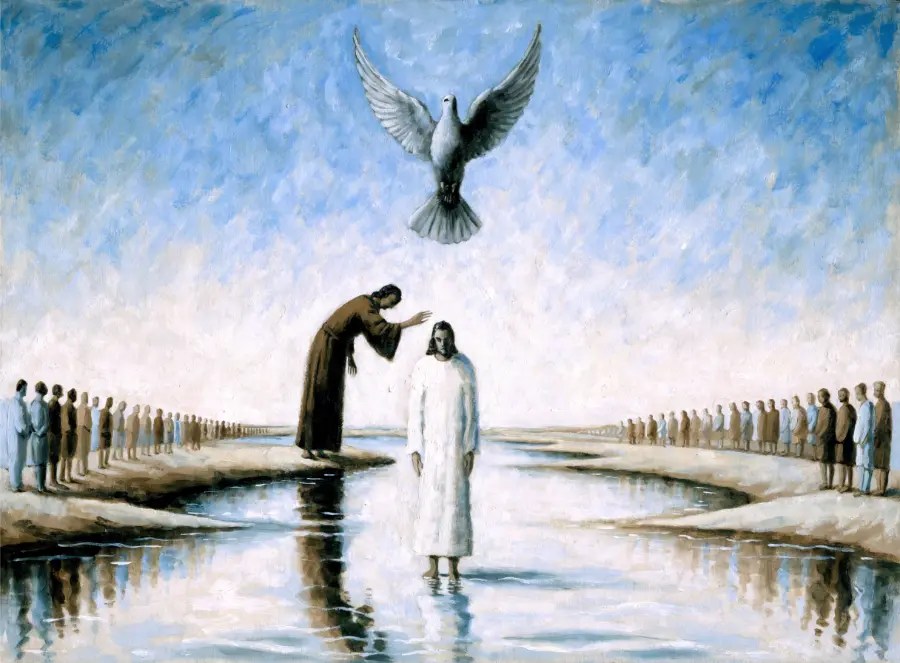
Ecclesiastes 4:9-10
“Two are better than one, because they have a good return for their labor: If either of them falls down, one can help the other up. But pity anyone who falls and has no one to help them up.”
Reflection: The Teacher has just described “a man all alone” who “had neither son nor brother” and who toils without end, asking, “For whom am I toiling?” (4:8). His case for two is practical: they “have a good return for their labor”, and when one falls the other can lift him up. Verse 11 adds that two lying down together keep warm.

Ecclesiastes 4:12
“Though one may be overpowered, two can defend themselves. A cord of three strands is not quickly broken.”
Reflection: The last advantage the Teacher names is defence: one person can be overpowered where two can hold off an attacker. The line about a cord of three strands raises the count from two to three without saying who or what the third strand is. Nothing in Ecclesiastes 4:7-12 mentions marriage; the passage is about the lone worker of verse 8 and the companions he lacks.
Husband and wife
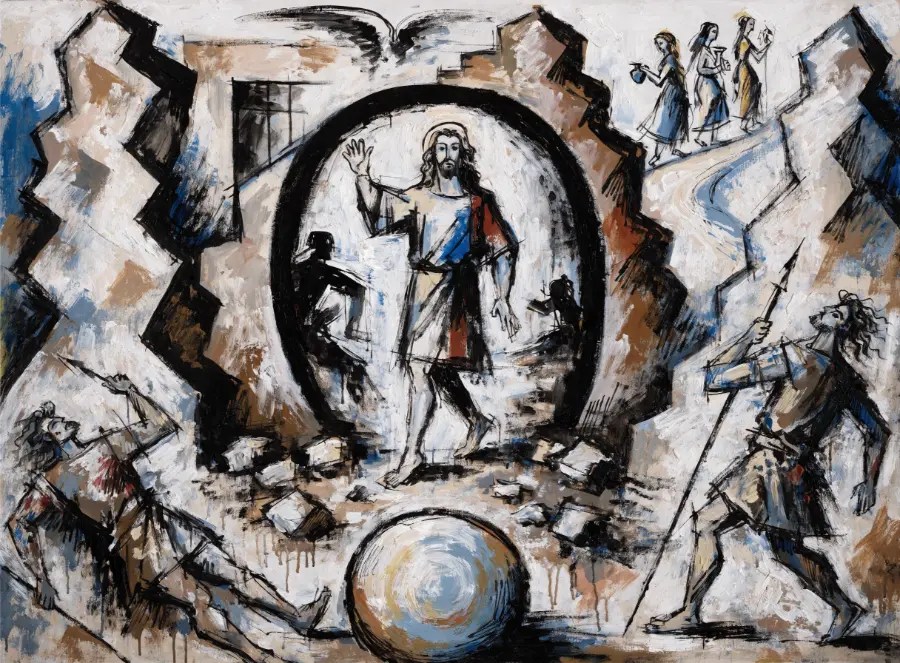
Genesis 2:18
“The Lord God said, ‘It is not good for the man to be alone. I will make a helper suitable for him.’”
Reflection: The verse comes after God has put the man in the garden “to work it and take care of it” (2:15), and the helper is made for a man who already has that work. In the first chapter, the work of filling the earth and ruling over the creatures is given to both together: “God blessed them and said to them” (1:28). The Hebrew noun for helper, ezer, is used of God himself in Psalm 33:20: “he is our help and our shield”.

Ephesians 5:31
“For this reason a man will leave his father and mother and be united to his wife, and the two will become one flesh.”
Reflection: Paul quotes Genesis 2:24 in the middle of his instructions that husbands should love their wives “as their own bodies” (5:28). The next sentence turns the quotation in a second direction: “This is a profound mystery—but I am talking about Christ and the church” (5:32). The verse therefore stands in Ephesians for both the union of husband and wife and the union of Christ with his church.
Friends and companions

Proverbs 17:17
“A friend loves at all times, and a brother is born for a time of adversity.”
Reflection: The proverb pairs a friend with a brother. The friend’s love holds “at all times”, and the brother is “born for a time of adversity”, so the second line names the hard times as the occasion a brother is for. Proverbs 18:24 makes the comparison run the other way: “there is a friend who sticks closer than a brother.”

Proverbs 27:17
“As iron sharpens iron, so one person sharpens another.”
Reflection: Iron is sharpened by working it against iron, and the proverb applies that to people: one sharpens another. A few lines earlier the same chapter says that “the pleasantness of a friend springs from their heartfelt advice” (27:9), and it adds, “Do not forsake your friend or a friend of your family” (27:10).
Sent out two by two

Mark 6:7
“Calling the Twelve to him, he began to send them out two by two and gave them authority over impure spirits.”
Reflection: Jesus sent the Twelve out in pairs with authority over impure spirits and told them to take nothing but a staff: “no bread, no bag, no money in your belts” (6:8). The pairs preached repentance, drove out demons and anointed the sick with oil (6:12-13). When they came back, they “gathered around Jesus and reported to him all they had done and taught” (6:30).
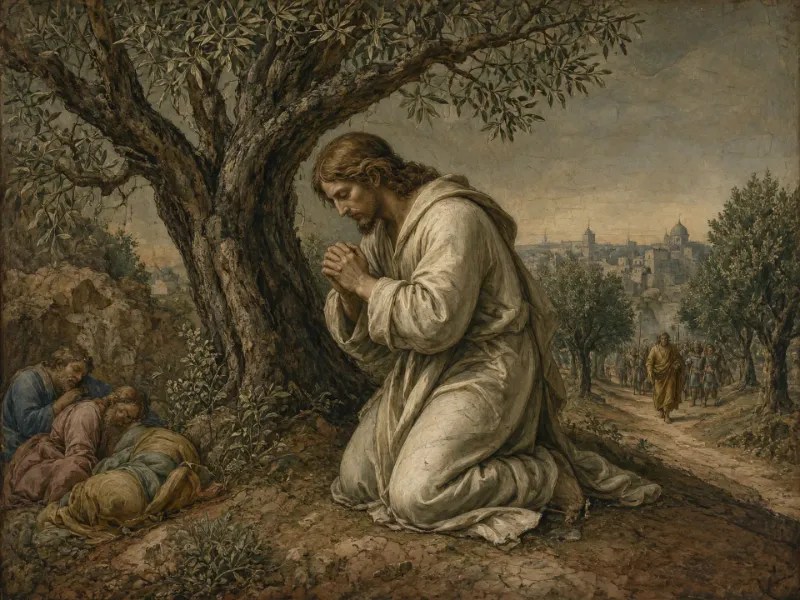
Acts 13:2-3
“While they were worshiping the Lord and fasting, the Holy Spirit said, ‘Set apart for me Barnabas and Saul for the work to which I have called them.’ So after they had fasted and prayed, they placed their hands on them and sent them off.”
Reflection: The church at Antioch had five prophets and teachers (13:1), and the Holy Spirit set apart two of them, Barnabas and Saul, for one work. The church fasted, prayed and laid hands on them before sending them off, and verse 5 adds that John went with them “as their helper”. The same partnership later broke: Barnabas wanted to take John Mark again, Paul refused because Mark had deserted them in Pamphylia, and “they had such a sharp disagreement that they parted company” (Acts 15:39).
Partners in the gospel
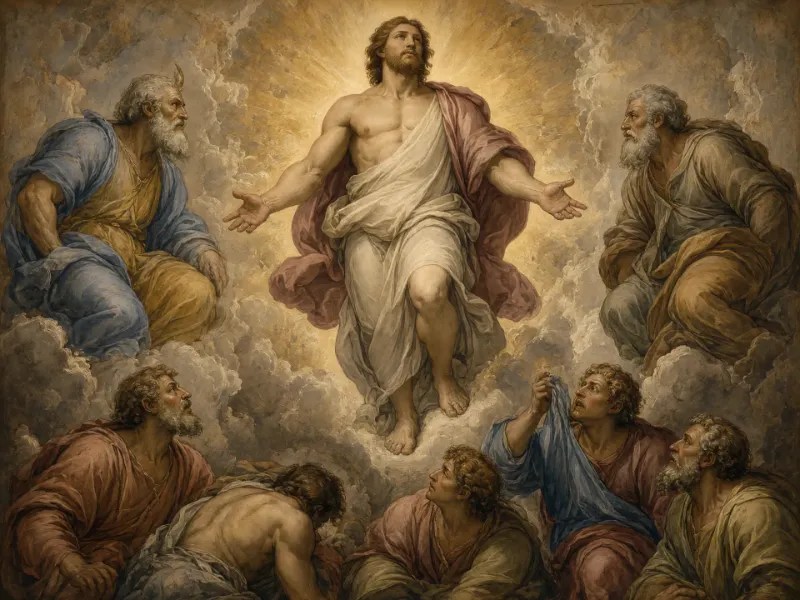
Philippians 1:5
“Because of your partnership in the gospel from the first day until now.”
Reflection: Paul thanks God for the Philippians’ koinonia, their sharing, “in the gospel from the first day until now”. Later in the letter he says what that sharing included: when he left Macedonia, “not one church shared with me in the matter of giving and receiving, except you only” (4:15), and they sent him aid in Thessalonica more than once (4:16). He wrote while “in chains” (1:7), and counts the Philippians as sharing God’s grace with him there.

Philippians 4:3
“Yes, and I ask you, my true companion, help these women since they have contended at my side in the cause of the gospel, along with Clement and the rest of my co-workers, whose names are in the book of life.”
Reflection: Paul has just pleaded with two women, Euodia and Syntyche, “to be of the same mind in the Lord” (4:2), and now asks someone he calls “my true companion” to help them. The Greek is suzugos, yoke-fellow. Thayer’s lexicon records that most interpreters take it as addressed to one particular associate of Paul, and that other expositors read it as a proper name, Syzygus, because it stands among other names; Thayer judges the second reading more correct. Both women had “contended at my side in the cause of the gospel”, which puts them among his co-workers alongside Clement.
2 Corinthians 8:23
“As for Titus, he is my partner and co-worker among you; as for our brothers, they are representatives of the churches and an honor to Christ.”
Reflection: Paul is sending Titus and two other brothers to Corinth about the collection for the churches, and he takes care over who handles the money: “We want to avoid any criticism of the way we administer this liberal gift” (8:20). He calls Titus both his koinonos, partner, and his sunergos, co-worker. One of the brothers travelling with Titus had been “chosen by the churches to accompany us as we carry the offering” (8:19).
1 Corinthians 3:9
“For we are co-workers in God’s service; you are God’s field, God’s building.”
Reflection: The Corinthians were quarrelling over leaders, one saying “I follow Paul” and another “I follow Apollos” (3:4). Paul answers that both men are servants: “I planted the seed, Apollos watered it, but God has been making it grow” (3:6), and the two “have one purpose” (3:8). The NIV reads “co-workers in God’s service”, while the King James Version has “labourers together with God”; in both, the Corinthians are the field and the building.
One body sharing the work

1 Corinthians 12:12
“Just as a body, though one, has many parts, but all its many parts form one body, so it is with Christ.”
Reflection: Paul compares the church to a body whose parts depend on one another, and he names who belongs to it: all were baptized by one Spirit into one body, “whether Jews or Gentiles, slave or free” (12:13). A few verses on he rules out any part standing alone: “The eye cannot say to the hand, ‘I don’t need you!’” (12:21).

Galatians 6:2
“Carry each other’s burdens, and in this way you will fulfill the law of Christ.”
Reflection: The command follows directly on an instruction to restore gently someone caught in a sin (6:1). Three verses later Paul tells each reader to test their own actions and adds that “each one should carry their own load” (6:5), so the same passage asks for shared burdens and for each person’s own responsibility.

Hebrews 10:24-25
“And let us consider how we may spur one another on toward love and good deeds, not giving up meeting together, as some are in the habit of doing, but encouraging one another—and all the more as you see the Day approaching.”
Reflection: The writer asks the readers to think about how to “spur one another on toward love and good deeds”, and connects that with meeting together, which some had stopped doing. The verse before gives the ground for it, “he who promised is faithful” (10:23), and the passage presses it harder “as you see the Day approaching”.
Two who agree in prayer

Matthew 18:19-20
“Again, truly I tell you that if two of you on earth agree about anything they ask for, it will be done for them by my Father in heaven. For where two or three gather in my name, there am I with them.”
Reflection: Jesus says this after his instructions for dealing with a brother or sister who sins, first in private, then with “one or two others”, then before the church (18:15-17), and after the saying about binding and loosing (18:18). The “two or three” of verse 20 repeat the number of witnesses in verse 16, so the promise about two agreeing in prayer stands in a passage about a church settling a wrong between its members.
A partnership Paul warns against
2 Corinthians 6:14
“Do not be yoked together with unbelievers. For what do righteousness and wickedness have in common? Or what fellowship can light have with darkness?”
Reflection: Paul’s picture is of a shared enterprise: two animals under one yoke must go the same way and pull the same load. The Greek verb, heterozugeo, is glossed in Thayer’s lexicon as having fellowship with one who is not an equal. Paul follows it with five questions, setting righteousness against wickedness, light against darkness, Christ against Belial, a believer against an unbeliever, and the temple of God against idols (6:14-16), then quotes “Come out from them and be separate” (6:17) and draws the conclusion in 7:1: “let us purify ourselves from everything that contaminates body and spirit”. The passage names neither marriage nor business.


Leave a Reply