
 English
 Chinese
 Dutch
 Arabic
 Spanish
 Portuguese
 Russian
 French
 Italian
 German
 Japanese
In the Bible, conviction is the exposing of sin so that a person sees and admits it. Jesus gives that work to the Helper he will send (John 16:8). It comes to David through Nathan’s “You are the man!” (2 Samuel 12:7) and to the crowd at Pentecost (Acts 2:37).
Godly grief over sin, Paul writes, “produces a repentance that leads to salvation” (2 Corinthians 7:10). The word also has a second sense in English Bibles: a settled certainty. Hebrews 11:1 calls faith “the conviction of things not seen,” using elenchos, a noun formed from elencho, the verb for “convict” in John 16:8. Paul’s certainty in Romans 8:38 (“I am sure”) and 2 Timothy 1:12 (“I am convinced”) is expressed with another verb, peitho, to persuade.
How sin is brought to light

John 16:8
“And when he comes, he will convict the world concerning sin and righteousness and judgment.”
Reflection: Jesus tells his disciples that his going away is to their advantage, because only then will the Helper come to them (John 16:7). The next three verses give the grounds of each charge: sin “because they do not believe in me,” righteousness “because I go to the Father,” and judgment “because the ruler of this world is judged.” The Greek verb is elencho, which Strong’s defines as to convict, reprove, expose, refute or correct.

Hebrews 4:12
“For the word of God is living and active, sharper than any two-edged sword, piercing to the division of soul and of spirit, of joints and of marrow, and discerning the thoughts and intentions of the heart.”
Reflection: The writer compares the word of God to a two-edged sword: the word pierces, and it also discerns “the thoughts and intentions of the heart.” Verse 13 moves from the word to God himself: “no creature is hidden from his sight, but all are naked and exposed to the eyes of him to whom we must give account.”
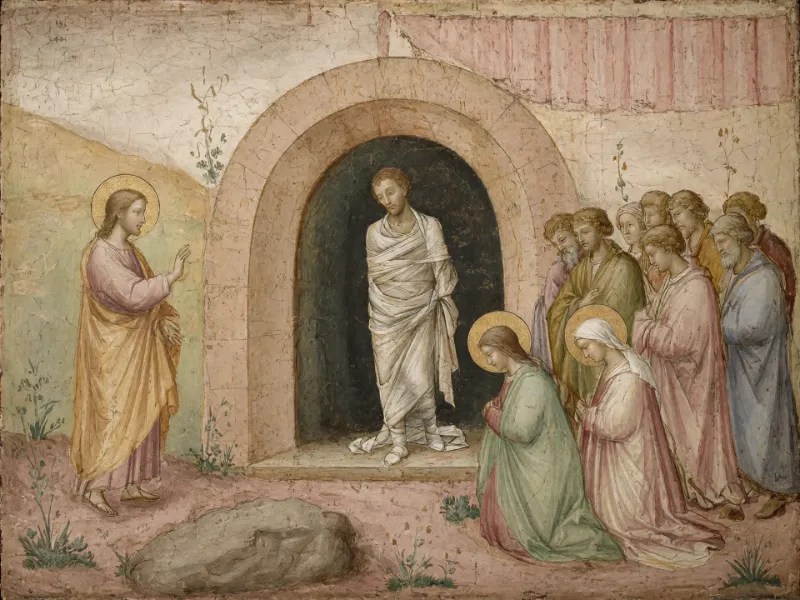
Acts 2:37
“Now when they heard this they were cut to the heart, and said to Peter and the rest of the apostles, ‘Brothers, what shall we do?’”
Reflection: Peter’s sermon at Pentecost ends with “this Jesus whom you crucified” (Acts 2:36), and the hearers, cut to the heart, ask what they should do. Peter answers, “Repent and be baptized every one of you in the name of Jesus Christ for the forgiveness of your sins” (2:38). Luke records that about three thousand were baptized that day (2:41).
Confronted by a prophet, by Jesus, by the law

2 Samuel 12:13
“David said to Nathan, ‘I have sinned against the LORD.’ And Nathan said to David, ‘The LORD also has put away your sin; you shall not die.’”
Reflection: Nathan came to David with a story about a rich man who took a poor man’s one ewe lamb to feed a guest. David, angry, said the man deserved to die, and Nathan replied, “You are the man!” (2 Samuel 12:7). David’s answer is this confession, and in the same verse Nathan tells him the LORD has put away his sin, though the child born to him will die (12:14). The heading of Psalm 51 places that psalm at this moment.

John 8:9
“But when they heard it, they went away one by one, beginning with the older ones, and Jesus was left alone with the woman standing before him.”
Reflection: The scribes and Pharisees had brought a woman caught in adultery to test Jesus, and he answered, “Let him who is without sin among you be the first to throw a stone at her” (John 8:7). The accusers leave, oldest first. The King James Version reads “being convicted by their own conscience, went out one by one”; the ESV has no such phrase. Jesus then tells the woman, “Neither do I condemn you; go, and from now on sin no more” (8:11).

James 2:9
“But if you show partiality, you are committing sin and are convicted by the law as transgressors.”
Reflection: James has described a congregation that seats a man in fine clothing “in a good place” and tells a poor man, “You stand over there” (James 2:2-3). Partiality, he says, is sin, and it is the law that convicts; the verb is elencho, as in John 16:8. The next verse gives the reason one failure counts: “whoever keeps the whole law but fails in one point has become guilty of all of it.”
Conscience and a heart that condemns

Romans 2:15
“They show that the work of the law is written on their hearts, while their conscience also bears witness, and their conflicting thoughts accuse or even excuse them.”
Reflection: Paul is writing about Gentiles who do not have the law yet “by nature do what the law requires” (Romans 2:14). Their conscience bears witness, and their thoughts accuse or excuse them. Verse 16 sets that inner testimony before a future verdict: “on that day when, according to my gospel, God judges the secrets of men by Christ Jesus.”

1 Timothy 1:19
“…holding faith and a good conscience. By rejecting this, some have made shipwreck of their faith.”
Reflection: Paul charges Timothy to wage “the good warfare” (1 Timothy 1:18) holding two things together, faith and a good conscience. Some rejected the good conscience and wrecked their faith with it. Paul names two of them, Hymenaeus and Alexander, in the next verse.

1 John 3:20
“…for whenever our heart condemns us, God is greater than our heart, and he knows everything.”
Reflection: John has told his readers to love “in deed and in truth” (1 John 3:18), and says that by this they will “reassure our heart before him.” For the times when the heart still condemns, he sets God’s knowledge above the heart’s verdict. Verse 21 describes the other case: “if our heart does not condemn us, we have confidence before God.”

Psalm 139:23-24
“Search me, O God, and know my heart! Try me and know my thoughts! And see if there be any grievous way in me, and lead me in the way everlasting.”
Reflection: The psalm opens with a statement, “O LORD, you have searched me and known me!” (Psalm 139:1), and closes by turning it into a request. Just before, David has declared his hatred for God’s enemies (139:19-22). He then asks God to test his own thoughts as well and to find any “grievous way” in him.
What conviction leads to

Psalm 51:17
“The sacrifices of God are a broken spirit; a broken and contrite heart, O God, you will not despise.”
Reflection: The heading of Psalm 51 sets it after Nathan went to David over Bathsheba. The verse before this one says God does not delight in sacrifice or take pleasure in burnt offering; what he accepts is a broken spirit. Earlier in the psalm David says, “I know my transgressions, and my sin is ever before me” (51:3).

2 Corinthians 7:10
“For godly grief produces a repentance that leads to salvation without regret, whereas worldly grief produces death.”
Reflection: Paul had sent a letter that grieved the Corinthians (2 Corinthians 7:8), and he rejoices, he says, “not because you were grieved, but because you were grieved into repenting” (7:9). Here he sets two kinds of grief side by side: one ends in salvation, the other in death. Verse 11 lists what the godly kind produced in Corinth: earnestness, eagerness to clear themselves, indignation, fear, longing and zeal.

Proverbs 28:13
“Whoever conceals his transgressions will not prosper, but he who confesses and forsakes them will obtain mercy.”
Reflection: The proverb sets out two ways of handling a transgression. Concealing it does not prosper. Mercy is promised to the one who both confesses and forsakes it: admitting the sin and leaving it are joined in one clause.
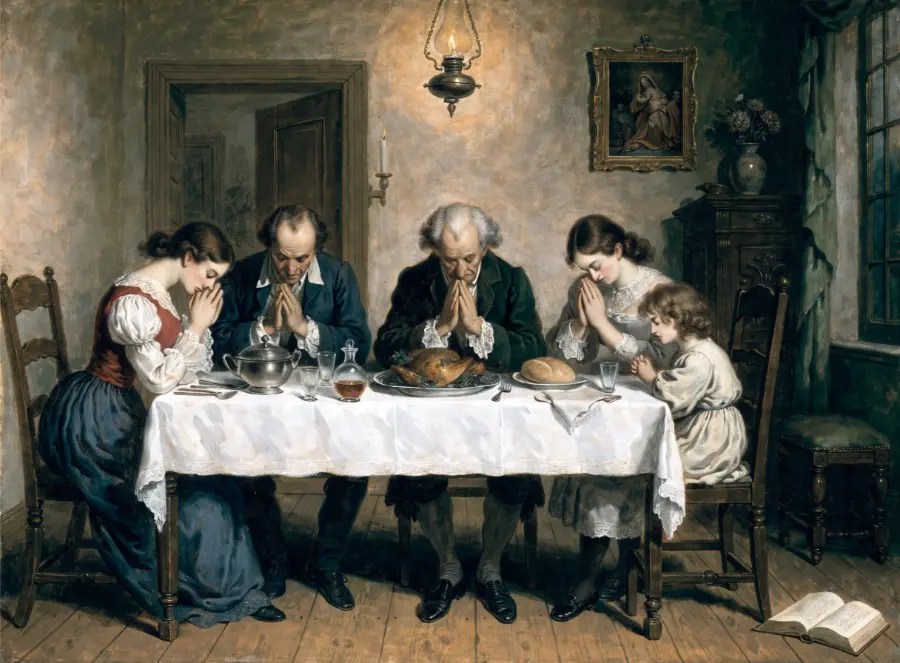
Luke 15:17-18
“But when he came to himself, he said, ‘How many of my father’s hired servants have more than enough bread, but I perish here with hunger! I will arise and go to my father…’”
Reflection: The younger son has spent everything “in reckless living” and, in a famine, is feeding another man’s pigs and longing for their food (Luke 15:13-16). “He came to himself” when hunger showed him that his father’s hired servants ate better. The words he plans to say follow: “Father, I have sinned against heaven and before you. I am no longer worthy to be called your son. Treat me as one of your hired servants” (15:18-19). His father sees him “while he was still a long way off” and runs to embrace him (15:20). When the son speaks, Luke records the confession without the request to be made a hired servant (15:21).
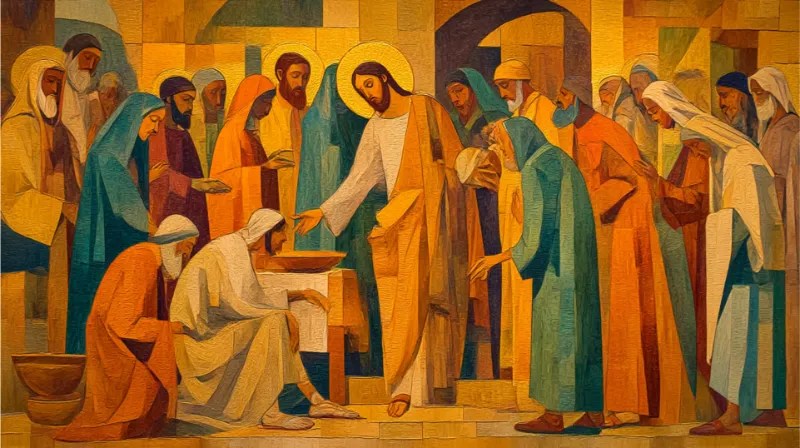
Acts 3:19
“Repent therefore, and turn back, that your sins may be blotted out.”
Reflection: After a man lame from birth was healed at the temple gate, the crowd ran together at Solomon’s portico (Acts 3:11), and Peter spoke to them. He says they acted “in ignorance” (3:17) and calls them to repent and turn back. Peter adds “that times of refreshing may come from the presence of the Lord” (3:20).
Conviction as settled certainty

1 Thessalonians 1:5
“…because our gospel came to you not only in word, but also in power and in the Holy Spirit and with full conviction.”
Reflection: Paul recalls how the gospel reached Thessalonica: in word, in power, in the Holy Spirit and “with full conviction.” The noun is plerophoria, which Strong’s gives as full assurance or complete certainty; it is a different word from the elencho of John 16:8. Verse 6 adds that the Thessalonians received the word “in much affliction, with the joy of the Holy Spirit.”

Hebrews 11:1
“Now faith is the assurance of things hoped for, the conviction of things not seen.”
Reflection: Here “conviction” translates elenchos, which Strong’s derives from elencho and defines as proof or conviction; the King James Version renders it “evidence.” Two verses later the chapter gives its first “By faith” statement: “By faith we understand that the universe was created by the word of God, so that what is seen was not made out of things that are visible” (11:3).

Romans 8:38-39
“For I am sure that neither death nor life, nor angels nor rulers, nor things present nor things to come, nor powers, nor height nor depth, nor anything else in all creation, will be able to separate us from the love of God in Christ Jesus our Lord.”
Reflection: The list answers the question of Romans 8:35, “Who shall separate us from the love of Christ?”, which Paul first tests against tribulation, distress, persecution, famine, nakedness, danger and sword. “I am sure” translates pepeismai, from peitho, to persuade: Paul has been persuaded. The same form stands behind “I am convinced” in 2 Timothy 1:12.

2 Timothy 1:12
“…But I am not ashamed, for I know whom I have believed, and I am convinced that he is able to guard until that day what has been entrusted to me.”
Reflection: Paul writes as “a preacher and apostle and teacher” (2 Timothy 1:11) who is suffering for it. His certainty rests on a person: “I know whom I have believed.” Translations divide over the last clause: the ESV reads “what has been entrusted to me,” and the NIV reads “what I have entrusted to him.”


Leave a Reply