
 English
 Chinese
 Dutch
 Arabic
 Spanish
 Portuguese
 Russian
 French
 Italian
 German
 Japanese
Every church on this page says that whoever is saved is saved by Jesus Christ, and they part over whether a person has to come to know him in this life. The Catholic Church teaches that people who, “through no fault of their own,” do not know the Gospel, yet seek God and follow their conscience, “may achieve eternal salvation.” The Orthodox Church in America says the Church “has no monopoly on grace and truth and love.” The Assemblies of God says nobody goes to hell for being born “in the wrong country or the wrong century,” though such people “are judged by their works against the light they have had available to them.” The Westminster Confession, the Thirty-nine Articles, the Southern Baptists’ Baptist Faith and Message and the evangelical Lausanne Covenant teach that there is no salvation apart from faith in Christ. Latter-day Saints teach that those who died without knowing the gospel, and would have received it, “shall be heirs of the celestial kingdom of God,” and Jehovah’s Witnesses that “God will bring billions back from death by means of a resurrection,” to learn God’s ways when they are raised.
Somebody once asked Jesus this very thing, while he was “journeying toward Jerusalem” (Luke 13:22). “Lord, are there few that be saved?” he was asked, and he gave no number at all. He said, “Strive to enter in at the strait gate: for many, I say unto you, will seek to enter in, and shall not be able” (Luke 13:23–24). Another day his disciples heard him say that a camel would go through the eye of a needle more easily than a rich man into the kingdom, and they “were astonished out of measure, saying among themselves, Who then can be saved?” This time he told them, “With men it is impossible, but not with God: for with God all things are possible” (Mark 10:26–27). So he answered the question twice, once with a gate we are to strive for ourselves and once with a God for whom nothing is impossible. The churches hold on to both answers, and they differ over how far the second reaches toward people who never stood at the gate.
| Church | Can a non-Christian be saved? | In its own words |
|---|---|---|
| Catholic | Yes, through Christ, if they do not know him through no fault of their own | “Those too may achieve eternal salvation” |
| Eastern Orthodox (Orthodox Church in America) | God alone judges every person | “No monopoly on grace and truth and love” |
| Coptic Orthodox | Faith and baptism are required; mercy for those who lived in ignorance, but their distance remains | “God’s mercy will be extended … but their distance, barriers, denunciations, and convictions will remain” |
| Lutheran (Missouri Synod) | Only those who trust in Jesus | “Those who trust in Jesus as their Savior will rise to eternal life” |
| Church of England (Thirty-nine Articles) | Only by the name of Christ | “Only the Name of Jesus Christ, whereby men must be saved” |
| Presbyterian (Westminster Confession) | No; none outside the Christian religion | “Much less can men, not professing the Christian religion, be saved” |
| Presbyterian Church (U.S.A.), 2002 | Only through Christ, but God’s freedom is not limited | “We do not presume to limit the sovereign freedom of God” |
| Southern Baptist | No, only through personal faith | “No salvation apart from personal faith in Jesus Christ” |
| Evangelical and nondenominational (Lausanne Covenant) | No; knowing God through nature cannot save | “We deny that this can save” |
| Churches of Christ (Apologetics Press) | Faith, repentance, immersion and the one church | “Members of the one, true, undenominational church” |
| Amish (Dordrecht Confession) | None shut out except those who despise the gospel | “Excluding no one … except the unbelieving and disobedient” |
| United Methodist | Offered to all, but not all will be saved | “Salvation available to all persons” |
| Church of the Nazarene | Christ’s atonement covers everyone; adults must repent and believe | “Sufficient for every individual of Adam’s race” |
| Salvation Army | Atonement for the whole world | “Whosoever will may be saved” |
| Mennonite Church USA | Offered to all, received by repenting and accepting Christ | “God offers salvation … to all people” |
| Assemblies of God | Nobody is condemned for where they were born; judged by the light they had | “The wrong country or the wrong century” |
| Oneness Pentecostal (UPCI) | Speaks of other believers, not other religions | “Each of us is accountable to God” |
| Disciples of Christ | Leaves the question open | “Struggle with how God’s love may be known to others” |
| United Church of Christ | A promise to all who trust the gospel; nothing said of others | “God promises to all who trust in the gospel” |
| Quakers (Britain Yearly Meeting) | The Light of Christ shines in everyone | The Light “shine through all” |
| Seventh-day Adventist | No statement on this question | The church is “all who truly believe in Christ” |
| Latter-day Saints | All but the “sons of perdition” inherit a kingdom of glory; the gospel is preached to the dead | “Heirs of the celestial kingdom of God” |
| Jehovah’s Witnesses | Billions will be raised to life on earth; 144,000 go to heaven | “God will bring billions back from death” |
Our free tool, Compare Christian Denominations, sets any two of 23 churches side by side on who will be saved and 54 other questions.

Is Jesus the only way to be saved?
Every church in that table would say yes, and each would open the Bible at the same places. When Thomas asked how they could know the way, Jesus told him, “I am the way, the truth, and the life: no man cometh unto the Father, but by me” (John 14:6), and Peter told the rulers in Jerusalem, “Neither is there salvation in any other: for there is none other name under heaven given among men, whereby we must be saved” (Acts 4:12). Paul puts the width of God’s wish and the one road into a single sentence: God “will have all men to be saved, and to come unto the knowledge of the truth. For there is one God, and one mediator between God and men, the man Christ Jesus” (1 Timothy 2:4–5). We have gathered more of these passages in Is Jesus the only way to heaven?
Where we part is over what “but by me” asks of a person. Some of us hear in it that Christ is the Savior of everyone who is saved, whether or not they learned his name in this life. Others hear that a person must hear of him and believe before death, because faith is how we receive what he did.
Which churches teach that only Christians are saved?
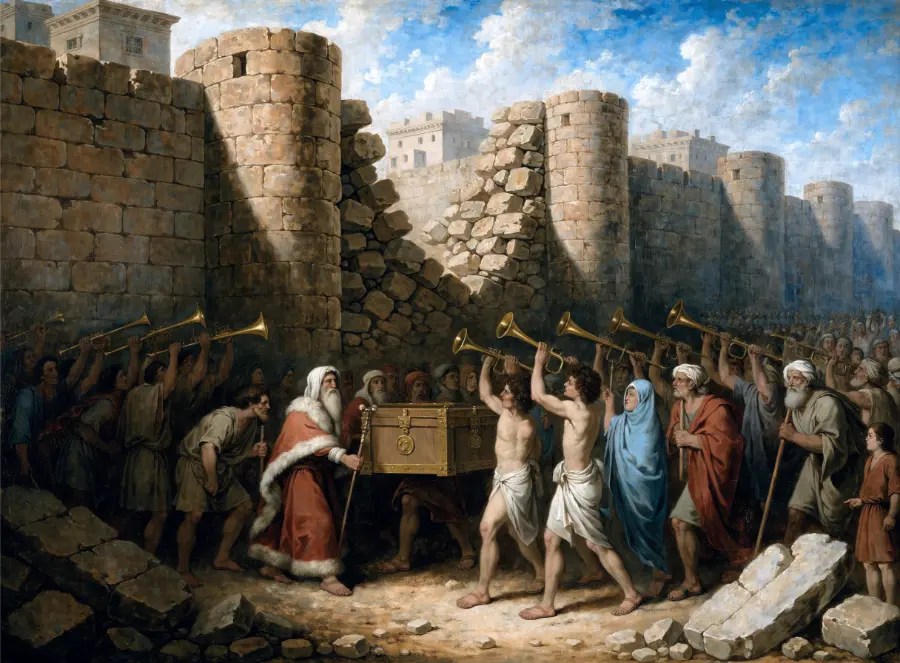
The Church of England put its answer in the Thirty-nine Articles, and Article XVIII, headed “Of obtaining eternal Salvation only by the Name of Christ,” says, “They also are to be had accursed that presume to say, That every man shall be saved by the Law or Sect which he professeth, so that he be diligent to frame his life according to that Law, and the light of Nature. For holy Scripture doth set out unto us only the Name of Jesus Christ, whereby men must be saved.” The Westminster Confession of 1646, which the Orthodox Presbyterian Church publishes among its standards, uses the same words about the light of nature when it says that “much less can men, not professing the Christian religion, be saved in any other way whatsoever, be they never so diligent to frame their lives according to the light of nature, and the laws of that religion they do profess.”
When the General Assembly of the Presbyterian Church (U.S.A.) met in June 2002, it approved a statement called Hope in the Lord Jesus Christ by 497 votes to 11. The statement holds that “No one is saved apart from God’s gracious redemption in Jesus Christ,” and then takes up Paul’s sentence to Timothy: “Yet we do not presume to limit the sovereign freedom of God our Savior, who desires everyone to be saved and to come to the knowledge of the truth.” It goes on, “Thus, we neither restrict the grace of God to those who profess explicit faith in Christ nor assume that all people are saved regardless of faith.”
Missouri Synod Lutherans, Southern Baptists and evangelical churches say it in newer words, and they say the same thing: a person is saved by trusting in Jesus, and there is no other way. The Lutheran Church–Missouri Synod teaches that “Those who trust in Jesus as their Savior will rise to eternal life in heaven. Those who deny Jesus and live in their sin will be cast out of His presence to hell.” The Baptist Faith and Message, the confession of the Southern Baptist Convention, says that “There is no salvation apart from personal faith in Jesus Christ as Lord.” Evangelical and nondenominational churches have no one confession of their own; the nearest they share is the Lausanne Covenant, an evangelical statement of 1974, and it says that Jesus Christ “is the only mediator between God and people. There is no other name by which we must be saved.” The Covenant also speaks of the person who knows God only from the world around them: “We recognize that everyone has some knowledge of God through his general revelation in nature. But we deny that this can save, for people suppress the truth by their unrighteousness.” In the same breath it says that “God loves everyone, not wishing that any should perish but that all should repent.”
Apologetics Press, a teaching ministry of the Churches of Christ, adds baptism and the church to faith. It says that salvation comes by faith, repentance and “being immersed in water for the remission of past sins,” and that “Those enjoying salvation are (a) members of the one, true, undenominational church.” The Amish, for whom the Dordrecht Confession of 1632 is one of the key sources of belief, read in its fifth article that God’s promise is for all who heed the gospel in faith, “thus excluding no one from the precious inheritance of eternal salvation, except the unbelieving and disobedient, the stiff-necked and obdurate, who despise it.”
All of these churches hear Paul’s questions as a sending, and he ends them with feet on the road: “how shall they believe in him of whom they have not heard? and how shall they hear without a preacher? And how shall they preach, except they be sent? as it is written, How beautiful are the feet of them that preach the gospel of peace” (Romans 10:14–15).
Is there salvation outside the Catholic Church?
The words go back to Cyprian, bishop of Carthage in the third century, who wrote in a letter that “there is no salvation out of the Church.” In 1442 the Council of Florence said it in its hardest form, that those outside the Catholic Church, “not only pagans but also Jews or heretics and schismatics, cannot share in eternal life,” unless “they are joined to the catholic church before the end of their lives.”
The Catechism of the Catholic Church keeps the old words as a heading, “Outside the Church there is no salvation,” and explains that, “Re-formulated positively, it means that all salvation comes from Christ the Head through the Church which is his Body.” The warning is for the one who knows and turns away, for the Second Vatican Council said in Lumen Gentium that “Whosoever, therefore, knowing that the Catholic Church was made necessary by Christ, would refuse to enter or to remain in it, could not be saved.” Then the Catechism of the Catholic Church teaches that “Those who, through no fault of their own, do not know the Gospel of Christ or his Church, but who nevertheless seek God with a sincere heart, and, moved by grace, try in their actions to do his will as they know it through the dictates of their conscience — those too may achieve eternal salvation” (paragraph 847).
In the same document the Second Vatican Council named the people it had in mind. Of the Jewish people it said, “On account of their fathers this people remains most dear to God, for God does not repent of the gifts He makes nor of the calls He issues,” and it added, “But the plan of salvation also includes those who acknowledge the Creator. In the first place amongst these there are the Muslims.” None of this was a reason to stop preaching. The Catechism says that God can lead such people “to that faith without which it is impossible to please him,” yet “the Church still has the obligation and also the sacred right to evangelize all men” (paragraph 848), and of baptism it says, “God has bound salvation to the sacrament of Baptism, but he himself is not bound by his sacraments” (paragraph 1257).
Do the Orthodox believe only the Orthodox are saved?
The Orthodox Church in America teaches that “the Church has no monopoly on grace and truth and love,” and that “God is the Sovereign Lord who saves those whom He wills.” It leaves the judging with him, because “God alone is capable of judging since He alone knows the secrets of each mind and heart,” and it does not let its own people rest easy either: “nominal church membership or formal assent to some doctrines does not at all guarantee salvation.”
Archpriest Michael Gillis, writing on Pravmir in 2016, likes to put it this way: “we Orthodox know where the Church is, but we do not know where it is not.” He grants that a few Orthodox “argue with the zeal of 17th century Puritans that those outside the Orthodox Church do not have the Holy Spirit and are hopelessly deluded,” and he adds, “Thank God this is a small minority.”
The Coptic Orthodox Diocese of the Southern United States was asked straight out what happens to people who die without hearing of Jesus Christ, and it answers that “Salvation requires faith, deeds, and grace,” with baptism the mark of faith in the New Testament, as Jesus said: “He that believeth and is baptized shall be saved” (Mark 16:16). It says too that “God is compassionate beyond our ability to understand, and His many mercies are countless,” and goes straight on, “Nonetheless, His expectations for eternal life with Him are clear.” So it teaches that “God’s mercy will be extended to those who unknowingly and unwillingly lived in ignorance of Him throughout their lives; but their distance, barriers, denunciations, and convictions will remain.”
What happens to people who have never heard of Jesus?
Paul’s question, how shall they believe in him “of whom they have not heard,” seems to leave such people with nothing. Yet eight chapters earlier in the same letter he had written, “For when the Gentiles, which have not the law, do by nature the things contained in the law, these, having not the law, are a law unto themselves: Which shew the work of the law written in their hearts, their conscience also bearing witness” (Romans 2:14–15). The churches that hope for those who never heard read the two passages side by side.
The Assemblies of God calls this “the fate of the unreached,” and its paper on the final judgment says, “The Assemblies of God does not believe that someone will go to hell because they were born in the wrong country or the wrong century.” It does not say they are saved by being good. They “are judged by their works against the light they have had available to them,” it says, “with the result that ‘all have sinned and fall short of the glory of God’,” and so it turns to the work in front of us: “Now that Christ has been made known, our responsibility is to share the good news.”
The United Methodist Church, the Church of the Nazarene, the Salvation Army and Mennonite Church USA all teach that God offers salvation to everyone, and that each person must still receive it. The United Methodist Church says that “United Methodists affirm that through Jesus Christ God has made salvation available to all persons. That does not mean we believe that all persons will be saved,” because “love does not compel people to accept it,” and it adds that “God prepares our hearts and minds to accept Jesus’s invitation to follow him before we are even aware of it.” The Church of the Nazarene teaches in its Articles of Faith that Christ’s atonement “is sufficient for every individual of Adam’s race.” The Salvation Army’s sixth doctrine says that Christ “has by his suffering and death made an atonement for the whole world so that whosoever will may be saved.” Mennonite Church USA says in its Confession of Faith that “God offers salvation from sin and a new way of life to all people. We receive God’s salvation when we repent of sin and accept Jesus Christ as Savior and Lord.” None of this is universalism, the belief that in the end everyone will be saved, which the United Methodists and the Assemblies of God both reject by name; we explain it in Does everyone go to heaven?
Britain Yearly Meeting’s Quaker faith & practice says that “George Fox saw the Light ‘shine through all’ and he identified it with the divine Light of Christ,” the Light of the first chapter of John, “the true Light, which lighteth every man that cometh into the world” (John 1:9). It also quotes Robert Barclay, who wrote in 1678 that “There may be members therefore of this Catholic church both among heathens, Turks, Jews and all the several sorts of Christians, men and women of integrity and simplicity of heart.”
Four churches in our table have no teaching that answers this question head on. Two of them speak of God’s love for the world and leave the rest open. The Disciples of Christ say in their identity statement, “We witness to the Gospel of God’s saving love for the world in Jesus Christ, while continuing to struggle with how God’s love may be known to others in different ways.” The United Church of Christ’s Statement of Faith of 1959 says that “God promises to all who trust in the gospel forgiveness of sins and fullness of grace,” and nothing either way about anyone else. The other two speak of the church and of other believers. The Seventh-day Adventist Fundamental Beliefs come nearest in Belief 13, which says that “The universal church is composed of all who truly believe in Christ,” and do not go on to speak of people who never heard. The United Pentecostal Church International says, “We do not reject those who have not received the complete New Testament experience, but we encourage them to receive everything God has for them,” and it is speaking there of other believers, not of people of other religions.
Can people be saved after they die?
The Council of Florence said a person must be joined to the Church “before the end of their lives,” and nothing in the Protestant confessions above offers a second chance. Latter-day Saints and Jehovah’s Witnesses both teach that people who never heard the gospel in this life will still have it offered to them: the Latter-day Saints say it is preached to the spirits of the dead, and the Witnesses that God will raise the dead to learn his ways. The Church of Jesus Christ of Latter-day Saints teaches that “There are three kingdoms of glory: the celestial kingdom, the terrestrial kingdom, and the telestial kingdom.” Its Gospel Topics page tells how Joseph Smith, in a vision in January 1836, saw the celestial kingdom and “marveled when he saw his older brother Alvin there, even though Alvin had died before receiving the ordinance of baptism.” The revelation of that day is in the Doctrine and Covenants: “All who have died without a knowledge of this gospel, who would have received it if they had been permitted to tarry, shall be heirs of the celestial kingdom of God” (137:7). An earlier vision, of 1832, takes up Peter’s words that Christ “went and preached unto the spirits in prison” (1 Peter 3:19). In that vision even the lowest kingdom, for those who “received not the gospel of Christ, neither the testimony of Jesus,” is a glory “which surpasses all understanding” (76:82, 89). Only the “sons of perdition” have no kingdom of glory at all. Latter-day Saints are also baptized on behalf of their dead, which we explain in Baptism for the dead.
Jehovah’s Witnesses teach that “A relatively small number of people—144,000—will be resurrected to life in heaven to rule with Jesus in the Kingdom,” and they read the “great multitude, which no man could number, of all nations” (Revelation 7:9) as those who are “preserved alive on earth.” For the dead they look to Paul’s hope of “a resurrection of the dead, both of the just and unjust” (Acts 24:15). “God will bring billions back from death by means of a resurrection,” they say, and “God will bless obedient people with perfect health and everlasting life in an earthly paradise,” though “those who refuse to learn God’s ways after being raised to life will be destroyed forever with no hope of a resurrection.”
What happens to babies who die?
If you are reading this because your own child has died, we are so sorry, and we would like the first words you find here to be the Lord’s. Jesus said, “Suffer little children, and forbid them not, to come unto me: for of such is the kingdom of heaven” (Matthew 19:14). And when King David’s infant son died, David said, “I shall go to him, but he shall not return to me” (2 Samuel 12:23).
The Church of the Nazarene and the Latter-day Saints both say that such children are saved. The Church of the Nazarene says that Christ’s atonement “is graciously efficacious for the salvation of those incapable of moral responsibility and for the children in innocency.” The Latter-day Saints’ Doctrine and Covenants says that “all children who die before they arrive at the years of accountability are saved in the celestial kingdom of heaven” (137:10). The Westminster Confession speaks of the elect: “Elect infants, dying in infancy, are regenerated, and saved by Christ, through the Spirit, who worketh when, and where, and how he pleaseth.” The Catholic Church says of children who die without baptism that “the Church can only entrust them to the mercy of God, as she does in her funeral rites for them,” and that God’s mercy and Jesus’ tenderness toward children “allow us to hope that there is a way of salvation for children who have died without Baptism” (paragraph 1261); the older idea of limbo is explained in Limbo vs purgatory. The Baptist Faith and Message says that people come under condemnation “as soon as they are capable of moral action,” and it says no more about children who die before then.
So we come back to the one who asked on the road to Jerusalem whether few would be saved. Jesus did not tell him how many. He told him to strive for the gate himself, and he told his frightened disciples that the whole of it rests with God. If someone you love died outside the faith, we will not pretend that this page can answer for them, and the words Jesus gave his disciples are yours to keep as well: “With men it is impossible, but not with God: for with God all things are possible.”

Related reading
- Compare Christian Denominations: what 23 churches teach on 55 questions
- Do Catholics believe in predestination? What each church teaches
- Calvinism vs Arminianism: the five points side by side
- Do all Christian denominations go to heaven?
- What Jehovah’s Witnesses believe about salvation


Leave a Reply