
 English
 Chinese
 Dutch
 Arabic
 Spanish
 Portuguese
 Russian
 French
 Italian
 German
 Japanese
The Christmas novena is nine days of prayer that end on Christmas Eve. Catholics begin it on 16 December and pray it at home, in parish churches, or at Mass before dawn. Another favorite, the St. Andrew Christmas novena, is one short prayer said fifteen times a day from 30 November until Christmas Eve.
The nine days have a reason. They recall the nine months Christ was carried in his mother’s womb, from the Annunciation to his birth, as the Catholic Encyclopedia of 1911 explains. The novena waits as Mary waited, from the day she said, “Behold the handmaid of the Lord; be it unto me according to thy word” (Luke 1:38), to the night her child was born. A Catholic university in Manila says it plainly of the Filipino novena: for nine days the faithful “join and accompany her, so to speak, as she awaits the birth of her Son.”
The waiting of one mother has become nine days that whole peoples keep. A historian in Bogotá wrote in 2013 that the Christmas novena still holds a leading place in the traditions of most Colombians, and a Franciscan priest, Father Andres Rañoa, says that from the start Simbang Gabi in the Philippines was a time when “rich and poor, men and women, children and elderly, came together as a community waiting for the coming of the Lord and rejoicing in the promise of the Messiah.”
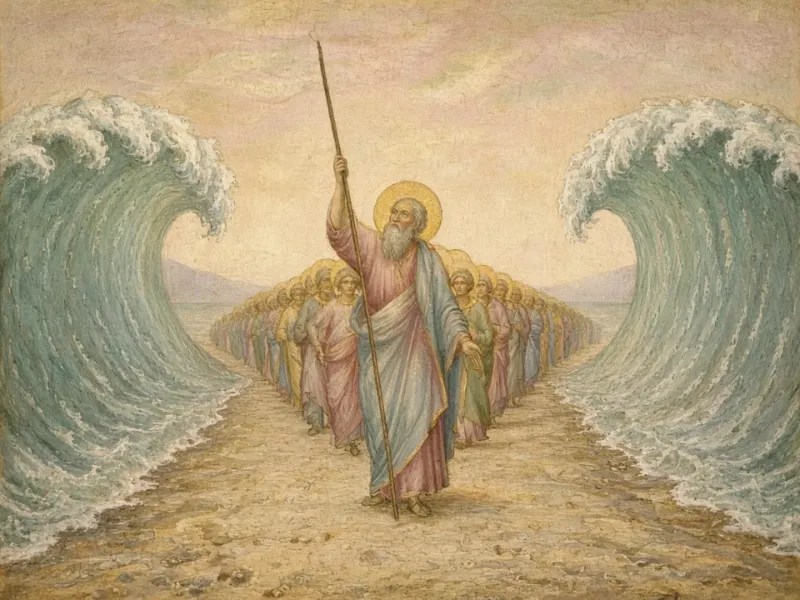
What is the 300-year-old Christmas novena?
Search for the Christmas novena in English and you will mostly find one from Turin in Italy, prayed from 16 to 24 December. Catholic News Agency credits it to Father Charles Vachetta, pastor of the Church of the Immaculate in Turin, who wrote it in 1721 “to inspire his parishioners during Advent.” The Vincentian historian John Rybolt, who studied its history in 1985, found its first recorded appearance a year earlier, in 1720, at the Vincentian church in Turin, and wrote that Carlo Antonio Vacchetta “either composed or revised it to encourage the Marchesa of Caluso’s piety.” So one of the best-loved prayers before Christmas may have begun as a priest’s help for one woman at prayer. Two and a half centuries on, Rybolt could still call it “a treasured part of Vincentian life.”
Each day it walks through the prophets. A refrain, “Our Lord and king is drawing near; O come let us adore him!”, is sung between promises gathered from Zephaniah, Jeremiah, Isaiah and Habakkuk, among them this one: “The Lord will appear, and he will not deceive; if he should delay, wait for him to come. He will surely come and will not tarry.” Then come a canticle, a Scripture reading for the day, that evening’s “O” antiphon, Mary’s Magnificat, intercessions and a closing prayer. Catholic News Agency prints the whole novena, day by day, in an English text from Pauline Books and Media. Nine evenings of it teach us the prophets’ patience: he will come, and if he seems slow, we wait.
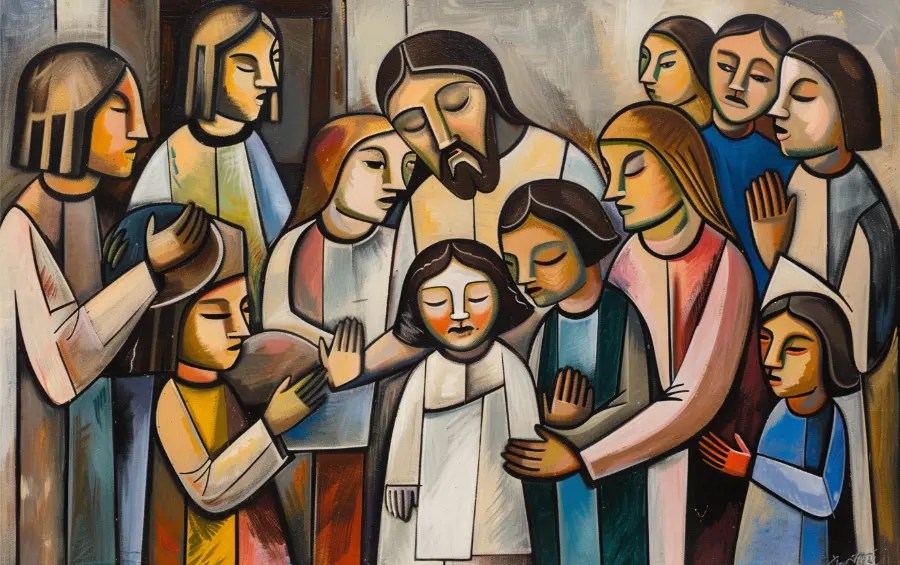
What does “novena” mean?
It comes from the Latin novem, nine: “A nine days’ private or public devotion in the Catholic Church to obtain special graces,” in that encyclopedia’s words. Its mood is that “of hopeful mourning, of yearning, of prayer.” A novena asks for something and keeps asking, day after day.
In the Catholic reading of Acts, the first Christian novena was the one Christ himself asked of his apostles. Before his ascension he told them to “wait for the promise of the Father” (Acts 1:4). Between the Ascension, forty days after Easter, and Pentecost on the fiftieth day, they waited nine days in prayer, and Mary was with them: “These all continued with one accord in prayer and supplication, with the women, and Mary the mother of Jesus, and with his brethren” (Acts 1:14). Those nine days became the model for every novena since: a promise, patient prayer, and then the gift.

When does the Christmas novena start?
On 16 December, so that the ninth day falls on 24 December. In 2026 it begins on a Wednesday and ends on Christmas Eve, a Thursday. The St. Andrew novena starts earlier, on 30 November, which in 2026 is the Monday after the first Sunday of Advent. Six novenas kept before Christmas are set side by side here.
| Novena | Days | What is prayed |
|---|---|---|
| St. Andrew Christmas novena | 30 November to 24 December | One short prayer, fifteen times a day |
| The Christmas Novena from Turin | 16 to 24 December | Prophecies with a refrain, a reading, the “O” antiphon and the Magnificat |
| Simbang Gabi (Philippines) | 16 to 24 December | A Mass each day before dawn, in Mary’s honor |
| Novena de Aguinaldos (Colombia) | 16 to 24 December | Prayers, a reading for the day and sung refrains, on nine evenings |
| Novena to the Child Jesus (France) | 16 to 24 December | A prayer for each day, with the Our Father, Hail Mary and Glory Be |
| Evening Prayer with the great antiphons | 17 to 23 December | The Church’s own evening prayer, sung more solemnly |
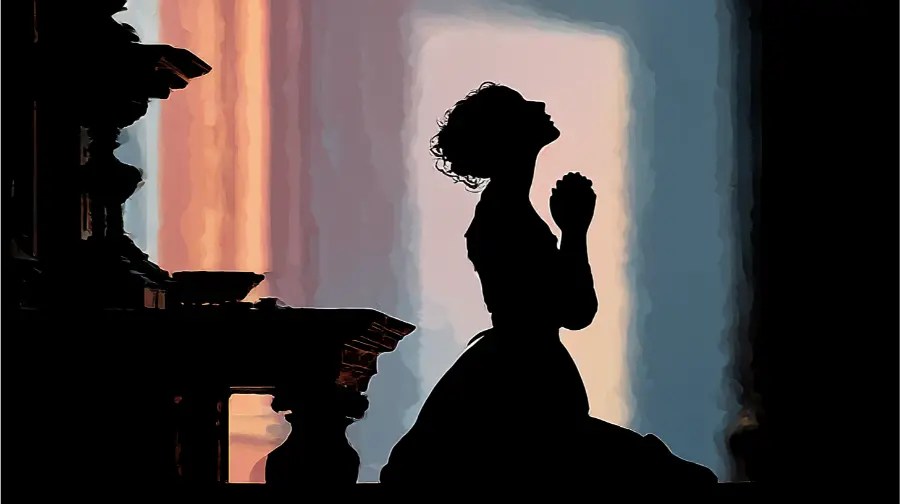
Where did the Christmas novena come from?
As far as the 1911 Catholic Encyclopedia could trace it, the Christmas novena began in Spain and France in the early Middle Ages, and it began with Mary. In 656 a council at Toledo set the feast of the angel’s visit to her, the Annunciation, on 18 December, a week before Christmas, as the fitting feast to prepare for the birth, and with it, it seems, came a novena of preparation in the full sense. A thousand years later the islanders of the Azores wrote to Rome to defend their “most ancient custom” of nine Masses of Our Lady just before Christmas. In 1658 Rome let them keep it, “because of the people who took part in the celebration.” Rome’s answer turned on the people themselves, and their love for nine days with Mary was reason enough.
In France the nine days were sung. The service books of Nantes and of St. Martin of Tours gave nine of the great “O” antiphons, one for each of the nine days before Christmas, where other churches sang seven, so the waiting there had two more cries of “O” in it. Italy seems to have taken the novena up only in the seventeenth century, and came to love it so well that in 1718 Rome, in one case, allowed it alone a solemn celebration with the Blessed Sacrament exposed. Two years later the novena that English speakers pray today is first recorded in Turin.
The Vatican’s Directory on Popular Piety and the Liturgy (2001) explains why the novena grew. “The Christmas novena began as a means of communicating the riches of the Liturgy to the faithful who were unable easily to grasp it. It has played a very effective role and can continue to play such a role.” Now that the faithful can follow the liturgy more easily, the Directory suggests that Evening Prayer from 17 to 23 December be celebrated more solemnly, with the great antiphons, and calls that “an ideal ‘Christmas novena’.”
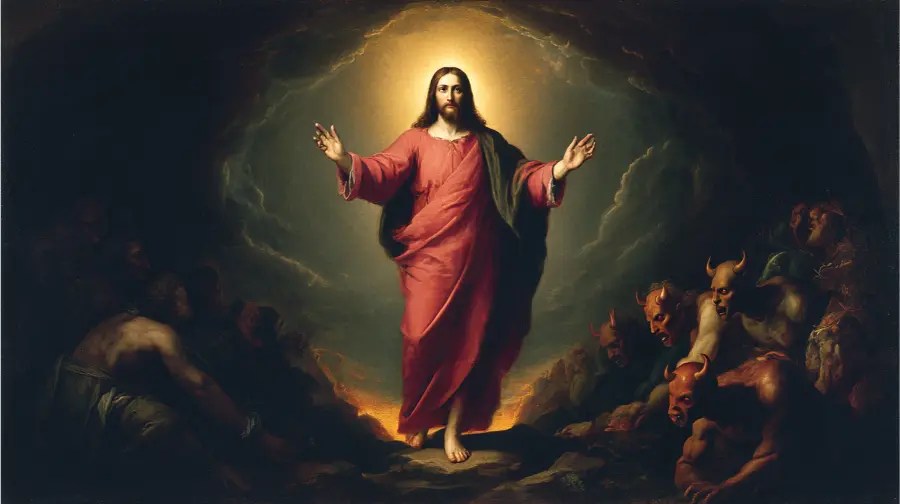
What is the St. Andrew novena?
It is one prayer, said fifteen times a day from the feast of St. Andrew on 30 November until Christmas Eve. The Archdiocese of Los Angeles gives it in these words:
Hail and blessed be the hour and moment in which the Son of God was born of the most pure Virgin Mary, at midnight, in Bethlehem, in the piercing cold. In that hour vouchsafe, I beseech Thee, O my God, to hear my prayer and grant my desires through the merits of Our Savior Jesus Christ, and of His blessed Mother. Amen.
It is not a novena in the strict sense, since it runs for 25 days, and it is not addressed to Andrew. It takes his name because his feast, on 30 November, falls close to the start of Advent. Fifteen times a day for 25 days is 375 prayers, each one turning the mind back to the same night in Bethlehem. Luke tells us only that it was night, with shepherds “keeping watch over their flock by night” (Luke 2:8); the hour of midnight and the cold belong to the prayer’s devotion. Saint Mary’s University of Minnesota calls it a prayer “believed to be over 100 years old.”
Andrew is a fitting patron for it. In John’s Gospel he is the one who brings his brother to Jesus: “He first findeth his own brother Simon, and saith unto him, We have found the Messias” (John 1:41). In Advent 2025 the Archdiocese of Philadelphia asked its people to pray the St. Andrew prayer fifteen times a day for the 83 percent of baptized Catholics in the archdiocese who no longer take part in the sacramental life of the Church: for the “homecoming” of loved ones, as its office for evangelization put it, asking Andrew to “go fishing” for them. It is the work he began with his own brother.
What is Simbang Gabi?
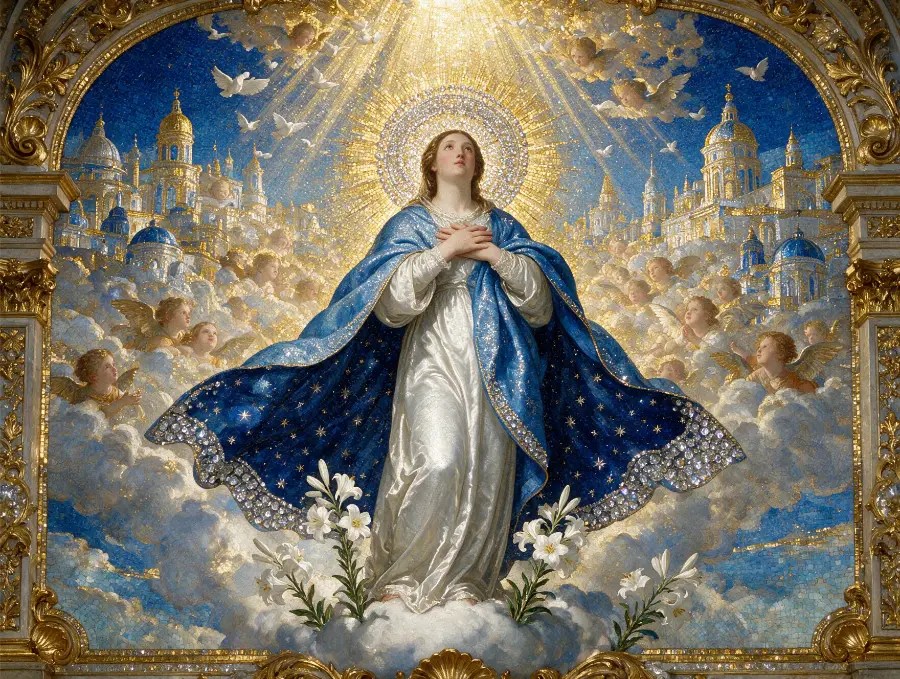
Simbang Gabi is the Philippine Christmas novena: nine Masses on the nine days from 16 to 24 December, traditionally before dawn. For the University of Santo Tomas in Manila it is “a typical Filipino way of spiritually preparing” for Christmas and “an expression of the filial devotion of the Filipinos to the Blessed Virgin Mary,” and so the Masses of those days are votive Masses in her honor.
Spanish missionaries from Mexico brought it in the mid-1600s, and it has gone by two names, the Misa de Gallo, the Mass of the rooster, and the Misa de Aguinaldo, the Mass of the Christmas gift. In Spain and much of Latin America the rooster’s name belongs to the Mass of Christmas night, but in the Philippines it went to these dawn Masses. As the story goes, the priests chose the hour when the roosters begin to crow, so that farmers and fishermen could come to Mass before setting off to work. The novena was fitted to people with a day’s work ahead of them, and they gave God the first hour of the day, before the boats and the fields. Those of us who can pray only at the edges of a busy December are in good company. Many parishes now keep it in the early evening as well.
Rome itself once stopped it, for nine years from 1680 to 1689, over the singing of Christmas songs in the people’s own language during Mass. Father Rañoa admits that at times its religious meaning “got relegated to the background,” when people came less to prepare for Christ than to meet family and friends. Yet the custom outlasted both troubles: in 1953 the bishops of the Philippines asked Rome to let it continue, and the Masses are still kept with great solemnity, with the Gloria sung, though it is otherwise silent in Advent.
What is the Novena de Aguinaldos?
It is the Christmas novena of Colombia, prayed on the nine evenings from 16 to 24 December, and it began with a friendship. Fernando de Jesús Larrea (1700–1773), a Franciscan friar born in Quito, guided María Clemencia Caycedo, a laywoman of Bogotá who belonged to the Franciscan Third Order, in the spiritual life, and he wrote the novena at her request. It was printed in Bogotá in 1784, eleven years after his death, to be read on the nine nights before Christmas. Like the Turin novena as Rybolt tells it, it was written to help one woman pray, and a whole country took it up.
Larrea filled the nine evenings with prayers to God, to Mary, to St. Joseph and to the Child Jesus, and his letters to María Clemencia tell us why. He told her that the Child who did not refuse to be born in a poor shelter, on a cold, hard stone, would not refuse to be born in a hard, cold heart that was offered to him with love. Every Christmas novena rests on that hope, and so can we: whatever state our hearts are in on 16 December, he will not refuse them.
Is there a French Christmas novena?
Yes, and France is one of the two places where the 1911 encyclopedia first finds the Christmas novena. Besides the nine antiphons of Nantes and Tours, a French book of church order from the Middle Ages has the preparation begin on the ninth day before Christmas, with the “O” antiphons. French Catholics still keep the nine days, as a parish in the Diocese of Lille did in December 2024 with a novena to the Child Jesus for 16 to 24 December, taken from an old book with a telling title, Bethlehem, or the School of the Child Jesus, by Monsignor Jean-Joseph Gaume. The manger is the school, and the Child is the teacher.
Each of its nine days looks at one step of God’s coming down to us. On the first, the eternal Word became man. Then, day by day, the great became a little child, the strong became weak, the rich became poor, the high became humble, the master became a servant, the happy one took on suffering, and the innocent one took on our guilt. On the ninth day, Christmas Eve, he who was his own became ours. Each day ends with the Our Father, the Hail Mary and the Glory Be, and the novena includes a prayer to the Child Jesus by St. Alphonsus Liguori.
How do you pray a Christmas novena at home?
Choose one novena and keep it at the same time each day: before breakfast, at the evening meal, or before bed. The Archdiocese of Los Angeles gives simple steps for the St. Andrew prayer: make the sign of the cross, say the prayer, name your intentions to God, and close with the sign of the cross. Praying it fifteen times is the custom, and Saint Mary’s University notes that the prayer “may be adapted to a simplified form for private devotion.” Members of a family can divide the fifteen prayers among them, each saying a few at the table.
For the nine days from 16 December, a family can read the Christmas chapters of Luke, the first and second, a part each evening, before the novena’s prayer. The Directory pictures families at the nativity scene doing just this, gathering “for a moment of prayer or to read the biblical accounts of the Lord’s birth.” Where a parish sings Evening Prayer from 17 December, with its great antiphons, that is the novena the Directory itself recommends. The novena ends on Christmas Eve, a few hours before the Mass of Christmas night, and the rest of the season’s customs are gathered in Catholic Christmas traditions from Advent to the Baptism of the Lord.
When we begin on 16 December, we keep Mary company in the last days of her waiting, and we wait for the same Child. What she was told came true, and Elizabeth’s words to her can go with us through all nine days: “And blessed is she that believed: for there shall be a performance of those things which were told her from the Lord” (Luke 1:45).
Related reading
- Catholic Christmas traditions from Advent to the Baptism of the Lord
- What is Midnight Mass?
- 12 prayers for Advent
- What does the Advent wreath symbolize?
- What do the Advent colors mean?


Leave a Reply