
 English
 Chinese
 Dutch
 Arabic
 Spanish
 Portuguese
 Russian
 French
 Italian
 German
 Japanese
To prepare your heart for Christmas, keep Advent as a season of waiting, of turning back to God and of hope. In 2026 it runs from 29 November to Christmas Eve: read each Sunday’s Gospel through the week that follows, pray one short prayer a day, and clear the way for Christ, who came at Bethlehem and will come again.
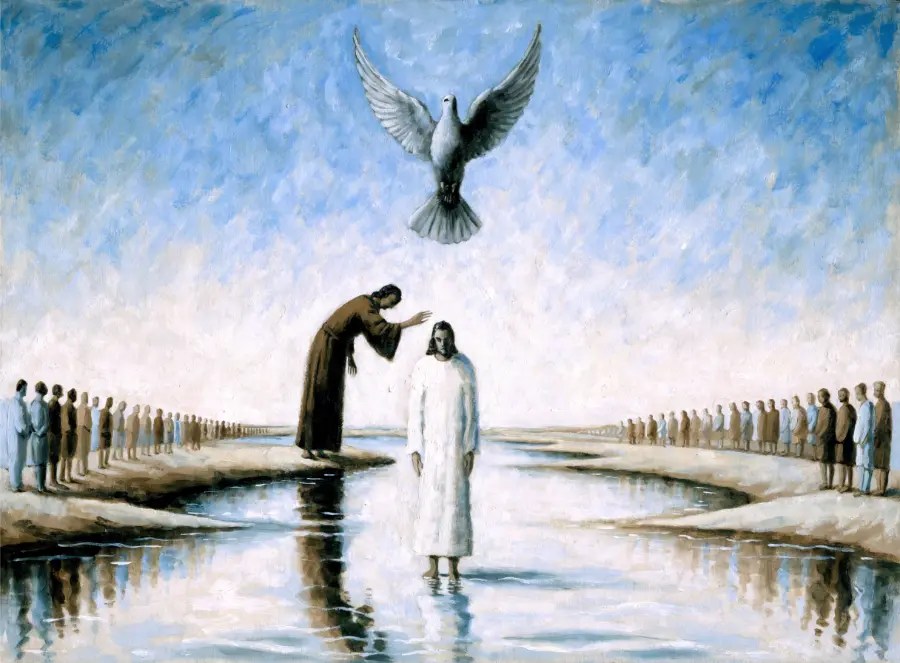
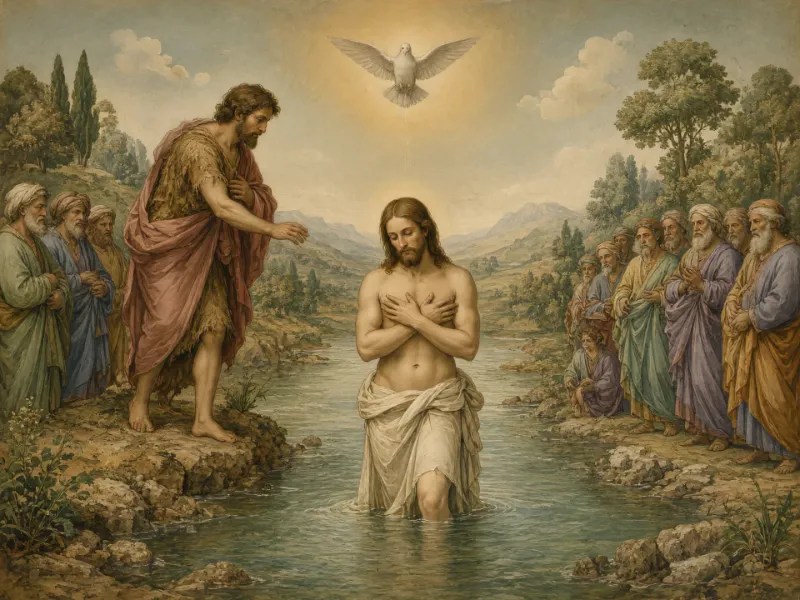
The words for that clearing come from John the Baptist, who borrowed them from Isaiah: “The voice of one crying in the wilderness, Prepare ye the way of the Lord, make his paths straight” (Mark 1:3). Isaiah, who first heard the cry, goes on to say what the work involves: “Every valley shall be exalted, and every mountain and hill shall be made low: and the crooked shall be made straight, and the rough places plain” (Isaiah 40:4). A heart is prepared the way a road is. Something low is lifted, something high is brought down, and then we wait for the one who is coming along it. If this December finds you tired, or carrying a loss that the lights and the music make heavier, you may feel you have nothing to bring. The road does not have to be finished before you start. It only has to be cleared a little each week, and Advent gives us four.
What is Advent for?
The Church gives Advent two comings of Christ to prepare for. The Catholic Church’s Universal Norms on the Liturgical Year (1969) say that “Advent has a twofold character”: it prepares for Christmas, when “the First Coming of the Son of God to humanity is remembered,” and it is a time when “minds and hearts are led to look forward to Christ’s Second Coming at the end of time.” The Vatican’s Directory on Popular Piety and the Liturgy (2001) calls the season “a time of waiting, conversion and of hope.” Those three words are enough to plan a December by.
Cyril, bishop of Jerusalem, taught this about the year 350, a generation before the first trace of Advent itself, and he began one of his lectures with these words:
We preach not one advent only of Christ, but a second also, far more glorious than the former. For the former gave a view of His patience; but the latter brings with it the crown of a divine kingdom. … In His former advent, He was wrapped in swaddling clothes in the manger; in His second, He covers Himself with light as with a garment.
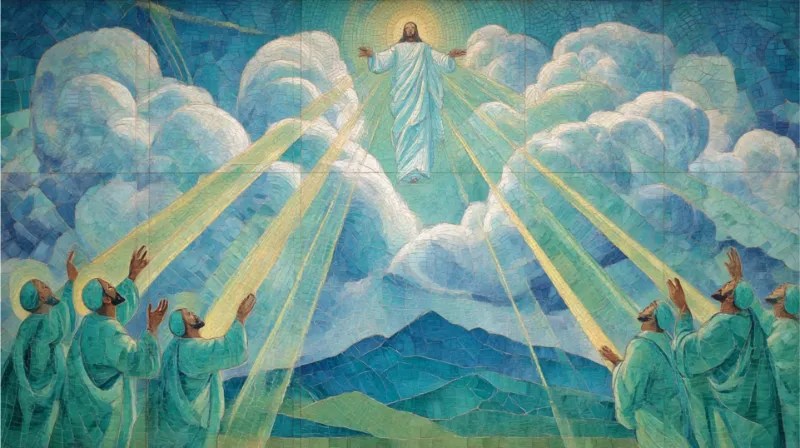
Cyril found the two comings in Paul’s letter to Titus, which speaks of grace that “hath appeared to all men” and of “Looking for that blessed hope, and the glorious appearing of the great God and our Saviour Jesus Christ” (Titus 2:11, 13). So in Advent we look two ways at once: back to a child in swaddling clothes, and ahead to a King clothed in light. Talk of Christ’s return can sound like a threat. Cyril heard it as glory, “far more glorious than the former,” and Paul calls it a “blessed hope.” The one we wait for is the same child Mary wrapped and laid in the manger.
An Advent devotional for 2026, week by week
In 2026 Catholic parishes and the Protestant churches that follow the Revised Common Lectionary read the same Gospel on each Sunday of Advent. So if you sit in either kind of church on Sunday, the Gospel you hear can come home with you. Read it again on Monday and on Tuesday, carry one verse from the Sunday’s readings through the week, and let the week’s practice grow out of it.
| Week | Sunday Gospel | A verse to carry | For the week |
|---|---|---|---|
| 1: from 29 November | Mark 13:24–37 (Catholic 13:33–37) | “Watch ye therefore” (Mark 13:35) | Keep watch: a set time to pray |
| 2: from 6 December | Mark 1:1–8 | “Prepare ye the way of the Lord” (Mark 1:3) | Clear the way: repent, confess, make peace |
| 3: from 13 December | John 1:6–8, 19–28 | “Rejoice evermore” (1 Thessalonians 5:16) | Rejoice, and give to the poor |
| 4: from 20 December | Luke 1:26–38 | “Be it unto me according to thy word” (Luke 1:38) | Say yes to God, as Mary did |
Week 1: Watch
The first Sunday’s Gospel is Jesus’ own word about his return: “Take ye heed, watch and pray: for ye know not when the time is” (Mark 13:33). He tells of a master who goes away and leaves each servant his work, and of a porter told to keep watch, because the master may come “at even, or at midnight, or at the cockcrowing, or in the morning” (Mark 13:35). Every hour of a long night is in that list, the late ones and the early ones, and the master might come in any of them. Then Jesus widens the circle beyond the disciples in front of him to everyone who will ever hear him: “And what I say unto you I say unto all, Watch” (Mark 13:37). He is speaking to us.
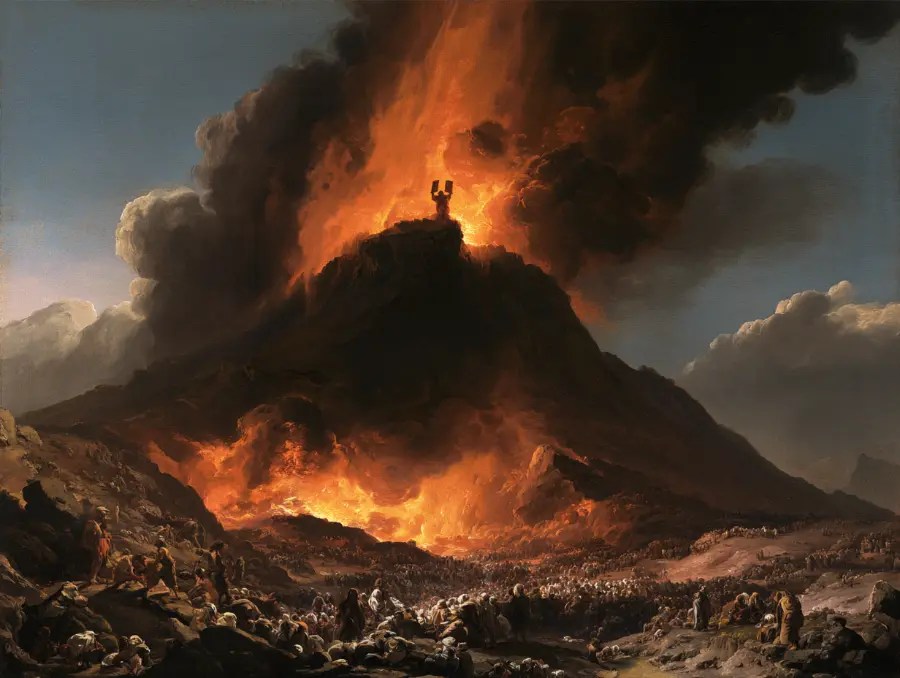
The Revised Common Lectionary sets beside that Gospel Isaiah’s cry, “Oh that thou wouldest rend the heavens, that thou wouldest come down” (Isaiah 64:1), and the Catholic first reading comes from the same prayer of Isaiah. It is the prayer of someone who feels that God is far off and tells him so. If that is your prayer this year, the Church puts the prophet’s words in your mouth on the very first Sunday. For the week, choose one time each day for prayer and keep it, even if all you bring is Isaiah’s line. The porter in the story is given one job, to stay awake for the master, and that is the whole of the first week.
Week 2: Prepare the way
The second Sunday brings John the Baptist out of the wilderness, preaching “the baptism of repentance for the remission of sins,” and the people go out to him “confessing their sins” (Mark 1:4–5). Before John speaks, though, the first reading opens with one of the tenderest lines in Isaiah: “Comfort ye, comfort ye my people, saith your God” (Isaiah 40:1). God says comfort twice before he asks anything of us, and Advent’s call to turn back begins there. The Directory names conversion as one of the three marks of Advent and quotes John: “Repent for the kingdom of heaven is at hand.” For the week, find the one thing that stands in the road, a sin to confess, a quarrel to mend or a habit to set down, and clear that one thing. The rest of the road can wait for another year.
Week 3: Rejoice
The third Sunday, Gaudete Sunday, is the Sunday of joy, and its Gospel brings John back, this time as a witness: “There was a man sent from God, whose name was John. The same came for a witness, to bear witness of the Light” (John 1:6–7). Its second reading, in both lectionaries, is Paul’s “Rejoice evermore. Pray without ceasing. In every thing give thanks” (1 Thessalonians 5:16–18). If joy is hard to find this December, Paul’s last command can still be kept, because he asks for thanks “in every thing,” inside whatever the day holds. One thing each evening is enough to begin with.
Joy in Advent also looks outward. The Directory says the Lord’s birth cannot be kept “except in an atmosphere of sobriety and joyous simplicity and of concern for the poor.” For the week, give something away, to a neighbor or to the poor, and give thanks each evening for one thing in the day. We make room for the child partly by making room for someone else.
Week 4: Say yes
The fourth Sunday’s Gospel is the angel Gabriel’s visit to Mary, and Mary’s first words to him are a question. She asks, “How shall this be?” and is told, “For with God nothing shall be impossible” (Luke 1:34, 37). Only then does she answer, “Behold the handmaid of the Lord; be it unto me according to thy word” (Luke 1:38). Mary brought her question to God before she brought her yes, and we may do the same. Both lectionaries pair the Gospel with God’s promise to David, “thy throne shall be established for ever” (2 Samuel 7:16), the promise Gabriel says her son will fulfill. In 2026 this last week runs only from Sunday 20 December to Christmas Eve, a Thursday, five short days. For those five days, bring to God whatever you have been saying no to, and pray Mary’s words over it.
From 16 December many Catholics also pray the nine days of the Christmas novena, and from 17 December the Church’s evening prayer sings the great “O” antiphons, a different one each evening. Anyone who wants more than one prayer a day in those last days can join them.
A prayer for every day of Advent
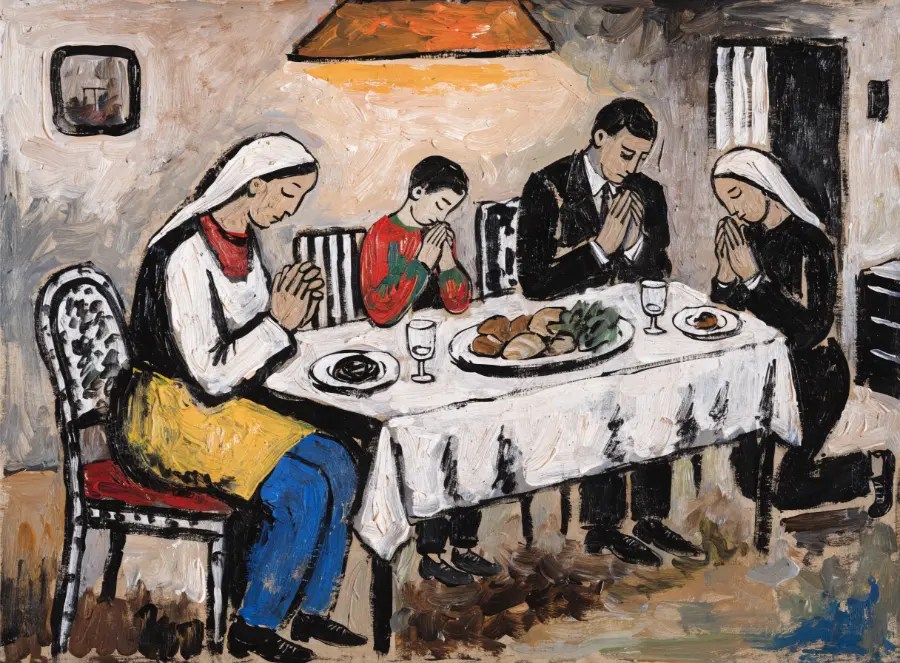
The Book of Common Prayer gives a prayer for the first Sunday of Advent and directs that it “is to be repeated every day, after the other Collects in Advent, until Christmas Day.” In the 1928 American edition it reads:
Almighty God, give us grace that we may cast away the works of darkness, and put upon us the armour of light, now in the time of this mortal life, in which thy Son Jesus Christ came to visit us in great humility; that in the last day, when he shall come again in his glorious majesty to judge both the quick and the dead, we may rise to the life immortal, through him who liveth and reigneth with thee and the Holy Ghost, now and ever. Amen.
It holds both comings in one sentence, the Son who “came to visit us in great humility” and the Son who “shall come again in his glorious majesty,” and its first lines come from Paul: “The night is far spent, the day is at hand: let us therefore cast off the works of darkness, and let us put on the armour of light” (Romans 13:12). It asks two things a tired person can still do: put something down, and put something on. Say it in the morning before the day begins, or at night when the house is quiet, every day until Christmas. More prayers for the season are gathered in 12 prayers for Advent.
Keeping Advent at home
The best-known home custom is the Advent wreath: four candles in evergreen, one more lit each Sunday until Christmas. The Directory calls it “a symbol of the prophetic light gradually illuminating the long night prior to the rising of the Sun of justice.” Light the week’s candles when you read the week’s Gospel, and the growing light will tell the family what the calendar tells them too, that the road is getting shorter. Churches give the candles different colors and names, and Orthodox Christians, who keep a forty-day fast before the Nativity, have customs of their own; both are set out in what the Advent colors mean.
An Advent calendar counts the same road on the wall, and we made one that walks from the first day of creation to the manger, with a painting, a verse, two sentences of the story and a short prayer for each day from 1 December to Christmas. We print each one to order and can send it to the United States and Canada.
Advent in Paintings, our wall calendar
Advent was once kept with fasting, as that Orthodox fast still is. A family need not fast to borrow the idea: a simpler table, less spending and more given away leave room for the guest who is coming. In a month when so much is added, Advent asks us to take a little away.

Where did Advent come from?
No one can say exactly when Advent began, the Catholic Encyclopedia of 1907 admits, because a season before Christmas could not come before Christmas itself was kept everywhere, which was by the end of the fourth century. The first sign of it is a synod at Saragossa in Spain in 380, which ordered that from 17 December to Epiphany no one should stay away from church. The oldest rule we have about these weeks, then, asks only that we keep coming to church, and more than sixteen centuries later it is still good counsel.
For a long time after that, Christians kept these weeks as a small Lent. Some synods set the fast from 11 November, a synod in Gaul in 581 ordered Masses in the Lenten manner three days a week until Christmas, and by the eighth century the Greek churches kept a fast of their own from 15 November; the Western churches settled on four Sundays under Pope Gregory VII in the eleventh century. We need not keep their fasts to learn from them. A fast before a feast lets the body feel what the heart is waiting for, and when Christmas comes it tastes like a feast.
The last words of the Bible before its closing blessing are Advent words, a promise and the prayer that answers it. By Christmas Eve, with the road as clear as we could make it, they can be ours: “Surely I come quickly. Amen. Even so, come, Lord Jesus” (Revelation 22:20).
Related reading
- What Does the Advent Wreath Symbolize? The Circle and the Candles
- What Do the Advent Colors Mean? Purple, Pink, Blue and White
- 12 prayers for Advent
- What Is the Christmas Novena? Nine Days of Prayer Before Christmas
- Catholic Christmas Traditions From Advent to the Baptism of the Lord


Leave a Reply