
 English
 Chinese
 Dutch
 Arabic
 Spanish
 Portuguese
 Russian
 French
 Italian
 German
 Japanese
How many times is the word “courage” mentioned in the Bible, and in which books does it appear most frequently?
As we explore the sacred scriptures, we find that courage is a recurring theme, though its explicit mentions are not as numerous as one might expect. The word “courage” itself appears relatively infrequently in most English translations of the Bible. But we must remember that the concept of courage is often conveyed through other related terms and phrases.
In the King James Version, for instance, the word “courage” appears approximately 15 times(Fefelov, 2024). But this number can vary depending on the translation used. The books where courage is most frequently mentioned include Deuteronomy, Joshua, and 1 Chronicles in the Old Testament(Fefelov, 2024). These books often recount the stories of leaders and warriors facing great challenges, where courage was essential.
In the New Testament, direct mentions of the word “courage” are less frequent. But the concept is still present, often expressed through exhortations to “be of good cheer” or “take heart”(Fefelov, 2024). The Gospels and Acts contain several instances where Jesus or the apostles encourage others to have courage.
Although the word itself may not appear frequently, the theme of courage permeates the entire Bible. From the stories of the patriarchs to the prophets, from the disciples to the early we see countless examples of individuals and communities displaying courage in the face of adversity.
I must emphasize that the frequency of a word does not necessarily reflect its importance in the text. The Bible often conveys powerful messages through narratives and metaphors rather than explicit statements. I would add that courage is often demonstrated through actions rather than words, which is reflected in the biblical accounts. This nuanced understanding becomes even clearer when conducting a bible truth frequency analysis, where the emphasis on specific words may overshadow the profound lessons embedded within the stories. Ultimately, it is through engaging with the text and reflecting on its deeper implications that we uncover the true essence of its teachings. Therefore, actions aligned with faith and integrity often speak louder than the words themselves.
In our modern context, where fear and uncertainty often prevail, we can draw strength from these biblical examples of courage. They remind us that faith and courage are intimately connected, and that true courage often emerges in the most challenging circumstances. Let us, therefore, not simply count the occurrences of the word, but rather seek to embody the spirit of courage that the Bible so powerfully illustrates.
What are the different Hebrew and Greek words translated as “courage” in the Bible, and what do they each signify?
In the Hebrew of the Old Testament, several words are often translated as “courage”:
- “Chazaq” (חזק): This word, appearing frequently, means to be strong, firm, or courageous. It often implies the idea of strengthening oneself or others(Fefelov, 2024). When God tells Joshua to “be strong and courageous” (Joshua 1:9), He uses this word, emphasizing the need for inner strength and resolve.
- “Amats” (אמץ): This term signifies being strong, alert, or courageous. It can also mean to make firm or strengthen(Fefelov, 2024). This word often appears alongside “chazaq” in phrases like “be strong and of good courage” (Deuteronomy 31:6).
- “Ruach” (רוח): While primarily meaning “spirit” or “breath,” in some contexts, it can be translated as “courage,” particularly when referring to the spirit that enables one to face danger or difficulty.
In the Greek of the New Testament, we encounter:
- “Tharsos” (θάρσος): This noun denotes courage, confidence, or boldness. Its related verb form “tharseo” (θαρσέω) is often translated as “take heart” or “have courage”(Fefelov, 2024). Jesus uses this word when He says, “Take heart, daughter” (Matthew 9:22).
- “Parrhesia” (παρρησία): While often translated as “boldness” or “confidence,” this word can also convey the idea of courage, particularly in speaking openly or fearlessly.
I find it fascinating how these words encompass not just bravery in the face of danger, but also inner strength, resolve, and the courage to speak truth. They remind us that courage is not merely the absence of fear, but the strength to act despite it.
Historically, these words have inspired countless believers through the ages. They have comforted the persecuted, emboldened the downtrodden, and strengthened the weak. In our modern context, where we face different yet equally challenging trials, these words continue to resonate.
Let us remember, that when we read of courage in our Bibles, we are tapping into a rich tradition of faith-inspired bravery. Whether it’s the “chazaq” that strengthened Joshua, the “tharsos” that Jesus instilled in His followers, or the “parrhesia” that empowered the early each word calls us to a deeper, more robust understanding of courage.
In our daily lives, may we embody all these aspects of courage – the strength to endure, the boldness to speak truth, and the spirit to face our challenges. For in doing so, we not only honor the biblical tradition but also bear witness to the transformative power of faith-inspired courage in our world today.

How is courage portrayed differently in the Old Testament compared to the New Testament?
In the Old Testament, courage is often depicted in the context of physical battles and national struggles. We see this vividly in the stories of Joshua leading the Israelites into the Promised Land, or David facing Goliath(Fefelov, 2024). The courage here is frequently associated with military prowess, leadership in the face of external threats, and faithfulness to God’s commands in challenging circumstances. The exhortation to “be strong and courageous” (Joshua 1:9) is a recurring theme, emphasizing the need for resolute action in the face of formidable opponents.
Old Testament courage is often linked to obedience to God’s law and resistance against idolatry. The prophets, for instance, displayed remarkable courage in standing against corrupt rulers and calling the nation back to faithfulness. Their courage was manifest in their willingness to speak truth to power, often at great personal risk.
As we turn to the New Testament, we find a shift in the portrayal of courage. While physical bravery is still valued, there’s a greater emphasis on moral and spiritual courage. The courage of Jesus, for example, is not displayed on a battlefield, but in His unwavering commitment to His mission, His confrontation of religious hypocrisy, and His willingness to face the cross(Fefelov, 2024).
In the early as depicted in Acts and the Epistles, courage is often associated with boldness in proclaiming the Gospel despite persecution. The Greek word “parrhesia,” often translated as “boldness” but carrying connotations of courage, is frequently used in this context(Fefelov, 2024). This courage is not about conquering lands or defeating enemies, but about standing firm in faith and love, even in the face of hostility and suffering.
New Testament courage is intimately linked with the concept of self-sacrificial love. Jesus’ teaching to “take up your cross and follow me” (Matthew 16:24) presents a radical form of courage – the courage to die to self for the sake of others and for the Kingdom of God.
I find this evolution profoundly major. It reflects a deepening understanding of human nature and the internal struggles we face. The New Testament portrayal of courage speaks to our need for inner strength, not just external bravery. It acknowledges the courage required to love unconditionally, to forgive, and to persist in faith amidst doubt and hardship.
Historically, this shift has had a tremendous impact on the Christian understanding of virtue and heroism. It has inspired countless individuals to acts of moral courage, from standing against injustice to showing compassion to the marginalized.
In our modern world, where we often face more subtle yet equally challenging moral and spiritual battles, the New Testament’s portrayal of courage remains deeply relevant. It calls us to a courage that transforms not just our actions, but our hearts and minds. This courage enables us to confront our doubts and fears, fostering resilience in the face of adversity. Additionally, the Bible’s perspective on the soul invites us to nurture our inner being, guiding us to seek wisdom and compassion in our daily interactions. As we embody this transformative courage, we align our lives more closely with the values that promote genuine understanding and connection.
What are some key biblical figures who exemplify courage, and what can we learn from their stories?
The Bible is replete with figures who exemplify courage in various forms, each offering us powerful lessons for our own lives. Let us reflect on a few of these inspiring individuals and the wisdom we can glean from their experiences.
We have Moses, a man who initially doubted his abilities but grew to lead an entire nation out of slavery. Moses’ courage is evident in his confrontations with Pharaoh and his leadership through the wilderness(Fefelov, 2024). From Moses, we learn that courage often involves overcoming our own self-doubts and insecurities. His story teaches us that God can use even those who feel inadequate to accomplish great things.
Next, we encounter Esther, a young Jewish woman who risked her life to save her people. Her famous words, “If I perish, I perish” (Esther 4:16), exemplify courage in the face of mortal danger(Fefelov, 2024). Esther’s story reminds us that courage sometimes requires us to step out of our comfort zones and use our positions of influence for the greater good.
In the New Testament, we see remarkable courage in the apostle Paul. Despite facing persecution, imprisonment, and numerous hardships, Paul persevered in his mission to spread the Gospel(Fefelov, 2024). From Paul, we learn about the courage to stand firm in our convictions, even when it leads to personal suffering. His life demonstrates that true courage is often manifested in endurance and perseverance.
We must not forget Peter, who, despite his initial failure in denying Christ, found the courage to become a bold leader in the early Church. Peter’s journey teaches us that courage can involve facing our past failures and allowing God to transform our weaknesses into strengths.
Lastly, we have the ultimate example of courage in Jesus Christ. His willingness to face the cross, motivated by love for humanity, sets the highest standard of courage(Fefelov, 2024). Jesus’ courage was not just in facing death, but in His entire life of self-giving love and His confrontation of injustice and hypocrisy.
I am struck by how these stories illustrate different aspects of courage. They show us that courage is not the absence of fear, but the ability to act despite it. They demonstrate that courage often involves vulnerability and the willingness to face uncertainty for a greater purpose.
Historically, these figures have inspired countless individuals to acts of courage in their own contexts. From martyrs facing persecution to ordinary believers standing up for justice, the impact of these biblical examples is immeasurable.
In our modern world, where we often face moral and spiritual challenges rather than physical threats, these stories remain profoundly relevant. They call us to a courage that is rooted in faith, motivated by love, and expressed in both bold actions and quiet perseverance.
How does the concept of courage in the Bible relate to facing fear and adversity?
The biblical concept of courage is intimately connected with facing fear and adversity. It is not about the absence of fear, but rather about moving forward in faith despite our fears. This understanding is crucial for our spiritual growth and our ability to navigate the challenges of life.
Throughout the scriptures, we see that courage is often called for in moments of great fear and adversity. The frequent exhortation “Do not be afraid” in both the Old and New Testaments is not a denial of fear, but an encouragement to find courage in the face of it(Fefelov, 2024). This reminds us that fear and courage often coexist, and that true courage emerges when we choose faith over fear.
In the Psalms, we find beautiful expressions of this interplay between fear and courage. The psalmist often begins by expressing fear or distress, but then finds courage through trust in God. Psalm 56:3-4 exemplifies this: “When I am afraid, I put my trust in you. In God, whose word I praise—in God I trust and am not afraid.” This passage teaches us that courage is often a choice, a decision to trust in God’s faithfulness even when circumstances are daunting.
The story of David and Goliath (1 Samuel 17) provides a powerful illustration of courage in the face of overwhelming adversity. David’s courage wasn’t based on his own strength, but on his faith in God’s power. This teaches us that biblical courage is often about perspective – seeing our challenges in light of God’s greatness rather than our own limitations.
In the New Testament, we see Jesus encouraging His disciples to have courage as they face persecution and hardship. His words, “In this world you will have trouble. But take heart! I have overcome the world” (John 16:33), acknowledge the reality of adversity while providing the basis for courage – Christ’s ultimate victory.
I find it major that the Bible doesn’t present courage as a mere feeling, but as an action often taken in spite of feelings of fear. This aligns with modern psychological understanding that courage involves choosing to act despite the presence of fear or anxiety.
The biblical concept of courage is deeply relational. It’s not just about individual bravery, but about finding strength in our relationship with God and within the community of believers. Paul’s encouragement to the Philippians to “stand firm in the one Spirit, striving together as one for the faith of the gospel” (Philippians 1:27) highlights this communal aspect of courage.
Historically, this understanding of courage has sustained believers through periods of intense persecution and hardship. It has enabled martyrs to stand firm in their faith and missionaries to venture into unknown territories.
In our modern context, where we often face more subtle forms of adversity – the challenges of maintaining faith in a secular world, the struggles with mental health, the complexities of ethical decisions – this biblical concept of courage remains profoundly relevant. It encourages us to face our fears, whether they be of failure, rejection, or the unknown, with faith and perseverance.

What specific verses in the Bible encourage believers to be courageous?
The Bible is filled with exhortations to be courageous, especially in times of trial or uncertainty. These verses remind us that God is always with us, giving us strength.
One of the most well-known encouragements comes from the book of Joshua, as God commissions Joshua to lead the Israelites: “Be strong and courageous. Do not be afraid; do not be discouraged, for the Lord your God will be with you wherever you go” (Joshua 1:9) (Kebaneilwe, 2017). This beautiful promise reminds us that our courage stems not from our own abilities, but from God’s presence.
The Psalms also offer many words of encouragement. Psalm 27:14 tells us, “Wait for the Lord; be strong and take heart and wait for the Lord.” And Psalm 31:24 exhorts, “Be strong and take heart, all you who hope in the Lord.” These verses link courage with hope and patience, virtues we all need in our daily lives.
In the New Testament, Jesus himself encourages his disciples to have courage. In John 16:33, he says, “I have told you these things, so that in me you may have peace. In this world you will have trouble. But take heart! I have overcome the world.” Here, courage is connected to the peace we find in Christ, even amidst worldly troubles.
The apostle Paul also speaks often of courage, linking it to faith. In 1 Corinthians 16:13, he writes, “Be on your guard; stand firm in the faith; be courageous; be strong.” And in Ephesians 6:10, as part of his discussion of spiritual warfare, he encourages believers to “be strong in the Lord and in his mighty power.”
These verses, are not mere platitudes. They are God’s living word to us, reminding us that we can face life’s challenges with courage because we are never alone. God is always with us, strengthening us and guiding us. Let us take these words to heart and allow them to transform our lives.

How do the teachings on courage in the Bible apply to modern-day challenges faced by Christians?
The teachings on courage in the Bible are timeless and speak profoundly to the challenges we face in our modern world. Today, Christians often find themselves swimming against the cultural tide, facing ridicule or even persecution for their faith. In such times, biblical courage is not just relevant – it is essential.
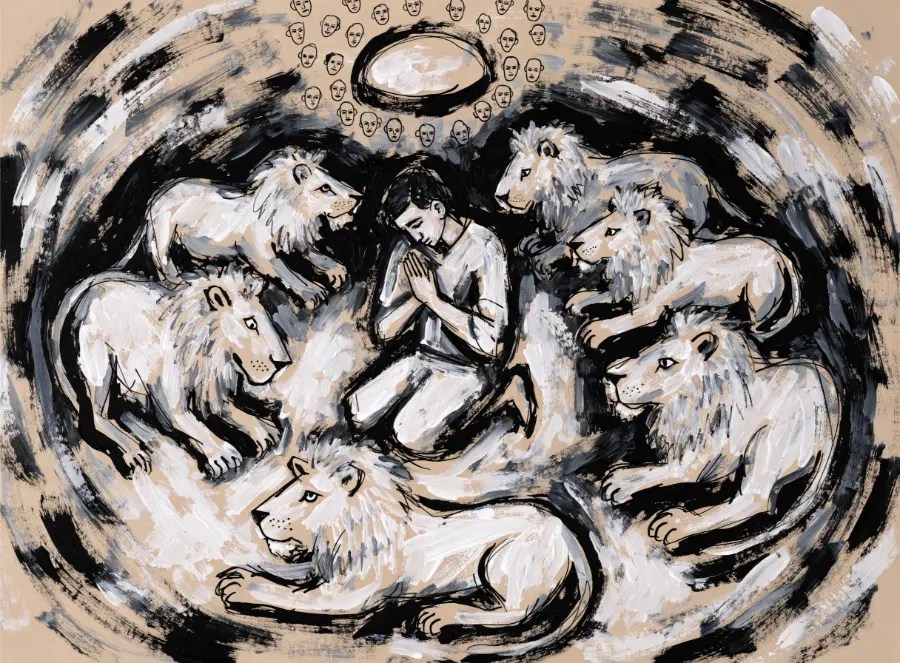
Consider the story of Daniel in the Old Testament. When faced with a decree forbidding prayer to anyone but the king, Daniel courageously continued to pray to God, even at the risk of his life (Daniel 6:10) (Kebaneilwe, 2017). This example of standing firm in one’s convictions, even when it goes against societal norms, is deeply relevant today. Christians may face pressure to compromise their beliefs in the workplace, in academia, or in social settings. Daniel’s courage reminds us to stay true to our faith, even when it’s difficult.
The apostle Paul’s exhortation to “not be ashamed of the testimony about our Lord” (2 Timothy 1:8) speaks directly to our modern context. In an increasingly secular world, it takes courage to openly profess and live out our faith. This verse encourages us to boldly share the Gospel and live as witnesses to Christ’s love, even when it may lead to social ostracism or professional setbacks.
The biblical concept of courage extends beyond standing firm in our beliefs. It also encompasses the courage to love unconditionally, to forgive those who wrong us, and to serve others sacrificially. Jesus’ command to “love your enemies and pray for those who persecute you” (Matthew 5:44) requires immense courage in a world often driven by retaliation and self-interest.
In our digital age, where online harassment and cyberbullying are rampant, the Bible’s teachings on courage call us to be voices of kindness and truth in online spaces. We are called to have the courage to speak up against injustice and to defend the vulnerable, both online and offline.
Lastly, in a world grappling with complex issues like climate change, poverty, and social inequality, biblical courage inspires us to take action. The prophet Micah’s call to “act justly and to love mercy and to walk humbly with your God” (Micah 6:8) requires courage as we confront these challenging issues.
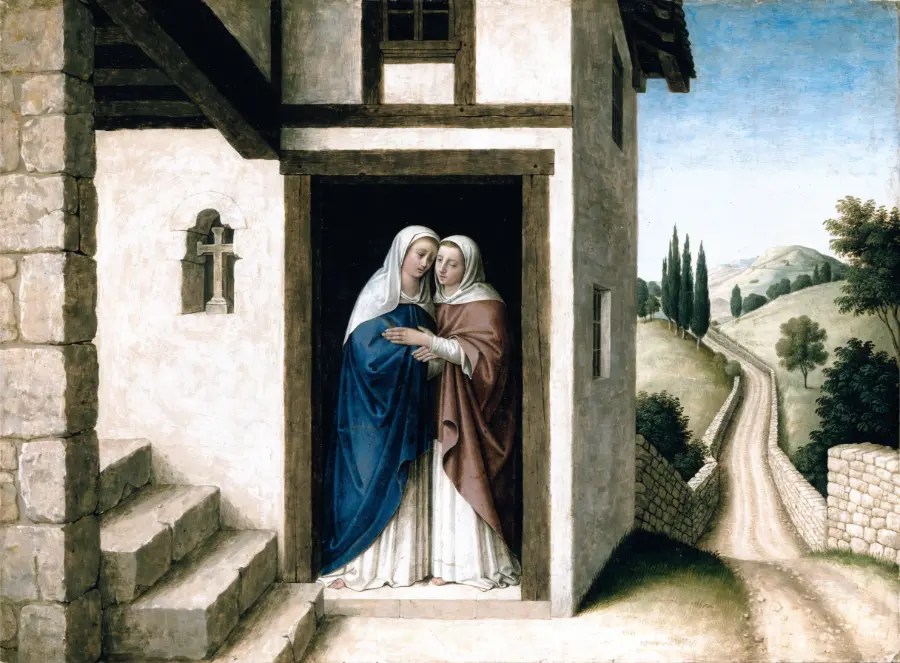
What did the early Church Fathers teach about the virtue of courage?
St. Augustine, one of the most influential of the Church Fathers, saw courage as one of the four cardinal virtues, alongside prudence, justice, and temperance (Moral Foundations of American Law: Faith, Virtue and Mores, n.d.). For Augustine, courage was not merely about physical bravery, but about the strength of the soul to withstand adversity and remain steadfast in faith. He wrote, “Courage is love bearing all things for the sake of the object loved.” This beautiful definition reminds us that true courage is rooted in love – love for God and love for others.
St. Ambrose, another great Father of the emphasized the connection between courage and faith. He taught that courage without faith is mere recklessness, while faith gives purpose and direction to courage. Ambrose wrote, “Where there is no faith, there is no courage.” This reminds us, that our courage as Christians is not self-reliant bravado, but a confident trust in God’s presence and power.
The Greek Fathers, such as St. John Chrysostom, often spoke of courage in the context of martyrdom. In those early centuries of persecution, many Christians faced the ultimate test of their faith. Chrysostom praised the courage of the martyrs, seeing in their willingness to die for Christ the highest expression of Christian virtue. Yet he also emphasized that courage was needed in everyday life, to resist temptation and to persevere in good works.
St. Clement of Alexandria offered an interesting perspective, linking courage with self-control. He taught that true courage involves not only facing external dangers but also mastering one’s own passions and fears. This internal dimension of courage reminds us that sometimes our greatest battles are within ourselves.
The Desert Fathers, those early monks who retreated to the wilderness to seek God, saw courage as essential in the spiritual life. They taught that it takes great courage to confront one’s own sins and weaknesses, to persevere in prayer, and to resist the temptations of the devil.
These teachings of the Church Fathers remind us that courage is a layered virtue, encompassing love, faith, self-control, and perseverance. Their words encourage us to cultivate a deep, abiding courage that is rooted in our relationship with God and expressed in every aspect of our lives.

How is the virtue of courage discussed in relation to other Christian virtues such as faith and love?
Let us consider the relationship between courage and faith. The author of Hebrews tells us that “faith is confidence in what we hope for and assurance about what we do not see” (Hebrews 11:1) (Kebaneilwe, 2017). This confidence and assurance require courage, especially when we face trials or uncertainties. At the same time, our faith gives us reason to be courageous. As St. Paul reminds us, “If God is for us, who can be against us?” (Romans 8:31). Thus, faith and courage mutually reinforce each other – our faith gives us courage, and our courage strengthens our faith.
The connection between courage and love is equally powerful. As I mentioned earlier, St. Augustine defined courage as “love bearing all things for the sake of the object loved.” This echoes St. Paul’s famous description of love in 1 Corinthians 13, where he says that love “always protects, always trusts, always hopes, always perseveres” (1 Corinthians 13:7). These qualities of love – protection, trust, hope, and perseverance – all require courage. To love deeply is to make oneself vulnerable, and this vulnerability demands courage.
Courage is often necessary to put love into action. To love our enemies, as Jesus commands, requires great courage. To stand up for the marginalized and oppressed, to forgive those who have wronged us, to sacrifice our own comfort for the sake of others – all these expressions of love demand courage.
The virtue of hope is also closely tied to courage. Hope gives us the courage to persevere through difficulties, knowing that God is working all things for good (Romans 8:28). Conversely, it takes courage to maintain hope in the face of seemingly hopeless situations.
We must also consider how courage relates to humility. True Christian courage is not about self-reliance or bravado, but about trusting in God’s strength rather than our own. As St. Paul writes, “When I am weak, then I am strong” (2 Corinthians 12:10). This paradoxical courage-in-weakness requires great humility.
Finally, let us not forget the virtue of prudence. Courage without prudence can lead to recklessness. The Church Fathers taught that true courage is guided by wisdom and discernment, knowing when to stand firm and when to be flexible.

Are there any prayers or practices in Christian tradition that are aimed at cultivating courage?
Our rich Christian tradition offers us many beautiful prayers and practices to help cultivate the virtue of courage. These spiritual tools, handed down through generations of faithful believers, can strengthen our hearts and minds to face life’s challenges with confidence in God’s presence and power.
One of the most powerful prayers for courage comes from the Psalms. Many Christians throughout history have found strength in praying Psalm 23, especially the verse, “Even though I walk through the darkest valley, I will fear no evil, for you are with me” (Psalm 23:4) (Kebaneilwe, 2017). This prayer reminds us that our courage comes not from our own strength, but from God’s presence with us.
The Prayer of St. Patrick, also known as St. Patrick’s Breastplate, is another beautiful invocation for courage. It includes the powerful lines: “Christ with me, Christ before me, Christ behind me, Christ in me, Christ beneath me, Christ above me, Christ on my right, Christ on my left…” This prayer helps us visualize Christ’s presence surrounding us, giving us courage to face any challenge.
In the Catholic tradition, many find courage through prayers to St. Michael the Archangel, who is seen as a powerful protector against evil. The traditional prayer includes the words, “Be our protection against the wickedness and snares of the devil.” This prayer can help us feel spiritually fortified when facing difficult situations.
The practice of lectio divina, or sacred reading, can also help cultivate courage. By meditating deeply on Scripture passages that speak of God’s faithfulness and protection, we can internalize these truths and draw courage from them in times of need.
Many Christians find that the regular practice of the Examen, a prayerful review of the day, helps build courage. By reflecting on where we’ve experienced God’s presence and guidance each day, we grow in confidence that God will be with us in future challenges.
The sacrament of Confirmation in many Christian traditions is seen as imparting courage through the Holy Spirit. The anointing with oil in this sacrament is a tangible reminder of God’s strengthening presence in our lives.
For those in the Orthodox tradition, the Jesus Prayer (“Lord Jesus Christ, Son of God, have mercy on me, a sinner”) is a practice that can cultivate courage. The repetition of this simple prayer helps center our minds on Christ, giving us courage rooted in His mercy and power.
Finally, let us not forget the courage we can draw from Christian community. The practice of sharing our struggles and praying for one another in small groups or with spiritual companions can be a powerful source of encouragement and strength.
These prayers and practices, are not magic formulas. Rather, they are means by which we open ourselves to God’s grace and allow the Holy Spirit to cultivate courage within us. May we make use of these rich resources of our faith, always remembering that true courage comes from our loving, faithful God.
—


Leave a Reply