
 English
 Chinese
 Dutch
 Arabic
 Spanish
 Portuguese
 Russian
 French
 Italian
 German
 Japanese
Yes. Every church we compare that teaches about the will at all says that God made us with a will of our own and that our choices are ours, and none of them says we are puppets. Where they part is over what Adam’s fall did to that will, and whether a fallen person can turn to God before grace has changed him. Catholics say the will was wounded but never lost, and that it works together with grace. The Orthodox and Coptic churches say the image of God in us survived the fall, and the Orthodox call our working together with God “synergy”. Lutherans and Reformed Christians say that in the things of God the fallen will can do nothing until God renews it. The Anglican and Methodist articles say that God’s grace has to go before us before we can will any good, and the Nazarenes and the Salvation Army add that this grace is for everyone who will turn. The Southern Baptist Convention and the Assemblies of God speak most of all about free choice, and so does Christian Courier, a teaching site in the Churches of Christ. Latter-day Saints call it “agency”. Jehovah’s Witnesses speak of a free will that God respects.
The prophet Ezekiel gave the same people two sayings that hold the whole question between them. “Make you a new heart and a new spirit: for why will ye die, O house of Israel?” he tells them (Ezekiel 18:31), and later he brings them God’s promise, “A new heart also will I give you … and I will take away the stony heart out of your flesh, and I will give you an heart of flesh” (Ezekiel 36:26). In the first we are told to do the very thing that in the second God says he will do for us. The churches below differ over how a command like that and a promise like that fit together.
| Church | Can a fallen person turn to God? | In its own words |
|---|---|---|
| Catholic | The will is wounded, not lost; it cooperates with grace | Nature “wounded in the natural powers proper to it” (Catechism) |
| Eastern Orthodox | The image of God remains; we work with God (“synergy”) | “Man still remains the created image of God” (Orthodox Church in America) |
| Coptic Orthodox | The image remains; the likeness was lost | “We lost our likeness with the fall, but not our image” (Coptic Diocese of the Southern US) |
| Lutheran | Free in earthly things, bound in the things of God | “No power, without the Holy Ghost” (Augsburg Confession) |
| Presbyterian and Reformed | Unable to turn until God renews the will | “Wholly lost all ability of will to any spiritual good” (Westminster) |
| Anglican and Methodist | Not alone; grace goes before us | “The grace of God by Christ preventing us” (Church of England, Article X; United Methodist, Article VIII) |
| Nazarene and Salvation Army | Fallen, but grace reaches all who will | Nazarene: grace “enabling all who will to turn”; Salvation Army: “whosoever will may be saved” |
| Quaker | A Light in everyone | “The Inward Light is the light of Christ” (Britain Yearly Meeting) |
| Southern Baptist | Made free; only grace brings us to God | “Endowed by his Creator with freedom of choice” (Baptist Faith and Message) |
| Assemblies of God (Pentecostal) | Free to choose right or wrong | “A free will which can choose right or wrong” (Assemblies of God) |
| United Pentecostal (Oneness) | No statement on the will itself | The fall brought “the sin condition” (UPCI) |
| Churches of Christ | Free to accept or reject (one teaching site’s view) | “Ability to accept or reject it” (Christian Courier) |
| Nondenominational and evangelical | Sin has corrupted our nature and its powers | “Sin corrupts our inherent human nature and capacities” (Lausanne) |
| Mennonite and Amish | We chose sin and are trapped by it; the call is to repent | Mennonite Church USA: humanity has “chosen to sin”; Amish (Dordrecht Confession): “repentance and reformation of life” |
| United Church of Christ | No teaching on a bound or free will | God “sets before us the ways of life and death” (Statement of Faith) |
| Disciples of Christ | God has made us able to answer | “Able to respond to the gospel” (General Assembly) |
| Seventh-day Adventist | Made free; born with tendencies to evil | “The power and freedom to think and to do” (Fundamental Belief 7) |
| Latter-day Saints | Agency, given before birth | “Free to choose liberty and eternal life” (Book of Mormon) |
| Jehovah’s Witnesses | A free will God will not override | God acts “to respect the free will that he gave us” (Awake!) |
Our free tool, Compare Christian Denominations, sets any two of 23 churches side by side on what they teach about human nature and free will, and on 54 other questions.
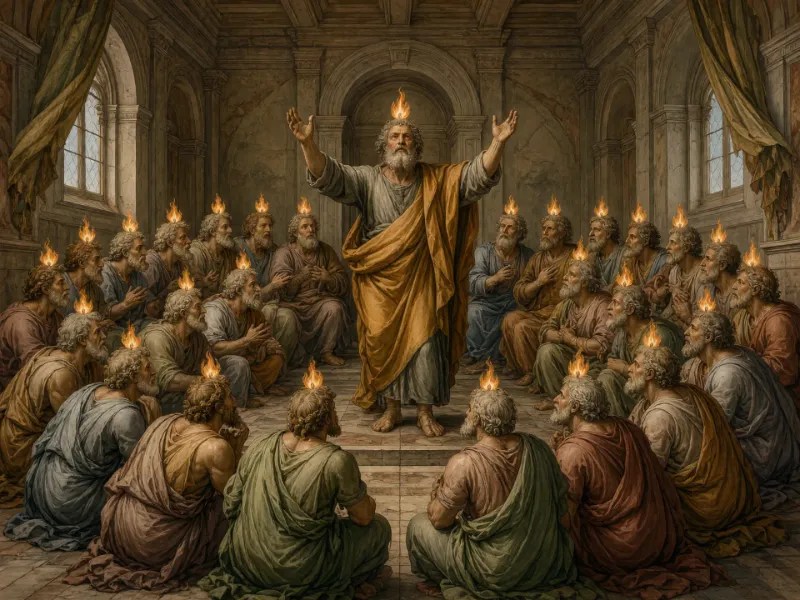
Does any church say our choices are not our own?
None does, and the churches that argue hardest about grace say so in their own documents. The Catechism of the Catholic Church teaches that God “created man a rational being, conferring on him the dignity of a person who can initiate and control his own actions” (paragraph 1730). The Reformed Westminster Confession says that “God hath endued the will of man with that natural liberty, that it is neither forced, nor, by any absolute necessity of nature, determined to good, or evil” (9.1), and the Lutheran Formula of Concord rejects the old Stoic teaching “that everything that happens must so happen, and cannot happen otherwise.” Scripture speaks to us that way from beginning to end, from Moses, “I have set before you life and death, blessing and cursing: therefore choose life” (Deuteronomy 30:19), to the Bible’s last invitation, “whosoever will, let him take the water of life freely” (Revelation 22:17). So the question that divides the churches is smaller than whether we choose. It is whether, after the fall, we can choose God before God has first done something in us.
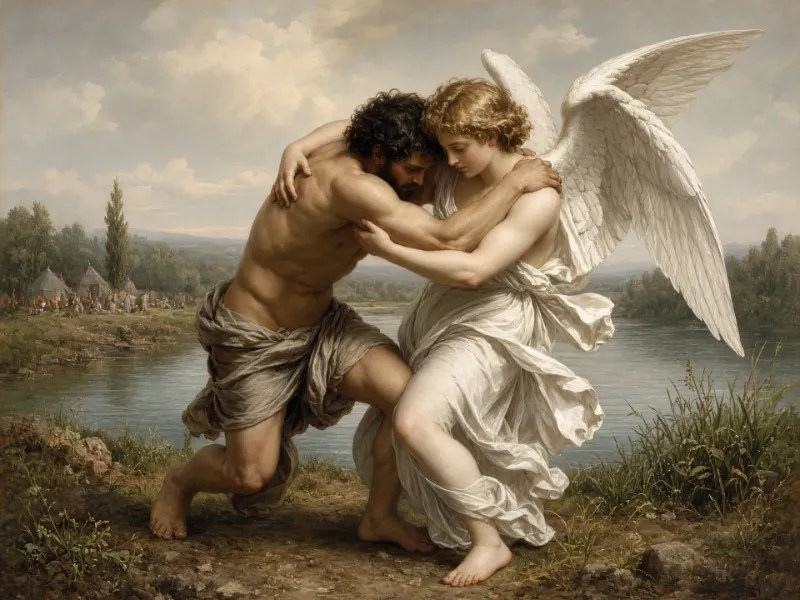
What did Adam’s fall do to the will?
Catholics answer that it wounded the will and bent it, but did not break it. The Catechism says of original sin that “human nature has not been totally corrupted: it is wounded in the natural powers proper to it” (405), and the Council of Trent, in its decree on justification of January 1547, said that free will, “attenuated as it was in its powers, and bent down, was by no means extinguished.”
The Orthodox speak of what was kept as well as what was lost. The Orthodox Church in America teaches in its book The Orthodox Faith that “Man still remains the created image of God—this cannot be changed—but he fails to keep his image pure and to retain the divine likeness.” What we receive from Adam they call ancestral sin, and a Greek Orthodox parish catechism in Greenville, South Carolina, explains the name: “We do not inherit the guilt for the bad choice that Adam made, but we inherit the consequence of his sinfulness.” The Coptic Orthodox Diocese of the Southern United States says it in two sentences: “The fall was a result of exercising their free will to disobey God. We lost our likeness with the fall, but not our image.” Seventh-day Adventists use the same picture. Their seventh Fundamental Belief teaches that “Man and woman were made in the image of God with individuality, the power and freedom to think and to do,” and that after the fall “The image of God in them was marred.”
Lutherans draw a line through the middle of life. The Augsburg Confession of 1530 teaches that “man’s will has some liberty to choose civil righteousness, and to work things subject to reason. But it has no power, without the Holy Ghost, to work the righteousness of God, that is, spiritual righteousness,” so the will is free in the things of this life and bound in the things of God. Presbyterians confess in the Westminster Confession that after the fall man “hath wholly lost all ability of will to any spiritual good accompanying salvation” (9.3), until God “enables him freely to will and to do that which is spiritually good” (9.4). Paul knew that struggle from the inside: “for to will is present with me; but how to perform that which is good I find not” (Romans 7:18). How each church understands the first sin itself is set out in Original Sin: What Catholics, Orthodox and Protestants Each Teach.
What does total depravity mean?
Total depravity is the teaching that sin has reached every part of us. The Westminster Confession says that by the first sin our first parents became “wholly defiled in all the parts and faculties of soul and body” (6.2). The Canons of Dort, written by the Reformed synod that met at Dordrecht in 1618–19, say that “Without the grace of the regenerating Holy Spirit they are neither willing nor able to return to God.” They still find “a certain light of nature remaining in all people after the fall,” but they add that “this light of nature is far from enabling humans to come to a saving knowledge of God and conversion to him.” The words closest to the phrase itself come from the other side of the old argument. The Salvation Army confesses in its fifth doctrine that “all men have become sinners, totally depraved,” and in its sixth that Christ “made an atonement for the whole world so that whosoever will may be saved.” Where it parts from the Reformed is over what God does next, and the five points that grow from that are set side by side in Calvinism vs Arminianism.
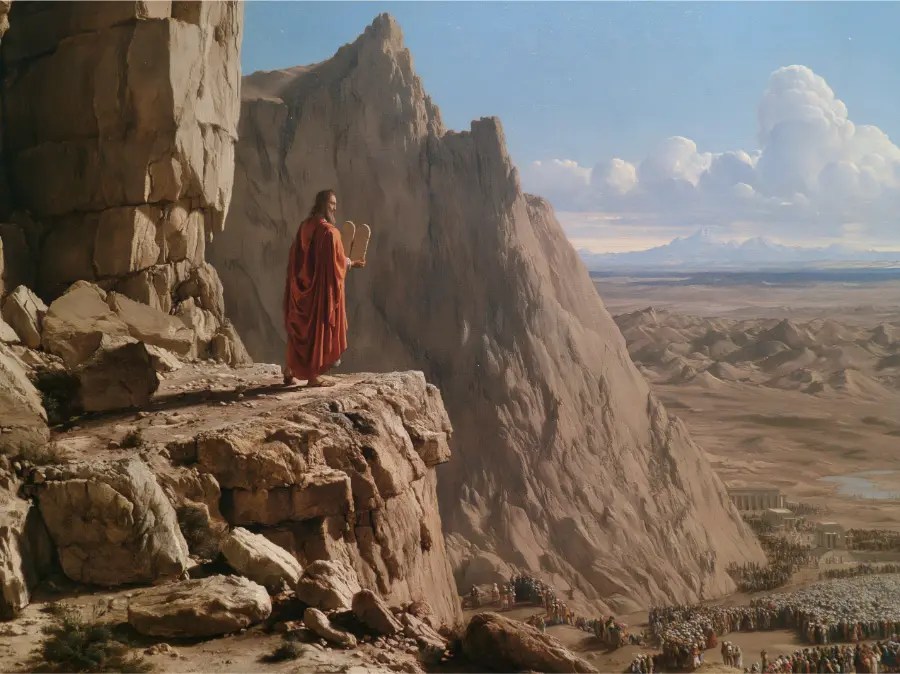
If the will is bound, are we stones?
Here the churches that disagree most reach for the same picture, though they do not all do the same thing with it. The Council of Trent condemned anyone who taught that the will, when God calls, “cannot refuse its consent, if it would, but that, as something inanimate, it does nothing whatever and is merely passive.” The Formula of Concord says that before conversion a person can help in his own turning “just as little as a stone or a block or clay.” Yet it also says that “man is not a stone or block. For a stone or block does not resist the person who moves it.” It hears that resistance in Jesus’ lament over Jerusalem: “how often would I have gathered thy children together, even as a hen gathereth her chickens under her wings, and ye would not!” (Matthew 23:37). And the Formula keeps the very word Trent condemned. When Luther says that “man is pure passive (purely passive)” in his conversion, it explains, he means that a person “of himself, or from his natural powers, cannot do anything or help towards his conversion.” So Catholics and Lutherans part here, and what they share is only the denial that a person is a stone. The Canons of Dort say that grace “does not act in people as if they were blocks and stones; nor does it abolish the will and its properties or coerce a reluctant will by force, but spiritually revives, heals, reforms, and—in a manner at once pleasing and powerful—bends it back.”
When Trent says the will is not inanimate, it means that a person moved by God can still say no, and says yes freely. Lutherans, too, hold that grace can be resisted to the end. The Formula says that God “does not force man to become godly,” and that “those who always resist the Holy Ghost and persistently oppose the known truth … are not converted.” The Reformed teach an effectual call instead. The Westminster Confession says that God is pleased “effectually to call” those he has chosen for life. It goes straight back to Ezekiel for this: God calls by “taking away their heart of stone, and giving unto them a heart of flesh; renewing their wills,” so that “they come most freely, being made willing by his grace” (10.1).
Who moves first, God or us?
The Anglican and Methodist articles answer that God does. The Church of England’s Thirty-nine Articles, agreed in 1562, teach in Article X that man “cannot turn and prepare himself, by his own natural strength and good works, to faith, and calling upon God,” and can do nothing pleasing to God “without the grace of God by Christ preventing us, that we may have a good will, and working with us, when we have that good will.” The United Methodist Church’s Article VIII says the same, with only the word “good” left out. “Preventing” there is the old English for going before. The Church of the Nazarene calls it prevenient grace and teaches in its Articles of Faith that “the grace of God through Jesus Christ is freely bestowed upon all people, enabling all who will to turn from sin to righteousness.”
John Wesley preached on it from the verse where Paul holds both of Ezekiel’s sayings in one breath: “work out your own salvation with fear and trembling. For it is God which worketh in you both to will and to do of his good pleasure” (Philippians 2:12–13). “Salvation begins with what is usually termed (and very properly) preventing grace,” he said, “including the first wish to please God, the first dawn of light concerning his will, and the first slight transient conviction of having sinned against him.” Out of Paul’s two sentences he made two of his own: “God works; therefore you can work. Secondly, God works, therefore you must work.”
The Council of Trent tells it in the same order. For Trent, justification begins with “prevenient” grace, by which people are called “without any merits existing on their parts.” A person moved by that grace is “also able to reject it; yet is he not able, by his own free will, without the grace of God, to move himself unto justice in His sight.” Trent finds both halves in two verses of the prophets. When God says, “Turn ye unto me, saith the Lord of hosts, and I will turn unto you” (Zechariah 1:3), “we are admonished of our liberty,” and when we pray, “Turn thou us unto thee, O Lord, and we shall be turned” (Lamentations 5:21), “we confess that we are prevented by the grace of God.” The Catechism says it in its own words, that “the grace of Christ is not in the slightest way a rival of our freedom” (1742). The Orthodox have a word for this working together, and Fr. John Breck writes for the Orthodox Church in America, “Orthodoxy does recognize, however, the importance of our ‘cooperation’ with God, what we term ‘synergy.’”
Quakers speak of that first grace as a light in every person. Robert Barclay, the Quaker writer of 1675, whose propositions are his own account and not a creed every Friend signs, said that Christ “enlighteneth every man that cometh into the world,” and that “this Light enlighteneth the hearts of all in a day … in order to salvation, if not resisted.” Britain Yearly Meeting says it today in Quaker faith & practice: “The Inward Light is the light of Christ. It is a universal Light, which can be known by anyone.”
What do Baptists, Pentecostals and the Churches of Christ teach about free will?
These churches start from the choice itself, and they reason from the way God speaks to us: if he calls us to repent, we must be able to answer. The Assemblies of God puts that reasoning into words in a paper endorsed by its Commission on Doctrinal Purity: “Every call to repentance in Scripture is an indication that God has given to humankind a free will which can choose right or wrong.” God made us so, it says, because he “desired freely given allegiance rather than robotic response to His will.” The Churches of Christ have no central body to speak for them, but Christian Courier, Wayne Jackson’s teaching site in that fellowship, gives the same reason as its own view: “Every command given to man presupposes his ability to accept or reject it.” Reading the same lament over Jerusalem, it says, “There is a vast difference between ‘will not’ and ‘cannot.’”
The Southern Baptist Convention’s Baptist Faith and Message begins further back, in Eden: “In the beginning man was innocent of sin and was endowed by his Creator with freedom of choice. By his free choice man sinned against God and brought sin into the human race.” It adds that “Only the grace of God can bring man into His holy fellowship.” Reformed Baptists stand with the Calvinist churches instead, as What Denominations Are Calvinist? Presbyterian, Reformed and Some Baptist Churches sets out. Not every Pentecostal church speaks to it either. The United Pentecostal Church International, a Oneness Pentecostal church, teaches that death entered the human race “as a result of the sin condition, which resulted from the Fall,” but none of its statements takes up the freedom of the will directly.
Other churches say less about the will itself. The evangelical Lausanne Movement looks instead at the damage sin has done, and its Seoul Statement of 2024 says that “Sin corrupts our inherent human nature and capacities.” Two mainline churches speak briefly of what God has given us. The Disciples of Christ say in a General Assembly statement that “God has made us able to respond to the gospel,” and the United Church of Christ’s Statement of Faith says that God “creates humankind in the divine image, and sets before us the ways of life and death.” The UCC has no teaching on whether the fallen will is bound or free.
Mennonites and Amish speak of sin as something chosen that then holds us. Mennonite Church USA confesses that “humanity has disobeyed God, given way to the tempter, and chosen to sin,” and it knows how a choice becomes a chain: “The more we sin, the more we become trapped in sin.” The Amish hold the Dordrecht Confession of 1632, which begins its article on repentance with the words of Genesis, “since the imagination of man’s heart is evil from his youth,” and answers them with “the first lesson of the precious New Testament of the Son of God,” which “is repentance and reformation of life.”
What do Latter-day Saints and Jehovah’s Witnesses mean by free will?
Latter-day Saints call it agency, and they say we had it before we were born. The Church of Jesus Christ of Latter-day Saints teaches that “Agency is the ability and privilege God gives us to choose and to act for ourselves” and that “In our premortal life we had moral agency,” and its Book of Mormon says that men “are free to choose liberty and eternal life, through the great Mediator of all men, or to choose captivity and death” (2 Nephi 2:27). Jehovah’s Witnesses teach that God holds back his power to foreknow and foreordain so that our path is not fixed. “Jehovah exercises self-control in order to respect the free will that he gave us,” says the February 2009 issue of Awake!, and The Watchtower of April 2009 says of salvation, “God does not compel us to accept his offer.”
Does predestination cancel free will?
The churches that teach predestination most strongly say it does not. The Westminster Confession, which teaches that God ordains “whatsoever comes to pass,” says in the same sentence that “neither is God the author of sin, nor is violence offered to the will of the creatures” (3.1), and the Baptist Faith and Message calls election “consistent with the free agency of man.” St John of Damascus, the Eastern father of the eighth century, drew the line between what God knows and what he fixes: “We ought to understand that while God knows all things beforehand, yet He does not predetermine all things.” How each church teaches predestination itself is set out in Do Catholics Believe in Predestination? What Each Church Teaches.
If we come to this question afraid that we might be shut out, the Canons of Dort, which teach reprobation in plain words, speak gently to that fear: those who “seriously desire to turn to God,” they say, “ought much less to stand in fear of the teaching concerning reprobation, since our merciful God has promised not to snuff out a smoldering wick or break a bruised reed.” Wesley, on the other side of the argument, counted “the first wish to please God” as grace already at work.
So the churches hold Ezekiel’s two sayings in different hands, the command to make a new heart and the promise that God will give one. Whichever church we kneel in, the prayer Trent read as our confession that grace goes first belongs to all of us: “Turn thou us unto thee, O Lord, and we shall be turned” (Lamentations 5:21).
Related reading
- Compare Christian Denominations: what 23 churches teach on 55 questions
- Lutheran vs Methodist: Free Will, Baptism and Communion
- Methodist vs Presbyterian: Free Will or Predestination, Bishops or Elders
- What Denominations Are Calvinist? Presbyterian, Reformed and Some Baptist Churches
- The Council of Trent, Session VI: the decree on justification
- Angels: Do They Have Free Will?


Leave a Reply