
 English
 Chinese
 Dutch
 Arabic
 Spanish
 Portuguese
 Russian
 French
 Italian
 German
 Japanese
Here is a short prayer for companionship: Lord, you said that it is not good for us to be alone, and you know how long I have been alone. Send me a companion, a husband or a wife if that is your will, or a friend who loves you, and until then keep close to me yourself. Amen. Below are prayers for the moments when this longing presses hardest, and then three old ones: the prayer Tobias and Sara prayed together on the night of their wedding, an Orthodox hymn asking Christ for a companion on the road, and an Anglican prayer that begins with the God who sets the solitary in families.
If being alone has turned into despair, or into thoughts of ending your life, please tell someone today. In the US you can call or text 988, and in the UK and Ireland you can call Samaritans free on 116 123. There are more Christian and crisis lines where someone will listen.

Is it right to ask God for a companion?
It is, and God put the longing into words before any of us did. All through the first chapter of Genesis he looks at what he has made and sees that it is good, seven times over. He sees it of the light, of the dry land and the seas, and of the plants; he sees it of the sun and moon and stars, of the creatures of the sea and the air, and of the animals of the land; and at last he sees “every thing that he had made, and, behold, it was very good” (Genesis 1:31). Then, in the next chapter, before there is any sin in the world at all, comes the first thing in the Bible that God calls not good: “It is not good that the man should be alone; I will make him an help meet for him” (Genesis 2:18).
So if you have looked at an empty chair across the table for a long time and wished someone were sitting in it, you are feeling something God himself named, and we can bring it to him without shame. The Preacher says it as plainly as anyone could: “Two are better than one,” and “woe to him that is alone when he falleth; for he hath not another to help him up” (Ecclesiastes 4:9–10). The Bible tells of people God gave to one another, Ruth, who would not leave her mother-in-law Naomi after both their husbands had died, and the twelve, whom Jesus sent out “by two and two” (Mark 6:7). Twice it tells of a companion who came alongside on the road and was more than he seemed, an angel walking with young Tobias and the risen Lord walking with two disciples to Emmaus.

Prayers for a companion
Each of these belongs to one moment of the longing, and each is short enough to pray in a minute. Pray the one that fits today, and change the words into your own if yours come more easily. If what you need tonight is comfort in being alone more than a companion, the prayers for loneliness were written for that.
When you hope to marry
Father, you gave Adam a helper when he was alone in the garden, and your word tells me, “Delight thyself also in the Lord: and he shall give thee the desires of thine heart” (Psalm 37:4). This is the desire of my heart. If it is your will that I marry, bring me a husband or wife who loves you, and make me ready to love that person well. Keep me from settling for someone who would pull me away from you, and give me patience in the waiting. Amen.
If marriage is what you are praying for most of all, our prayers to find a godly spouse stay with that one hope from beginning to end.
After your husband or wife has died
Lord, the house is quiet in a way it never was before, and I feel what Naomi felt when she said, “I went out full and the Lord hath brought me home again empty” (Ruth 1:21). Thank you for the years we had. You gave Naomi a companion in Ruth when she thought she had no one left. Send me someone to share my days with, whether a friend, family close by, or in time, if you will it, another husband or wife, and show me which it should be. Amen.
If you are widowed and have wondered whether it is right even to hope for marriage again, Paul settled it long ago: a widow “is at liberty to be married to whom she will; only in the Lord” (1 Corinthians 7:39). So you may pray for it freely, and if marriage is not what you want, you may ask God just as freely for companionship of another kind.
When you have moved and know no one
God, everything here is new and nobody knows my name. Your word says that you set “the solitary in families” (Psalm 68:6). Set me in one. Lead me to a church where I will be missed when I am absent, to neighbours who will open their doors, and to one or two people who will become friends. Give me the courage to speak first. Amen.
For a friend who shares your faith
Lord, the psalmist could say, “I am a companion of all them that fear thee, and of them that keep thy precepts” (Psalm 119:63). Give me a friend like that, someone I can pray with and tell the truth to, the way “the soul of Jonathan was knit with the soul of David” (1 Samuel 18:1). Teach me to be that kind of friend, too. Amen.
Catholic and Orthodox Christians, who read the Book of Sirach as Scripture, have one more promise to pray with here: “A faithful friend is the medicine of life and immortality: and they that fear the Lord, shall find him” (Ecclesiasticus 6:16, Douay-Rheims). If you have been waiting a long time for a friend like that, look at whom the promise is made to: those who fear the Lord. The hours you spend near him while you wait are not lost, because that is the very road on which such a friend is promised.
When you are married and still lonely
Father, I am not alone in this house, and yet I feel alone. Through Malachi you called a wife her husband’s “companion, and the wife of thy covenant” (Malachi 2:14), so you meant us to be companions to each other. Show us where we drifted apart. Give us time to talk, patience to listen, and the warmth the Preacher spoke of when he asked, “how can one be warm alone?” (Ecclesiastes 4:11). Make us friends again. Amen.
In old age
Lord, my friends are fewer every year and my days are long. I pray with the psalmist, “Cast me not off in the time of old age; forsake me not when my strength faileth” (Psalm 71:9). Send someone to sit with me, to drive me to church and to call when the weather turns, and let me still be of use to someone else. Amen.
In the evening, when the house is quiet
Jesus, on the road to Emmaus you “drew near, and went with them” (Luke 24:15), and when evening came they begged you, “Abide with us: for it is toward evening, and the day is far spent” (Luke 24:29). I ask the same tonight. Sit at my table, stay with me through the night, and let me know you are here. Amen.
When someone new comes into your life
Lord, I have waited so long, and now I have met someone, and I am glad, and I am afraid that the long waiting will make me hope too soon. Your word says, “If any of you lack wisdom, let him ask of God, that giveth to all men liberally, and upbraideth not; and it shall be given him” (James 1:5), so I am asking. Show me whether this person is who they say they are, whether they love you, and whether this friendship or courtship is from you, and let me listen to the people who love me if they have doubts. Amen.
If you met this person online, please hold on to the rule the US Federal Trade Commission gives: “Never send money or gifts to a sweetheart you haven’t met in person.” Romance scammers, it warns, say they are overseas or serving in the military, and then they ask for money, for a ticket, a medical bill or a fee. If that happens to you, stop writing to the person at once and talk to someone you trust.
To be a companion to someone else
Lord, while I wait, open my eyes to someone who is as alone as I am. Ruth said to Naomi, “whither thou goest, I will go; and where thou lodgest, I will lodge” (Ruth 1:16), and she became Naomi’s companion when Naomi had given up. Show me whom I can visit this week, whom I can invite to a meal, and whom I can call. Amen.
If no companion comes
Lord Jesus, I have asked for a companion and none has come yet. Do not let me turn bitter. Hold me to the promise you made, “I will never leave thee, nor forsake thee” (Hebrews 13:5), be my friend until someone comes and after, and give me what I need for today. Amen.
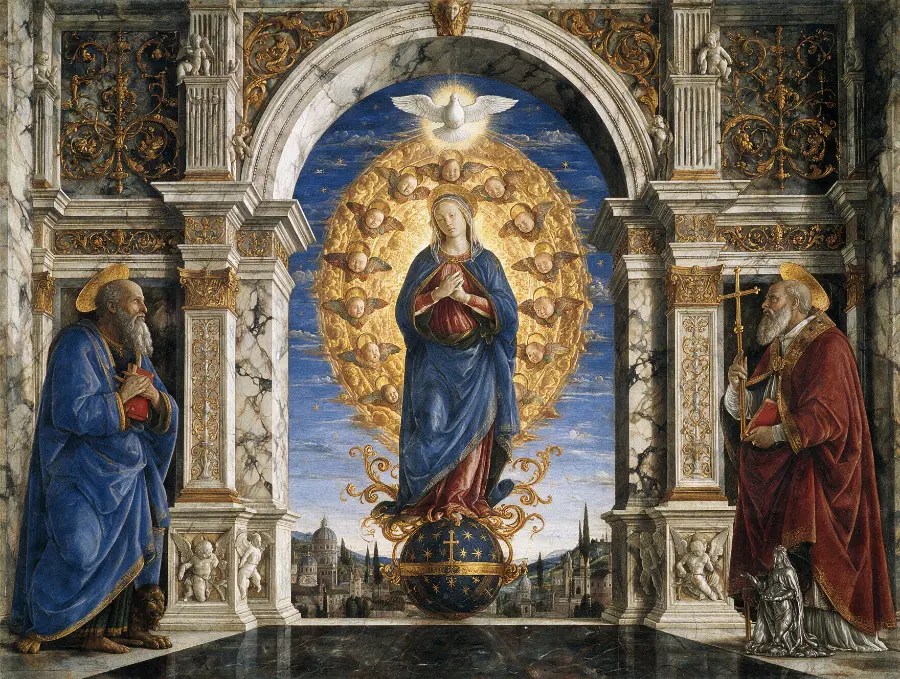
The prayer of Tobias and Sara
Lord God of our father, may the heavens and the earth, and the sea, and the fountains, and the rivers, and all thy creatures that are in them, bless thee. Thou madest Adam of the slime of the earth, and gavest him Eve for a helper. And now, Lord, thou knowest, that not for fleshly lust do I take my sister to wife, but only for the love of posterity, in which thy name may be blessed for ever and ever.
Sara also said: Have mercy on us, O Lord, have mercy on us, and let us grow old both together in health.
Tobias 8:7–10, Douay-Rheims Bible
Tobias goes back to the beginning, to Adam and the helper God gave him, the same need God named in Genesis. When he calls her “my sister” he is using the old way of speaking of a kinswoman, and Sara was one, the daughter of “a near kinsman of thy tribe,” as the angel had told him (Tobias 6:11), and now she was his bride as well. And Sara, who had lost seven husbands, asks for only one thing more, to grow old beside this one. Anyone who has lost a companion and dares to hope again can pray her words.
Every word the two of them prayed that night was spoken to God, so any of us can pray it with them, whatever church we belong to and whatever Bible we were given. Catholic and Orthodox Christians may also ask Raphael and the other angels and saints to pray for them, where most Protestants pray to God alone, but this prayer goes straight to God and belongs to all of us. Whether the book itself is in your Bible does depend on your church: the Council of Trent counted Tobias among the sacred and canonical books in 1546, the Orthodox Church in America says the books of its “longer canon” are “accepted by Orthodox Christianity as canonical scripture,” the Anglican Articles of Religion in the 1928 Book of Common Prayer read it “for example of life and instruction of manners” but not to establish any doctrine, and other Protestant churches call these books the Apocrypha.

An Orthodox hymn for a companion on the road
O Christ, who art the Way and the Truth, send now thine Angel as a fellow-traveller to thy servant(s), preserving him (her, them) like Tobias of old, and guarding him (her, them) unharmed of every evil thing, and in all prosperity, unto thy glory: through the prayers of the Birth-giver of God, O thou who alone lovest mankind.
O Saviour, who didst accompany Luke and Cleopas unto Emmaus, accompany thou now also thy servant who is (servants who are) minded to travel, delivering him (her, them) from every evil assault: For thou canst do all things whatsoever thou wilt, in that thou lovest mankind.
Isabel F. Hapgood, Service Book of the Holy Orthodox-Catholic Apostolic Church (1906), “The Rite of Blessing for a Journey,” pp. 525–526
The words in brackets are the forms for a woman or for several people. The hymns were written for travellers, but some roads are walked without leaving home, and anyone who has moved to a strange city, or who is walking a long way through grief with no one beside them, can pray them for themselves.

An Anglican prayer to the God who sets the solitary in families
Almighty God, our heavenly Father, who settest the solitary in families; We commend to thy continual care the homes in which thy people dwell. Put far from them, we beseech thee, every root of bitterness, the desire of vain-glory, and the pride of life. Fill them with faith, virtue, knowledge, temperance, patience, godliness. Knit together in constant affection those who, in holy wedlock, have been made one flesh; turn the heart of the fathers to the children, and the heart of the children to the fathers; and so enkindle fervent charity among us all, that we be evermore kindly affectioned with brotherly love; through Jesus Christ our Lord. Amen.
The Book of Common Prayer (1928), Family Prayer, “For a Blessing on the Families of the Land,” p. 598
The two disciples on the road to Emmaus did not know who had walked beside them all that way until he sat at their table, and then “he took bread, and blessed it, and brake, and gave to them. And their eyes were opened, and they knew him” (Luke 24:30–31). The companion we are praying for may be a long time coming, but the Lord who drew near to them on that road is near to us already, and we can ask him tonight what they asked: “Abide with us: for it is toward evening, and the day is far spent.”



Leave a Reply