
 English
 Chinese
 Dutch
 Arabic
 Spanish
 Portuguese
 Russian
 French
 Italian
 German
 Japanese
The Restoration Movement was an attempt, begun on the American frontier around 1800, to end the divisions among Christians by setting aside creeds and church names and going back to the New Testament alone. Its leaders were Barton W. Stone in Kentucky, Thomas Campbell and his son Alexander in Pennsylvania and Virginia, and the evangelist Walter Scott in Ohio, and historians also call it the Stone-Campbell Movement after the first three. It has since divided twice, and three bodies come down from it today: the Churches of Christ, who sing without instruments; the independent Christian Churches and Churches of Christ; and the Christian Church (Disciples of Christ).
What the Churches of Christ teach today
Most of this story turns on something Thomas Campbell said at a meeting in 1809: “where the Scriptures speak, we speak; and where the Scriptures are silent, we are silent.” It sounds as though it ought to settle every argument. What is a church to do, though, when the Bible says nothing about a missionary society, or an organ? The people who loved that sentence most have never agreed about the answer.
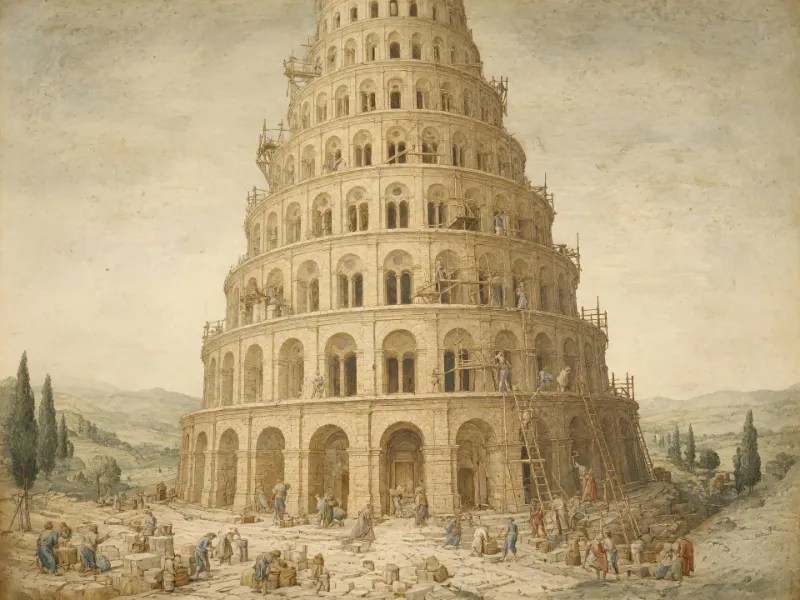
The Cane Ridge revival of 1801
In 1798 two congregations in Bourbon County, Kentucky, Cane Ridge and Concord, called Barton Stone to be their Presbyterian minister. Before his ordination he went through his church’s Confession of Faith once more, and he tells us, “I stumbled at the doctrine of Trinity as taught in the Confession; I labored to believe it, but could not conscientiously subscribe to it.” He told two leading men of the presbytery that he meant to decline ordination, and they asked him how far he could receive the Confession. As far as he saw it consistent with the word of God, he said, and they told him that was sufficient. So when the question was put to him he answered aloud, so that the whole congregation could hear, “I do, as far as I see it consistent with the word of God.” In the spring of 1801 he went across to Logan County to see a revival for himself and came home and told his people about it, and on the third Sunday of August the crowds came to Cane Ridge.
“The roads were literally crowded with wagons, carriages, horsemen, and footmen, moving to the solemn camp,” Stone remembered, and the military men who were there judged that there were “between twenty and thirty thousand collected.” Four or five preachers would be speaking at once in different parts of the camp. People fell to the ground or shook with what he called the jerks, and though he believed God was at work, he admits there was “much fanaticism in this excitement.” He noticed who was standing next to whom, too. “The Methodist and Baptist preachers aided in the work,” he wrote, and all were “of one mind and one soul.” It went on for six or seven days, until the neighbourhood ran out of food for them, and it persuaded Stone that the denominations had to work together. Within three years he belonged to none of them.
The presbytery that wrote its own will
In September 1803, when the Synod of Kentucky moved against one of the revival preachers, Richard McNemar, he and Stone and three others went out during a recess to a private garden, prayed, and drew up a declaration that they were withdrawing from the Synod’s authority. They formed a presbytery of their own at Springfield, and Stone went home, told his two congregations he could no longer preach to support the Presbyterian church, and “in their presence tore up their salary obligation to me.” Within about a year the new presbytery was worrying its own members, because they “found it extremely difficult to suppress the idea that they themselves were a party separate from others.” So on 28 June 1804 they drew up its last will and testament and let it die. Here is its first clause, and then its seventh and eighth.
Imprimis. We will, that this body die, be dissolved, and sink into union with the Body of Christ at large; for there is but one body, and one Spirit, even as we are called in one hope of our calling.
Item. We will, that the people henceforth take the Bible as the only sure guide to heaven; and as many as are offended with other books, which stand in competition with it, may cast them into the fire if they choose; for it is better to enter into life having one book, than having many to be cast into hell.
Item. We will, that preachers and people cultivate a spirit of mutual forbearance; pray more and dispute less; and while they behold the signs of the times, look up, and confidently expect that redemption draweth nigh.
Stone and five others signed it as witnesses, and they added that the presbytery had “died a voluntary and happy death.” With the man-made creeds, Stone said, “we threw it overboard, and took the name Christian.”

Where the Scriptures are silent, we are silent
Thomas Campbell was an Irish Presbyterian minister who came to America in 1807 and was suspended from the ministry for practising open communion. He went on preaching in western Pennsylvania to anyone who would hear him, and in 1809 they called a meeting to settle what they stood for. Campbell spoke about the harm done by divisions among Christians, and he finished by giving them a rule. “That rule, my highly respected hearers,” he said, “is this, that where the Scriptures speak, we speak; and where the Scriptures are silent, we are silent.”
A solemn silence followed, Robert Richardson tells us in his life of Alexander Campbell, and it was some time before anyone would break it. Then Andrew Munro, a bookseller and postmaster from Canonsburg, stood up and said, “Mr. Campbell, if we adopt that as a basis, then there is an end of infant baptism.” Campbell answered, “if infant baptism be not found in Scripture, we can have nothing to do with it.” At that Thomas Acheson came forward with his hand on his heart and cried, “I hope I may never see the day when my heart will renounce that blessed saying of the Scripture, ‘Suffer little children to come unto me, and forbid them not, for of such is the kingdom of heaven.’” He burst into tears and started for the next room, James Foster called after him that the verse had nothing to do with baptism, and “Mr. Acheson passed out to weep alone.”
Before that meeting ended, then, the rule had sent a man out of the room in tears, and they adopted it anyway. Later that year Campbell set out their program in the Declaration and Address, where he says that division among Christians “is a horrid evil, fraught with many evils.”
The trouble is hiding in his fifth proposition. Where the Scriptures are silent about the time or manner of a command, he says, “no human authority has power to interfere, in order to supply the supposed deficiency by making laws for the Church,” and that protects our freedom, since nobody may bind us where God has not. A few lines further on he says, “Nothing ought to be received into the faith or worship of the Church, or be made a term of communion among Christians, that is not as old as the New Testament,” and that fences the worship in, since nothing new may enter. Both sentences sit in one paragraph, so a later Christian could take the silence of Scripture as liberty or as a limit and quote Thomas Campbell either way. It was forty years before the movement had to choose.
How the Campbells came to baptism by immersion
Andrew Munro turned out to be right about where the rule would lead them, and the one who proved it was Campbell’s own son. Alexander Campbell had come over from Scotland in 1809 and taken up his father’s cause, and when he became a father himself he went to the Greek of the New Testament and came away sure that the words for baptism “could mean only immersion and immerse” and that believers alone should receive it. In June 1812 he arranged for a Baptist preacher, Matthias Luce, to immerse him in a deep pool in Buffalo Creek. As they were setting out, Thomas Campbell “simply remarked that Mrs. Campbell had put up a change of raiment for herself and him, which was the first intimation given that they also intended to be immersed.” Seven people went down into the water that day.
These churches came to be known for baptizing believers by immersion, reading Peter’s words at Pentecost, “Repent, and be baptized every one of you in the name of Jesus Christ for the remission of sins” (Acts 2:38), and for gathering at the Lord’s table every week, as Luke shows the disciples doing “upon the first day of the week, when the disciples came together to break bread” (Acts 20:7).
In 1827, on Alexander Campbell’s recommendation, the Mahoning Baptist Association hired Walter Scott, a teacher from Scotland who had become Campbell’s friend, as its evangelist in the Western Reserve of Ohio, and for three years he baptized more than a thousand people a year. He put the whole message on one hand so that even young children could remember it: faith, repentance, baptism, remission of sins and the gift of the Holy Spirit.
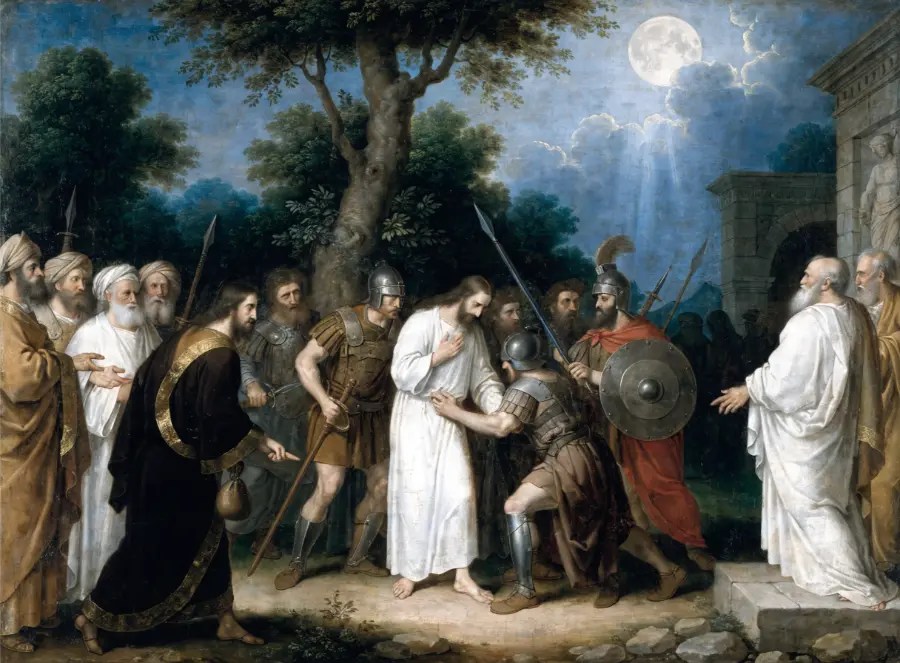
How the Stone and Campbell churches united in 1832
By 1830 many towns had a church of Stone’s people and a church of the Campbells’, teaching much the same thing. Even their names came out of one verse, for Stone held to “Christians” and Campbell preferred “Disciples,” and Luke has both in a single sentence: “And the disciples were called Christians first in Antioch” (Acts 11:26). They had larger differences than names, for Stone’s people found Campbell’s too legalistic about baptism, Campbell’s found Stone’s too given to speculation, and Stone had never been able to subscribe to the Confession’s doctrine of the Trinity, though he assured Campbell that he believed everything Scripture says about the Father, the Son and the Spirit.
On the Saturday of the New Year weekend of 1832 a crowd filled the Christians’ meeting house on Hill Street in Lexington, Kentucky. John Smith, a preacher of the Campbell reform known as “Raccoon” John, spoke first, and he gave them the whole idea in a sentence: “While there is but one faith, there may be ten thousand opinions; and hence, if Christians are ever to be one, they must be one in faith, and not in opinion.” On the deep questions, such as “the mode of the Divine Existence, and the Ground and Nature of the Atonement,” he promised to use only the words of Scripture, because “it can offend no one to say about those things just what the Lord himself has said.” And he asked them to “be no longer Campbellites or Stoneites, New Lights or Old Lights, or any other kind of lights.”
So at Lexington the silence of the Bible was ground they could both stand on. Stone got up and said he had “not one objection to the ground laid down by him as the true scriptural basis of union among the people of God,” and he added, “I am willing to give him, now and here, my hand.” Smith’s biographer says he “offered to Smith a hand trembling with rapture and brotherly love.” Others came forward and joined hands, a song went up, and on the Lord’s day “they broke the loaf together.” Alexander Campbell had not even been consulted, and about half of Stone’s people stayed out of it, forming a fellowship that has been part of the United Church of Christ since 1957.
Why the movement divided over organs and missionary societies
Forty years after Campbell gave his rule, in 1849, a national convention at Cincinnati founded the American Christian Missionary Society. Many believed that a society was not authorized by Scripture and would take from the local congregations what belonged to them, and there was the silence again, doing the opposite of what it had done at Lexington.
Then came the melodeon, a small pump organ. Alexander Campbell had said what he thought of such things as early as 1851, when he wrote that “to all spiritually-minded Christians, such aids would be as a cowbell in a concert.” Even so, the singing at Midway, Kentucky, was so bad that the preacher, L. L. Pinkerton, said it would “scare even the rats from worship,” and in 1859 or 1860 (the sources differ) he let a melodeon into the service, which is thought to be the first instrument used in any congregation of the movement. One of the elders, Adam Hibler, went to the building late one night with Reuben, a man he held as a slave. He held a window open while Reuben climbed in and passed the instrument out, and he took it away to his barn. It is a funny story until we notice who was sent through the window. A second melodeon took its place.
After the Civil War more congregations wanted an organ, and the quarrel filled the church papers. In 1867 the church in St. Louis bought a building from the Episcopalians with a $3,000 organ inside it, and its members argued for years before it was played. Moses Lard, who opposed organs, wrote in his quarterly that the question touched “the right of men to introduce innovations into the prescribed worship of God. This right we utterly deny.” In 1870 Isaac Errett tried to make peace in the Christian Standard. He urged those who wanted organs to hold back for the sake of harmony, and he told those who opposed them that “it is wrong to make this difference a test of fellowship.” A Church of Christ writer today will tell you that this made the organ’s opponents out to be the troublemakers, and the organs kept coming in.
They were all reading the same verses. Paul tells the Ephesians to be “Speaking to yourselves in psalms and hymns and spiritual songs, singing and making melody in your heart to the Lord” (Ephesians 5:19), and one man took that as the limit of what the church may do while another took it as a command to sing that forbids nothing else. The psalmists’ harps and trumpets came into it as well, and you can read the Bible’s verses on musical instruments for yourself. So the two sentences of Campbell’s fifth proposition, the one guarding our freedom and the one fencing in the worship, now each had a party behind it.
Organs spread among the prosperous city churches of the North, very few Southern churches used them, and poorer country congregations tended to see them as giving way to the world. By the end of the century two fellowships stood where there had been one, and the government noticed. In 1907 S. N. D. North, the director of the Census Bureau, wrote to ask David Lipscomb, the editor of the Gospel Advocate, whether a separate body existed. “There is a distinct people taking the word of God as their only and sufficient rule of faith,” Lipscomb replied, and the census of 1906 listed them apart, with about 159,000 members out of some 1.1 million in the whole movement, about one in seven. It recorded a division that was by then nearly complete, as the historian Douglas Foster has shown.
How the independent Christian Churches came to leave the Disciples
The churches that kept their organs held together for two more generations, and this time the argument was over baptism and over who answers for the missionaries. Open membership meant receiving into a congregation people who had not been immersed, and in 1920 it was charged that missionaries of the Disciples’ United Christian Missionary Society in China were doing it. In 1926 the society ended its support of Leslie Wolfe, a long-serving missionary in Manila, and when he came to the convention at Memphis that November he was given only a few minutes. By the account of those on his side, many conservatives went home determined not to come back, and the Disciples’ own history says that a group began to separate in 1926 over “too-liberal policies on the mission field in the practice of baptism.”
By then congregations were sending money straight to missionaries of their own choosing, which is where the name “independent” comes from, and in October 1927 the conservatives met at Indianapolis as the North American Christian Convention. By their own account neither step was meant to divide anyone, and a commission worked from 1934 to 1948 to prevent a break, but it came anyway. In 1968, in the process called Restructure, the Disciples took their present name and “officially recognized their status as one of the denominations in America,” and some 3,000 congregations formally withdrew between 1967 and 1969.
What is the difference between the three churches today?
The instrument stands between the Churches of Christ and the other two, and a denominational structure stands between the Disciples and the other two.
| Church | Music in worship | Above the congregation | Reported size |
|---|---|---|---|
| Churches of Christ | Voices only | No headquarters; each church under its own elders | 1,264,115 members, 13,032 churches in the U.S. and Canada (Dialogue brochure); 1,183,613 members, 12,300 churches in the U.S. (2015) |
| Christian Churches/Churches of Christ | Instruments | No organizational tie between churches | 1,144,000 members, 5,552 churches in the U.S. and Canada (Dialogue brochure); 1,333,000 members, 5,554 churches (encyclopedia, early 2000s) |
| Christian Church (Disciples of Christ) | Instruments, in varied styles | A denomination with regions and general ministries | 834,000 members, 3,792 churches in the U.S. and Canada (Dialogue brochure); about 278,000 members (2022), over 3,000 churches |
Those numbers were gathered in different years and in different ways, so they show rough size and no more. The first figure in each row comes from one brochure, made in the early 2000s for the talks among the three bodies called the Stone-Campbell Dialogue, so those three at least were set side by side. All three have kept the Lord’s Supper every week and, by long tradition, the baptism of believers by immersion.
In a Church of Christ on a Sunday you will hear voices and no instrument, in keeping with the simplicity of the early church’s worship. They take the Bible as the final authority in all religious matters, and one congregation in Indianapolis, High School Road, gives the reason for the singing when it says that we are “limited in our acts of worship to those which are authorized by the scriptures.” They immerse believers and regard baptism as part of salvation, and their preachers have gone on counting it off on the hand as Walter Scott did, usually now as hearing, believing, repenting, confessing and being baptized. Nothing stands over a congregation beyond its own elders, and the churches are connected by lectureships, journals and schools. By the time of the Dialogue their numbers abroad, especially in Africa, were approaching those at home. They are not all of one mind, and the Dialogue’s brochure speaks of wide differences among their congregations. Rick Cherok, a historian at the independent Ozark Christian College, sorts them into those who keep singing unaccompanied as their preferred form of worship and those who hold an instrument to be a matter of salvation. Our page on how the Church of Christ differs from Baptists follows those beliefs further.
In one of the independent Christian Churches or Churches of Christ you will hear instruments, and you will find the Lord’s table spread, as it is every Sunday in every congregation, usually with elders presiding and open to all believers. They hold to the deity and lordship of Jesus and the authority of Scripture, they immerse believers, and they connect baptism with the forgiveness of sins while rejecting any idea that the water itself regenerates. Nothing ties one congregation to the next, in a way of governing that one of their own historians calls “fiercely protective of congregational autonomy,” and the money for missions goes straight from each congregation to the missionaries it chooses, claiming a considerable portion of its budget. The Dialogue’s brochure counts 943 of those missionaries and as many members abroad as in the United States and Canada. Walter Zorn, who taught Old Testament at Great Lakes Christian College, gives it as his own opinion that when the Scriptures are silent about a thing it is not for that reason forbidden.
The Christian Church (Disciples of Christ) is the only one of the three that accepts the name of a denomination, with regions and general ministries above the local congregation, and it calls itself “a movement for wholeness in a fragmented world.” When the three bodies described themselves for the Dialogue, the Disciples gave a vision of a faithful and growing church with true community, deep spirituality and a passion for justice. They have no creed as a test of faith, and their Lord’s table is “open to all who are followers of Jesus Christ.” At least some of their congregations, such as West Des Moines in Iowa, immerse while recognizing baptisms in other forms, and in the words of their 1968 Preamble, “We confess that Jesus is the Christ, the Son of the living God.”
Because the names are so alike, we should add that Churches of Christ have no connection with the Church of Jesus Christ of Latter-day Saints, and that Alexander Campbell wrote one of the first reviews of the Book of Mormon, in 1831, under the title “Delusions.” We have set out Church of Christ and Mormon beliefs side by side. The International Church of Christ grew out of the Churches of Christ and has stood apart since the early 1990s.
What have the three churches said to one another?
In December 1999 people from all three bodies sat down together at Indianapolis for what is called the Stone-Campbell Dialogue. They ruled out any merger and agreed they would not write joint statements, and at their second meeting, at the Madison Church of Christ in Nashville in June 2000, they wrote one anyway, a Confession of Sin that opens, “Division in the body of Christ is sin.”
They wanted to say together what they believed as well, so D. Newell Williams, one of the Disciples in the room, proposed a text and it was read out. Members of the other two bodies called out, “That’s us—that’s the Churches of Christ!” Then someone asked where it came from, and Williams had to tell them it was the Preamble of the Disciples’ Design, the very document whose adoption in 1968 had sealed the separation. The delight went out of the room and the old suspicions came back. Did the “light” of Scripture mean the Disciples were denying its authority? Had they given up the Lord’s Supper every week? The Disciples said no to both. So the “light” was changed to authority, the weekly Supper was written in, the opening was altered so that it named no one’s church, and they affirmed it together.
They had ruled out a merger before they began, so the three churches went home three churches, and Thomas Campbell’s rule has still not settled what the silence means. On division the Scriptures are not silent. On the night before he died our Lord asked his Father, “That they all may be one; as thou, Father, art in me, and I in thee, that they also may be one in us: that the world may believe that thou hast sent me” (John 17:21). And the six men who buried Springfield Presbytery in 1804 left something all three churches can still take up: “pray more and dispute less.”

Related reading
- What a non-denominational church is
- How many Christian denominations there are
- The largest Christian denominations in the United States
- Bible verses about baptism, and where Christians read them differently
- Bible verses about communion
Christian Pure wrote this page. We have no connection with any of the churches it describes.


Leave a Reply