
 English
 Chinese
 Dutch
 Arabic
 Spanish
 Portuguese
 Russian
 French
 Italian
 German
 Japanese
Churches of Christ and Baptists both baptize believers by immersion and let each congregation govern itself, but they part over what baptism does. Churches of Christ baptize “for the remission of sins,” as part of being saved. Baptists teach that faith saves, and baptism follows as its sign. Churches of Christ also sing without instruments.
| Question | Churches of Christ | Baptists |
|---|---|---|
| Baptism | Immersion “for the remission of sins” | Immersion after faith, as a symbol |
| How saved | Hear, believe, repent, confess, be baptized | Repentance and faith in Christ |
| Can it be lost? | Yes, a Christian can fall away | Most say no; Free Will Baptists say yes |
| Music | Voices only | Each church decides |
| Lord’s Supper | Every Sunday | Often quarterly |
| Leaders | A group of elders, with deacons | Pastors and deacons; the members vote |
| Creed | None but the Bible | The Bible; confessions only as guides |
| Wider ties | None above the congregation | Associations and conventions |
| Began | United States, early 1800s; a separate body by 1906 | English exiles in Amsterdam, 1608–1609 |
| Size | About 1.3 million in the US and more than 3 million worldwide (2004 estimate) | 53 million in the Baptist World Alliance (listed in 2026); 12.3 million Southern Baptists (2025) |
Where Churches of Christ and Baptists differ
Each answer is quoted from the church’s own documents or from one of our articles.
Salvation
Church of Christ
We believe we are sinners saved by Christ’s death and resurrection. We neither deserve nor earn that grace but receive it by obedient faith that repents, confesses Christ, and is baptized into Him for a new life filled with the Spirit’s fruitfulness.
From Harding University Statement of Faith (a Churches of Christ university)
Baptist
Justification is God’s gracious and full acquittal upon principles of His righteousness of all sinners who repent and believe in Christ. Justification brings the believer unto a relationship of peace and favor with God.
Losing salvation
Church of Christ
it is possible at one time to be within the grace of Christ and thereby saved, and then to so conduct oneself as to be severed from, to fall out of, and forfeit that grace.
From Apologetics Press (Churches of Christ), Dave Miller, "Falling Away from Grace?"
Baptist
All true believers endure to the end. Those whom God has accepted in Christ, and sanctified by His Spirit, will never fall away from the state of grace, but shall persevere to the end.
God's choosing
Church of Christ
The statement of the apostle Peter, "Of a truth I perceive that God is no respecter of persons, but in every nation he that feareth him and worketh righteousness is acceptable unto him" (Acts 10:34-35.) is taken as an evidence that God did not predestine individuals to be eternally saved or lost, but that each man determines his own destiny.
Baptist
Election is the gracious purpose of God, according to which He regenerates, justifies, sanctifies, and glorifies sinners. It is consistent with the free agency of man, and comprehends all the means in connection with the end.
Who is saved
Church of Christ
Those enjoying salvation are (a) members of the one, true, undenominational church (described in the New Testament), which is the body of Christ (Ephesians 1:22-23; 4:4), and (b) those who are living faithfully in service to God (Revelation 2:10).
From Apologetics Press, Mission, History, & Beliefs: What We Believe (apologeticspress.org)
Baptist
Salvation involves the redemption of the whole man, and is offered freely to all who accept Jesus Christ as Lord and Saviour, who by His own blood obtained eternal redemption for the believer. In its broadest sense salvation includes regeneration, justification, sanctification, and glorification. There is no salvation apart from personal faith in Jesus Christ as Lord.
Original sin
Church of Christ
Children do not inherit the sins of their parents (Gen. 8:21; Ezek. 18:20; Mt. 18:1ff; 19:14; 1 Cor. 14:20). Sinning is a matter of choice, not genes (Josh. 24:15; Isa. 7:15). People go astray (Isa. 53:6); they are not born astray.
From Christian Courier (Wayne Jackson), Bible Words: Depravity, Total (christiancourier.com)
Baptist
Through the temptation of Satan man transgressed the command of God, and fell from his original innocence whereby his posterity inherit a nature and an environment inclined toward sin. Therefore, as soon as they are capable of moral action, they become transgressors and are under condemnation.
From Baptist Faith and Message 2000, article III (Southern Baptist Convention, bfm.sbc.net)
Receiving the Spirit
Church of Christ
Christians receive the Holy Spirit (in a non-miraculous measure) when they are baptized into Christ (Acts 2:38; 1 Corinthians 6:19; Galatians 4:6).
From Christian Courier (Wayne Jackson), Bible Words: Holy Spirit (christiancourier.com)
Baptist
He calls men to the Saviour, and effects regeneration. At the moment of regeneration He baptizes every believer into the Body of Christ.
Communion
Church of Christ
It is expected that every member of the church will assemble for worship on each Lord's day. A central part of the worship is the eating of the Lord's supper (Acts 20:7). Unless providentially hindered, each member considers this weekly appointment as binding.
Baptist
The Lord’s Supper is a symbolic act of obedience whereby members of the church, through partaking of the bread and the fruit of the vine, memorialize the death of the Redeemer and anticipate His second coming.
The thousand years
Church of Christ
The figure “thousand” in Revelation 20 denotes the completeness of the Savior’s victory over his enemies; there is no reference to an earthly regime. In fact, the Lord’s reign is from heaven, not from Jerusalem (cf. Luke 1:32-33; Acts 2:30ff; Luke 19:12-15; 1 Peter 3:21-22).
From Christian Courier (Wayne Jackson), Y2K and Millennial Mania (christiancourier.com)
Baptist
There is no official stance in the SBC beyond what you find in The Baptist Faith and Message . An article published in SBC LIFE in 2014 may be helpful in studying various viewpoints on the end times held by Southern Baptists.
From Southern Baptist Convention, FAQ: What is the SBC's stance on the end times? (sbc.net)
One story in the Book of Acts holds the whole question between these two churches, and Baptist confessions list it among their texts on baptism. An official of the queen of Ethiopia was riding home from Jerusalem in his chariot, and Philip “preached unto him Jesus.” Then, as Luke tells it, “they came unto a certain water: and the eunuch said, See, here is water; what doth hinder me to be baptized?” (Acts 8:35–36). Both churches would take him down into the water, as Philip did, and lay him all the way under. Where they part is the question of when he was saved. Was it there in the water, or already on the road, with the water to show it? Almost every other difference between them grows from the answer, or from the way each church reads the Bible to reach it.
To see what members of the Churches of Christ teach beside what Baptists teach on 55 questions, open our free tool, Compare Christian Denominations.
Are the Church of Christ and Baptists the same?
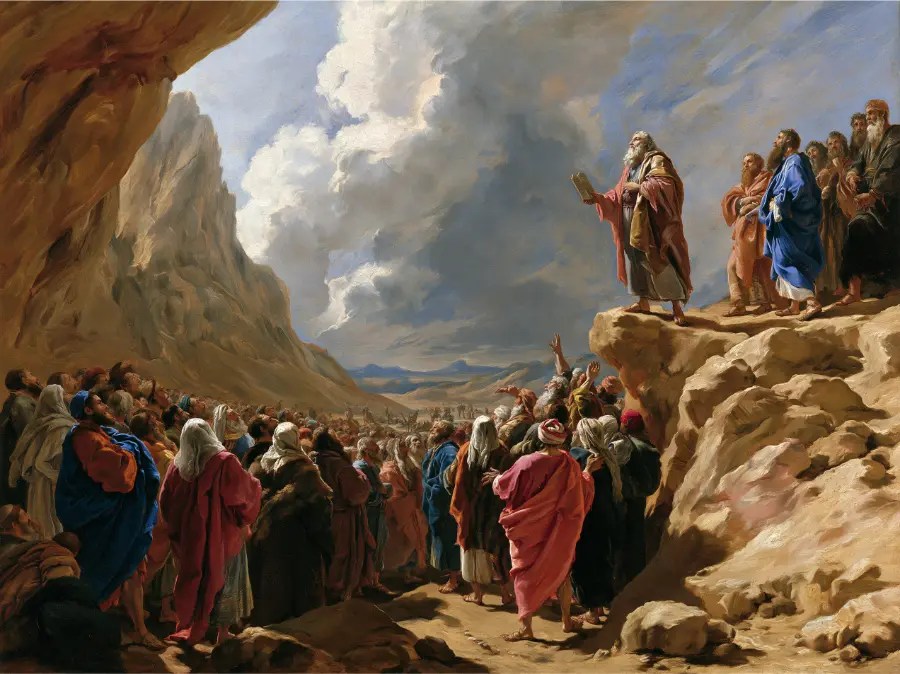
No, though their family trees cross. Baptists trace their first church to English Separatists in Amsterdam. There, in 1608 or 1609, John Smyth and Thomas Helwys formed a congregation that baptized believers rather than infants. Helwys led his followers back to England and formed the first Baptist church there in 1611 or 1612. Today Baptists are many separate bodies. The Baptist World Alliance joins 283 of them, with “53 million baptized believers,” and the Southern Baptist Convention, which left the Alliance in 2004, reported 12,331,954 members in 2025.
Churches of Christ grew from a movement in the young United States to leave denominations behind and restore the church of the New Testament. Batsell Barrett Baxter, a favorite speaker at citywide campaigns in the 1960s, who chaired the Bible department at David Lipscomb College, told in a tract how separate groups set the creeds aside in the first years of the 1800s. In New England, in 1802, one such movement arose “among the Baptists.” In Kentucky, in 1804, Barton W. Stone and other Presbyterian preachers declared that they would take the Bible as the “only sure guide to heaven.” In Pennsylvania, Thomas Campbell formed the Christian Association of Washington in 1809, and in 1811 its members founded the Brush Run church. In 1815 that church joined a Baptist association, the Redstone Association, on condition that it “should be allowed to teach and preach whatever we learned from the Holy Scriptures, regardless of any creed or formula in Christendom.” Tensions with some Baptist clergy followed, and in 1832 the Campbells’ reformers merged with Barton W. Stone’s movement from Kentucky.
By 1906 the United States census listed Churches of Christ apart from the Disciples of Christ, after disputes over missionary societies and “the use of instrumental music in worship.” Members do not think of their church as one more denomination. “Members of the church of Christ do not conceive of themselves as a new church started near the beginning of the 19th century,” Baxter wrote. “Rather, the whole movement is designed to reproduce in contemporary times the church originally established on Pentecost.” No central office counts them. The Encyclopedia of the Stone-Campbell Movement, in its 2004 edition, estimated about 1,300,000 members in the United States and more than 3,000,000 worldwide.
Is the Church of Christ the same as the United Church of Christ?
No. The United Church of Christ is a different church, “born on June 25, 1957 out of a combination of four groups”: the Congregational Churches and the Christian Church, which had united in 1931, and two churches of German and Swiss heritage, the Evangelical Synod of North America and the Reformed Church in the United States. The Christian Church (Disciples of Christ) is a nearer cousin, from the same Stone-Campbell movement.
Is baptism necessary for salvation?
Churches of Christ say yes, and Baptists say no, and no difference between them runs deeper. Churches of Christ teach that a person is saved by God’s grace through steps that God has set. Baxter called God’s part “the big part” and quoted Paul, “For by grace you have been saved through faith.” Then he set out “man’s part”: hear the gospel, believe, repent of past sins, confess Jesus as Lord, and “Be baptized for the remission of sins.” His text was Peter’s sermon at Pentecost: “Repent, and be baptized every one of you in the name of Jesus Christ for the remission of sins, and ye shall receive the gift of the Holy Ghost” (Acts 2:38).
Baptists read Peter’s words another way. A. T. Robertson, the Southern Baptist Greek scholar who taught at the Southern Baptist Theological Seminary, noted that the Greek word translated “for” can also mean “on the basis of,” as when the men of Nineveh repented at the preaching of Jonah. “My view is decidedly against the idea that Peter, Paul, or any one in the New Testament taught baptism as essential to the remission of sins,” he wrote. He understood Peter to be urging baptism on those “who had already turned (repented),” on the basis of “the forgiveness of sins which they had already received.” Baptists rest the weight on the verse Baxter also quoted: “For by grace are ye saved through faith; and that not of yourselves: it is the gift of God: Not of works, lest any man should boast” (Ephesians 2:8–9). The Baptist Faith and Message, the confession of the Southern Baptist Convention, says, “There is no salvation apart from personal faith in Jesus Christ as Lord,” and calls baptism “an act of obedience symbolizing the believer’s faith in a crucified, buried, and risen Saviour.” For Baptists, the eunuch was saved when he believed, and his baptism showed it to the world.
On the water itself the two agree. Both baptize only those old enough to believe. Both immerse, because Paul pictures baptism as a burial: “we are buried with him by baptism into death: that like as Christ was raised up from the dead by the glory of the Father, even so we also should walk in newness of life” (Romans 6:4). Baxter wrote that “only immersion conforms” to Paul’s words, and the Baptist confession calls baptism “the immersion of a believer in water in the name of the Father, the Son, and the Holy Spirit.”
Can a Christian lose salvation?
Most Baptists say no. The Baptist Faith and Message says, “All true believers endure to the end. Those whom God has accepted in Christ, and sanctified by His Spirit, will never fall away from the state of grace.” They rest on Jesus’ promise, “they shall never perish, neither shall any man pluck them out of my hand” (John 10:28). Not all Baptists agree. The Free Will Baptists’ confession says that the believer’s “future obedience and final salvation are neither determined nor certain,” and asks believers to “watch and pray lest they make shipwreck of their faith and be lost.” The wider question is weighed in is “once saved, always saved” biblical?
Churches of Christ teach that a Christian can fall away. Wayne Jackson, who began the Christian Courier in 1965 with members of a Church of Christ in Stockton, California, points to Paul’s warning to the Galatians: “Christ is become of no effect unto you, whosoever of you are justified by the law; ye are fallen from grace” (Galatians 5:4). Those who turned back to the law, Jackson writes, are “severed from Christ,” and “One cannot be severed from that to which he was not joined; hence, we are dealing with apostate children of God.” Behind this lies a view of choice. Baxter wrote that God predestines “the righteous to be eternally saved and the unrighteous to be eternally lost,” but did not choose individuals in advance: “each man determines his own destiny.”
Why does the Church of Christ sing without instruments?
Because the New Testament church sang, and Churches of Christ want to do only what it did. “It is a plea to speak where the Bible speaks and to remain silent where the Bible is silent in all matters that pertain to religion,” Baxter wrote. Paul told the church to sing, “Speaking to yourselves in psalms and hymns and spiritual songs, singing and making melody in your heart to the Lord” (Ephesians 5:19). They find no command in the New Testament to play. So in a Church of Christ “acappella singing is the only music used in the worship,” because “there is no authority for engaging in acts of worship not found in the New Testament.”
Baptist confessions set no such rule, so each Baptist church decides for itself. Some Baptists agree with the Churches of Christ on this point. “Primitive Baptist churches, in refusing the use of instrumental music in worship, do not do so just to be peculiar,” one of their elders writes. Verses on music in Scripture are gathered in Bible verses about musical instruments.
How often do they take the Lord’s Supper?
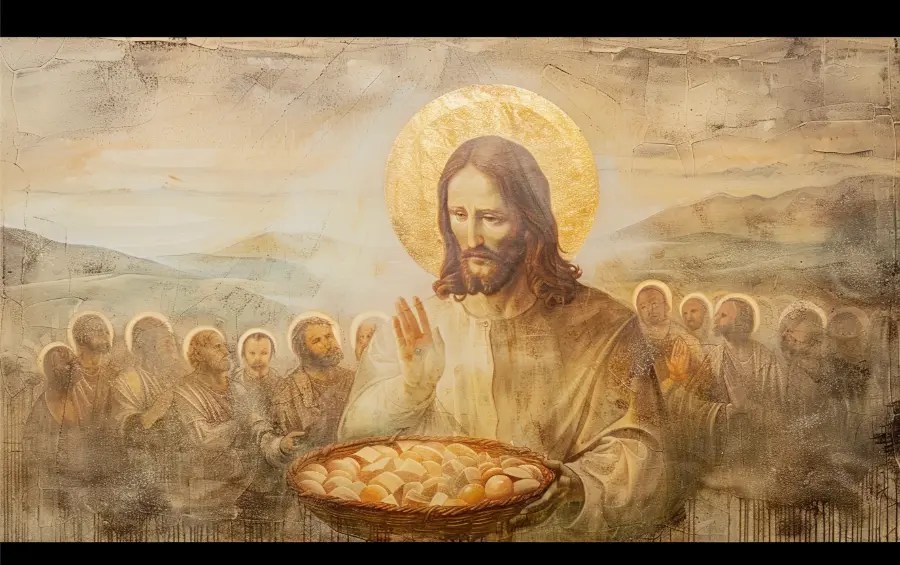
Churches of Christ take it every Sunday. “It is expected that every member of the church will assemble for worship on each Lord’s day,” Baxter wrote, and “A central part of the worship is the eating of the Lord’s supper.” They follow the church at Troas: “upon the first day of the week, when the disciples came together to break bread, Paul preached unto them” (Acts 20:7). “Unless providentially hindered, each member considers this weekly appointment as binding.”
Baptists call the Supper “a symbolic act of obedience” in which members “memorialize the death of the Redeemer and anticipate His second coming,” and each church chooses how often. In a 2012 Lifeway Research survey, 57 percent of Southern Baptist churches held it quarterly, 18 percent monthly and 1 percent weekly.
Who leads each church?
A Church of Christ is led by “a plurality of elders or presbyters,” chosen by the congregation by the qualifications in 1 Timothy 3. Deacons, teachers and preachers serve under them, and “There is no earthly authority superior to the elders of the local church.” There is no headquarters, and “There are no conventions, annual meetings, or official publications.”
A Baptist church is also “an autonomous local congregation,” and it governs itself “through democratic processes,” with members voting. Its offices in the Southern Baptist confession are “pastor/elder/overseer and deacon.” Unlike Churches of Christ, Baptist churches join associations and conventions to work together, though no convention rules a local church.
Do they have creeds?
Churches of Christ say no. “There is no creed in the usual sense of the word,” Baxter wrote. “The belief of the church is stated fully and completely in the Bible.” Baptists write confessions of faith. The Southern Baptist committee that wrote the 2000 Baptist Faith and Message quoted its 1925 predecessors: “Confessions are only guides in interpretation, having no authority over the conscience.”
Beneath these differences lie deep agreements. Both confess that Jesus was born of the virgin Mary, and Churches of Christ, in Baxter’s words, believe him to be “uniting in his person perfect divinity and perfect manhood.” Both believe that after the judgment each person goes to heaven or to hell, and neither believes in purgatory. Both open the same Bible, and neither lets a written creed bind the conscience beside it.
Brothers and sisters, the two churches will go on reading the story of the eunuch differently. Whichever way we read the water, Luke does not tell us what doctrine the man carried home, only how he went. “And when they were come up out of the water, the Spirit of the Lord caught away Philip, that the eunuch saw him no more: and he went on his way rejoicing” (Acts 8:39).

Related reading
- Baptist vs Christian: Baptists Are Christians, of One Protestant Family
- Baptist vs Southern Baptist: The SBC Is One Branch of the Baptist Family
- 24 Bible Verses About Baptism and Salvation
- Church of Christ vs. Mormon Beliefs
- Seventh-day Adventist vs Baptist: The Sabbath and the Soul
- What Do Baptists Believe? Baptism, the Bible and Local Churches


Leave a Reply