
 English
 Chinese
 Dutch
 Arabic
 Spanish
 Portuguese
 Russian
 French
 Italian
 German
 Japanese
Yes, Baptists are Christians. Baptist is one family of Protestant churches, as Lutheran and Methodist are. A Baptist church baptizes only people who profess faith in Christ, by immersion, and each congregation governs itself. When people set Baptist beside plain Christian, they usually mean a nondenominational church, and many of those teach much the same.
The name Christian is older than every one of these churches. It began in a single city: “in Antioch the disciples were first called Christians” (Acts 11:26). Baptist, Methodist and nondenominational are all younger words for people who still answer to that first one.
| Question | Baptist church | Nondenominational church |
|---|---|---|
| Belongs to | A Baptist convention or association, by choice | No denomination; sometimes a loose network |
| Began | 1608 or 1609, English exiles in Amsterdam | Grew mainly from the 1970s |
| Share of U.S. adults | 12 percent | 7 percent |
| Statement of faith | A shared confession, such as the Baptist Faith and Message 2000 | Each church writes its own |
| Final authority | The Bible; confessions are only guides | The Bible, with the pastor often the main voice |
| Baptism | Believers only, by immersion, as a symbol | Set by each church |
| Lord’s Supper | A memorial of Christ’s death | Set by each church |
| Who decides | The members, by vote | Varies; often the pastor and leaders |
| Pastors | Men only among Southern Baptists; women too among American Baptists | Mostly men, in a 2020 survey |
| Outlook | Varies by body: Southern, American and National Baptists differ | Mostly evangelical, some charismatic or Pentecostal |
Baptist bodies do not all agree, so where they differ the Baptist column follows the Southern Baptist Convention’s confession, the Baptist Faith and Message 2000. Each nondenominational church answers these questions for itself, so its column gives what studies of those churches have found.
Our free tool, Compare Christian Denominations, sets any two of 23 churches side by side on 55 questions.
What makes a church Baptist
The Southern Baptist Convention, which the Pew Research Center calls “the nation’s largest evangelical denomination,” sets out four convictions that mark a church as Baptist.
Baptism is for believers, by immersion
“Christian baptism is the immersion of a believer in water in the name of the Father, the Son, and the Holy Spirit,” the confession says, and it calls baptism “an act of obedience symbolizing the believer’s faith in a crucified, buried, and risen Saviour.” Because the act pictures a faith already held, Baptists do not baptize infants. A believer goes under the water and rises again, as Paul describes in Romans 6:4: “We were buried therefore with him by baptism into death, in order that, just as Christ was raised from the dead by the glory of the Father, we too might walk in newness of life.”
The Lord’s Supper, in the same way, is “a symbolic act of obedience” in which church members “memorialize the death of the Redeemer and anticipate His second coming.”
The Bible stands over every confession
Baptists write confessions of faith but keep them below Scripture. A 1925 statement, reprinted in the Baptist Faith and Message 2000, says “the sole authority for faith and practice among Baptists is the Scriptures of the Old and New Testaments. Confessions are only guides in interpretation, having no authority over the conscience.” It allows “any group of Baptists, large or small” to write its own, which is why the Second London Confession of 1689 and the Southern Baptist text both exist.
Each congregation governs itself
A Baptist church is “an autonomous local congregation of baptized believers,” and “each congregation operates under the Lordship of Christ through democratic processes.” Churches work together through associations and conventions, but “such organizations have no authority over one another or over the churches.”
Church and state stay separate
The first Baptists were English separatists who fled to Holland after the church courts suppressed separatism in 1608. They knew what it cost to have the state rule over faith, and their confession still says: “God alone is Lord of the conscience.” It adds that “church and state should be separate” and that no “denomination should be favored by the state more than others.”
Where Baptists stand among Christians
Baptists count themselves part of the whole people first named in Antioch. Their confession describes the church as “the Body of Christ which includes all of the redeemed of all the ages.”
Other churches say the same of them. The Catholic Catechism says of Protestants raised in their own communities: “All who have been justified by faith in Baptism are incorporated into Christ; they therefore have a right to be called Christians.”
In the United States Baptists are the largest Protestant family, at 12 percent of adults in Pew’s 2023–24 Religious Landscape Study. The family includes the Southern Baptist Convention, the American Baptist Churches USA and the National Baptist Convention, USA, one of the historically Black Protestant churches. Worldwide, the Baptist World Alliance counts 53 million baptized believers in 180,000 churches.
Baptist or nondenominational
Nondenominational churches are the second-largest Protestant family in the United States, at 7 percent of adults, and the only one that has grown as a share of the population since Pew’s first survey in 2007. Between 2010 and 2020, the U.S. Religion Census found, their adherents rose by nearly nine million while Southern Baptist adherents fell by about two million. Scott Thumma of the Hartford Institute for Religion Research, who counted the independent churches, offered a reason: “Denominational brands have weakened, and divisions have increased over issues such as female clergy or sexual orientation.”
The political scientist Ryan Burge, using the General Social Survey, found that nondenominational Christians were 5 percent of American Protestants in 1972 and are about 30 percent now. That is a share of Protestants, not of all adults, and it counts differently from Pew, whose 7 percent leaves out people who answer “just Christian.”
Most of these churches began independent. In Thumma’s 2020 survey, 88 percent said they were founded as nondenominational, though from the late 1980s to 2000 the growth “was mostly driven by existing denominational churches leaving their denominations and becoming independent.” He warns that the survey is “likely not truly representative” and that the definition of a nondenominational church is “somewhat suspect at best.”
What the two share
Among nondenominational churches, Thumma found, “the dominant theological perspective is evangelical Christian,” the tradition Pew assigns to Southern Baptists. In 2018 Burge compared the two groups’ members in a piece titled “Nondenominational Protestants are Basically Southern Baptists (With a Few Caveats).” They go to church about equally often: 48.5 percent of nondenominational respondents at least weekly, against 48.9 percent of Southern Baptists. The caveats were that nondenominational members are younger and more racially mixed, and that 44 percent of them read the Bible literally, 16 points fewer than Southern Baptists.
Where they part
The first difference is the confession. A Baptist church shares one with its family of churches, so you can learn before you visit what it teaches about baptism and the Lord’s Supper. A nondenominational church writes its own statement of faith, and those statements vary widely. In an earlier study, first presented in 1999, Thumma found the beliefs such churches stress “ranged from Fundamentalism to Prosperity doctrines, to charismatic emphasis on Spirit Baptism and the gifts of the Spirit.” To know where one stands, you read its statement.
The second is authority. In a Baptist church the members vote. In the 73 nondenominational churches of that earlier study, “only God, the Bible, and God’s spokesperson in the form of the pastor, are seen as spiritual authorities,” and leaders placed less weight on “encouraging internal democratic processes in the congregation” than other conservative churches did. The study leaned heavily on larger churches, so smaller ones may differ.
The third is who may be pastor. The Baptist Faith and Message says “the office of pastor/elder/overseer is limited to men,” while the American Baptist Home Mission Societies “wholeheartedly affirms women pastors.” The nondenominational churches in Thumma’s 2020 survey were “led predominantly by male clergy.”
Churches named simply “Christian Church”
A church called First Christian Church usually belongs to the Stone-Campbell Movement, which began in nineteenth-century America and now forms three bodies. The Christian Church (Disciples of Christ) is the only one that accepts the label of a denomination. The Churches of Christ took a separate identity in 1906. The Christian Churches/Churches of Christ formed when “approximately 750,000 Christians in about 3,500 congregations withdrew from Disciples life” after the Disciples restructured in 1968.
Like Baptists, their founders “taught baptism by immersion as the accepted form,” and the Disciples also say baptism “symbolizes the death and burial of the old self of the repentant believer.” They part from Baptists elsewhere. The Disciples’ page on baptism opens with Peter’s call in Acts 2:38 to repent and be baptized for the forgiveness of sins, and describes baptism as “at once a divine gift and a human response.” And their Lord’s Supper “is celebrated in weekly worship” and is “the central element of worship within the Disciples tradition.”
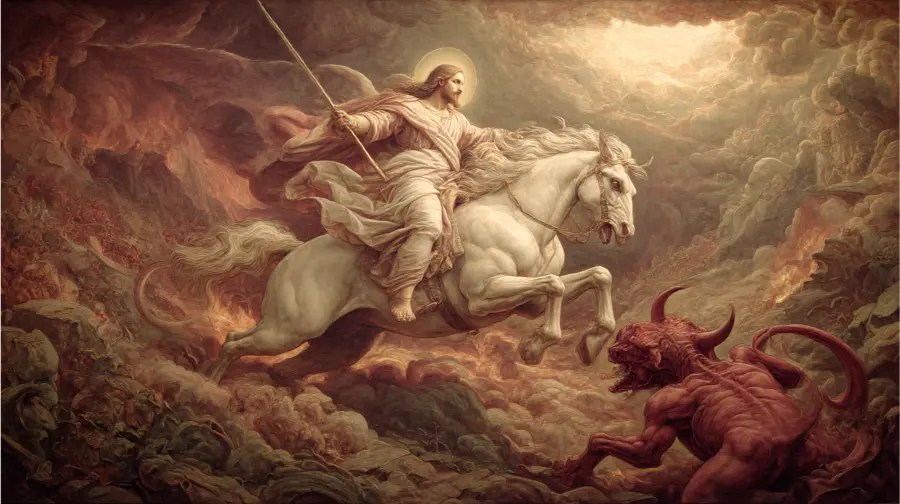
Is Baptist Christian or Catholic?
Christian, and in Pew’s classification Protestant rather than Catholic. Baptist churches do not recognize the Pope, baptize infants or hold that the bread and wine become Christ’s body and blood. Those differences are set out under Baptist vs Catholic beliefs.
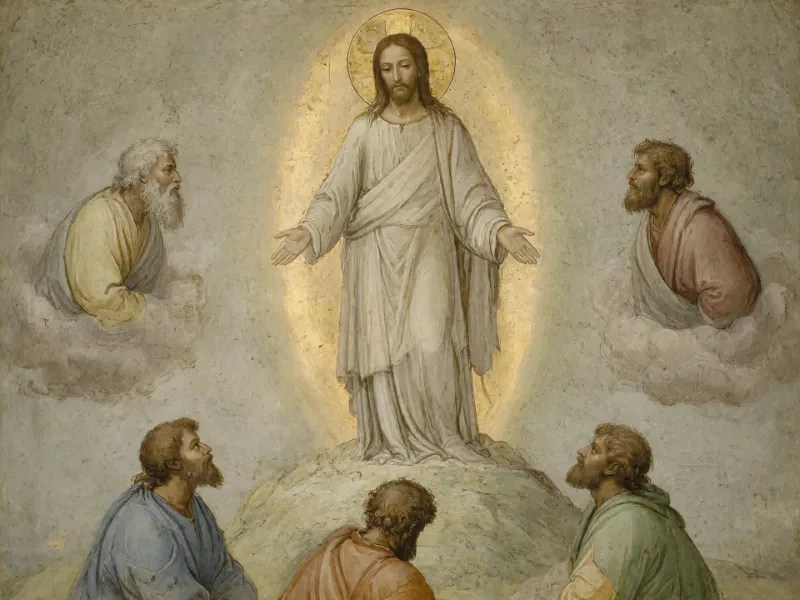
Which came first?
Christianity, by some sixteen centuries. The first Baptist church met in Amsterdam in 1608 or 1609, formed by English separatists under John Smyth and Thomas Helwys who held to “believer’s baptism as opposed to infant baptism.” Smyth baptized by pouring water from a dipper; Baptists took up immersion later. Nondenominational churches are younger still.
Long before any of them, there were the disciples in Antioch, the first to be called Christians. Every Baptist church still answers to their name.
Related reading
- Baptist vs Southern Baptist: The SBC Is One Branch of the Baptist Family
- Baptist vs Catholic Beliefs
- Methodists vs Baptists
- Baptist vs. Pentecostal Beliefs
- Church of Christ vs. Baptist Beliefs
- What is a non-denominational church?


Leave a Reply