
 English
 Chinese
 Dutch
 Arabic
 Spanish
 Portuguese
 Russian
 French
 Italian
 German
 Japanese
Scientologists believe in a supreme being, but they do not worship Jesus as God. Their church calls God the Eighth Dynamic, “the urge toward existence as infinity,” and sets no fixed teaching about him. Jesus is honoured as one of the great spiritual teachers of the past, not as the Son of God or the Saviour.
That is close to what many people said of Jesus in his own lifetime. “Whom do men say that I the Son of man am?” he asked his disciples, and they told him: some said John the Baptist, some Elijah, others “Jeremias, or one of the prophets.” Then he turned the question on them: “But whom say ye that I am?” Peter answered, “Thou art the Christ, the Son of the living God” (Matthew 16:13–16). Scientology gives the first kind of answer, a great man among great men. Christians, with Peter, give the second.
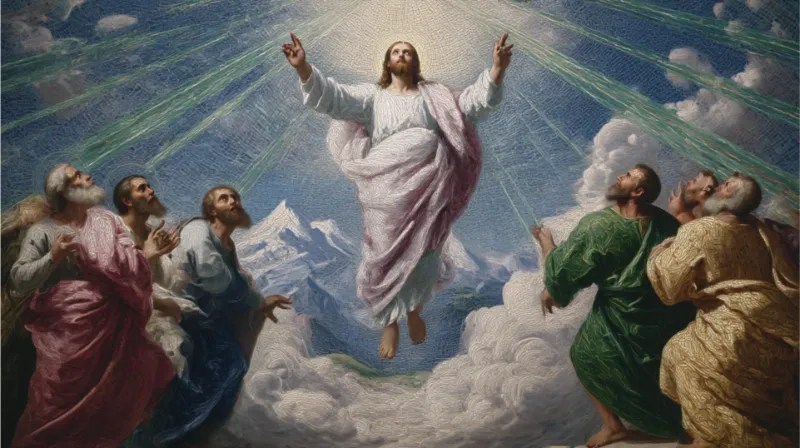
What do Scientologists believe about God?
The Church of Scientology answers the question on its own website in two words, “Most definitely,” and goes on: “In Scientology, the concept of God is expressed as the Eighth Dynamic—the urge toward existence as infinity. This is also identified as the Supreme Being.” It quotes its founder, L. Ron Hubbard, from Science of Survival: “No culture in the history of the world, save the thoroughly depraved and expiring ones, has failed to affirm the existence of a Supreme Being.”
The “dynamics” are the widening circles of life that, in Hubbard’s teaching, everything seeks to survive through. They begin with the self and move outward to the family, the group or nation, all humankind, the animal kingdom, the physical universe and the spiritual universe, and the eighth and last is infinity, or God. The eight are drawn as the eight points of the Scientology cross.
What God is like, the church leaves to each member. “Unlike religions with Judeo-Christian origins,” it says, “the Church of Scientology has no set dogma concerning God that it imposes on its members.” A member is expected to reach understanding step by step, and “only when the Seventh Dynamic (spiritual) is reached in its entirety will one discover and come to a full understanding of the Eighth Dynamic (infinity) and one’s relationship to the Supreme Being.”
For Christians the order runs the other way. God is not found at the end of a long climb; he comes first, and he comes to us. “In the beginning was the Word, and the Word was with God, and the Word was God. … All things were made by him” (John 1:1–3). The Creator who made man “in his own image” (Genesis 1:27) is a person who speaks, calls and loves.

Do Scientologists believe in Jesus?
They respect him, but not as Christians do. The church’s website says Hubbard “honored the great religious leaders of the past for the wisdom they brought to the world,” and quotes him: Scientology shares “the goals set for Man by Christ, which are wisdom, good health and immortality.” In a longer passage Hubbard pictures wisdom being handed down like a torch, from the Buddha through the Middle East: “one of the people who handed it on was a man named Moses. And again it was handed on to a man named Christ.” In that picture Jesus is one bearer of the torch among several, beside Moses, the Buddha and Muhammad.
Nothing in the church’s own account of Jesus calls him God or Saviour, or speaks of his death for our sins or his rising from the dead. Scientology describes itself as “a religion of religions” and says it “offers certainty of eternal salvation now,” through its own practices. Nor does it make Hubbard a new Christ. Asked whether Scientologists believe Hubbard was like Jesus Christ, the church answers, “No. L. Ron Hubbard personally stated he was a man as others are men.”
Christian critics say Hubbard went further elsewhere in his writings. Craig Branch of the Apologetics Resource Center told Christianity Today in 2000, “Hubbard wrote that Christ was ‘a shade above Clear,’ which in Scientology terms means that he wasn’t even an Operating Thetan,” and that Hubbard “also wrote that the crucifixion was a legend that had been implanted in our psyches.” Branch does not name the works he was quoting, so his account is hard to check against Hubbard’s own words.
What do Scientologists believe about people and salvation?
Scientology teaches that each person is a thetan, an immortal spiritual being who has lived before. “One is a spirit, who has a mind and occupies a body,” the church says. In Hubbard’s account, as Melton summarises it, thetans took part in creating the physical universe of matter, energy, space and time, which Hubbard called MEST, then fell into it and were trapped, losing “both their creative abilities and the memories of who they were.” Scientologists speak of past lives rather than reincarnation.
The church holds that “Man is basically good,” and that his experiences over many lifetimes have led him into harmful acts, or sins, which dim his awareness. Its answer is auditing, one-on-one sessions in which an auditor asks set questions, often with the help of an electrical meter called the E-meter, so that the person can confront painful experiences and be free of them. The steps upward are laid out on a chart the church calls “the Bridge to Total Freedom”: first the state called Clear, then the Operating Thetan or OT levels. “One walks it and one becomes free,” the church says. The OT levels are, as the scholar J. Gordon Melton writes in Britannica, “restricted to church members who undergo the training,” and the church treats them as “confidential sacred scripture.” Former members have posted OT materials online, which Britannica says has been “especially harmful in the eyes of the church.” The church does not ask for a tithe. Instead, members make donations for auditing and training, which the church calls “the primary source of financial support for the Church.”
Christian faith sees our trouble and its cure differently. “All have sinned, and come short of the glory of God” (Romans 3:23), and the remedy is a gift rather than a course: “For by grace are ye saved through faith; and that not of yourselves: it is the gift of God: Not of works, lest any man should boast” (Ephesians 2:8–9).

Can you be a Christian and a Scientologist?
Scientology says it “respects all religions,” and its creed affirms that “all men have inalienable rights to their own religious practices.” Branch, though, says the two cannot be held together for long. “Most Scientologists will say Scientology is compatible with Christianity at first,” Branch said. “But as you progress in Scientology, it becomes clear that you cannot remain both a Christian and a Scientologist.”
The differences run to the centre of each faith:
| Question | Christian teaching | Scientology |
|---|---|---|
| Who is God? | The personal Creator of all | The Eighth Dynamic, infinity; no set doctrine |
| Who is Jesus? | God made flesh, the one Saviour | A great teacher of the past |
| What are we? | Creatures made in God’s image, fallen into sin | Immortal thetans who have lived before |
| How are we saved? | By grace, through faith in Christ | By auditing and training, step by step |
| After death? | One life, then judgment | Further lives in new bodies |
Scripture is plain on the points that matter most. “There is one God, and one mediator between God and men, the man Christ Jesus” (1 Timothy 2:5). “It is appointed unto men once to die, but after this the judgment” (Hebrews 9:27). And Jesus said of himself, “I am the way, the truth, and the life: no man cometh unto the Father, but by me” (John 14:6). Scientology is a different religion from Christianity, and it is also different from Christian Science, a separate faith with a similar name, as Scientology vs Christian Science sets out.
Hubbard wrote that man “has held the imperishable hope that someday in some way he would be free.” Christians share that hope, and Jesus spoke to it directly. “Ye shall know the truth, and the truth shall make you free,” he told those who believed in him, and a little later, “If the Son therefore shall make you free, ye shall be free indeed” (John 8:32, 36).
Related reading
- Why Does the Church of Scientology Have a Cross?
- Scientology vs Christian Science: What’s the Difference?
- The Rules of Scientology: What Members Can and Can’t Do
- Why Do Some People Hate Scientology?
- How Many Scientologists Are There Really?


Leave a Reply