
 English
 Chinese
 Dutch
 Arabic
 Spanish
 Portuguese
 Russian
 French
 Italian
 German
 Japanese
In the Bible, water to wash a guest’s feet was the welcome a host owed, and washing someone else’s feet was a servant’s work. When Jesus washed his disciples’ feet the night before he died, he made it a sign of cleansing and of the humble love he commanded them to show one another. Some churches still wash feet today.
John tells it slowly, as if he wants us to watch each movement. Jesus knew “that the Father had given all things into his hands,” and with those hands he “took a towel, and girded himself” and poured water into a basin (John 13:3–5).
Why did people wash feet in Bible times?
People in Bible lands wore sandals on dusty roads, so a guest arrived with dirty feet. A host welcomed his guests with water to wash their feet, and with rest and food. When three strangers came to Abraham’s tent, he said, “Let a little water, I pray you, be fetched, and wash your feet, and rest yourselves under the tree” (Genesis 18:4). His nephew Lot met two strangers at the gate of Sodom with the same courtesy: “turn in, I pray you, into your servant’s house, and tarry all night, and wash your feet” (Genesis 19:2).
The host gave the water, and usually the guests did their own washing. At Laban’s house, Abraham’s servant was given “water to wash his feet, and the men’s feet that were with him” (Genesis 24:32). In Joseph’s house his brothers were given water, “and they washed their feet” (Genesis 43:24). A traveller taken in for the night at Gibeah was treated the same way: “they washed their feet, and did eat and drink” (Judges 19:21).
Was washing feet a servant’s job?
It was, and a low one, as Abigail knew. When David sent for her to be his wife, she bowed to the ground and said, “let thine handmaid be a servant to wash the feet of the servants of my lord” (1 Samuel 25:41). She did not offer to wash David’s feet but his servants’ feet, the lowest place she could name.
Jewish teaching kept the same order, and the Mekhilta, an early rabbinic commentary on Exodus, rules that a Hebrew servant must not be given a slave’s work: “He should not wash his feet or tie his sandals or carry his clothing to the bath-house … as slaves do.” It allows one exception, and it matters when we come to the Gospels: “But with his son and his disciple, it is permitted.” A son or a disciple might serve his father or teacher this way, but no one expected a teacher to wash his disciples’ feet.
Did priests wash their feet before serving God?
They did, at a basin of brass, the “laver”, that stood “between the tabernacle of the congregation and the altar” (Exodus 30:18). God told Moses, “For Aaron and his sons shall wash their hands and their feet thereat: When they go into the tabernacle of the congregation, they shall wash with water, that they die not” (Exodus 30:19–20). This washing had nothing to do with hospitality; it was the cleanness God required of those who came near to him. At the Last Supper the welcome of a guest and the cleansing of a priest come together again.
Who washed feet in the Bible?
Here are the main passages where feet are washed, or water is offered for washing them, in the order they come in the Bible.
| Who washed | Whose feet | Where |
|---|---|---|
| Abraham’s three visitors, offered water | Their own | Genesis 18:4 |
| Lot’s two guests, offered water | Their own | Genesis 19:2 |
| Abraham’s servant and his men, at Laban’s house | Their own | Genesis 24:32 |
| Joseph’s brothers, in Joseph’s house | Their own | Genesis 43:24 |
| Aaron and the priests, at the brass laver | Their own hands and feet | Exodus 30:19–21 |
| A Levite and his companions, at Gibeah | Their own | Judges 19:21 |
| Abigail, offering as a servant | David’s servants | 1 Samuel 25:41 |
| A woman known as a sinner, with her tears | Jesus | Luke 7:38, 44 |
| Jesus, at the Last Supper | His twelve disciples, Judas included | John 13:5–12 |
| Widows the church honoured | “The saints” | 1 Timothy 5:10 |
The woman who washed Jesus’ feet with her tears
Once, before the Last Supper, someone washed Jesus’ feet. Luke tells of a dinner at the house of a Pharisee named Simon, where a woman “which was a sinner” stood behind Jesus “weeping, and began to wash his feet with tears, and did wipe them with the hairs of her head” (Luke 7:37–38). Simon judged her, and Jesus answered by pointing to the welcome Simon himself had skipped: “I entered into thine house, thou gavest me no water for my feet: but she hath washed my feet with tears, and wiped them with the hairs of her head” (Luke 7:44). Then he told her, “Thy sins are forgiven” (Luke 7:48). She had no towel, so she used what she had.

Why did Jesus wash his disciples’ feet?
John gives the reason in his first sentence about that night: “Now before the feast of the passover, when Jesus knew that his hour was come that he should depart out of this world unto the Father, having loved his own which were in the world, he loved them unto the end” (John 13:1). At that last meal before his arrest, the washing of their feet is that love, shown in something they could see.
John also tells us what Jesus knew as he stood up from the table: “that the Father had given all things into his hands, and that he was come from God, and went to God” (John 13:3). Then “He riseth from supper, and laid aside his garments; and took a towel, and girded himself. After that he poureth water into a bason, and began to wash the disciples’ feet” (John 13:4–5). The one who held all things did the work of the lowest servant in the house. Four centuries later Augustine of Hippo was still pondering it: “It is He, therefore, into whose hands the Father had given all things, who now washes, not the disciples’ hands, but their feet.”
Luke records that at the same supper “there was also a strife among them, which of them should be accounted the greatest,” and that Jesus answered, “I am among you as he that serveth” (Luke 22:24, 27). In John the towel and basin say the same thing without a word.
Why did Peter refuse to let Jesus wash his feet?
Peter could not bear to see his Lord at his feet. “Lord, dost thou wash my feet?” he asked, and then, “Thou shalt never wash my feet.” Jesus answered, “If I wash thee not, thou hast no part with me.” At once Peter wanted everything washed: “Lord, not my feet only, but also my hands and my head.” Jesus told him, “He that is washed needeth not save to wash his feet, but is clean every whit: and ye are clean, but not all” (John 13:6–10).
So the washing meant more than good manners. To have a part with Christ we have to let him wash us, and some of us find that harder than serving. Augustine read the bath and the feet this way: baptism washes the whole person, yet those who are washed still walk on the earth and still sin, and so “every day, therefore, is He who intercedes for us … washing our feet.”
Did Jesus wash Judas’s feet?
He did. John tells us that before the washing “the devil having now put into the heart of Judas Iscariot, Simon’s son, to betray him” (John 13:2), and Jesus washed the feet of all who were at the table. His words “ye are clean, but not all” pointed to Judas: “For he knew who should betray him” (John 13:10–11). He knelt before the man who would hand him over, and washed his feet all the same. There is more on this in did Jesus wash Judas’s feet.
What did Jesus tell his disciples to do?
When he had finished, Jesus sat down again and asked, “Know ye what I have done to you?” Then he gave the command: “If I then, your Lord and Master, have washed your feet; ye also ought to wash one another’s feet. For I have given you an example, that ye should do as I have done to you. Verily, verily, I say unto you, The servant is not greater than his lord” (John 13:12, 14–16).
John places the washing at the Last Supper, the meal where Matthew, Mark and Luke place the bread and the cup, and that is why some churches pair foot washing with communion. Later that night Jesus put the same lesson into words: “A new commandment I give unto you, That ye love one another; as I have loved you, that ye also love one another” (John 13:34). In Latin the new commandment begins “Mandatum novum,” words sung at the foot washing in the Western liturgy, and the English name Maundy Thursday comes from them.
What is the spiritual meaning of washing feet?
Christians read three things in John 13.
The first is humble service, for Jesus calls the washing “an example” (John 13:15). Humility is the lesson Catholics, Free Will Baptists and Adventists all name in their teaching on it. The second is cleansing, since Peter is told that without this washing he has “no part” with Christ (John 13:8). Augustine, the Free Will Baptists and the Adventists all tie the washing of feet to the cleansing believers still need after baptism. We are clean, and our feet still gather dust. The third is love among equals, and Augustine applied the command to forgiving one another: “Let us therefore forgive one another his faults, and pray for one another’s faults, and thus in a manner be washing one another’s feet.”
Feet carry meaning of their own in Scripture, as the lowest part of the body and a picture of a person’s walk; that wider picture is in what feet symbolize in the Bible.
Did the early Christians wash one another’s feet?
They did, though not everywhere in the same way. The first letter to Timothy lists foot washing among the good works of a widow the church honoured: “if she have lodged strangers, if she have washed the saints’ feet, if she have relieved the afflicted” (1 Timothy 5:10).
In Milan, Bishop Ambrose washed the feet of the newly baptized as they came up from the font. He knew that Rome did not, and said so: “We are not ignorant that the Roman Church has not this custom.” But he kept the custom all the same: “In all things I desire to follow the Roman Church. Yet we, too, are not without discernment.” Ambrose taught that Peter “was clean, but he must wash his feet,” and he tied the rite to washing away the inherited sin of Adam.
Augustine, answering questions from a man named Januarius, describes churches that held the foot washing in Lent, the season before Easter. He adds that “Many, however, have not accepted this as a custom, lest it should be thought to belong to the ordinance of baptism.” In his sermons on John he urged doing it literally: “it is far better … that it should also be done with the hands.”
Under the Rule of Saint Benedict, monks washed the feet of the whole community every Saturday, and the feet of guests. In the West the washing later settled on Holy Thursday.
Which churches wash feet today?
They differ on what Jesus’ command asks: a rite for one day of the year, an ordinance every believer should keep, or an example that can be kept in other ways. Here are the churches whose own documents describe the practice.
| Church | When | Who washes whose feet |
|---|---|---|
| Catholic | Holy Thursday evening Mass, after the homily, if the priest chooses to hold it | The priest washes the feet of a small group of the faithful, men and women |
| Orthodox (one form of the rite) | Holy Thursday, after the Liturgy, in some cathedrals | A bishop washes the right feet of twelve clergy |
| Church of England | Maundy Thursday, in many churches | Varies by parish |
| United Methodist | Holy Thursday evening, after the sermon; optional | Pastors and lay people wash one another’s feet |
| Church of the Brethren | Love feast, before the meal and communion | Members wash one another’s feet, then embrace |
| Seventh-day Adventist | Each communion service, usually once a quarter | Members in pairs, usually men and women apart |
| Free Will Baptist | With the Lord’s Supper | Members, with ministers and deacons leading |
| Church of God (Cleveland) | Named beside the Lord’s Supper in its beliefs | Members |
| Primitive Baptist | Usually right after communion | Members; some churches do not wash feet |
| Mennonite Church USA | Affirmed in its Confession; kept by some congregations | Members wash one another’s feet |
The Catholic and Orthodox rites
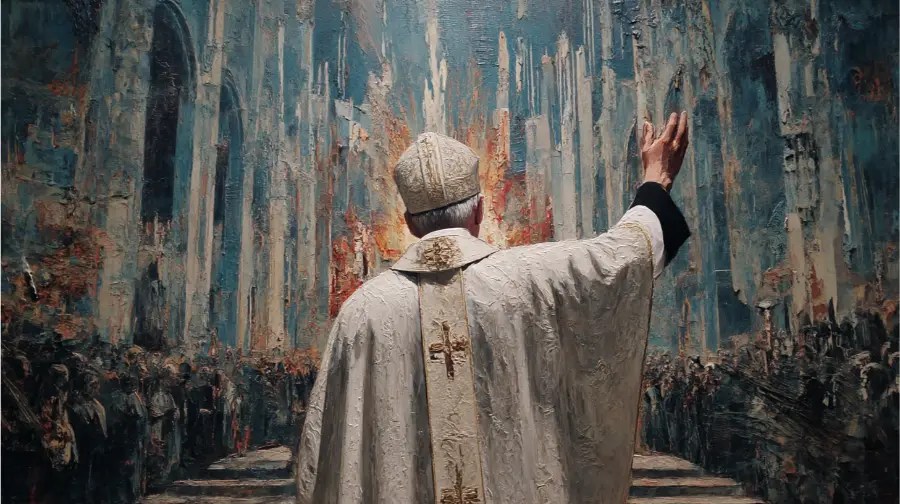
In the Catholic Mass of the Lord’s Supper the rite is called the Mandatum. The 1955 reform of Holy Week allowed priests to wash the feet of twelve men, “where a pastoral reason recommended it.” The rite follows the homily and is “not an obligatory part of that Mass,” in the words of the US bishops. In January 2016, at Pope Francis’s wish, the Congregation for Divine Worship changed the rubric so that those chosen come “from amongst the people of God”, and the group “can be made up of men and women.” Holy Thursday’s other signs are explained in Holy Thursday symbols and their meanings.
In one Orthodox form of the rite, a bishop serves it in his cathedral on Holy Thursday. The Ukrainian Orthodox Church of the USA describes it: “the celebrant washes the right feet of the 12 clergy, drying them with a towel and kissing them.”
Churches that keep it as an ordinance
For several Protestant churches foot washing belongs with the Lord’s Supper. The Free Will Baptist Treatise calls washing the saints’ feet “a sacred ordinance, which teaches humility and reminds the believer of the necessity of a daily cleansing from all sin.” The Church of God (Cleveland, Tennessee) states its belief “In the Lord’s Supper and washing of the saints’ feet.” Many Primitive Baptist churches hold it the same way. Flint River Primitive Baptist Church names “baptism, the Lord’s supper, and washing of the saints’ feet” as “ordinances of Jesus Christ,” and Pilgrim’s Rest Primitive Baptist Church believes “in washing the saints’ feet in a church capacity immediately after communion.” Not every Primitive Baptist agrees, though, and one elder writes that it “is not an ordinance, but it is an example set forth by our Lord Jesus Christ,” and that “There are several good Primitive Baptist Churches that do not wash feet.”
The Church of the Brethren washes feet at its love feast, before the meal and communion. Seventh-day Adventists call it the “Ordinance of Humility,” and their statement of beliefs says Christ “ordained the service of foot-washing to signify renewed cleansing, to express a willingness to serve one another in Christlike humility, and to unite our hearts in love.” Their Church Manual allows husband and wife, or parents and baptized children, to wash one another’s feet where that is socially acceptable.
Mennonite, Anglican and Methodist practice
Mennonite Church USA gives foot washing its own article in its Confession of Faith: “We believe that Jesus Christ calls us to serve one another in love as he did.” It also says plainly that practice varies: among its congregations “some practice foot washing, while others have discontinued the practice or have never observed it.”
In the Church of England, “Many churches recreate this act at special services on Maundy Thursday.” The United Methodist Book of Worship includes footwashing in its Holy Thursday evening service as an optional part after the sermon: “Mutual footwashing among pastor(s) and laypersons should be clearly visible, yet not overly dramatic.”
Wherever the basin and towel come out, the words that go with them are the same ones Jesus spoke at the table: “ye also ought to wash one another’s feet” (John 13:14).


Leave a Reply