
 English
 Chinese
 Dutch
 Arabic
 Spanish
 Portuguese
 Russian
 French
 Italian
 German
 Japanese
Pentecostals generally believe in the rapture, if by the rapture we mean what most people mean by it, that Christ will come first for his people and take them from the earth before a great tribulation and before he returns in glory. The Assemblies of God teach that in an official paper, and a column in the Baptist Bulletin posted by the Regular Baptists teaches it too. Southern Baptists have no official position and their pastors hold several views. The Orthodox, the Lutheran Church—Missouri Synod and the United Methodists say it is not their teaching, the Catholic Church teaches one visible return with no rapture before it, and the Westminster standards of the Presbyterians and the Episcopal Prayer Book of 1979 never mention it. Many churches do believe that the living will be caught up to meet Christ when he comes, because Paul says so in as many words, and what divides us is when that happens and whether it is a separate event.
Paul said it to the Christians at Thessalonica, who were sorrowing for their dead, and he wrote so that they would “sorrow not, even as others which have no hope” (1 Thessalonians 4:13). The dead in Christ would rise first, he told them, and “then we which are alive and remain shall be caught up together with them in the clouds, to meet the Lord in the air: and so shall we ever be with the Lord” (1 Thessalonians 4:17). The Latin Bible put “caught up” as rapiemur, and English made “rapture” from that, which is why we can read our English Bibles through and never meet the word. We have gone through the passage line by line in what the Bible says about the rapture, and people who love the same verse have heard it very differently.
| Church | A rapture before the tribulation? | The thousand years of Revelation 20 |
|---|---|---|
| Pentecostal (Assemblies of God and others) | Generally yes; official for the Assemblies of God | A future reign on earth |
| Oneness Pentecostal (UPCI) | Saints caught up; allows diversity on the timing | A future reign on earth |
| Regular Baptists (GARBC) | Yes, in a 2001 Baptist Bulletin column | Christ reigns on earth after the tribulation |
| Southern Baptists | No official position; pastors differ | No official position |
| Nondenominational and evangelical | No single view | No single view; a future reign is common |
| Church of the Nazarene | Caught up at his coming; no timetable | A renewed creation; no thousand years named |
| The Salvation Army | Avoids the details | No common interpretation, it says |
| Mennonite | Living saints transformed at his coming; word not used | Reign with Christ in a new heaven and earth |
| Evangelical Friends (Quaker) | Christ receives his Church at his return; no timetable | Christ’s final triumph at his coming |
| Catholic | No | Earthly reign rejected |
| Eastern Orthodox | No | The Kingdom comes at the end of time |
| Coptic Orthodox | No; caught up after the tribulation | Not literal; we are living in it now |
| Lutheran (Missouri Synod) | No; caught up on the last day | Figurative; Christ’s reign now |
| Presbyterian (Westminster standards) | Not in those standards | One general resurrection at the last day |
| Anglican and Episcopal | Not in the 1979 Episcopal Prayer Book | Christ comes in glory and judges |
| United Methodist | No; not in its doctrinal standards | Not in its doctrinal standards |
| United Church of Christ | Not addressed | The Kingdom is God’s rule in human hearts |
| Disciples of Christ | Not addressed | Anticipates God’s coming reign |
| Church of Christ (one teacher’s site) | No; caught up at the one return | Figurative; Christ reigns from heaven |
| Seventh-day Adventist | One visible coming; the righteous taken to heaven | A thousand years in heaven |
| Latter-day Saints | Righteous caught up in a cloud as Christ returns | Christ reigns on earth |
| Jehovah’s Witnesses | Reject the word; the anointed go to heaven | The 144,000 rule from heaven |
Our free tool, Compare Christian Denominations, sets any two of 22 churches side by side on this question and 54 others.
Before, during or after the tribulation
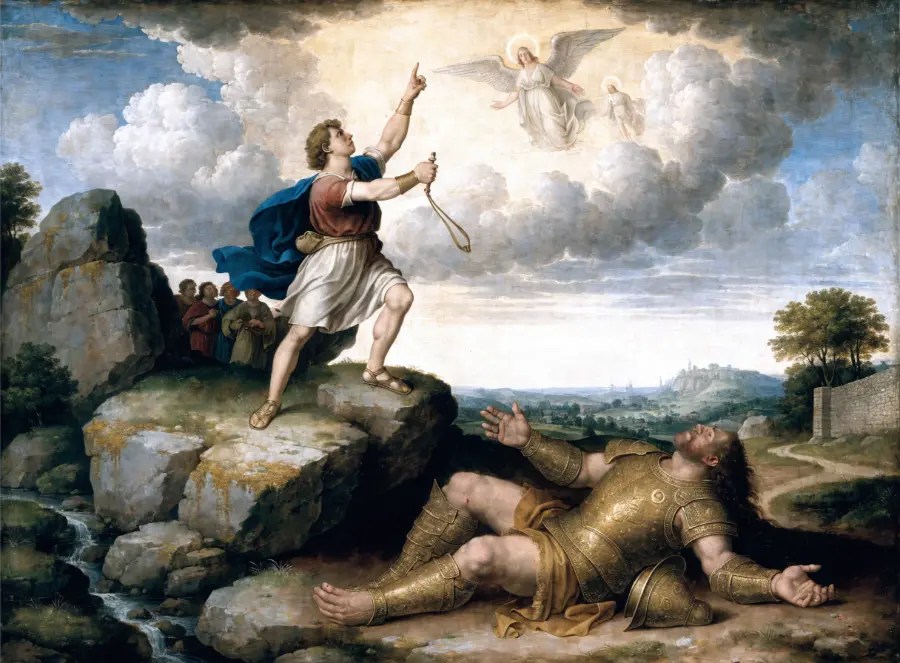
When people argue about this, the tribulation they have in mind is a time of terrible suffering on the earth, usually counted as seven years, and what they want to know is whether the Church will be here for it. Those who expect Christ to take his people at the start of it are called pre-tribulation, and theirs is the picture in the Left Behind novels. Others put the catching up halfway through, and others at the end, when it and the return of Christ in glory are one event. Lifeway Research put the question to 1,000 Protestant senior pastors in January 2016, and 36 percent chose the pre-tribulation rapture, 18 percent a rapture after the tribulation, and one in four told them the rapture is not literal.
Tangled up with that is a second argument, over John’s vision of those who “lived and reigned with Christ a thousand years” (Revelation 20:4). Premillennialists expect Christ to return before a thousand-year reign on earth, and amillennialists read the thousand years as a figure for his reign now. The two arguments cross without being the same one, which is how a person can be premillennial and still reject a pre-tribulation rapture, as some Southern Baptist writers do.
How each side reads the same verses
The Assemblies of God set out the case for two stages in a paper adopted in 1979, and they begin by noticing that the passages about his coming do not all sound alike. Some describe a coming the whole world will see, with judgment in it, as when Jesus says, “and they shall see the Son of man coming in the clouds of heaven with power and great glory” (Matthew 24:30). Paul’s words to the Thessalonians speak only of believers, and in them, the paper points out, “nothing is said about His feet touching the earth.” So if Christ comes for his saints in some verses and with them in others, the paper reasons, these are “two phases of His coming,” with the Great Tribulation between them, and when Jesus says, “the one shall be taken, and the other left” (Matthew 24:40), believers are the ones taken and unbelievers the ones left behind. A Regular Baptist column adds what Paul tells the same church a few verses later, “For God hath not appointed us to wrath, but to obtain salvation by our Lord Jesus Christ” (1 Thessalonians 5:9), and a Southern Baptist professor who places the rapture midway calls the words to the church at Philadelphia foundational, “I also will keep thee from the hour of temptation, which shall come upon all the world” (Revelation 3:10).
Those who expect one return hear the very same lines the other way, and the Lutheran Church—Missouri Synod starts with the shout, the voice of the archangel and the trump of God in 1 Thessalonians 4:16 and concludes that an event like that “will not be secret.” In the promise to Philadelphia it hears God preserving his people through suffering. The Greek Orthodox Archdiocese of America turns to Matthew, where Jesus says, “Immediately after the tribulation of those days,” and only then speaks of the Son of man appearing and the angels gathering the elect (Matthew 24:29–31). Christian Courier, a Church of Christ teaching site, goes to Paul’s second letter to the same people, where the Lord’s coming brings rest to the troubled and judgment on the wicked “in that day” (2 Thessalonians 1:10), one day for both.
Where the two-stage teaching came from
Churches on both sides name John Nelson Darby and the 1800s when they tell this story, and they tell it differently. The Missouri Synod’s report on the Left Behind books credits Darby, an Anglican clergyman who became a traveling preacher among the Plymouth Brethren, with first proposing the sequence. Cyrus Scofield then carried it into his influential Reference Bible, and in our own day the Left Behind novels have spread it widely. “Prior to 1830 (the advent of Darby’s teachings) there is no indication that any Christian church embraced this pre-tribulation “secret” rapture doctrine,” the report says.
Those who teach the doctrine reply that it is not new. “Is the teaching of the Rapture new? Absolutely not,” says a June 2001 question-and-answer column in the Baptist Bulletin, posted by the General Association of Regular Baptist Churches, and the column argues that what Darby did in the 1800s and the teaching’s greater popularity in the 1900s “is no more a discredit to the truth of the Rapture” than Luther’s rediscovery is a discredit to justification by faith alone. Defenders of the teaching also point to a sermon known as Pseudo-Ephraem, which they date as early as the fourth century, with these words in it: “For all the saints and elect of God are gathered, prior to the tribulation that is to come, and are taken to the Lord lest they see the confusion that is to overwhelm the world because of our sins.”
Do Pentecostals believe in the rapture?
Pentecostals generally believe that faithful Christians will be caught up to meet the Lord before he returns to earth for a thousand-year reign of peace. The Assemblies of God put that into their Statement of Fundamental Truths in so many words, “The second coming of Christ includes the rapture of the saints, which is our blessed hope, followed by the visible return of Christ with His saints to reign on earth for one thousand years,” and the hope they mean is the one Paul names when he tells Titus to be “Looking for that blessed hope” (Titus 2:13). Their 1979 paper gives the timing outright, that “the Church will be raptured before the period called the Great Tribulation.” The Church of God of Cleveland, Tennessee, says it in two steps in its Declaration of Faith, confessing “the premillennial second coming of Jesus. First, to resurrect the righteous dead and to catch away the living saints to Him in the air. Second, to reign on the earth a thousand years.” The Foursquare Church says the redeemed “shall be caught up together with them in the clouds” and leaves the timing unsaid.
Oneness Pentecostals are a family of their own, and the Articles of Faith of the United Pentecostal Church International say, “We believe that the time is drawing near when our Lord shall appear; then the dead in Christ shall arise, and we who are alive and remain shall be caught up with them to meet our Lord in the air.” The United Pentecostal Church’s 2005 position paper, The Coming of the Lord, looks “for the catching away of the saints, the return of the Lord Jesus Christ to earth, the establishing of Christ’s millennial kingdom,” and says, “We look forward to a time when the church will reign with Christ in the Millennium.” The paper leaves the order of events open, for it says the UPCI “allows diversity in views regarding the timing of the coming of the Lord, particularly with reference to the Tribulation.”
Do Baptists believe in the rapture?
It depends on which Baptists we are talking about, because Southern Baptists have left the question open and a Regular Baptist column has answered it. The Baptist Faith and Message, the Southern Baptist confession of 2000, never uses the word and says only, “According to His promise, Jesus Christ will return personally and visibly in glory to the earth; the dead will be raised; and Christ will judge all men in righteousness.” Asked for its stance on the end times, the Southern Baptist Convention answers, “There is no official stance in the SBC beyond what you find in The Baptist Faith and Message.” We can see what that leaves room for in the magazine SBC LIFE, which set out the options in 2014 and had five authors who all affirmed that confession defend five positions, among them a pre-tribulation rapture, a mid-tribulation rapture, and the amillennial view that “there is no ‘rapture’ to avoid the Great Tribulation.”
A Baptist Bulletin column posted by the General Association of Regular Baptist Churches calls the rapture of believers “a precious doctrine of hope” and speaks of “the tribulation period, which will follow the Rapture.” Only 6 percent of the Baptist pastors in the Lifeway survey said the rapture is not literal and 75 percent chose premillennialism, so belief in a future catching up is strong in Baptist pulpits whatever a particular confession leaves unsaid.
Do Lutherans believe in the rapture?
Lutherans are several churches, and the one whose answer we can give here is the Lutheran Church—Missouri Synod, since we found no statement on this from the Evangelical Lutheran Church in America. The Missouri Synod starts where a good pastor would, “The answer to your question depends on what you mean by ‘the rapture.’” It goes on to give both halves of the answer, that “Lutherans certainly believe what Paul teaches in this passage” and that Christ “will return only once (visibly)” to catch up all believers, living and dead. The Missouri Synod’s 2004 report on the Left Behind books says, “There is therefore no evidence that Scripture teaches a secret rapture. Nor does the book of Revelation teach a pre-tribulation rapture of Christians. Instead, it teaches that God will preserve His people in the face of persecution and suffering (Rev 3:10; 14:12).”
Lutherans had spoken to the thousand years long before Darby, for the Augsburg Confession of 1530, which they have confessed since the Reformation, condemned the expectation that “before the resurrection of the dead the godly shall take possession of the kingdom of the world.” The Missouri Synod still says the thousand years of Revelation 20 are “a figurative reference to Christ’s reign here and now in the hearts and lives of believers.” Of the Lutheran pastors Lifeway surveyed, 60 percent said the rapture is not literal and 71 percent chose amillennialism, more than in any other family.

Do Presbyterians believe in the rapture?
Presbyterians who hold to the Westminster standards expect the living to be changed at the last day, and those standards say nothing of a rapture before it, so it is those churches we are speaking of here and not every body that bears the name. The Westminster Confession, which Presbyterian churches such as the Orthodox Presbyterian Church hold as their standard, says, “At the last day, such as are found alive shall not die, but be changed: and all the dead shall be raised up, with the selfsame bodies, and none other (although with different qualities), which shall be united again to their souls forever.” That word “changed” is Paul’s own, from another letter, “We shall not all sleep, but we shall all be changed” (1 Corinthians 15:51), and the word rapture never appears in the Confession at all. Presbyterians who follow the Westminster Larger Catechism expect “a general resurrection of the dead, both of the just and unjust,” and the catechism goes on, “Immediately after the resurrection shall follow the general and final judgment of angels and men.” As we read those two answers, they leave no years between the resurrection and the judgment for a tribulation.
Among the Presbyterian and Reformed pastors in the Lifeway survey, 49 percent said the rapture is not literal and 52 percent chose amillennialism. The Second Helvetic Confession of 1566, a Reformed statement, speaks to the thousand years as well, condemning the hope of “a golden age on earth before the Day of Judgment.”
Catholics and the Orthodox
The Catholic Church does not teach a rapture that takes believers from the earth before a time of tribulation, and Catholics expect the dead to rise and the living to be caught up at the one visible return. The Catechism of the Catholic Church, in its pages on his coming, never uses the word rapture and says that “Before Christ’s second coming the Church must pass through a final trial that will shake the faith of many believers” (675). A little further on, the Catechism says the Catholic Church “has rejected even modified forms of this falsification of the kingdom to come under the name of millenarianism” (676). We have followed all this further in whether Catholics believe in the rapture, along with why Mary’s Assumption is not a rapture.
The Greek Orthodox Archdiocese of America says it about as briefly as it can be said: “For 2,000 years, the Orthodox Church has taught one Second Coming, one Resurrection, and one people of God. The Rapture isn’t part of that — and never was.” On the Kingdom, the Orthodox Church in America teaches that “The Kingdom of God, which Christ will rule, will come with power at the end of time when the Lord will fill all creation.” Coptic Orthodox Christians expect the catching up after the tribulation, and the Coptic Orthodox Diocese of the Southern United States says, “As Orthodox, we believe that when Jesus Christ returns, those who are still alive and have not succumbed to the antichrist will be caught up with those who had already reposed, and this will take place after the Great Tribulation.” Coptic Orthodox Christians read Revelation’s number as a figure, and that diocese teaches, “The thousand years is not literal but it is the period we are living now.”
Methodists, Anglicans and churches that have not taken it up
A good many churches confess that Christ will come again in glory and leave it there, with no timetable and, in the documents we read, no teaching of a rapture. The United Methodist Church has met the question directly through its Ask The UMC service, saying, “You will not find any teaching about the Rapture and its related beliefs about a ‘Great Tribulation’ that will befall all those ‘left behind’ for some period of time before the ‘Great White Throne Judgment’ and/or ‘The Millennial Reign’ among the doctrinal standards of The United Methodist Church.” The Methodist Articles of Religion say that Christ ascended into heaven “and there sitteth until he return to judge all men at the last day.” Among the Methodist pastors Lifeway surveyed, 48 percent said the rapture is not literal.
The Episcopal Church’s Book of Common Prayer of 1979 never mentions a rapture, and its catechism says both “We believe that Christ will come in glory and judge the living and the dead” and “By the coming of Christ in glory, we mean that Christ will come, not in weakness but in power, and will make all things new.” That is the only Anglican Prayer Book we searched, so we cannot speak for every Anglican church. The United Church of Christ keeps among its heritage testimonies the Nicene Creed, which says, “He will come again in glory to judge the living and the dead, and his kingdom will have no end,” and we have found no teaching of that church on a rapture. The 1929 Evangelical Catechism, another testimony of the United Church of Christ, speaks of the Kingdom in the present tense: “The Kingdom of God is the rule of God established in the hearts and lives of men.”
So far as we can find, the Christian Church (Disciples of Christ) has not taken up the question either, and its documents put the hope as something to live toward. A 1997 General Assembly study document of the Disciples of Christ says, “To be an eschatological community is to live in anticipation of that day when God’s promise of shalom for all creation is fulfilled.” The Disciples of Christ statement of identity says, “We anticipate God’s coming reign, seeking to serve the God – Creator, Redeemer, and Sustainer – whose loving dominion has no end.”
The answer we have from the Churches of Christ is one teacher’s and not a ruling of those churches, and he says no. Christian Courier, a Church of Christ teaching site, says that at Christ’s return to raise the dead the Lord’s people will be “caught up” to be with him evermore, and it calls the dispensational rapture “unfounded, being based upon a misunderstanding of Revelation 20:1ff.” In another article, “Y2K and Millennial Mania,” this Church of Christ teacher writes, “The figure “thousand” in Revelation 20 denotes the completeness of the Savior’s victory over his enemies; there is no reference to an earthly regime.”
Churches that expect his return and name no date
The churches we come to now all look for Christ’s return and none of them gives a timetable, though they differ in how much they say about the living on that day. The Church of the Nazarene says the most, and its Article of Faith XV confesses, “We who are alive at His coming shall not precede them that are asleep in Christ Jesus; but, if we are abiding in Him, we shall be caught up with the risen saints to meet the Lord in the air, so that we shall ever be with the Lord.” Nazarenes look on to a new creation after his coming, and their Articles of Faith say, “As the Triune God first created heaven and earth, God will renew them in the new creation where He will dwell eternally with His redeemed people.” The Salvation Army has made a point of saying less, and its Handbook of Doctrine says, “The Salvation Army has avoided speculation about details of the return of Christ. Salvationists prefer to emphasise the Christian responsibility to live in a state of expectation and hope.” The Salvation Army is as careful about the thousand years, saying in that Handbook that the idea “does not have universal acceptance among Christians, nor is there a common interpretation.”
Mennonites and Quakers write of his coming without timing it either. The Mennonite Confession of Faith of 1963 says, “His coming will introduce the resurrection, the transformation of the living saints, the judgment of the just and the unjust, and the fulfillment of His glorious reign.” The 1995 Confession of Faith used by Mennonite Church USA looks for “a new heaven and a new earth” where “the people of God will reign with Christ in justice, righteousness, and peace.” Among Quakers, the Faith and Practice of the Evangelical Friends Church Mid-America Yearly Meeting, which speaks for that yearly meeting alone, says, “When Jesus Christ returns to earth, He will receive His Church and judge the world,” and teaches that at his coming he will “consummate His rule over individuals and nations by the final triumph over Satan.”
Protestants in general have no shared teaching on a rapture, and the Lausanne Covenant of 1974, a statement of evangelicals from many churches, never mentions one and says, “We believe that Jesus Christ will return personally and visibly, in power and glory, to consummate his salvation and his judgment.” Nondenominational churches have no single view of the end times, though dispensational premillennialism, which carries the pre-tribulation rapture with it, is very common among them, so if that is where we worship, our own congregation’s statement of faith is the place to look.
Adventists, Latter-day Saints and Jehovah’s Witnesses
Seventh-day Adventists look for one coming that no one can miss, and their Fundamental Belief 25 says, “The Saviour’s coming will be literal, personal, visible, and worldwide. When He returns, the righteous dead will be resurrected, and together with the righteous living will be glorified and taken to heaven, but the unrighteous will die.” Adventists expect to spend the thousand years with Christ in heaven, and after that God makes a new earth.
Latter-day Saints have their own account of a catching up at Christ’s return, and their Guide to the Scriptures says, “The wicked will be removed from the earth and the righteous will be caught up in a cloud while the earth is cleansed.” Christ then reigns personally on the earth for a thousand years, in Latter-day Saint belief. Jehovah’s Witnesses expect the remaining anointed to go to heaven together, and The Watchtower of 15 July 2015 says of that moment, “We do not use the word “rapture” here to describe this event because of its connection to Christendom’s false teaching.” The 144,000, as the Witnesses teach it, will form a heavenly government over a paradise earth for the thousand years.
So a Pentecostal and a Lutheran, a Regular Baptist and a Catholic will not agree with one another on the order of these events, and each of them can still say the end of Paul’s sentence, “and so shall we ever be with the Lord.” He wrote it to people sorrowing for their dead, and the very next thing he asked of them had nothing to do with dates: “Wherefore comfort one another with these words” (1 Thessalonians 4:18).

Related reading
- Compare Christian Denominations: what 22 churches teach on 55 questions
- 17 Bible verses about the rapture
- When is Jesus coming back?
- Pentecostal and Methodist beliefs compared
- What is a non-denominational church?
- What Jehovah’s Witnesses believe about heaven


Leave a Reply