
 Chinese
 English
 Dutch
 Arabic
 Spanish
 Portuguese
 Russian
 French
 Italian
 German
 Japanese
In Scripture, people carry palm branches to rejoice before God. Israel carried palms at the harvest feast, and a palm could also be a sign of victory. Long before Jesus came to Jerusalem, Simon’s men entered the city’s fortress “with thanksgiving, and branches of palm trees” (1 Maccabees 13:51). The crowd that went out to meet Jesus carried palms to welcome their king. What I love about that welcome is the prayer they chose. Even as they praised him, they were asking him for help.
When Scripture speaks of the whole tree, it gives us another picture. “The righteous shall flourish like the palm tree” (Psalm 92:12), the psalmist sings. Where would you look for that tree? “Those that be planted in the house of the Lord shall flourish in the courts of our God” (Psalm 92:13). If you had gone looking for palms in Solomon’s temple, you would have found them even on the doors.
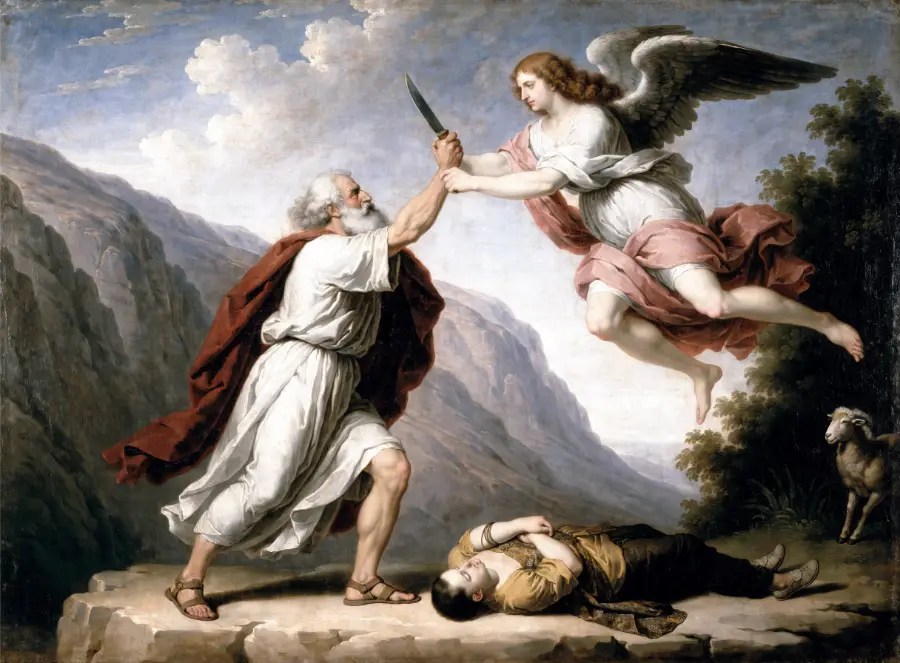
Why did the crowd greet Jesus with palms?
Six days before Passover, Jesus came to Bethany, where he had raised Lazarus from the dead (John 12:1). The next day people took palm branches and went out to meet him on his way to Jerusalem. Listen to what they call the man who raised Lazarus. “Hosanna: Blessed is the King of Israel” (John 12:12–13).
Without John we could still picture the road. Luke tells us people spread their clothes there, and both Matthew and Mark remember people cutting what Matthew calls “branches from the trees” (Matthew 21:8). But which tree did they choose for their King? Origen noticed in the third century that it is John who “says they took branches of palm trees.” That one detail gives Palm Sunday its name.
We can hear what those branches meant if we listen to the words people sang at the Feast of Tabernacles. God had told Israel to take “the boughs of goodly trees, branches of palm trees, and the boughs of thick trees, and willows of the brook; and ye shall rejoice before the Lord your God seven days” (Leviticus 23:40). At the Temple the worshippers held a palm branch, called a lulav, bound with myrtle and willow. When they sang Psalm 118, which words made them lift the branch?
The Mishnah preserves two answers. Hillel’s school said to wave the branch at “Give thanks to the Lord,” both at the beginning of the psalm and at the end, and at “O Lord, deliver us” (Psalm 118:25). Shammai’s school added the next plea, “O Lord, let us prosper.” Rabbi Judah the Prince, who gathered this collection of Jewish law and died about 220, preserved a memory from Rabbi Akiva. Akiva had watched two men in particular, Rabban Gamaliel and Rabbi Joshua. What he remembered was the moment they asked God for help. They waved their branches “only at ‘O Lord deliver us.’”
We know that prayer by the word hosanna. The Hebrew hoshia na means “save now”. “Save now, I beseech thee, O Lord,” says the King James Bible, and the very next verse gives us the rest of the crowd’s greeting, “Blessed be he that cometh in the name of the Lord” (Psalm 118:25–26). Passover was approaching when Jesus came to Jerusalem, yet the branch in the crowd’s hands and the prayer on their lips remind me of that harvest feast.
There had been another occasion to take up those branches. When the Maccabees cleansed the Temple, they celebrated for eight days “after the manner of the feast of the tabernacles” and carried “palms for Him that had given them good success in cleansing his place” (2 Maccabees 10:6–7). They could worship in God’s house again. The palm they carried in thanksgiving was the very branch a worshipper could lift when he still needed God to deliver him.
And whom did the crowd see when they went out with their palms? Their King, “sitting on an ass’s colt” (John 12:15). John tells us how long it took even the disciples to understand that sight. “These things understood not his disciples at the first: but when Jesus was glorified, then remembered they that these things were written of him” (John 12:16). If you’ve ever carried a palm into church still wondering what it means to call Jesus your king, there’s room for you on that road.

What did Egeria see on Palm Sunday in fourth-century Jerusalem?
Toward the end of the fourth century a pilgrim named Egeria saw the children of Jerusalem coming down the Mount of Olives with branches, “some of palms and some of olives,” and she noticed how the smallest ones managed it. The children, “even those who are too young to walk, are carried by their parents on their shoulders,” she wrote. A child could take part before taking a first step.
It was the Sunday that opened what the Christians of Jerusalem called the Great Week. The people and their bishop had climbed the Mount of Olives together and read the Gospel about the children who went to meet the Lord with branches. On the way down into the city they called the words of the psalm back and forth, Blessed is he that cometh in the name of the Lord. As Egeria put it, “thus the bishop is escorted in the same manner as the Lord was of old.” Egeria even tells us why they walked so slowly, “lest the people should be wearied.” Her 1919 translators, who knew her as Etheria, believed it was here in Jerusalem that children first waved their branches on Palm Sunday.
If you bring a branch home, how long do you keep it? In Russia, many Orthodox Christians carry pussy-willow branches and keep them at home beside their icons “until next year’s Palm Sunday, whereupon they can be burned,” as Archpriest Vyacheslav Kharinov of St. Petersburg explained in 2019. There is a place for last year’s palms in the Catholic observance of Lent, too. In 1907 Herbert Thurston wrote that the ashes Catholics received on Ash Wednesday “are made by burning the remains of the palms blessed on the Palm Sunday of the previous year.” The branch we held when we sang hosanna can come back to us as ash when we come to repent.
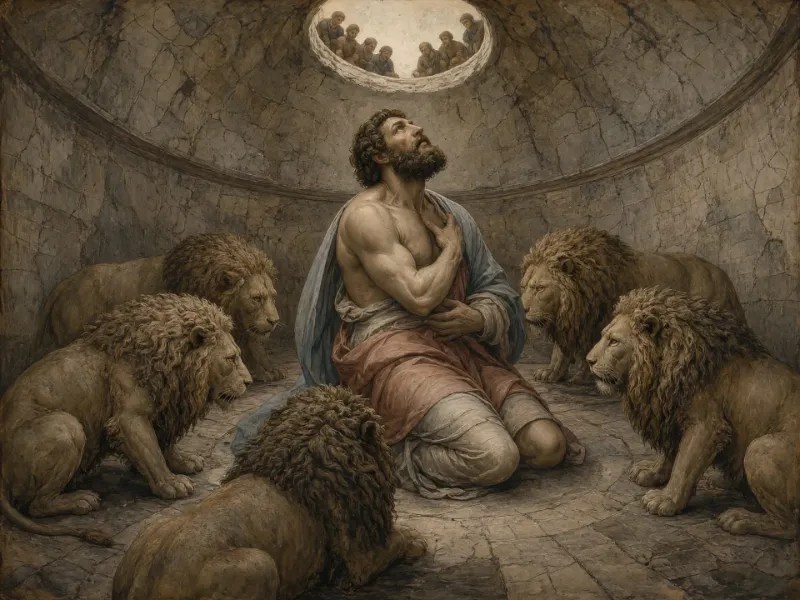
Why are there palm trees on the temple walls?
Solomon “carved all the walls of the house round about with carved figures of cherubims and palm trees and open flowers, within and without” (1 Kings 6:29). I’d like to stop at the two olive-wood doors that led into the inner sanctuary. There you could see what the Hebrew calls a timmorah, a palm carved into the wood. Solomon carved the figures on both doors “and overlaid them with gold, and spread gold upon the cherubims, and upon the palm trees” (1 Kings 6:32). Anyone who went through those doors passed between golden palms.
Those cherubim among the flowering plants remind me of Eden. The first time we meet cherubim in Scripture, God has set them east of the garden “to keep the way of the tree of life” (Genesis 3:24). Ezekiel saw palms and cherubim in his vision of the temple, and he noticed even the faces. He tells us that “a palm tree was between a cherub and a cherub,” with a man’s face turned toward one tree and a young lion’s face toward the other. The carving went on “through all the house round about” (Ezekiel 41:18–19).
I like to read Psalm 92 with those golden palms in mind. The tree in the psalm grows alongside the cedar of Lebanon, and the longer we listen, the clearer it becomes who is growing there. “The righteous shall flourish like the palm tree: he shall grow like a cedar in Lebanon. Those that be planted in the house of the Lord shall flourish in the courts of our God. They shall still bring forth fruit in old age” (Psalm 92:12–14). If you are growing old, those last words are for you. The psalmist still expects fruit from the tree God planted all those years ago.
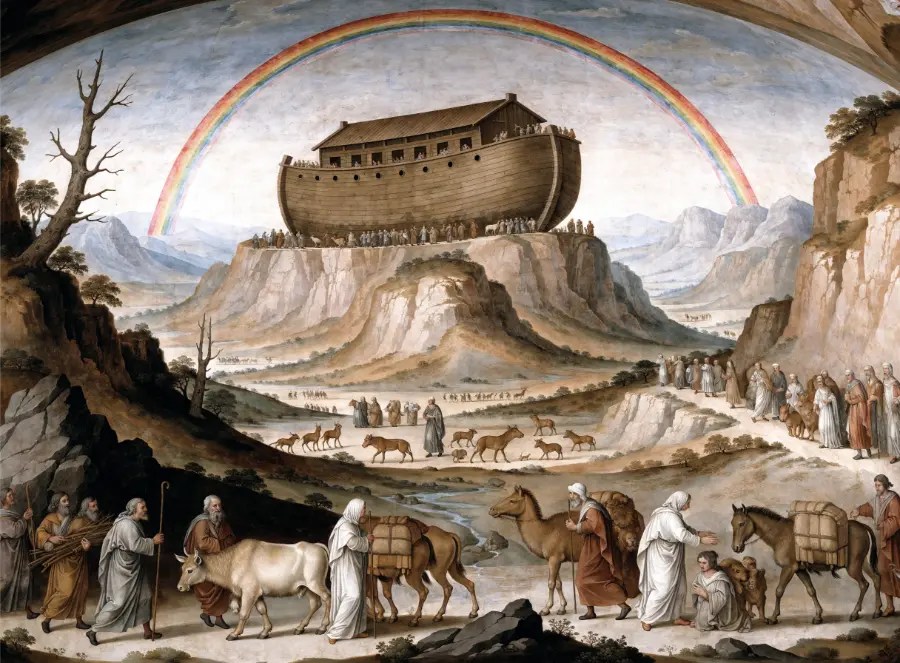
Where else do palms appear in the Bible?
When you hear the word Palm, you might picture the branch in someone’s hand on Palm Sunday. Yet of the 32 verses about the tree or its branches in the King James Bible, half describe palms carved in Solomon’s temple or in the temple Ezekiel saw in a vision.
| Where we find palms | 经文 | 阅读章节 |
|---|---|---|
| Temple carvings, including Ezekiel’s vision | 16 | 1 Kings 6:29, 32, 35 and 7:36; 2 Chronicles 3:5; Ezekiel 40:16, 22, 26, 31, 34, 37 and 41:18–20, 25–26 |
| Elim, Jericho and Deborah’s palm | 7 | Exodus 15:27; Numbers 33:9; Deuteronomy 34:3; Judges 1:16, 3:13 and 4:5; 2 Chronicles 28:15 |
| Branches for feasts, shelters and worship | 4 | Leviticus 23:40; Nehemiah 8:15; John 12:13; Revelation 7:9 |
| Poetry and prophecy | 5 | Psalm 92:12; Song of Solomon 7:7–8; Jeremiah 10:5; Joel 1:12 |
If you look up the words Palm 和 palms in the King James Old and New Testaments, you’ll find 41 verses. Nine speak of someone’s hand, from the priest holding oil in Leviticus 14 to the officer who “struck Jesus with the palm of his hand” (John 18:22). The table counts the other 32 and leaves out names where the English text never says Palm 或 palms.
Judah’s daughter-in-law and David’s daughter both bore the name Tamar. Reading their stories in English, we could pass both women without hearing what their name means. In Hebrew, 他玛 is a date palm. Once you know the word, you can hear it in a place name like Hazazon-tamar, too.
Your own Bible may give you a different count. Take Jeremiah’s description of idols. They “are upright as the palm tree, but speak not” in the King James Bible (Jeremiah 10:5). If you read the English Standard Version or the New Revised Standard Version Updated Edition, you’ll find them standing “like scarecrows in a cucumber field”. The Hebrew word there, tomer, can mean a palm tree or a post.
At Marah the water was so bitter that the people asked Moses, “What shall we drink?” (Exodus 15:24). Moses cried out to God, who showed him a tree to cast into the water, and the water became sweet. With their question still in your ears, listen to where they stopped next. They “came to Elim, where were twelve wells of water, and threescore and ten palm trees: and they encamped there by the waters” (Exodus 15:27). What would twelve wells have meant to you after Marah? There was water enough for the whole camp to stay, there among the seventy palms.
From Mount Nebo Moses looked across the promised land as far as “the plain of the valley of Jericho, the city of palm trees” (Deuteronomy 34:3). Centuries later, four leaders of Ephraim stood up to soldiers bringing captives home from war. The soldiers left the captives and the spoil, and the four men used what the soldiers had taken to give the captives clothes and shoes. They gave them food and drink, anointed them and “carried all the feeble of them upon asses, and brought them to Jericho, the city of palm trees, to their brethren” (2 Chronicles 28:12–15). For those too weak to walk, Jericho, the city of palm trees, was where their own people received them again. Jesus himself “entered and passed through Jericho” (Luke 19:1) on the journey that took him down the Mount of Olives into Jerusalem.
If you had a case to bring before the prophetess Deborah, you could find her by a particular tree. She “dwelt under the palm tree of Deborah between Ramah and Bethel in mount Ephraim: and the children of Israel came up to her for judgment” (Judges 4:5).
When the man in the Song of Songs looks at the woman he loves, what catches his eye is how tall she stands. “This thy stature is like to a palm tree,” he tells her, and by the next verse he wants to climb it (Song of Solomon 7:7–8). I think of the delight in his voice when I read Joel grieving over what the locusts have left. The palm withers with the others, “because joy is withered away from the sons of men” (Joel 1:12).
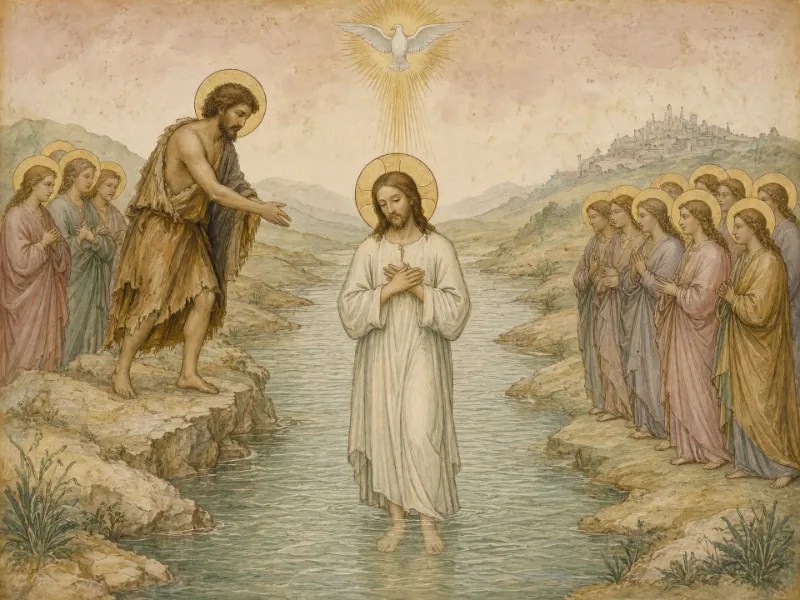
Who holds the palms in Revelation?
Only twice in the King James New Testament do we hear of the palm tree or its branches. The first time, people go out with branches to meet the King of Israel (John 12:13). Who could have guessed, watching them go, how many more would stand before him? In Revelation John sees “a great multitude, which no man could number, of all nations, and kindreds, and people, and tongues,” standing before the throne and the Lamb, “clothed with white robes, and palms in their hands” (Revelation 7:9).
One of the elders asks John who these people are, and the elder himself gives the answer. “These are they which came out of great tribulation, and have washed their robes, and made them white in the blood of the Lamb” (7:14). Think of the palms on Solomon’s walls, then look where these people stand with their branches. “Therefore are they before the throne of God, and serve him day and night in his temple” (7:15).
Early Christians saw victory in the palm, especially when they spoke of someone who had died for Christ. As Maurice Hassett wrote in 1911, accounts of the martyrs often said of someone who had died this way that he “received the palm of martyrdom.” Could you know a martyr’s grave, then, by the palm on it? On 10 April 1688 the Congregation of Rites in Rome ruled that a palm on a catacomb tomb was proof. Later scholars found the same sign on tombs from after the persecutions and even on pagan graves. A palm on its own can’t tell us whether the person buried there was a martyr. In John’s vision the elder speaks of everyone who came through great tribulation.
When I hear the crowd in Jerusalem praying “Save now,” I think of what the people with palms in their hands cry out before the throne. “Salvation to our God which sitteth upon the throne, and unto the Lamb” (Revelation 7:10). The Lamb who saved them “shall feed them, and shall lead them unto living fountains of waters” (7:17). Those fountains remind me of Elim, where the people found water among the palms after the bitter water of Marah. Here again there is water enough for everyone, and here “God shall wipe away all tears from their eyes” (Revelation 7:17).


发表回复