
 Arabic
 English
 Chinese
 Dutch
 Spanish
 Portuguese
 Russian
 French
 Italian
 German
 Japanese
A Blue Christmas service, which many churches call a Longest Night service, is a short, quiet evening of worship before Christmas for anyone who comes to the season carrying a loss. Many who come are facing the first Christmas since someone they love died. There are candles, a few readings of comfort, soft music and time to remember the people we miss, often by name, and many churches hold it on or near the longest night of the year north of the equator, which in 2026 is Monday 21 December.
One of the readings the Methodist Church in Britain suggests for the service was first spoken to a people in the dark: “The people that walked in darkness have seen a great light: they that dwell in the land of the shadow of death, upon them hath the light shined” (Isaiah 9:2). On the longest night we hear it as it was first given, a promise of light made to people who still dwelt in the shadow of death.
Who is a Blue Christmas service for?
The Rev. Elizabeth Northcott, who began one of the earliest of these services, at St. Mary’s Anglican Church in Kerrisdale, Vancouver, put it this way in 2005: “At Christmas many feel they have to apologize for their sorrows. We don’t feel they must. We acknowledge our sorrows.” The Methodist Church in Britain gathers the ways churches describe the service, and they say much the same thing: it is “for those who find celebration difficult at Christmas”, or “for those experiencing loss, loneliness or despair at Christmas”.
Canon Richard Moorse, who holds the service at St. Paul’s Anglican Church in Jarvis, Ontario, told the Anglican Journal in 2017 that the loss people bring may be “the loss of a child, it could be the loss of a marriage…any sort of substantial loss,” and other churches name the loss of a job, of health, or a serious diagnosis. The same report says the door is open to everyone, and that “often non-church-goers and even those who practice other religions attend.”
The service has no fixed day in the church year, and Connecticut Public noted in 2019 that Blue Christmas “is not part of the Catholic liturgical calendar”, though some Catholic parishes now hold one. It falls in the weeks of Advent, the season in which the Church waits for Christ’s coming. If you are looking for one near you, ask a church nearby. Some dioceses and conferences gather the services in their churches into one list, as the Anglican diocese in Vancouver did in 2005 and the United Methodist conferences of North and Central Texas did in 2023.
Prayers for the first Christmas after a death
These prayers are short enough to pray aloud, alone or with family, and each has a line saying when it may fit. Use the words that are true for you and leave the rest. There are more prayers for loss in our صلوات عند الحزن.
A prayer for the first Christmas without them
For the weeks before Christmas, when the first one without them is coming.
Lord Jesus, you came as a child into a world that knew sorrow. This Christmas we come to you missing someone we love. You know their name and their face better than we do. Hold them in your peace, and hold us too, through the carols and the cards and the quiet after. Be with us on the days we can celebrate and on the days we cannot. Amen.
A prayer before lighting a candle
At a Blue Christmas service, or at home on the longest night.
Light of the world, we light this small flame for [name]. Thank you for the years we were given, for every kindness and every ordinary day. The night is long, but the darkness has not overcome your light. Keep our loved one in your care, and keep this little light burning in us. Amen.
A prayer at the table with an empty chair
Before the Christmas meal, when someone’s place is empty.
Father, we thank you for this food and for each other. We thank you for [name], who sat with us at this table and whom we miss tonight. Let our memories of them be gentle and our words to one another kind. Bless this meal and the people around it, and keep us close to one another and to you. Amen.
A prayer for Christmas Eve
On the evening before Christmas, at the service or at home.
God of Bethlehem, tonight the world sings that a child is born, and our hearts are heavy. Mary and Joseph were away from home when your Son came, and there was no room for them. Come to us as we are tonight. Let the old words reach us, “unto you is born this day,” and let us know that he was born for us too. Amen.
A prayer for a night without sleep
For the hours after midnight, when grief keeps us awake.
Lord, the night is long and I cannot sleep. You are awake with me, and the darkness is not dark to you. Quiet my thoughts, ease the ache I carry, and let me rest in you even if I do not sleep. When morning comes, help me to meet it. Amen.
A prayer when we cannot find words
For the days when praying at all feels too hard.
Holy Spirit, I do not know what to pray. Your word says that you pray for us “with groanings which cannot be uttered” (Romans 8:26). Pray for me now. Take my tears and my silence as my prayer. Amen.
A prayer on Christmas morning
When the day itself arrives.
Lord Jesus, this is the day we keep your birth, and this year it is hard. Help us to give the gifts, share the meal and keep the day as gently as we can. If laughter comes, let it come without guilt; if tears come, let them fall in your sight. You are Emmanuel, God with us, and you are with us today. Amen.
A prayer for a friend who is grieving
For someone you love who faces this Christmas after a loss.
Father, I bring you my friend [name], who is grieving this Christmas. Comfort them in the hours when no one else is near. Give me the words to say, or the grace to sit with them and say nothing. Let them know they are not forgotten, by me or by you. Amen.
A prayer for every other kind of loss
For a marriage that ended, work or a home that was lost, health that has changed, or a hope that did not come true.
Lord, my loss this year is not one everyone can see. You know what has been taken from me and what it meant. Keep me from pretending, and keep me from despair. Meet me this Christmas as you met the shepherds keeping watch by night, with good tidings. Amen.
An old prayer for the night
This prayer comes from An Order for Compline, the service of prayer at night in the 1979 Book of Common Prayer of the Episcopal Church, a text in the public domain. It fits the longest night, because it remembers those who “weep this night”.
“Keep watch, dear Lord, with those who work, or watch, or weep this night, and give your angels charge over those who sleep. Tend the sick, Lord Christ; give rest to the weary, bless the dying, soothe the suffering, pity the afflicted, shield the joyous; and all for your love’s sake. Amen.”
Bible verses of comfort for a blue Christmas
Here are a few verses for the dark weeks, in the King James Version. One is enough for a night.
- “Blessed are they that mourn: for they shall be comforted” (Matthew 5:4).
- “The Lord is nigh unto them that are of a broken heart” (Psalm 34:18).
- “Jesus wept” (John 11:35). He wept at the grave of his friend Lazarus, though he was about to call him out of it with a loud voice, “Lazarus, come forth” (John 11:43).
- “Yea, though I walk through the valley of the shadow of death, I will fear no evil: for thou art with me” (Psalm 23:4). There is more on this psalm in our verse-by-verse reading of Psalm 23.
- “Yea, the darkness hideth not from thee; but the night shineth as the day: the darkness and the light are both alike to thee” (Psalm 139:12).
- “That ye sorrow not, even as others which have no hope. For if we believe that Jesus died and rose again, even so them also which sleep in Jesus will God bring with him” (1 Thessalonians 4:13–14). Paul was writing to grieving Christians, and he sets hope beside their sorrow.
- “Peace I leave with you, my peace I give unto you: not as the world giveth, give I unto you. Let not your heart be troubled, neither let it be afraid” (John 14:27).
- “And God shall wipe away all tears from their eyes; and there shall be no more death, neither sorrow, nor crying” (Revelation 21:4).
Grief keeps its own time, and the NHS, Britain’s health service, says, “There’s no right or wrong way to feel.” It suggests talking about your feelings with a friend, a family member, a doctor or a counsellor, and it says that if you are feeling increasingly depressed or anxious you may need medical help. If the weight feels too heavy this Christmas, please tell someone near you, and if you or someone you know is in crisis, call your local emergency number.
Where did Blue Christmas services begin?
No one has found the first service. By 2019 reporters could say only that Christians had been holding them since at least the mid-1990s, and some believe they grew out of the services of healing and hope that hospice centres in Canada held at Christmas in those years.
What we have points back to Canada in the late 1990s. In 2011 the Rev. Victoria Gaskell, the chapel associate for Methodist students at Marsh Chapel, Boston University, told the university’s news service that the idea “began in Canada in 1996” and “has blossomed among U.S. churches in the past decade”. That is her account, given fifteen years afterwards, and we have no document from 1996 itself. Two records from 1998 already mention the service: the Acts and Proceedings of the General Assembly of the Presbyterian Church in Canada note a congregation’s “Blue Christmas service (for those grieving and in pain at Christmas)”, and a book of that year, Get Me to the Church Online by Cheryl Perry, describes a web page with “an outline for a Blue Christmas service”. We know them only as a 2013 post to the American Dialect Society’s mailing list quotes them from Google Books.
The fullest early story comes from Vancouver. Elizabeth Northcott began a service at St. Mary’s, Kerrisdale, with an order taken from a church education resource called The Whole People of God, and when the Anglican Diocese of New Westminster wrote about it in December 2005, it said that “a Blue Christmas service has been held annually for the past eight years”. That takes it back to about 1997, and the diocese called it “one of the first”. By then the diocese could list twelve such services in its parishes and an ecumenical one, besides another at a prison, the Pacific Institution.
Set side by side in date order, the dated reports run like this:
| السنة | أين | ما يقوله السجل |
|---|---|---|
| 1996 (as told in 2011) | كندا | Where the idea began, in one Boston University chaplain’s account |
| About 1997 | St. Mary’s Anglican, Kerrisdale, Vancouver | Held “annually for the past eight years” and “one of the first” (diocese, 2005) |
| 1998 | الكنيسة المشيخية في كندا | A congregation’s Blue Christmas service in the General Assembly’s records, as quoted in a 2013 mailing-list post |
| 2008 | Highland Presbyterian, Louisville | Its annual Longest Night service begins (Presbyterian Church (USA), 2025) |
| 2011 | Bellarmine University, Louisville (Catholic) | A Blue Christmas Mass on Christmas Eve; more than 300 came |
| 2024 | Methodist Church in Britain | A complete Blue Christmas liturgy for its Hush the Noise Advent and Christmas campaign |
From those first churches the custom was handed on, sometimes from one denomination to another. Canon Moorse began the services at Jarvis about 2007, “after adapting the idea from a United Church minister”, and others followed in their own towns. Today Anglican, Presbyterian, United, Methodist, Lutheran, Reformed and Catholic congregations hold them, and the Salvation Army in Canada and Bermuda publishes a guide called “How to Hold a Blue Christmas Service”.
Catholic parishes came to it as well. Father Ronald Knott, a priest at Bellarmine University in Louisville, told America magazine how his began: “I kept hearing people talk about how they hated to go to Mass on Christmas because they had experienced a loss of children or spouses or family members.” In 2011 he held a Blue Christmas Mass on Christmas Eve in a chapel that seats about 175, expecting that to be enough, and more than 300 people came. He held it every Christmas through 2019.
Why is it called Blue Christmas, or the Longest Night?
Elvis Presley made a song called “Blue Christmas” famous in 1957, and the Methodist Church in Britain says the service takes its name from it. The Vancouver diocese was more careful in 2005, saying only that “some think” the name comes from that song. Churches have given the same service other names as well: When Christmas Hurts, A Quiet Christmas, A Time to Remember, and the Service of the Longest Night.
The longest night is the December solstice, which in 2026 comes at 20:50 UTC on Monday 21 December. In 2027 it comes at 02:42 UTC on 22 December. That is still the evening of Tuesday 21 December in the Americas and the small hours after it in Europe, so the longest night that year is the night of Tuesday 21 December. Most churches choose an evening on or near the solstice, and some keep Christmas Eve, as Father Knott did. South of the equator the December solstice is the longest day of the year, so in Brazil, southern Africa or Australia the name fits less well; it comes from the northern winter, where the custom began.
“Weeping may endure for a night, but joy cometh in the morning,” says the psalm (Psalm 30:5). It does not tell us how long the night will be, only that a morning comes after it.
What happens at a Blue Christmas service?
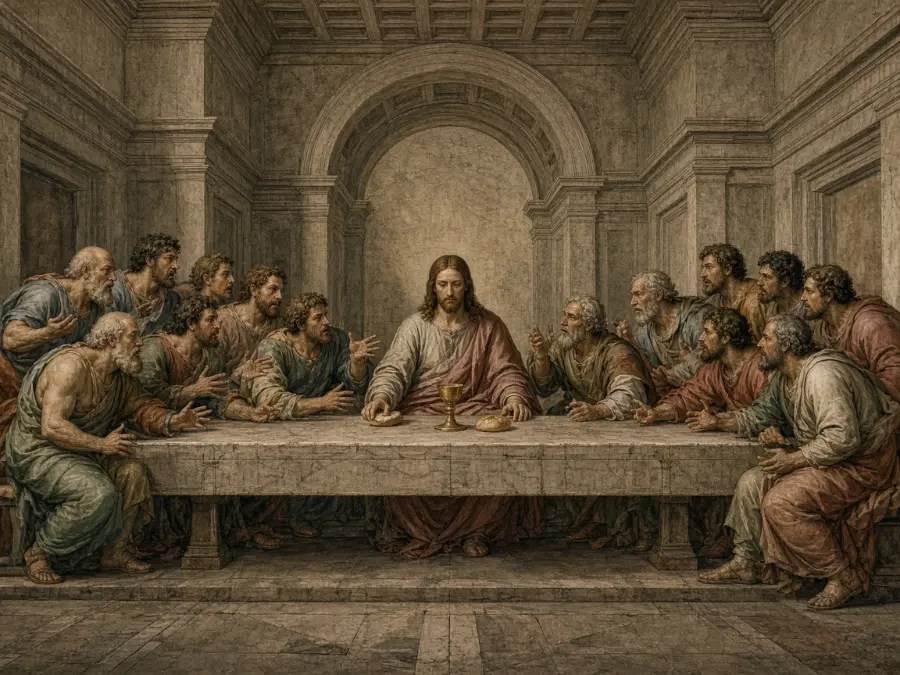
It is almost always held in the evening, and it is short and lit by candles. At St. Mary’s, Kerrisdale, there was “no organ, just a soft piano. Candles. No Christmas decorations,” and the service lasted “not much more than half an hour”. The order used at Grace Community Christian Reformed Church in Oak Lawn, Illinois, suggests giving people name tags or index cards, so that each can write the name of a person, or a situation, they are mourning this season.
The readings speak of comfort and of light coming into darkness. The Methodist Church in Britain suggests Psalm 23, Ecclesiastes 3:1–8, with its “time to weep, and a time to laugh” (Ecclesiastes 3:4), Isaiah 9:2, 4 and 6, the birth in Luke 2:1–7 and the opening of John’s Gospel, John 1:1–14. In Ponoka, the Rev. Donna Willer turns to the words of Jesus: “Come unto me, all ye that labour and are heavy laden, and I will give you rest” (Matthew 11:28). Many services leave out the hymns and use an acoustic guitar, a harp or a simple chant instead. Others sing, and at Oak Lawn a verse of “O Come, O Come, Emmanuel” follows each candle as it is lit.
There the four Advent candles are lit one by one, each with a sentence: “We light the first Advent candle and remember those persons who have been loved and lost,” then the second for “the many sources of loss and grief”, the third “to acknowledge the pain of our loss in this Christmas season”, and the fourth “to remember all who have shared in our sorrow”. Near the end, anyone who wishes comes forward to light a small candle of their own, “in memory, in honor, in gratitude, in hope, or in love”. At St. Paul’s, Jarvis, each candle is set in a bowl of water that stands for loss and pain, and the liturgy says the candles are a sign that our loved ones’ “presence is still with us…A symbol of what they meant to us, how they loved us, and formed us, and can never be taken away.” At a Methodist service in North Texas, people carry their candle home.
There is often silence, and in place of a sermon there may be a short reflection or two; Old St. Mary’s, a Paulist parish in Chicago, planned four brief ones in 2022. Some churches find other ways to hold up a name or a burden. First Presbyterian in Hastings, Nebraska, gives out wooden ornaments to be decorated with a loved one’s name and hangs them on the sanctuary trees until Christmas Eve. At West Portland United Methodist Church, NPR reported in 2019, people write down what they are struggling with, and then the others take those notes and hang them on the church garland. Some churches share Holy Communion, and the North Texas service, begun for a grief support group more than twenty years ago, now includes it.
Many of these services are small, and the people who keep them say the numbers do not matter. At St. Paul’s, Jarvis, it is usual to have “only around a half-dozen attendees,” and Canon Moorse told the Anglican Journal, “I just do it because I think it’s important.” Elizabeth Northcott said of hers, “It’s not important how many people come … just that it’s offered,” and of what it does, “What we do is allow people to acknowledge sorrows that are real for them, so they might give them to God.”
A simple order for those planning a service
If you are a minister or a parish team planning one for the first time, here is a simple order drawn from the services above, which can be kept to about forty minutes:
- Quiet music as people arrive, with the lights low, and cards for anyone who wants to write a name.
- A welcome that says who the service is for, and that no one need speak.
- Readings: Isaiah 9:2, Psalm 23 and John 1:1–5, with silence after each.
- The lighting of the Advent candles, with a sentence and a prayer for each, and, if your people sing, a verse of “O Come, O Come, Emmanuel” after each candle.
- If you wish, a short reflection of a few minutes in place of a sermon.
- An invitation to come forward and light a candle while quiet music plays.
- Prayers for the grieving, including those who could not come.
- Holy Communion, where your church’s practice allows it.
- A blessing, and the candles carried home.
The Methodist Church in Britain’s page on the service points to a complete liturgy written for its 2024 Hush the Noise campaign, and the magazine Reformed Worship has printed the full candlelight order from Oak Lawn, which was based on one from the Cathedral Church of Saint Andrew in Honolulu; both are listed in the sources for this page.
Before Jesus was born, John the Baptist’s father, Zacharias, prophesied that “the dayspring from on high hath visited us, to give light to them that sit in darkness and in the shadow of death, to guide our feet into the way of peace” (Luke 1:78–79). It is Isaiah’s promise of light, and Zacharias speaks of it as already come. That light came into the world at Bethlehem, to shepherds keeping watch by night, and on the longest night the Church lights its candles because it has not gone out: “the light shineth in darkness; and the darkness comprehended it not” (John 1:5).


اترك تعليقاً