
 Arabic
 English
 Chinese
 Dutch
 Spanish
 Portuguese
 Russian
 French
 Italian
 German
 Japanese
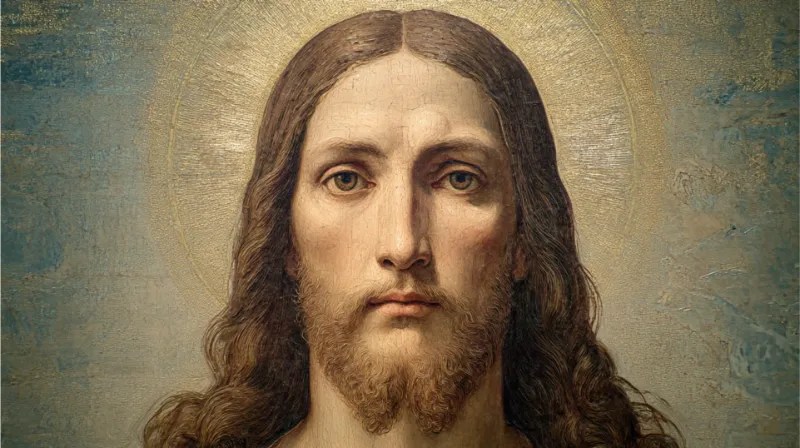
In the Bible, white hair is a sign of old age, and God asks us to honour the person who wears it. Proverbs 16:31 sees a crown in the white hair of someone who has walked with God. “The hoary head is a crown of glory, if it be found in the way of righteousness.”
Daniel sees God himself on a throne with “the hair of his head like the pure wool” (Daniel 7:9). Our white hair tells us that the years are passing. What could it mean for the God who made the days? Hippolytus of Rome, a priest who wrote four books of commentary on Daniel and died about 236, called him the one “who makes the days old, and yet becomes not old Himself by times and days.” God was there before the first day of our lives. John sees that same white hair on the risen Christ.
Why does Proverbs call white hair a crown?
God gave Israel a way to honour someone who had grown old. “Thou shalt rise up before the hoary head, and honour the face of the old man, and fear thy God: I am the Lord” (Leviticus 19:32). We can do that for someone even before we know their name. And if it is our own strength we miss as we grow older, listen to what Proverbs finds beautiful in each of us. “The glory of young men is their strength: and the beauty of old men is the grey head” (Proverbs 20:29).
Does growing old make us wise? Look again at the words that follow the crown in Proverbs 16:31, “if it be found in the way of righteousness”. The New International Version says “it is attained in the way of righteousness”, and the English Standard Version says “it is gained in a righteous life”. Think of a parent or grandparent you honour for their wisdom. What do you remember about them when someone asks who taught you to live that way?
Joab grew old too, and David remembered him for quite another reason. As his own death drew near (1 Kings 2:1), David reminded Solomon that Joab had “shed the blood of war in peace”, and charged him, “let not his hoar head go down to the grave in peace” (1 Kings 2:5–6). Joab had lived long enough for his hair to turn white. He still had to answer for the people he killed. When we pray for a long life, we can ask God to keep us company on that road and help us choose what is right. That question of how we live follows us through the other passages about what gray hair means in Scripture.
Does white hair mean death is near?
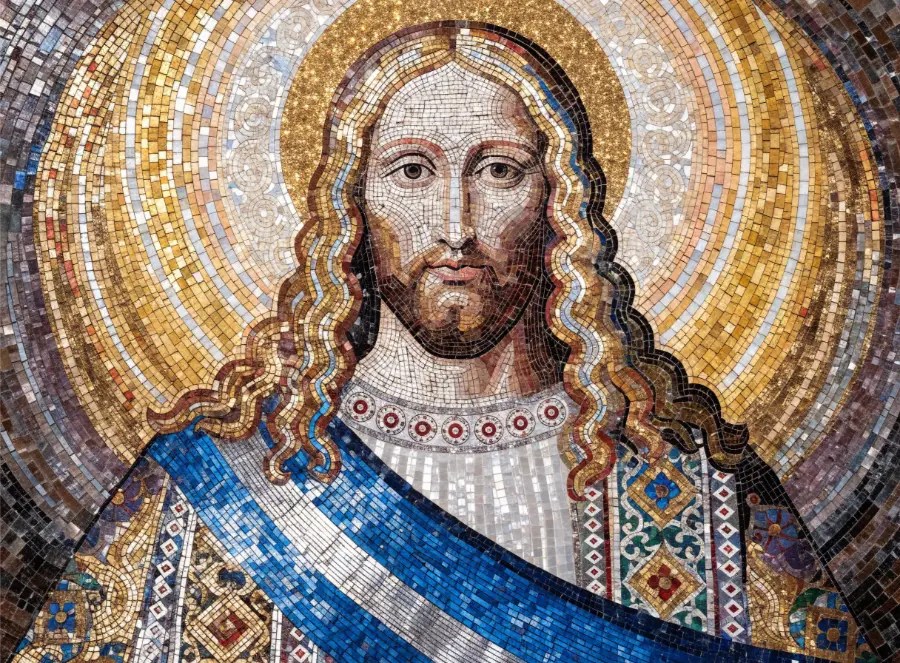
If your hair has begun to turn white, Scripture gives you no reason to take it as a warning of death. You may be thinking of the flowering tree in Ecclesiastes. Looking ahead to old age, the Preacher says “the almond tree shall flourish”. A few words later, “man goeth to his long home, and the mourners go about the streets” (Ecclesiastes 12:5). What did he see in that flowering tree? The Geneva Bible notes give the familiar answer, “Their head will be as white as the blossoms of an almond tree.” John Gill records a different reading from the rabbis, who saw in the almond the hip bone that stands out in old age. The Cambridge Bible objects that the blossoms “are, however, pink and not white” and suggests another likeness. In Hebrew the almond is “the early waking tree”, a name that will make sense to anyone who sleeps less easily in old age.
We can leave the almond tree an open question and still hear what the Preacher asks of us. Go back to the beginning of the chapter, where he tells us when to turn to God. “Remember now thy Creator in the days of thy youth” (Ecclesiastes 12:1). We needn’t wait for the first white hair.
Where does the King James Bible mention white hair?
If you look up white hair in the King James Version, you might expect to find all those verses about old age together. The words for ageing hair are usually different. Five verses use “hoary” or “hoar” for it (Leviticus 19:32, Proverbs 16:31, 1 Kings 2:6 and 2:9, and Isaiah 46:4). You can also read the nine verses about grey hair that use forms of “gray” or “grey”.
The words “hair” and “hairs” occur 79 times in the King James Bible. Nine verses mention white hair. You may remember John seeing the risen Christ (Revelation 1:14), or Jesus reminding us that “thou canst not make one hair white or black” (Matthew 5:36). If you came looking for a word about growing older, the other seven may surprise you. In every one, a priest is looking at the hairs in a sore. Three even tell him what to do when he finds no white hair there (Leviticus 13:4, 21, 26).
When someone’s whole head has grown white with age, Leviticus tells us to stand up and honour them (19:32). What, then, was the priest looking for when someone came to him with “a rising, a scab, or bright spot”? He looked at the depth of the sore and asked whether “the hair in the plague is turned white”. White hairs in a sore that looked deeper than the skin were signs of what the King James calls leprosy, and the priest pronounced the person unclean (Leviticus 13:2–3). If the spot was shallow and the hair “be not turned white”, he kept the person apart and looked again on the seventh day (13:4–5). A little further on we meet a man who has lost his hair altogether. He “is bald; yet is he clean” (13:40).
What if a patch of hair suddenly turns white?
If you’ve noticed a new white patch, show it to a doctor. Dermatologists call a localised patch of white hairs poliosis, and DermNet calls it “a clinical sign rather than a diagnosis”. A doctor may see it with vitiligo, alopecia areata, a pale halo around a mole or the loss of skin pigment that can accompany melanoma. A patch can also appear with certain medicines or after shingles or radiotherapy. The colour alone cannot tell you which, if any, of these explains yours.
Scripture gives a white streak no spiritual meaning. When Jesus tells his disciples to stop swearing by heaven, by the earth or by Jerusalem, he brings the matter very close to home. “Neither shalt thou swear by thy head, because thou canst not make one hair white or black” (Matthew 5:36). We have so little say over the colour of one hair, yet every one of them matters to God. Jesus tells us how closely God attends to us when he speaks of the sparrows. “But even the very hairs of your head are all numbered. Fear not therefore: ye are of more value than many sparrows” (Luke 12:7).
Who appears with white hair in biblical dreams?
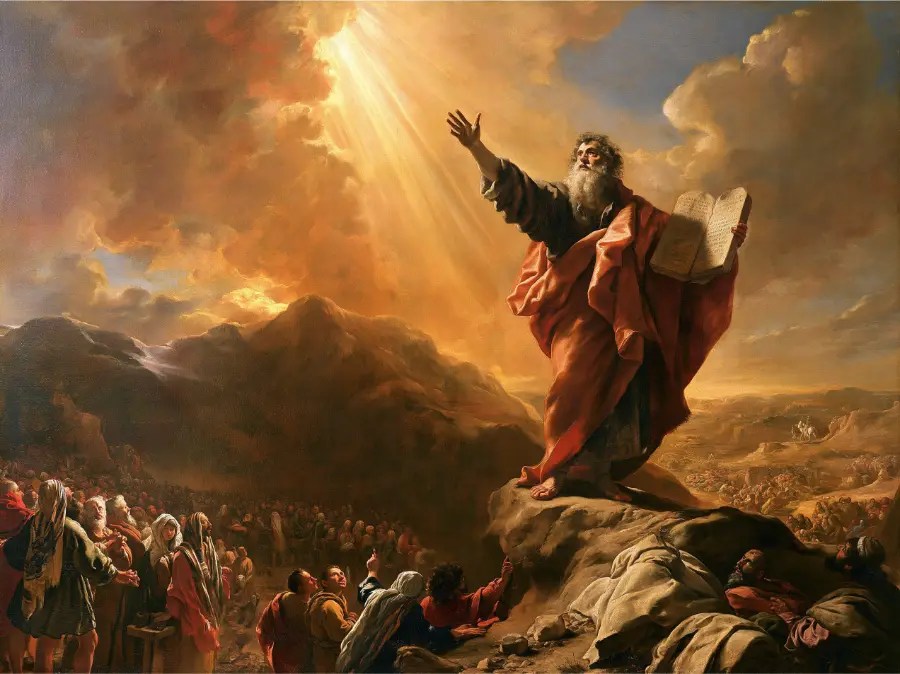
If you dreamed of someone with white hair, you might wonder who it was. Daniel could tell us who he saw. “Daniel had a dream and visions of his head upon his bed” (Daniel 7:1). He saw the thrones set in place and the Ancient of Days taking his seat. His throne was “like the fiery flame”, a stream of fire flowed before him, and “thousand thousands ministered unto him”. Then “the judgment was set, and the books were opened” (Daniel 7:9–10). The one whose hair Daniel could see was the Judge himself.
Why doesn’t Daniel appear among those nine King James verses? Read the description again. The Ancient of Days wears a garment “white as snow”, and the hair of his head is “like the pure wool” (Daniel 7:9). The Aramaic calls the garment white and describes the hair as “like wool, pure”. We still see the colour, just as we do when Isaiah promises that sins red as scarlet “shall be as white as snow”, and sins red as crimson “shall be as wool” (Isaiah 1:18). If you read the New International Version, you will find “the hair of his head was white like wool”. That one word is enough to change the count from one Bible to another.
Daniel watched as “one like the Son of man came with the clouds of heaven, and came to the Ancient of days” and received a kingdom that “shall not be destroyed” (Daniel 7:13–14). Even Daniel, who saw all this, was troubled by it (7:15). Listen to how readily he admits that he needed someone to explain it to him. “I came near unto one of them that stood by, and asked him the truth of all this” (7:16). He heard the interpretation, and afterwards, he says, “I kept the matter in my heart” (7:28). His dream concerned God’s judgment and God’s kingdom.
If you read 2 Maccabees, you meet someone else with white hair in a dream. Judas tells his men that he saw Onias, the former high priest, praying with outstretched arms for his people. Then a man appeared whom the New American Bible, Revised Edition describes as “distinguished by his white hair and dignity”. How did Judas know him? Onias named him as Jeremiah, the prophet who loved his people and prayed for them. Jeremiah held out a gold sword for Judas to take as a gift from God (2 Maccabees 15:11–16).
If you woke wondering whether your dream carried a message, neither Daniel nor Judas gives you a way to read the white hair in yours. You can tell someone what you dreamed and leave its meaning open. Jeremiah knew the harm prophets could do when they told their neighbours a dream and claimed God had spoken to them (Jeremiah 23:25–28). Listen to the question God puts to them. “The prophet that hath a dream, let him tell a dream; and he that hath my word, let him speak my word faithfully. What is the chaff to the wheat? saith the Lord” (Jeremiah 23:28). Paul leaves us room to listen and the freedom to weigh what we hear. “Prove all things; hold fast that which is good” (1 Thessalonians 5:21).
You may hear different answers in church about whether God still speaks through dreams. The Westminster Confession of 1646 says that with Scripture complete, God’s “former ways” of revealing his will are “now ceased”. The Assemblies of God, in a 2010 position paper, looks to Pentecost, when the Spirit came and fulfilled Joel’s promise of dreams and visions (Acts 2:16–21). For Catholics, even private revelations the Church recognises “do not belong, however, to the deposit of faith” (Catechism, paragraph 67). Their purpose is to help us live by what Christ has revealed, and they can add nothing to it. Whatever your church, you can take a troubling dream to God in prayer, talk it over with a pastor you trust, or sit with one of these 22 آية من الكتاب المقدس عن الأحلام.
Why does John see the risen Christ with white hair?
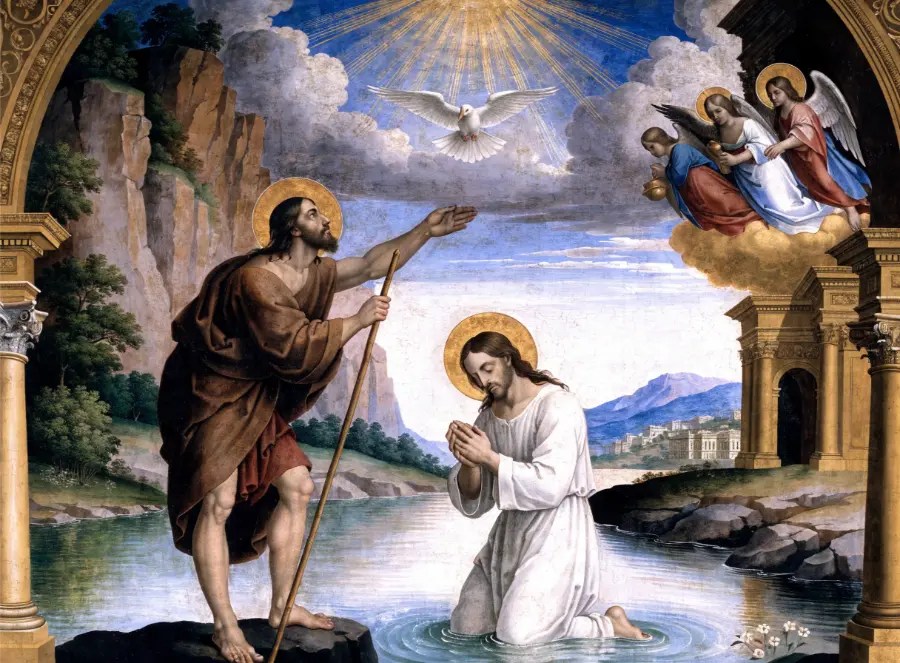
Remember the two figures in Daniel’s dream. Hippolytus understood the Ancient of Days to be the Father, whom he called “the Lord and God and Ruler of all, and even of Christ Himself.” Now listen to John, exiled on Patmos “for the word of God” (Revelation 1:9). He turns towards the voice speaking to him and sees “one like unto the Son of man” (1:13). “His head and his hairs were white like wool, as white as snow” (Revelation 1:14). The Son has the Father’s white hair.
Read Daniel and John side by side and you can see why the Cambridge Bible for Schools and Colleges pauses here. “Though the Person seen is the Son of Man of Daniel 7:13, the description is more nearly that of the Ancient of Days.” This is why John Gill can say that the title belongs to the Father, “yet it also agreeth to Christ, who is equal with the Father, as to his Divine nature.” And now this Son of Man, with eyes like flame and a face “as the sun shineth in his strength” (Revelation 1:14–16), stands close enough to touch John.
John falls at his feet as though dead. Let him tell you what Christ does next. “And he laid his right hand upon me, saying unto me, Fear not; I am the first and the last: I am he that liveth, and was dead; and, behold, I am alive for evermore” (Revelation 1:17–18). As our own hair turns white, we can remember whose hand that is. The one who was there before our days began, who has himself known death, says to John, “Fear not; I am the first and the last.”


اترك تعليقاً