
 English
 Chinese
 Dutch
 Arabic
 Spanish
 Portuguese
 Russian
 French
 Italian
 German
 Japanese
The Bible speaks of breaking chains in two senses: the literal bonds of prisoners, which God bursts apart, and slavery to sin, from which Christ sets people free. Psalm 107:14 records it and Nahum 1:13 promises it, Acts 12:7 records Peter’s chains falling off, and John 8:34-36 and Romans 6:6-7 describe the second.
The two meet in Isaiah 61:1, “to proclaim liberty to the captives,” which Jesus read aloud in the synagogue at Nazareth and said was fulfilled that day (Luke 4:18-21). Paul’s letters describe the believer as freed from slavery to sin and to the law (Romans 6:6-7, Galatians 5:1); the wider subject of freedom in the Bible has its own page.
God breaks bonds and yokes in the Old Testament
Psalm 107:13-14
“Then they cried to the LORD in their trouble, and he delivered them from their distress. He brought them out of darkness and the shadow of death, and burst their bonds apart.”
Reflection: Psalm 107 describes groups of people in trouble, and this group sat “in darkness and in the shadow of death, prisoners in affliction and in irons” because they had rebelled against the words of God (verses 10-11). “Then they cried to the LORD in their trouble” is a refrain the psalm repeats for each group. Verse 16 gives the reason for thanks in the same terms: God “shatters the doors of bronze and cuts in two the bars of iron.”
Psalm 146:7
“who executes justice for the oppressed, who gives food to the hungry. The LORD sets the prisoners free;”
Reflection: Setting prisoners free sits in a list of what the God of Jacob does: he feeds the hungry, opens the eyes of the blind, lifts up those bowed down, and upholds the widow and the fatherless (verses 7-9). The psalm sets this God against princes, “in whom there is no salvation” (verse 3).
Psalm 116:16
“O LORD, I am your servant; I am your servant, the son of your maidservant. You have loosed my bonds.”
Reflection: The psalmist calls himself God’s servant twice in one line and then says, “You have loosed my bonds.” The next verse answers the release with worship: “I will offer to you the sacrifice of thanksgiving and call on the name of the LORD.” The verse is addressed to God and can be prayed as written.
Nahum 1:13
“And now I will break his yoke from off you and will burst your bonds apart.”
Reflection: The book opens as “an oracle concerning Nineveh,” the Assyrian capital, and here God speaks to Judah about the empire that had afflicted it: “Though I have afflicted you, I will afflict you no more” (verse 12). The yoke and bonds belong to the oppressor, and verse 15 calls Judah to keep its feasts because “never again shall the worthless pass through you.”
Zechariah 9:11-12
“As for you also, because of the blood of my covenant with you, I will set your prisoners free from the waterless pit. Return to your stronghold, O prisoners of hope; today I declare that I will restore to you double.”
Reflection: These verses follow the promise of a king coming to Jerusalem “humble and mounted on a donkey” (verse 9), a line Matthew 21:5 and John 12:15 quote of Jesus entering Jerusalem. The release of prisoners rests on “the blood of my covenant with you,” and the captives are called “prisoners of hope” and told to return to their stronghold, where God promises to restore double.
Isaiah 42:6-7
“I am the LORD; I have called you in righteousness; I will take you by the hand and keep you; I will give you as a covenant for the people, a light for the nations, to open the eyes that are blind, to bring out the prisoners from the dungeon, from the prison those who sit in darkness.”
Reflection: God speaks to the servant introduced in Isaiah 42:1, “Behold my servant, whom I uphold.” The servant’s work includes opening blind eyes and bringing prisoners “from the dungeon, from the prison those who sit in darkness.” The darkness of the prison is the same image Psalm 107:10 uses.
Isaiah 58:6
“Is not this the fast that I choose: to loose the bonds of wickedness, to undo the straps of the yoke, to let the oppressed go free, and to break every yoke?”
Reflection: Here the bonds are ones people put on others. The people of Judah fasted and complained that God did not notice, and God answered that on their fast days they oppressed their workers (verse 3). The fast he chooses is to loose those bonds, let the oppressed go free, share bread with the hungry and bring the homeless poor into the house (verse 7).
The liberty Christ brings
Isaiah 61:1
“The Spirit of the Lord GOD is upon me, because the LORD has anointed me to bring good news to the poor; he has sent me to bind up the brokenhearted, to proclaim liberty to the captives, and the opening of the prison to those who are bound;”
Reflection: The speaker is anointed by the Spirit of the Lord God and sent with good news for the poor, the brokenhearted, the captives and “those who are bound.” The commission continues into verse 2 with “the year of the LORD’s favor, and the day of vengeance of our God,” and comfort for those who mourn in Zion.
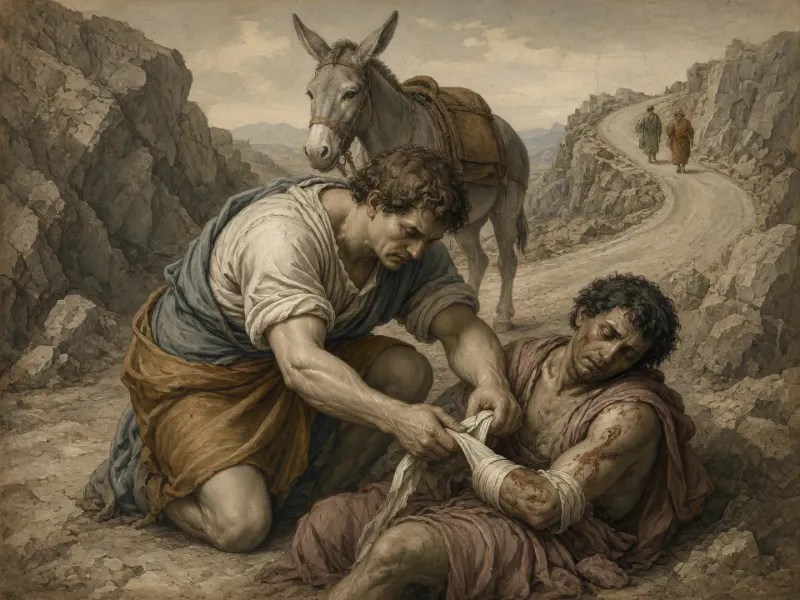
Luke 4:18
“The Spirit of the Lord is upon me, because he has anointed me to proclaim good news to the poor. He has sent me to proclaim liberty to the captives and recovering of sight to the blind, to set at liberty those who are oppressed,”
Reflection: Jesus stood to read in the synagogue at Nazareth, was handed the scroll of Isaiah, and read this passage. Luke’s quotation stops at “the year of the Lord’s favor” (verse 19), before Isaiah’s “day of vengeance.” Jesus then sat down and said, “Today this Scripture has been fulfilled in your hearing” (verse 21).
John 8:31-32
“So Jesus said to the Jews who had believed him, ‘If you abide in my word, you are truly my disciples, and you will know the truth, and the truth will set you free.’”
Reflection: Jesus said this to Jews who had believed him, and they objected that as offspring of Abraham they “have never been enslaved to anyone” (verse 33). His answer names the chain he means: “everyone who practices sin is a slave to sin” (verse 34). The freedom is tied to abiding in his word.
John 8:36
“So if the Son sets you free, you will be free indeed.”
Reflection: The verse closes the same exchange. Jesus contrasts the slave, who “does not remain in the house forever,” with the son, who “remains forever” (verse 35). The Son, who belongs to the household, is the one who can set the slave free.
Hebrews 2:14-15
“Since therefore the children share in flesh and blood, he himself likewise partook of the same things, that through death he might destroy the one who has the power of death, that is, the devil, and deliver all those who through fear of death were subject to lifelong slavery.”
Reflection: The writer explains why the Son shared “flesh and blood” with the children: by dying he would destroy the devil, who has “the power of death.” The slavery here is fear of death, and it is described as lifelong.
Colossians 1:13-14
“He has delivered us from the domain of darkness and transferred us to the kingdom of his beloved Son, in whom we have redemption, the forgiveness of sins.”
Reflection: The verses continue Paul’s thanksgiving to the Father, “who has qualified you to share in the inheritance of the saints in light” (verse 12). The rescue moves people from one domain to another, out of darkness and into the kingdom of the Son, and verse 14 names what that means: redemption, “the forgiveness of sins.”
Set free from sin
Romans 6:6-7
“We know that our old self was crucified with him in order that the body of sin might be brought to nothing, so that we would no longer be enslaved to sin. For one who has died has been set free from sin.”
Reflection: Paul writes that the believer has been united with Christ in his death (verse 5), and the old self was crucified with him. The reason given is “so that we would no longer be enslaved to sin,” and verse 7 states the principle: one who has died has been set free from sin.
Romans 6:14
“For sin will have no dominion over you, since you are not under law but under grace.”
Reflection: The promise that sin will have no dominion rests on being “under grace” rather than “under law.” Paul at once asks whether that permits more sin and answers, “By no means!” (verse 15). By verse 18 those set free from sin “have become slaves of righteousness,” so the release in Romans 6 is a change of master.
Romans 8:1-2
“There is therefore now no condemnation for those who are in Christ Jesus. For the law of the Spirit of life has set you free in Christ Jesus from the law of sin and death.”
Reflection: No condemnation follows from a release: “the law of the Spirit of life has set you free in Christ Jesus from the law of sin and death.” Verse 3 explains how, saying God did what the law “weakened by the flesh” could not do, by sending his own Son and condemning sin in the flesh.
Romans 8:15
“For you did not receive the spirit of slavery to fall back into fear, but you have received the Spirit of adoption as sons, by whom we cry, ‘Abba! Father!’”
Reflection: Paul sets two spirits side by side: one of slavery that leads back into fear, and one of adoption by which believers call God “Abba! Father!” Verse 14 says those led by the Spirit of God are his sons, and verse 16 that the Spirit bears witness with their spirit that they are God’s children.
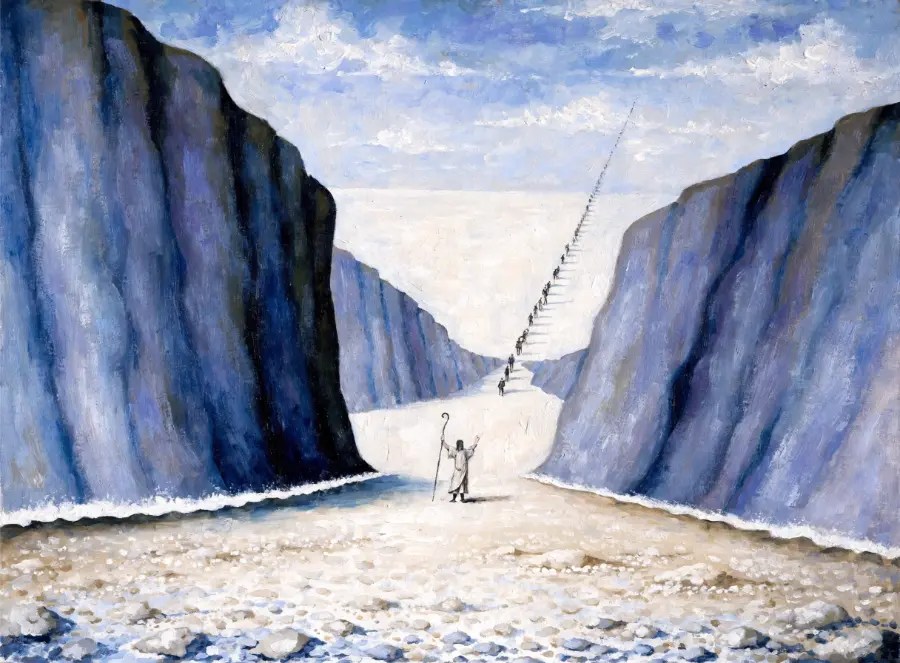
Galatians 5:1
“For freedom Christ has set us free; stand firm therefore, and do not submit again to a yoke of slavery.”
Reflection: Paul means the law taken up as a way to be justified, as verse 4 puts it: “You are severed from Christ, you who would be justified by the law.” Galatians 4 had just contrasted Hagar, whose children are born for slavery, with the free woman, and the verses after this one warn the Galatians that if they accept circumcision, “Christ will be of no advantage to you” (verse 2).
Chains that fell off in Acts
Acts 12:7
“And behold, an angel of the Lord stood next to him, and a light shone in the cell. He struck Peter on the side and woke him, saying, ‘Get up quickly.’ And the chains fell off his hands.”
Reflection: Herod had put Peter in prison, and he was sleeping “between two soldiers, bound with two chains” on the night before Herod meant to bring him out, while the church prayed for him (verses 5-6). The chains fell from his hands at the angel’s word, and the iron gate to the city “opened for them of its own accord” (verse 10). Peter at first thought he was seeing a vision.
Acts 16:25-26
“About midnight Paul and Silas were praying and singing hymns to God, and the prisoners were listening to them, and suddenly there was a great earthquake, so that the foundations of the prison were shaken. And immediately all the doors were opened, and everyone’s bonds were unfastened.”
Reflection: Paul and Silas were in prison at Philippi, praying and singing at midnight, when an earthquake opened the doors and unfastened every prisoner’s bonds. None of them left. Paul stopped the jailer from killing himself, and the jailer asked, “Sirs, what must I do to be saved?” (verse 30), and was baptized with his household that night.
Chains that stayed on
Not every prisoner in the New Testament is released. Paul writes in 2 Timothy 2:9 that he is suffering for the gospel, “bound with chains as a criminal,” and adds, “But the word of God is not bound!” The next verse gives his reason for enduring it: “for the sake of the elect, that they also may obtain the salvation that is in Christ Jesus.”


Leave a Reply