
 English
 Chinese
 Dutch
 Arabic
 Spanish
 Portuguese
 Russian
 French
 Italian
 German
 Japanese
The Bible tells believers to work at peace with other people, and it allows that the other side may refuse: “If it is possible, as far as it depends on you, live at peace with everyone” (Romans 12:18). Jesus calls peacemakers blessed (Matthew 5:9) and puts reconciliation ahead of an offering (Matthew 5:23-24).
Psalm 34:14 says to “seek peace and pursue it,” and Abram ends a quarrel with Lot by giving him first choice of the land (Genesis 13:8-9). Jesus tells a disciple to go privately to someone who has sinned (Matthew 18:15), and the letters add bearing with one another (Ephesians 4:2-3), settling anger before sunset (Ephesians 4:26), and leaving revenge to God (Romans 12:19-21). Proverbs adds the part that words play, from the gentle answer of Proverbs 15:1 to the friendship lost in Proverbs 17:9.
The command to seek peace

Matthew 5:9
“Blessed are the peacemakers, for they will be called children of God.”
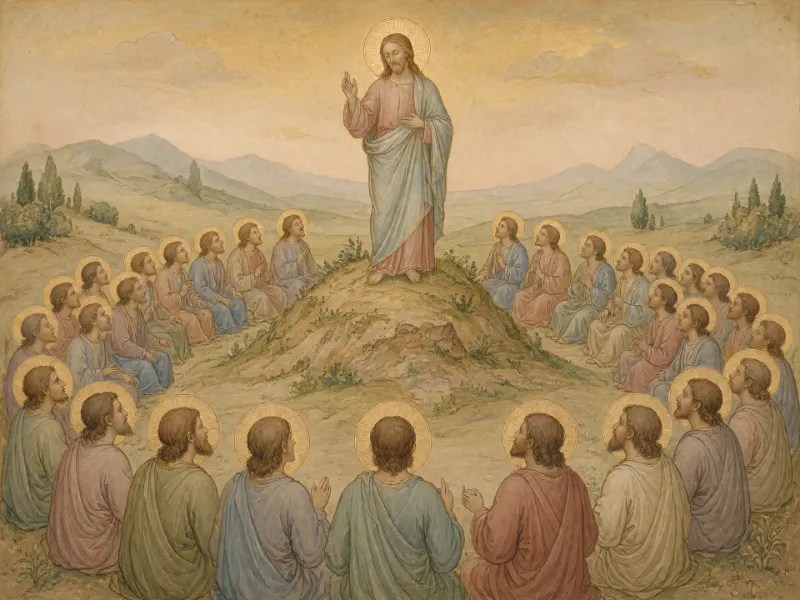
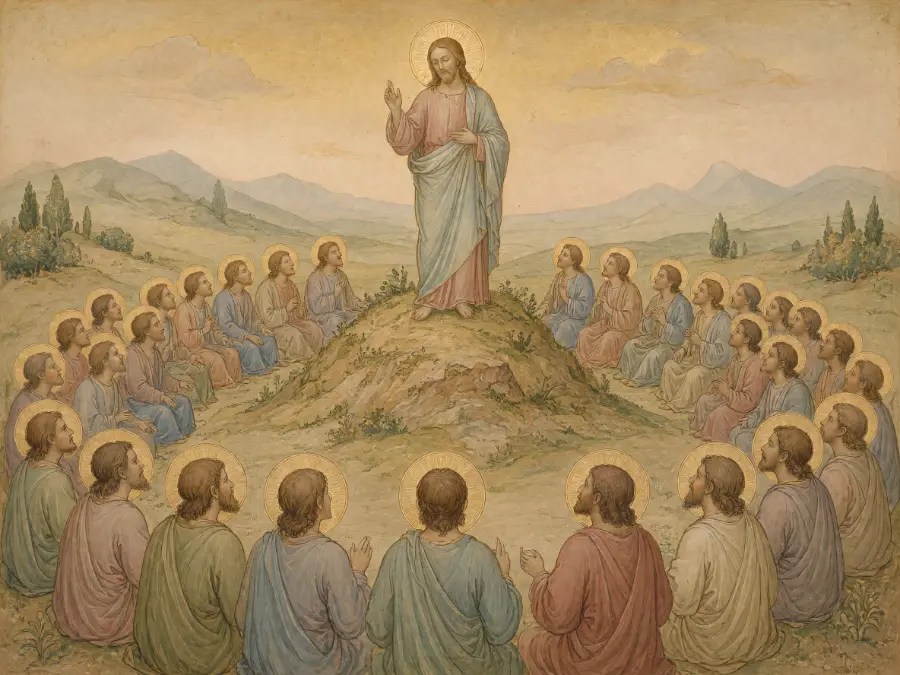
Reflection: Jesus speaks these words to his disciples on a mountainside, in the list of blessings that opens the Sermon on the Mount (Matthew 5:1-2). The word is peacemakers, people who make peace where it is missing. Their reward is a name: they will be called children of God.

Romans 12:18
“If it is possible, as far as it depends on you, live at peace with everyone.”
Reflection: Paul puts two limits on the command, “if it is possible” and “as far as it depends on you.” The verse sits between “Do not repay anyone evil for evil” (12:17) and “Do not take revenge” (12:19), so the peace in view includes peace with people who have done harm.

Hebrews 12:14
“Make every effort to live in peace with everyone and to be holy; without holiness no one will see the Lord.”
Reflection: The writer joins peace with everyone to holiness and asks for effort in both. The next verse names a danger inside the community: “See to it that no one falls short of the grace of God and that no bitter root grows up to cause trouble and defile many.”

Psalm 34:14
“Turn from evil and do good; seek peace and pursue it.”
Reflection: The psalm’s heading sets it after David pretended to be insane before Abimelek. In verses 11 to 14 he speaks as a teacher to “my children”: whoever wants to see many good days must keep the tongue from lies, turn from evil, and “seek peace and pursue it.” First Peter 3:10-11 quotes these lines straight after “Do not repay evil with evil or insult with insult” (1 Peter 3:9).

Mark 9:50
“Salt is good, but if it loses its saltiness, how can you make it salty again? Have salt among yourselves, and be at peace with each other.”
Reflection: The disciples had argued on the road about which of them was the greatest, and Jesus answered that “anyone who wants to be first must be the very last, and the servant of all” (Mark 9:33-35). The teaching that follows ends with this verse, telling the Twelve to be at peace with each other.

Colossians 3:15
“Let the peace of Christ rule in your hearts, since as members of one body you were called to peace. And be thankful.”
Reflection: The verse follows the instruction to “bear with each other and forgive one another if any of you has a grievance against someone” (3:13). Paul gives the reason for peace in the church: its members were called to it “as members of one body.”
Keeping peace inside the church
Ephesians 4:2-3
“Be completely humble and gentle; be patient, bearing with one another in love. Make every effort to keep the unity of the Spirit through the bond of peace.”
Reflection: Paul writes as “a prisoner for the Lord” and urges the Ephesians to live up to their calling (4:1). The unity belongs to the Spirit, and the church is told to keep it, with peace as the bond that holds it. Humility, gentleness and patience are the means, and bearing with one another is how patience shows.

2 Corinthians 13:11
“Finally, brothers and sisters, rejoice! Strive for full restoration, encourage one another, be of one mind, live in peace. And the God of love and peace will be with you.”
Reflection: These are the closing commands of a letter written before Paul’s third visit to Corinth (13:1). A chapter earlier he said he feared finding “discord, jealousy, fits of rage, selfish ambition, slander, gossip, arrogance and disorder” (12:20). The promise that “the God of love and peace will be with you” comes after the command to live in peace.
Romans 14:19
“Let us therefore make every effort to do what leads to peace and to mutual edification.”
Reflection: The dispute in Romans 14 was over food: one believer ate anything, another only vegetables (14:2). Paul tells the first not to treat the second with contempt and the second not to judge the first (14:3), and he says the kingdom of God is “not a matter of eating and drinking, but of righteousness, peace and joy in the Holy Spirit” (14:17). Peace here is pursued by not pressing a disputable matter on someone else.

James 3:18
“Peacemakers who sow in peace reap a harvest of righteousness.”
Reflection: James closes a contrast between two kinds of wisdom. Bitter envy and selfish ambition produce “disorder and every evil practice” (3:16), while the wisdom from heaven is “first of all pure; then peace-loving, considerate, submissive, full of mercy” (3:17). The next chapter opens with the question “What causes fights and quarrels among you?” (4:1).
Words and anger

Proverbs 15:1
“A gentle answer turns away wrath, but a harsh word stirs up anger.”
Reflection: The proverb deals with the answer given to someone who is already angry. A gentle reply turns the anger away, and a harsh one adds to it. A few lines later the same chapter says, “The soothing tongue is a tree of life, but a perverse tongue crushes the spirit” (15:4).
Ephesians 4:26
“‘In your anger do not sin’: Do not let the sun go down while you are still angry.”
Reflection: Paul allows that anger will come and sets a limit on it: deal with it before the day ends. The sentence continues, “and do not give the devil a foothold” (4:27). Just before, he tells the Ephesians to speak truthfully to their neighbours, “for we are all members of one body” (4:25).

Ephesians 4:31-32
“Get rid of all bitterness, rage and anger, brawling and slander, along with every form of malice. Be kind and compassionate to one another, forgiving each other, just as in Christ God forgave you.”
Reflection: Six things are to go: bitterness, rage, anger, brawling, slander and malice. In their place Paul puts kindness, compassion and forgiveness, and he gives the measure for forgiving: “just as in Christ God forgave you.” Colossians 3:13 gives the same measure.

Proverbs 17:9
“Whoever would foster love covers over an offense, but whoever repeats the matter separates close friends.”
Reflection: The proverb sets two responses to the same offence side by side. Covering it over fosters love, and repeating the matter separates close friends.

Proverbs 12:20
“Deceit is in the hearts of those who plot evil, but those who promote peace have joy.”
Reflection: The verses around it are about speech: an honest witness against a false one (12:17), and reckless words that “pierce like swords” against the wise tongue that “brings healing” (12:18). Here deceit belongs to people who plot evil, and joy to people who promote peace.
When a quarrel has started

Matthew 5:23-24
“Therefore, if you are offering your gift at the altar and there remember that your brother or sister has something against you, leave your gift there in front of the altar. First go and be reconciled to them; then come and offer your gift.”
Reflection: Jesus has just said that anger with a brother or sister is subject to judgment (5:22). Here it is the brother or sister who has something against the worshipper, yet the worshipper is the one who must go. Reconciliation comes first, and the gift waits in front of the altar until he returns.

Matthew 18:15
“If your brother or sister sins, go and point out their fault, just between the two of you. If they listen to you, you have won them over.”
Reflection: Here the other person has sinned, and the first step is a private conversation. If that fails, the next verses add one or two witnesses and then the church (18:16-17). Peter then asks how many times he must forgive, and Jesus answers, “not seven times, but seventy-seven times” (18:22).

Genesis 13:8-9
“So Abram said to Lot, ‘Let’s not have any quarreling between you and me, or between your herders and mine, for we are close relatives. Is not the whole land before you? Let’s part company. If you go to the left, I’ll go to the right; if you go to the right, I’ll go to the left.’”
Reflection: The land could not support both men’s flocks and herds, and quarreling broke out between their herders (13:6-7). Abram appeals to their kinship, “for we are close relatives,” and lets Lot choose first. Lot took the well-watered plain of the Jordan, and the two parted company (13:10-11).
When the other person is an enemy

Romans 12:19-21
“Do not take revenge, my dear friends, but leave room for God’s wrath, for it is written: “It is mine to avenge; I will repay,” says the Lord. On the contrary: “If your enemy is hungry, feed him; if he is thirsty, give him something to drink. In doing this, you will heap burning coals on his head.” Do not be overcome by evil, but overcome evil with good.”
Reflection: Paul tells the Romans to leave vengeance to God and then quotes Proverbs 25:21-22: an enemy who is hungry is to be fed, and one who is thirsty given a drink. The last line turns the whole passage into a contest between evil and good, to be won with good.

Proverbs 16:7
“When the Lord takes pleasure in anyone’s way, he causes their enemies to make peace with them.”
Reflection: The verses before this one are about the Lord weighing motives and establishing plans (16:2-3). This proverb puts peace with enemies in the same hands: when the Lord takes pleasure in a person’s way, he is the one who brings that person’s enemies to make peace.
When peace is refused
Romans 12:18 limits the command to what is possible and to what depends on the believer, so it does not require the other person’s agreement. Matthew 18:17 ends the process of going to someone who has sinned by treating them “as you would a pagan or a tax collector” if they will not listen even to the church.
Genesis 13:8-9 ends a quarrel by separation: Abram and Lot part company, and the quarreling between their herders stops. Romans 12:19-21 covers a harder case, where the other person stays an enemy and the instruction is to feed him and leave vengeance to God.


Leave a Reply