
 English
 Chinese
 Dutch
 Arabic
 Spanish
 Portuguese
 Russian
 French
 Italian
 German
 Japanese
For a marriage under strain, Scripture asks for reconciliation, forgiveness and confession. Paul tells a wife who has already separated to “remain unmarried or else be reconciled to her husband” (1 Corinthians 7:11).
Jesus tells Peter to forgive a brother not seven times but seventy-seven (Matthew 18:21-22), and James tells believers to “confess your sins to one another and pray for one another, that you may be healed” (James 5:16). The other passages below set out how a husband and wife are told to treat each other (Ephesians 5:22-25, 1 Peter 3:7), why faithfulness matters (Hebrews 13:4, Proverbs 5:18-19), and the covenant that Malachi 2:14 says the Lord witnessed.
Reconciling, forgiving and confessing
1 Corinthians 7:10-11
“To the married I give this charge (not I, but the Lord): the wife should not separate from her husband (but if she does, she should remain unmarried or else be reconciled to her husband), and the husband should not divorce his wife.”
Reflection: Paul marks this charge as coming from the Lord, and in the next verse marks his own advice as “I, not the Lord” (7:12). He tells the wife not to separate and the husband not to divorce, yet allows for a separation that has already happened. For that case he gives two courses, to remain unmarried or to be reconciled to her husband.

Matthew 18:21-22
“Then Peter came up and said to him, ‘Lord, how often will my brother sin against me, and I forgive him? As many as seven times?’ Jesus said to him, ‘I do not say to you seven times, but seventy-seven times.’”
Reflection: Peter’s question follows Jesus’ teaching on what to do when a brother sins against you (18:15). Peter offers seven times and Jesus answers seventy-seven. He then tells of a servant forgiven a debt of ten thousand talents who would not forgive a fellow servant a hundred denarii, and ends: “So also my heavenly Father will do to every one of you, if you do not forgive your brother from your heart” (18:35).
Colossians 3:13
“bearing with one another and, if one has a complaint against another, forgiving each other; as the Lord has forgiven you, so you also must forgive.”
Reflection: Paul writes to the church at Colossae, after telling them to put on “compassionate hearts, kindness, humility, meekness, and patience” (3:12). The measure of forgiveness is the Lord’s own: as he has forgiven, so they must forgive. A few verses later the same letter tells husbands, “love your wives, and do not be harsh with them” (3:19).

James 5:16
“Therefore, confess your sins to one another and pray for one another, that you may be healed. The prayer of a righteous person has great power as it is working.”
Reflection: James has just told the sick to call the elders to pray over them, adding that “if he has committed sins, he will be forgiven” (5:15). This verse turns the practice to every believer: confess sins to one another and pray for one another, that you may be healed. The command is to “one another”, which includes a husband and wife.
How husbands, wives and all believers are told to treat one another

Ephesians 5:22-25
“Wives, submit to your own husbands, as to the Lord. For the husband is the head of the wife even as Christ is the head of the church, his body, and is himself its Savior. Now as the church submits to Christ, so also wives should submit in everything to their husbands. Husbands, love your wives, as Christ loved the church and gave himself up for her.”
Reflection: The verse before it, “submitting to one another out of reverence for Christ” (5:21), is addressed to the whole church, and the sentence to wives follows straight on from it. Each spouse then receives a charge of their own, and neither charge is stated as conditional on the other keeping theirs. The husband’s love is measured by Christ, who “gave himself up” for the church, and Paul’s summary in 5:33 names what each is to give: love from the husband, respect from the wife.

1 Peter 3:7
“Likewise, husbands, live with your wives in an understanding way, showing honor to the woman as the weaker vessel, since they are heirs with you of the grace of life, so that your prayers may not be hindered.”
Reflection: Peter first addresses wives, some of whose husbands “do not obey the word” (3:1), then turns to husbands. A husband is to live with his wife “in an understanding way” and honor her, and Peter ties this to the husband’s own prayers, which are hindered if he does not. Verse 8 turns to “all of you”, and verse 9 rules out answering an insult in kind: “Do not repay evil for evil or reviling for reviling, but on the contrary, bless.”

1 Corinthians 13:4-7
“Love is patient and kind; love does not envy or boast; it is not arrogant or rude. It does not insist on its own way; it is not irritable or resentful; it does not rejoice at wrongdoing, but rejoices with the truth. Love bears all things, believes all things, hopes all things, endures all things.”
Reflection: Paul wrote this to the church in Corinth in the middle of his teaching on spiritual gifts (12:31), not to a married couple. Several items on its list bear directly on a quarrel between two people: love “does not insist on its own way”, is not “irritable or resentful”, and “does not rejoice at wrongdoing”. The last line asks for love that “bears all things” and “endures all things”.
Faithfulness, desire and love’s strength
Hebrews 13:4
“Let marriage be held in honor among all, and let the marriage bed be undefiled, for God will judge the sexually immoral and adulterous.”
Reflection: Where adultery has damaged a marriage, this verse names it without softening: God will judge “the sexually immoral and adulterous.” Its first command, that marriage be “held in honor among all”, is addressed to everyone, so it binds people outside a marriage as well as the husband and wife within it.

Proverbs 5:18-19
“Let your fountain be blessed, and rejoice in the wife of your youth, a lovely deer, a graceful doe. Let her breasts fill you at all times with delight; be intoxicated always in her love.”
Reflection: The father who speaks here has just told his son to keep far from the forbidden woman (5:8). Alongside that warning he gives a positive charge: delight in the wife of your youth and “be intoxicated always in her love.” The next verse sets the two side by side, “Why should you be intoxicated, my son, with a forbidden woman?” (5:20), and verse 21 gives the reason: “a man’s ways are before the eyes of the Lord.”
1 Corinthians 7:2-3
“But because of the temptation to sexual immorality, each man should have his own wife and each woman her own husband. The husband should give to his wife her conjugal rights, and likewise the wife to her husband.”
Reflection: Paul treats sexual withdrawal within a marriage as a matter of what each spouse owes the other: “the wife does not have authority over her own body, but the husband does. Likewise the husband does not have authority over his own body, but the wife does” (7:4). He allows time apart only “by agreement for a limited time” for prayer, then says, “come together again, so that Satan may not tempt you because of your lack of self-control” (7:5).
Song of Solomon 8:6-7
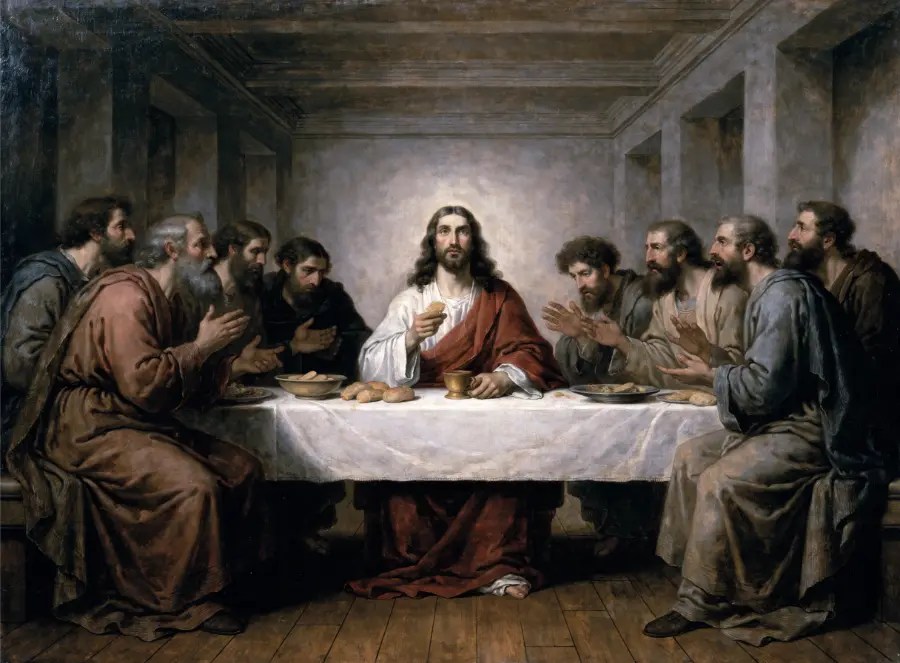
“Set me as a seal upon your heart, as a seal upon your arm, for love is strong as death, jealousy is fierce as the grave. Its flashes are flashes of fire, the very flame of the Lord. Many waters cannot quench love, neither can floods drown it.”
Reflection: The speaker asks to be set as a seal on the beloved’s heart and arm, a mark that the two belong to each other. Against the waters and floods the poem sets love, which they cannot quench or drown, and it calls love as strong as death. Verse 7 goes on past the quoted words: a man who offered all the wealth of his house for love “would be utterly despised.”
The covenant behind a marriage
Malachi 2:14
“But you say, ‘Why does he not?’ Because the Lord was witness between you and the wife of your youth, to whom you have been faithless, though she is your companion and your wife by covenant.”
Reflection: The men of Judah weep at the altar because the Lord no longer accepts their offerings (2:13), and this verse gives the reason. For a husband who has broken faith, Malachi names both the wrong and what the Lord asks next. The Lord was witness to the marriage, and the wife is “your companion and your wife by covenant”, so faithlessness to her is also a matter between the husband and God. The charge that follows is “let none of you be faithless to the wife of your youth” (2:15).
Matthew 19:4-6
“He answered, ‘Have you not read that he who created them from the beginning made them male and female, and said, “Therefore a man shall leave his father and his mother and hold fast to his wife, and the two shall become one flesh”? So they are no longer two but one flesh. What therefore God has joined together, let not man separate.’”
Reflection: Asked whether a man may divorce his wife “for any cause” (19:3), Jesus answers from Genesis, that the two become one flesh and that God has joined them. When the Pharisees point to Moses’ certificate of divorce, Jesus names the cause behind that permission: “Because of your hardness of heart Moses allowed you to divorce your wives, but from the beginning it was not so” (19:8).
The exceptions in Matthew 19:9 and 1 Corinthians 7:15
Three verses after Matthew 19:6, Jesus says: “And I say to you: whoever divorces his wife, except for sexual immorality, and marries another, commits adultery” (Matthew 19:9). In the same chapter as 1 Corinthians 7:10-11, Paul writes: “But if the unbelieving partner separates, let it be so. In such cases the brother or sister is not enslaved. God has called you to peace” (1 Corinthians 7:15).
Paul follows that with a question rather than a promise: “For how do you know, wife, whether you will save your husband? Or how do you know, husband, whether you will save your wife?” (1 Corinthians 7:16). There “save” refers to the spouse’s salvation, not to keeping the marriage.


Leave a Reply