
 English
 Chinese
 Dutch
 Arabic
 Spanish
 Portuguese
 Russian
 French
 Italian
 German
 Japanese
The Bible’s nearest subjects to being positive are what a person sets the mind on, joy, and hope, and its writers ground each of them in God. Philippians 4:8 lists what to think about, 1 Thessalonians 5:16-18 commands thanks “in all circumstances”, and John 16:33 promises peace in the same verse that forecasts “trouble”.
Paul wrote Philippians while “in chains for Christ” (Philippians 1:13), Jeremiah 29 is a letter to the exiles in Babylon, and Lamentations opens over a deserted city (Lamentations 1:1).
What to set the mind on

Philippians 4:8
“Finally, brothers and sisters, whatever is true, whatever is noble, whatever is right, whatever is pure, whatever is lovely, whatever is admirable—if anything is excellent or praiseworthy—think about such things.”
Reflection: Paul opens the verse with “Finally” and gives a list of qualities with one verb: think about such things. The verse follows the promise that God’s peace “will guard your hearts and your minds” (4:7), and the next verse joins thinking to doing: “Whatever you have learned or received or heard from me, or seen in me—put it into practice.” The verse closes with a promise: “And the God of peace will be with you.”

Romans 12:2
“Do not conform to the pattern of this world, but be transformed by the renewing of your mind. Then you will be able to test and approve what God’s will is—his good, pleasing and perfect will.”
Reflection: The verse follows Paul’s appeal, “in view of God’s mercy,” to offer “your bodies as a living sacrifice” (12:1). The change he describes comes by “the renewing of your mind,” and its purpose is to test and approve God’s will. The next verse turns to how a person sees himself: “think of yourself with sober judgment.”

Colossians 3:2
“Set your minds on things above, not on earthly things.”
Reflection: Paul has just written “set your hearts on things above, where Christ is” (3:1), and he gives the reason in 3:3: the readers have died, and their life “is now hidden with Christ in God.” A few verses later he names what belongs to the earthly nature: sexual immorality, greed, anger, rage, malice and slander (3:5-8).

Isaiah 26:3
“You will keep in perfect peace those whose minds are steadfast, because they trust in you.”
Reflection: The verse is part of a song that, according to 26:1, “will be sung in the land of Judah” about a strong city whose walls are salvation. The steady mind in this verse belongs to those who trust, and the next line gives the ground for trusting: “the Lord, the Lord himself, is the Rock eternal” (26:4).
Rejoicing, and where joy comes from

Philippians 4:4-7
“Rejoice in the Lord always. I will say it again: Rejoice! Let your gentleness be evident to all. The Lord is near. Do not be anxious about anything, but in every situation, by prayer and petition, with thanksgiving, present your requests to God. And the peace of God, which transcends all understanding, will guard your hearts and your minds in Christ Jesus.”
Reflection: Paul gives the command to rejoice twice, “in the Lord,” in a letter he wrote while “in chains for Christ” (1:13). The church he addresses has a quarrel of its own: two verses earlier he pleads with Euodia and Syntyche “to be of the same mind in the Lord.” For anxiety he prescribes prayer with thanksgiving, and the promise attached is the peace of God guarding hearts and minds.

1 Thessalonians 5:16-18
“Rejoice always, pray continually, give thanks in all circumstances; for this is God’s will for you in Christ Jesus.”
Reflection: Three short commands sit in a list of instructions to the Thessalonian church that also tells it to “encourage the disheartened” and “help the weak” (5:14). The thanks are to be given “in all circumstances”; the verse does not call the circumstances good. The reason Paul gives is that this is “God’s will for you in Christ Jesus.”

Nehemiah 8:10
“The joy of the Lord is your strength.”
Reflection: Ezra had read the Law aloud “from daybreak till noon” (8:3), and the people wept as they listened. Nehemiah tells them not to grieve because the day is holy, to eat and drink, and to “send some to those who have nothing prepared.” Verse 12 says they celebrated “because they now understood the words that had been made known to them.”

Psalm 16:11
“You make known to me the path of life; you will fill me with joy in your presence, with eternal pleasures at your right hand.”
Reflection: The psalm, headed “A miktam of David,” opens with a plea: “Keep me safe, my God, for in you I take refuge.” In verse 8 David says, “I keep my eyes always on the Lord,” and the gladness of verse 9 follows from it: “Therefore my heart is glad.” Verse 11 is addressed to God and places joy in his presence.
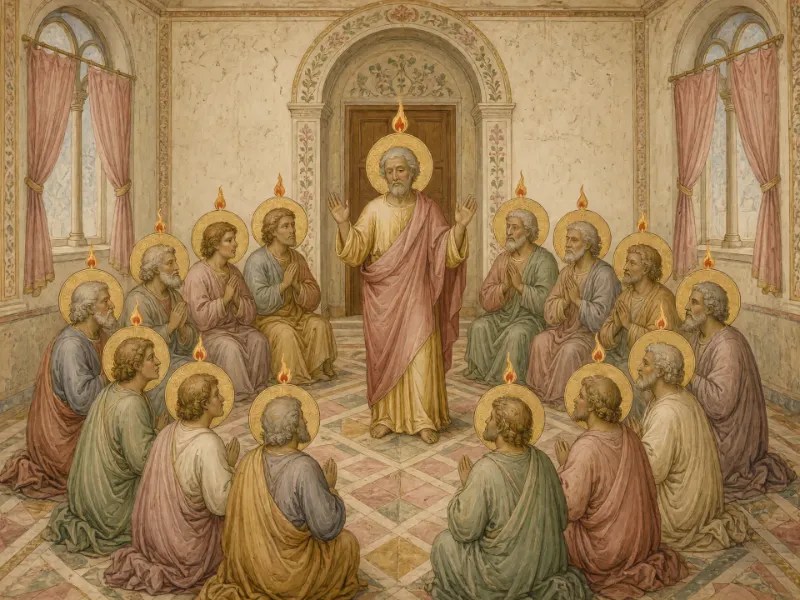
Romans 15:13
“May the God of hope fill you with all joy and peace as you trust in him, so that you may overflow with hope by the power of the Holy Spirit.”
Reflection: Paul writes this wish for the Roman church just after quoting Isaiah: “in him the Gentiles will hope” (15:12). It names God as the one Paul hopes will fill them with joy and peace as they trust him, and it looks for hope to overflow “by the power of the Holy Spirit.”
Hope with the trouble in view
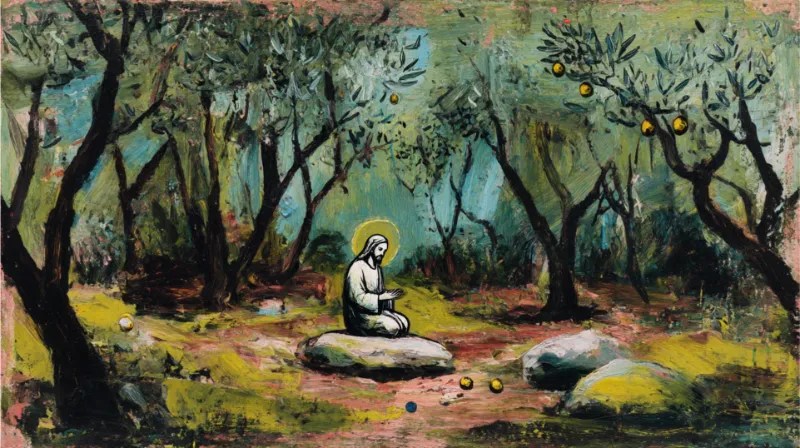
John 16:33
“I have told you these things, so that in me you may have peace. In this world you will have trouble. But take heart! I have overcome the world.”
Reflection: Jesus says this to the disciples immediately after telling them they will be scattered and will leave him alone (16:32). The peace he promises is “in me,” and it stands beside a plain forecast: “In this world you will have trouble.” The ground for taking heart is what Jesus has done: “I have overcome the world.”

Lamentations 3:22-23
“Because of the Lord’s great love we are not consumed, for his compassions never fail. They are new every morning; great is your faithfulness.”
Reflection: In the verses before, the speaker has been “deprived of peace” and says, “my soul is downcast within me” (3:17-20). Verse 21 turns on a deliberate act of memory: “Yet this I call to mind and therefore I have hope.” What he calls to mind is the Lord’s love and faithfulness, and he goes on to say “it is good to wait quietly for the salvation of the Lord” (3:26).

Romans 5:3-4
“…but we also glory in our sufferings, because we know that suffering produces perseverance; perseverance, character; and character, hope.”
Reflection: Paul has just said that believers “boast in the hope of the glory of God” (5:2), and he adds that they glory in sufferings too. His reason is the chain that follows: suffering, perseverance, character, hope. Verse 5 says this hope “does not put us to shame” because God’s love “has been poured out into our hearts through the Holy Spirit.”

Romans 8:28
“And we know that in all things God works for the good of those who love him, who have been called according to his purpose.”
Reflection: The verse comes after Paul writes that “our present sufferings are not worth comparing with the glory that will be revealed in us” (8:18) and that the Spirit intercedes when believers do not know what to pray (8:26). The promise is for “those who love him, who have been called according to his purpose.” The next verse says what God predestined them to: to be “conformed to the image of his Son.”

Jeremiah 29:11
“For I know the plans I have for you,” declares the Lord, “plans to prosper you and not to harm you, plans to give you hope and a future.”
Reflection: The verse is part of a letter Jeremiah sent from Jerusalem to the exiles in Babylon (29:1). The same letter tells them to build houses, plant gardens and marry there, warns them against prophets who “are prophesying lies to you in my name,” and says when the return will come: “When seventy years are completed for Babylon” (29:10).

2 Corinthians 12:9-10
“But he said to me, ‘My grace is sufficient for you, for my power is made perfect in weakness.’ Therefore I will boast all the more gladly about my weaknesses, so that Christ’s power may rest on me. That is why, for Christ’s sake, I delight in weaknesses, in insults, in hardships, in persecutions, in difficulties. For when I am weak, then I am strong.”
Reflection: Paul pleaded three times for his “thorn in my flesh” to be taken away (12:7-8), and the answer he records is this sentence about grace, with no mention of removing the thorn. His response is to delight “in weaknesses, in insults, in hardships, in persecutions, in difficulties,” and he gives the reason: “For when I am weak, then I am strong.”
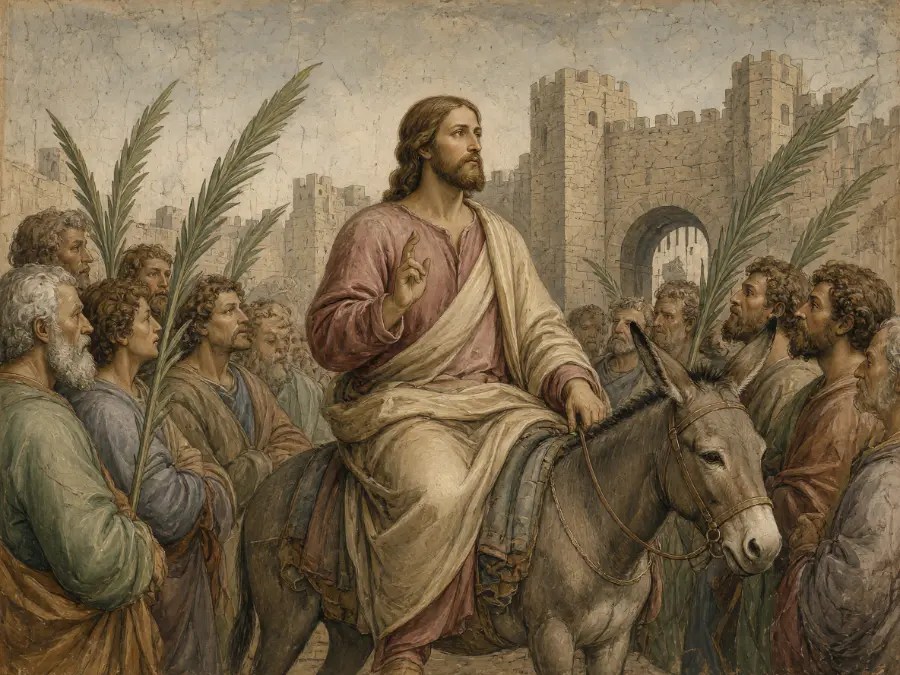
Philippians 4:13
“I can do all this through him who gives me strength.”
Reflection: Paul writes this about contentment. In the verse before, he says he has “learned the secret of being content in any and every situation, whether well fed or hungry, whether living in plenty or in want,” and “all this” points back to those conditions. He writes it while thanking the Philippians for renewing their concern for him (4:10).
Sorrow alongside these verses
Lamentations 3:22-23 sits between “my soul is downcast within me” and “it is good to wait quietly,” John 16:33 promises trouble in this world, and 2 Corinthians 12:8 records Paul pleading three times before he received an answer.
The chapter that commands “Rejoice always” also tells the church to “encourage the disheartened” (1 Thessalonians 5:14), and Nehemiah 8:9 records the people weeping before they were told the day was for feasting. Psalm 16:11 is addressed to God and can be prayed as written.


Leave a Reply