
 English
 Chinese
 Dutch
 Arabic
 Spanish
 Portuguese
 Russian
 French
 Italian
 German
 Japanese
“I can do all things through Christ which strengtheneth me” (Philippians 4:13). Paul wrote it from prison to thank a church for a gift, and he means that Christ gives him strength for whatever life holds, hunger as much as plenty. The “all things” are the ones he has just named in verses 11 and 12.
Read the verse with the two lines before it, and its meaning becomes clear. “I have learned, in whatsoever state I am, therewith to be content,” Paul writes. “I know both how to be abased, and I know how to abound: every where and in all things I am instructed both to be full and to be hungry, both to abound and to suffer need” (Philippians 4:11–12). Then comes the sentence we know by heart, and now we hear it as he meant it. A man in chains is telling his friends that Christ has been enough for him at the empty table and at the full one.

What does “all things” mean in Philippians 4:13?
The “all things” are the states Paul has just listed: being abased and abounding, being full and being hungry, having plenty and suffering need. The New International Version makes the link plain: “I can do all this through him who gives me strength.” The strength he speaks of is strength to stay faithful in each of those states, and to be at peace in them.
Two of his words show how hard that peace was won. “Content” in verse 11 translates autarkēs, a word Greek writers used for a person “sufficient for oneself”, “independent of external circumstances”, as Thayer’s lexicon defines it. The Stoic philosophers prized that kind of self-sufficiency as an ideal. Paul takes their word and gives it a new source: his sufficiency comes from Christ. And “I am instructed” in verse 12 comes from mueō, the verb for being initiated into a mystery, which is why modern translations say “I have learned the secret”. Verse 13 tells us what the secret is, and the secret is a person.
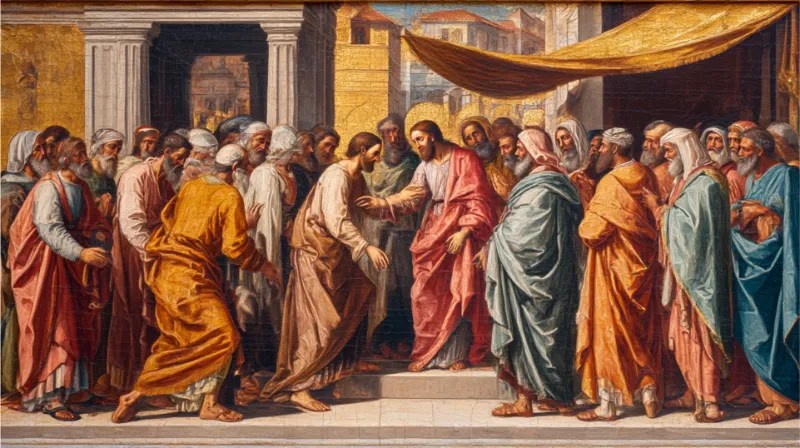
Where was Paul when he wrote Philippians 4:13?
He was in prison, and where is less certain than it looks. He tells the Philippians that his “bonds in Christ are manifest in all the palace” (Philippians 1:13), and he sends greetings from believers in “Caesar’s household” (Philippians 4:22). Those details fit Rome, the traditional answer, and the Catholic Encyclopedia of 1911 dated the letter there, A.D. 62–64. The U.S. Catholic bishops’ introduction to the New American Bible calls the place and date “uncertain”: one view proposes Caesarea, and “much recent scholarship favors Ephesus”, around A.D. 55. If it was Rome, Acts shows us the scene, with Paul guarded by a soldier and living two years “in his own hired house” (Acts 28:16, 30).
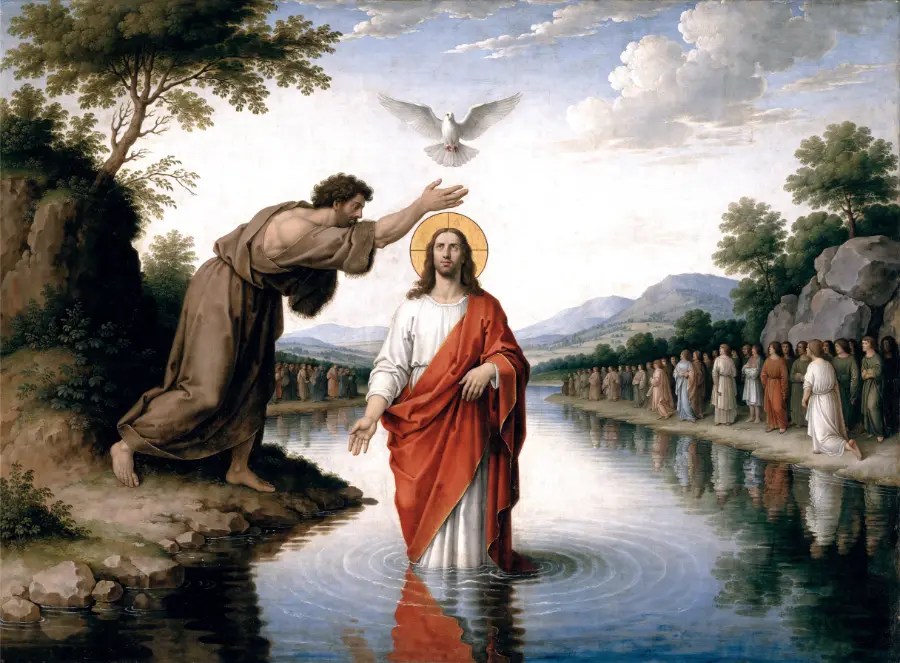
The church he was writing to knew Paul’s prisons well. Paul first preached in Philippi by a river, where a seller of purple named Lydia believed and was baptized with her household (Acts 16:13–15). Soon after, he and Silas were beaten and fastened in the stocks, “and at midnight Paul and Silas prayed, and sang praises unto God: and the prisoners heard them” (Acts 16:25). Before morning the jailer had asked, “Sirs, what must I do to be saved?” and he “was baptized, he and all his, straightway” (Acts 16:30, 33). The Philippians had seen Paul content in chains long before he wrote the word. Now, from another prison, he thanks them for the gift they sent with Epaphroditus, who came near to death serving him (Philippians 2:25–30; 4:18).
Is the word “Christ” in the Greek of Philippians 4:13?
Not in the Greek text that most modern translations follow. The Westcott and Hort, Nestle and SBL editions read panta ischuō en tō endunamounti me: all things I have strength for, in the one who strengthens me. The Textus Receptus behind the King James Version, like the Byzantine Majority Text, adds Christō, “Christ”. That is why the NIV and the English Standard Version say “him” and the King James says “Christ”.
The meaning is the same either way. The verb endunamoō means “to make strong, endue with strength, strengthen”, and the one doing it is the Lord in whom Paul has been rejoicing since verse 10. The strength is his, and he gives it to a man who has none of his own to spare.
Is Philippians 4:13 a promise of success?
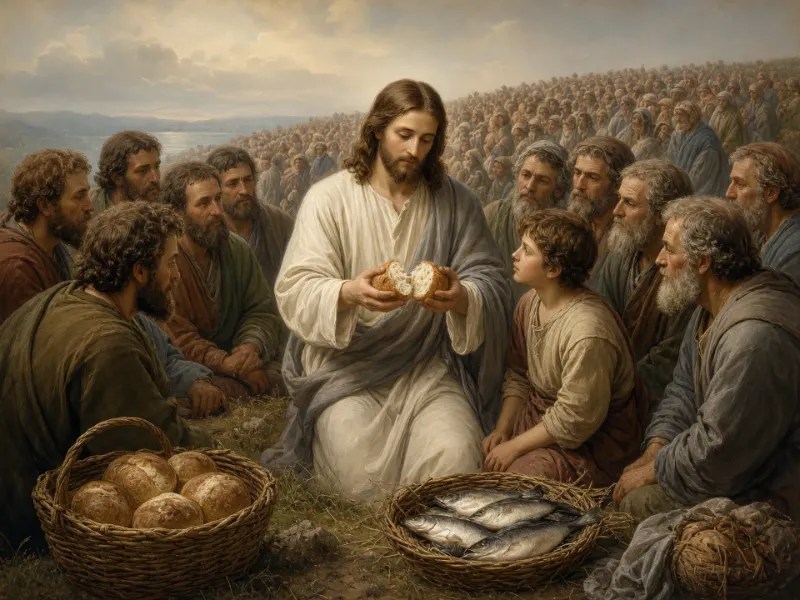
It is easy to hear the verse as a guarantee that we will succeed at whatever we attempt. Paul’s own list will not let us, because it includes going hungry and suffering need, and he says Christ carried him through both. John Chrysostom, in his fifteenth homily on Philippians, noticed how quickly Paul turns from his own record to Christ: “The success is not my own, but His who has given me strength.”
Paul knew weakness well. He had been beaten with rods three times, stoned once and shipwrecked three times, “in hunger and thirst, in fastings often, in cold and nakedness” (2 Corinthians 11:25–27). The Lord had told him, “My grace is sufficient for thee: for my strength is made perfect in weakness,” and Paul had learned to say, “when I am weak, then am I strong” (2 Corinthians 12:9–10). Philippians 4:13 says the same thing: the strength Paul has is Christ’s, given to him in his weakness. Jesus put it in a single line: “without me ye can do nothing” (John 15:5).
This is how many of God’s promises in the Bible read when we keep them in their settings. They promise his presence and his strength in our circumstances, whatever those turn out to be.

How can I apply Philippians 4:13 to my life?
Paul says twice that he learned this (Philippians 4:11–12). Contentment did not come to him all at once, and it need not come to us all at once. We learn it where our lives actually take us: the lean month, the diagnosis, the door that will not open, and the good year too, which tests us in its own way. Chrysostom saw that plenty needs Christ’s strength as much as want does: “For as want inclines us to do many evil things, so too does plenty.” So the verse belongs to the full season as much as the empty one, and so does the abundant life Jesus came to give, which is lived with him in both.
The lines just before it show us the way in. “Be careful for nothing; but in every thing by prayer and supplication with thanksgiving let your requests be made known unto God. And the peace of God, which passeth all understanding, shall keep your hearts and minds through Christ Jesus” (Philippians 4:6–7). We bring the need to God, we thank him for what is already in our hands, and we let his peace keep watch over us. When the strength comes, it comes as it came to Paul, enough for the day. More of Scripture’s words on it are gathered in 18 Bible verses about strength and being strong in the Lord.
He ends the passage by turning the promise toward his friends. They had given out of their own need, and he answers them: “But my God shall supply all your need according to his riches in glory by Christ Jesus” (Philippians 4:19).


Leave a Reply