
 English
 Chinese
 Dutch
 Arabic
 Spanish
 Portuguese
 Russian
 French
 Italian
 German
 Japanese
The Bible has no phrase for negative thoughts, but it tells believers what to dwell on and how to answer a downcast mind. Paul points to whatever is true and noble (Philippians 4:8) and to a mind renewed (Romans 12:2). The psalmists question their own downcast souls (Psalm 42:5) and ask God to test their anxious thoughts (Psalm 139:23-24).
Bible verses for anxious thoughts and a downcast heart
Jesus tells his hearers not to worry about tomorrow (Matthew 6:34). Two of the verses have other settings: 2 Corinthians 10:5 belongs to Paul’s dispute with opponents in Corinth, and 2 Timothy 1:7 to Timothy’s courage in his ministry.
What the mind is told to dwell on
Philippians 4:8
“Finally, brothers and sisters, whatever is true, whatever is noble, whatever is right, whatever is pure, whatever is lovely, whatever is admirable—if anything is excellent or praiseworthy—think about such things.”
Reflection: The list closes a run of instructions that begins with “Rejoice in the Lord always” (verse 4) and includes the command to bring every anxiety to God in prayer (verses 6-7). Paul names six qualities to think about, then two broader tests, “excellent or praiseworthy”; the verse gives no list of thoughts to avoid. The next verse turns thinking into practice, “Whatever you have learned or received or heard from me, or seen in me—put it into practice,” and ends with the promise that “the God of peace will be with you.”

Romans 12:2
“Do not conform to the pattern of this world, but be transformed by the renewing of your mind. Then you will be able to test and approve what God’s will is—his good, pleasing and perfect will.”
Reflection: Paul’s appeal opens chapter 12 and rests on what verse 1 calls “God’s mercy.” The change he describes comes “by the renewing of your mind,” and its result is the ability to “test and approve” God’s will. Verse 3 applies the renewed mind straight away to how a person regards himself: “think of yourself with sober judgment, in accordance with the faith God has distributed to each of you.”
Ephesians 4:22-24
“You were taught, with regard to your former way of life, to put off your old self, which is being corrupted by its deceitful desires; to be made new in the attitude of your minds; and to put on the new self, created to be like God in true righteousness and holiness.”
Reflection: Paul sets these verses against the Gentiles’ “futility of their thinking” and darkened understanding (verses 17-18). He describes the change as putting off an old self and putting on a new one, and between the two stands the instruction “to be made new in the attitude of your minds.” Verse 25 gives the first application, which concerns speech: “each of you must put off falsehood and speak truthfully to your neighbor.”

2 Corinthians 10:5
“We demolish arguments and every pretension that sets itself up against the knowledge of God, and we take captive every thought to make it obedient to Christ.”
Reflection: Paul is answering people in Corinth “who think that we live by the standards of this world” (verse 2), and he quotes the charge that he is “timid” face to face and “bold” when away (verse 1). The arguments he demolishes are those set up “against the knowledge of God,” and verse 6 moves straight on to punishing “every act of disobedience” in the church. In the chapter, taking every thought captive belongs to that dispute with Paul’s opponents.
Thoughts laid open before God

Psalm 139:23-24
“Search me, God, and know my heart; test me and know my anxious thoughts. See if there is any offensive way in me, and lead me in the way everlasting.”
Reflection: The psalm opens with God’s knowledge already complete: “You have searched me, Lord, and you know me… you perceive my thoughts from afar” (verses 1-2). At the close the psalmist invites that search, and names “my anxious thoughts” among the things God is to test. He asks to be shown “any offensive way” in himself and to be led “in the way everlasting.”
Hebrews 4:12
“For the word of God is alive and active. Sharper than any double-edged sword, it penetrates even to dividing soul and spirit, joints and marrow; it judges the thoughts and attitudes of the heart.”
Reflection: The verse before it urges readers to “make every effort to enter that rest, so that no one will perish by following their example of disobedience.” The word of God is described as judging “the thoughts and attitudes of the heart,” and verse 13 adds that “nothing in all creation is hidden from God’s sight.” In its setting the verse is a warning to those who hear God’s word and disobey it.
Psalm 19:14
“May these words of my mouth and this meditation of my heart be pleasing in your sight, Lord, my Rock and my Redeemer.”
Reflection: The verses just before this prayer concern faults a person cannot see: “But who can discern their own errors? Forgive my hidden faults” (verse 12). The psalmist asks that both his words and “this meditation of my heart” be pleasing to God, whom he calls his Rock and Redeemer. The King James Version has “acceptable in thy sight” where the NIV has “pleasing in your sight.”
Speaking to a downcast soul

Psalm 42:5
“Why, my soul, are you downcast? Why so disturbed within me? Put your hope in God, for I will yet praise him, my Savior and my God.”
Reflection: The psalmist speaks to himself, asking his own soul why it is downcast and telling it to “put your hope in God.” The psalm gives the reasons for the gloom: tears “day and night” while people ask “Where is your God?” (verse 3), and the memory of going to the house of God “among the festive throng” (verse 4). Between this verse and the refrain’s return in verse 11 stands the complaint “Why have you forgotten me?” (verse 9), and the refrain comes back once more in Psalm 43:5.

Lamentations 3:21-23
“Yet this I call to mind and therefore I have hope: Because of the Lord’s great love we are not consumed, for his compassions never fail. They are new every morning; great is your faithfulness.”
Reflection: The speaker has just recited his affliction, “the bitterness and the gall,” and says “my soul is downcast within me” (verses 19-20). Verse 21 turns on a deliberate act of memory: “this I call to mind.” What he recalls is the Lord’s love and compassion, and verse 24 records what he then says to himself: “The Lord is my portion; therefore I will wait for him.”

Psalm 30:5
“For his anger lasts only a moment, but his favor lasts a lifetime; weeping may stay for the night, but rejoicing comes in the morning.”
Reflection: The psalm praises God for lifting the psalmist “out of the depths” and healing him (verses 1-2). He admits he once said “I will never be shaken,” and that when God hid his face he was dismayed (verses 6-7). Verse 5 sets a night of weeping against morning rejoicing, and verse 11 describes the change as it happened to him: “You turned my wailing into dancing.”
Worry and fear
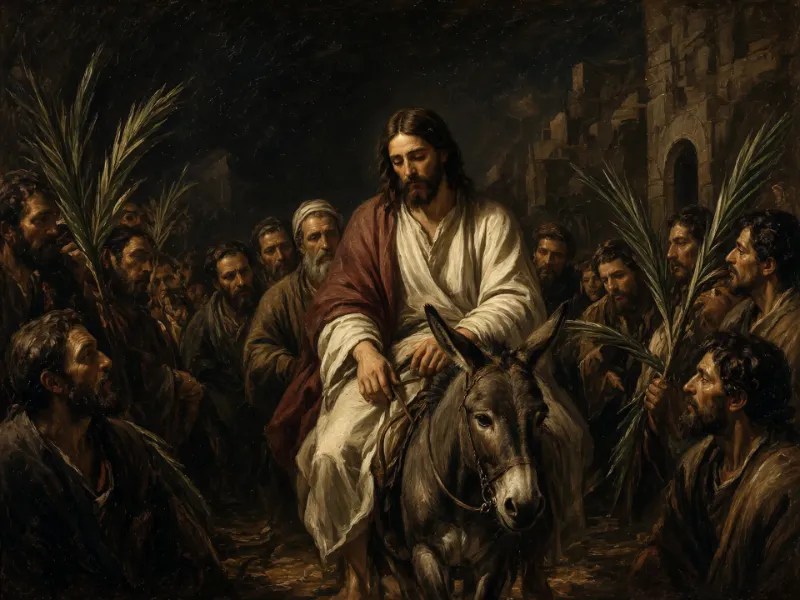
Philippians 4:6-7
“Do not be anxious about anything, but in every situation, by prayer and petition, with thanksgiving, present your requests to God. And the peace of God, which transcends all understanding, will guard your hearts and your minds in Christ Jesus.”
Reflection: These verses follow the line “The Lord is near” (verse 5) and come just before the list of things to think about in verse 8. Anxiety is met with prayer, petition and thanksgiving, and the promised result is the peace of God guarding “your hearts and your minds in Christ Jesus.” Paul promises that peace; he does not say the requests will be granted as made.

Matthew 6:34
“Therefore do not worry about tomorrow, for tomorrow will worry about itself. Each day has enough trouble of its own.”
Reflection: The verse closes a section of the Sermon on the Mount in which Jesus tells his hearers not to worry about food, drink or clothes, pointing to the birds the Father feeds and the flowers he clothes (verses 25-30). Just before it he says, “seek first his kingdom and his righteousness, and all these things will be given to you as well” (verse 33). The closing line leaves tomorrow’s trouble to tomorrow: “Each day has enough trouble of its own.”

John 14:27
“Peace I leave with you; my peace I give you. I do not give to you as the world gives. Do not let your hearts be troubled and do not be afraid.”
Reflection: Jesus is preparing his disciples for his departure: “I am going away and I am coming back to you” (verse 28). The verse before promises the Holy Spirit, who “will remind you of everything I have said to you” (verse 26). The peace Jesus leaves is set against what “the world gives,” and it comes with a command: “Do not let your hearts be troubled and do not be afraid.”

Isaiah 41:10
“So do not fear, for I am with you; do not be dismayed, for I am your God. I will strengthen you and help you; I will uphold you with my righteous right hand.”
Reflection: God speaks to Israel as the servant he has chosen. Israel has enemies who wage war against it (verse 12). In verse 13 God describes how close he is to the people who fear them: he takes hold of their right hand.

Isaiah 35:4
“say to those with fearful hearts, “Be strong, do not fear; your God will come, he will come with vengeance; with divine retribution he will come to save you.”
Reflection: Isaiah tells his hearers what to say to people whose hearts are fearful. Speaking to them belongs with the work of steadying “the knees that give way” in verse 3. The reason he gives them for courage is that God himself will come to save them.

Psalm 27:1
“The Lord is my light and my salvation— whom shall I fear? The Lord is the stronghold of my life— of whom shall I be afraid?”
Reflection: David asks twice whom he has reason to fear when the Lord protects him. In verse 3 he imagines an army surrounding him and says that even then “my heart will not fear.”
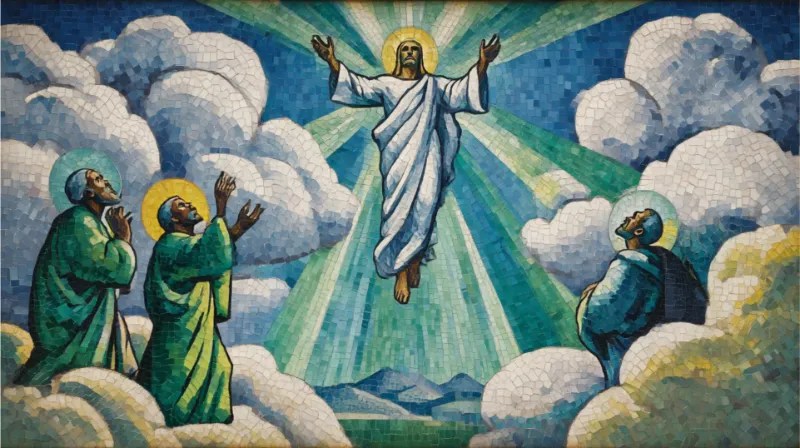
2 Timothy 1:7
“For the Spirit God gave us does not make us timid, but gives us power, love and self-discipline.”
Reflection: Paul writes to Timothy recalling his tears (verse 4) and the faith that lived first in his grandmother Lois and mother Eunice (verse 5), and reminds him to “fan into flame the gift of God” (verse 6). Timidity is set against power, love and self-discipline, and the next verse applies the point to Timothy’s ministry: “do not be ashamed of the testimony about our Lord or of me his prisoner.” The King James Version renders the last of the three qualities “a sound mind.”
Help from other people

Ecclesiastes 4:9-10
“Two are better than one, because they have a good return for their labor: If either of them falls down, one can help the other up. But pity anyone who falls and has no one to help them up.”
Reflection: The Teacher has just described a man “all alone” with “neither son nor brother,” toiling without end and asking “For whom am I toiling?” (verse 8). These verses set two people against that one: when one falls, the other can help him up. Verse 11 adds that two lying down together “will keep warm.”

1 Thessalonians 5:11
“Therefore encourage one another and build each other up, just as in fact you are doing.”
Reflection: Paul has been writing about believers who have died and about the Lord’s coming, and he ended that section with “encourage one another with these words” (4:18). He repeats the instruction here after telling the church that “God did not appoint us to suffer wrath but to receive salvation” (verse 9). He adds that they are already doing it.
Praying these verses as written
Psalm 139:23-24 and Psalm 19:14 are prayers addressed to God and can be prayed as written. In Psalm 42:5 and Lamentations 3:21-24 the speaker talks to himself: he asks his soul why it is downcast, or calls the Lord’s love to mind and says, “The Lord is my portion.”


Leave a Reply