
 English
 Chinese
 Dutch
 Arabic
 Spanish
 Portuguese
 Russian
 French
 Italian
 German
 Japanese
The Bible’s names for what we call space are “the heavens” and “the skies”. It treats the sun, moon and stars as things God made and named. Psalm 19:1 says the heavens declare his glory, Genesis 1:14 sets lights in the sky to mark days and years, and Isaiah 40:26 and Psalm 147:4 say God calls each star by name.
The sky also appears as a sign: the Magi come to Jerusalem because they saw a star rise (Matthew 2:2), and Jesus speaks of signs in the sun, moon and stars before his return (Luke 21:25). The prophets and apostles look ahead to “new heavens and a new earth” (Isaiah 65:17; 2 Peter 3:13; Revelation 21:1). In Job 38:31-32 God asks Job whether he can move the Pleiades and Orion.
What the sky shows about the God who made it
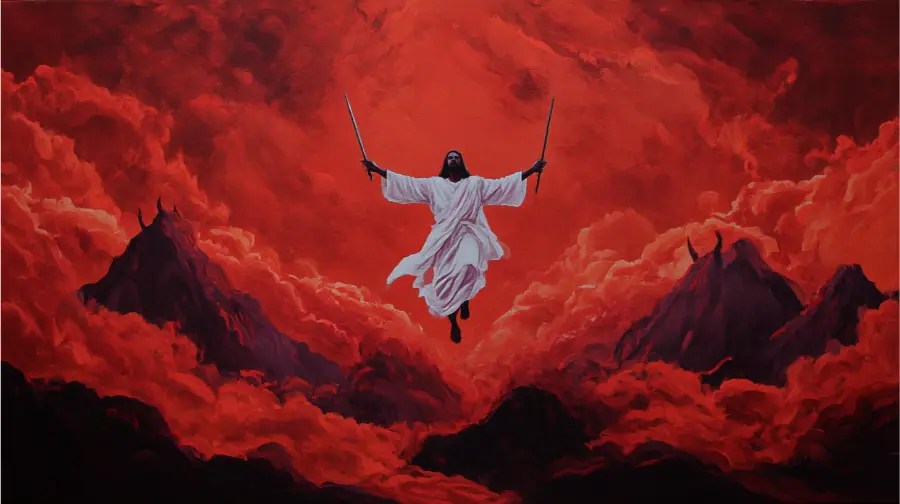
Psalm 19:1
“The heavens declare the glory of God; the skies proclaim the work of his hands.”
Reflection: David’s psalm opens with the sky as a witness that speaks without words: “They have no speech, they use no words; no sound is heard from them. Yet their voice goes out into all the earth” (verses 3-4). The following verses describe the sun running its course from one end of the heavens to the other. From verse 7 the psalm turns to “the law of the Lord”, which it calls perfect, “refreshing the soul.”
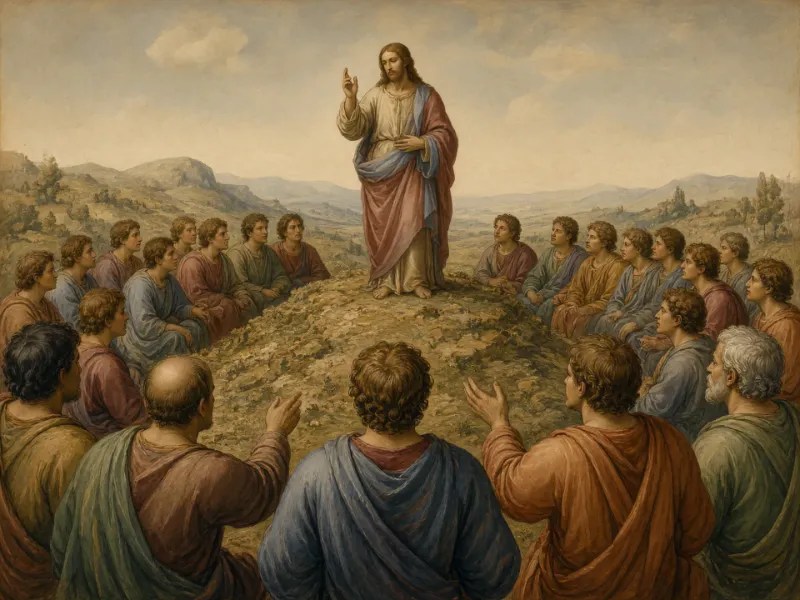
Romans 1:20
“For since the creation of the world God’s invisible qualities—his eternal power and divine nature—have been clearly seen, being understood from what has been made, so that people are without excuse.”
Reflection: Paul makes a claim close to Psalm 19, but uses it as evidence against people. Verses 18-19 say God’s wrath is revealed against those “who suppress the truth by their wickedness”, because what may be known about God “is plain to them”. Creation shows his “eternal power and divine nature”, and verse 21 names the failure: they knew God but “neither glorified him as God nor gave thanks to him.”
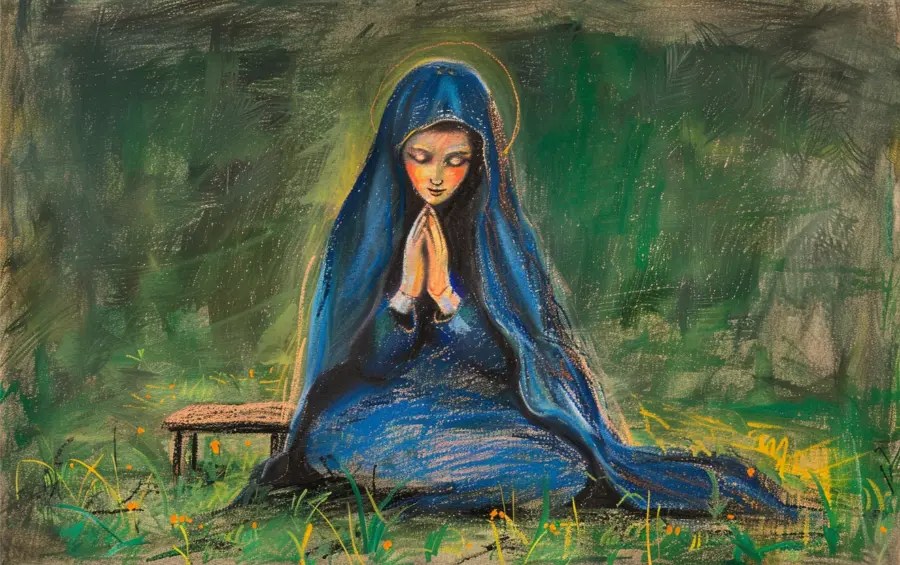
Psalm 8:3-4
“When I consider your heavens, the work of your fingers, the moon and the stars, which you have set in place, what is mankind that you are mindful of them, human beings that you care for them?”
Reflection: The psalm is addressed to God and opens and closes with the same line: “Lord, our Lord, how majestic is your name in all the earth!” Looking at the moon and stars, David asks why God pays attention to human beings at all. Verses 5-8 answer that God made them “a little lower than the angels” and put the flocks, the wild animals, the birds and the fish under their rule.
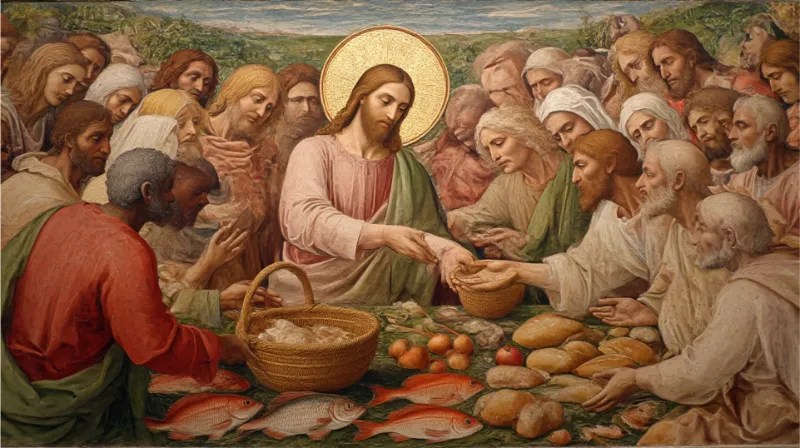
Nehemiah 9:6
“You alone are the LORD. You made the heavens, even the highest heavens, and all their starry host, the earth and all that is on it, the seas and all that is in them. You give life to everything, and the multitudes of heaven worship you.”
Reflection: The Levites speak these words to God on a day of fasting and confession, after the people had spent a quarter of the day reading the Book of the Law (verses 1-3). After the opening blessing in verse 5, “Blessed be your glorious name”, the prayer turns to creation, listing “the highest heavens, and all their starry host” before the earth and the seas. It then goes on to God’s choice of Abram (verse 7).
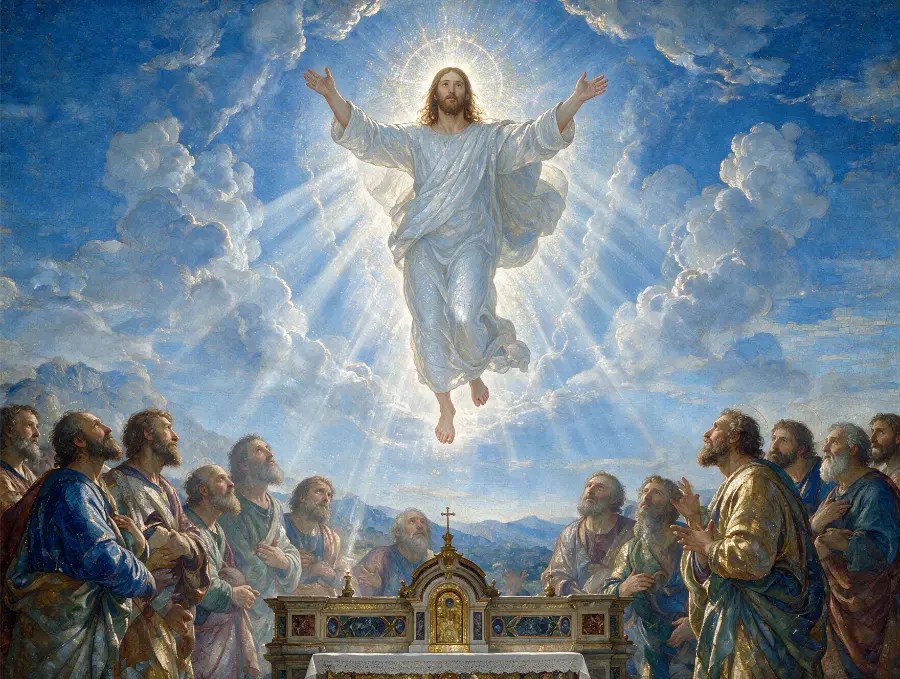
Colossians 1:17
“He is before all things, and in him all things hold together.”
Reflection: Paul is writing about the Son, “the image of the invisible God” (verse 15). Verse 16 says that in him “all things were created: things in heaven and on earth, visible and invisible”. Verse 17 adds that he existed before all of it and that it holds together in him.
Stars counted and named
Isaiah 40:26
“Lift up your eyes and look to the heavens: Who created all these? He who brings out the starry host one by one and calls forth each of them by name. Because of his great power and mighty strength, not one of them is missing.”
Reflection: God has just asked, “To whom will you compare me?” (verse 25), and the answer points to the night sky: he brings out the starry host one by one, calls each by name, and loses none. Verse 27 asks Israel why it says, “My way is hidden from the Lord; my cause is disregarded by my God”, and verse 28 replies, “The Lord is the everlasting God, the Creator of the ends of the earth. He will not grow tired or weary.”
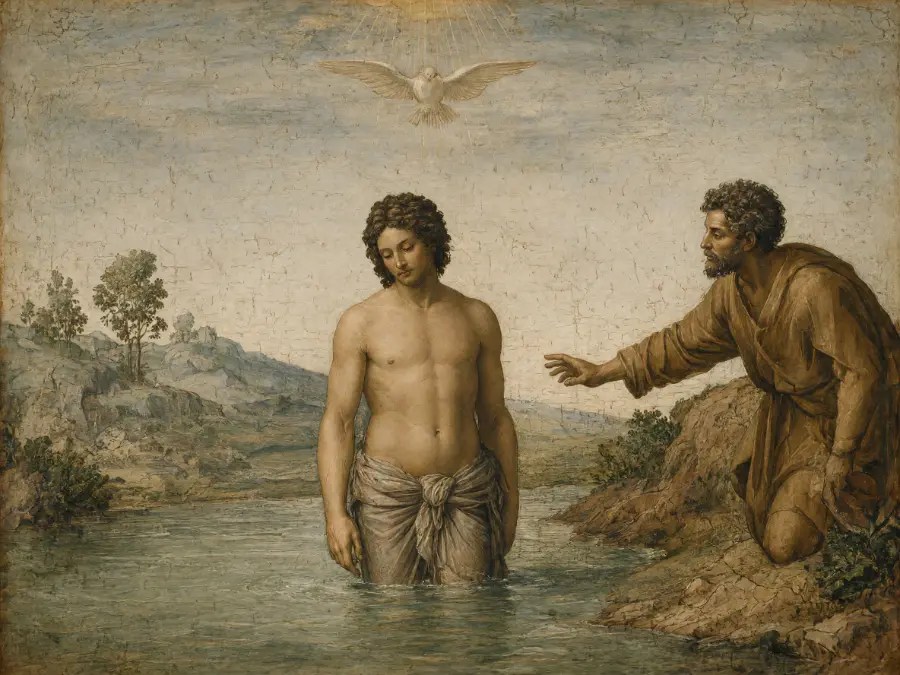
Psalm 147:4
“He determines the number of the stars and calls them each by name.”
Reflection: Verse 3 says God “heals the brokenhearted and binds up their wounds”, and verse 4 says he fixes the number of the stars and names each one. The psalm puts the two side by side. Verse 2 names what the Lord is doing for Israel: he “builds up Jerusalem; he gathers the exiles of Israel.”
Genesis 15:5
“He took him outside and said, ‘Look up at the sky and count the stars—if indeed you can count them.’ Then he said to him, ‘So shall your offspring be.’”
Reflection: Abram has complained that he has no son and that a servant from his household will inherit everything (verses 2-3). God takes him outside and tells him to count the stars, then promises that his offspring will be as many. Verse 6 records Abram’s response: “Abram believed the Lord, and he credited it to him as righteousness”, a verse Paul quotes in Romans 4:3.
Job 9:9-10
“He is the Maker of the Bear and Orion, the Pleiades and the constellations of the south. He performs wonders that cannot be fathomed, miracles that cannot be counted.”
Reflection: Job is speaking, answering his friend Bildad. He does not dispute God’s power; his complaint in verses 2-3 is that no mortal can win an argument with a God this great. The Bear, Orion and the Pleiades are named as God’s work alongside the sun he can tell not to shine (verse 7).

Job 38:31-32
“Can you bind the chains of the Pleiades? Can you loosen Orion’s belt? Can you bring forth the constellations in their seasons or lead out the Bear with its cubs?”
Reflection: God now speaks to Job “out of the storm” (verse 1), and names some of the same constellations Job listed in chapter 9. The questions are about control: Job cannot bind the Pleiades, loosen Orion or lead out the Bear. Verse 33 follows with “Do you know the laws of the heavens?” Earlier in the same speech God says the morning stars sang together when he laid the earth’s foundation (verse 7).
The height and order of the heavens
Isaiah 40:22
“He sits enthroned above the circle of the earth, and its people are like grasshoppers. He stretches out the heavens like a canopy, and spreads them out like a tent to live in.”
Reflection: This verse sits in the same chapter as Isaiah 40:26. God is above “the circle of the earth”, and from that height its people look like grasshoppers. He stretches out the heavens “like a tent to live in”. The next two verses apply the point to rulers: he “brings princes to naught”, and they wither as soon as he blows on them.

Job 22:12
“Is not God in the heights of heaven? And see how lofty are the highest stars!”
Reflection: Eliphaz the Temanite speaks here, and he uses the height of the stars against Job. In verses 13-14 he puts words in Job’s mouth: “What does God know? Does he judge through such darkness?” In Job 42:7 God tells Eliphaz that he is angry with him and his two friends, “because you have not spoken the truth about me, as my servant Job has.”
Genesis 1:14
“And God said, ‘Let there be lights in the vault of the sky to separate the day from the night, and let them serve as signs to mark sacred times, and days and years…’”
Reflection: On the fourth day God makes the lights in “the vault of the sky” and gives them work to do: to divide day from night, to mark sacred times, days and years, and to give light on the earth (verse 15). Verse 16 names the sun and moon as “the greater light” and “the lesser light” and adds, “He also made the stars.” Verse 18 ends, “And God saw that it was good.”
Jeremiah 31:35
“This is what the LORD says, he who appoints the sun to shine by day, who decrees the moon and stars to shine by night, who stirs up the sea so that its waves roar— the LORD Almighty is his name.”
Reflection: This verse follows the promise of a new covenant written on the heart (verses 31-34). God points to the fixed order of the sun, moon and stars as a pledge: “Only if these decrees vanish from my sight,” he says in verse 36, “will Israel ever cease being a nation before me.” Verse 37 uses the heavens again: only if they “can be measured” will God reject Israel’s descendants.
Stars as signs and comparisons
Matthew 2:2
“‘Where is the one who has been born king of the Jews? We saw his star when it rose and have come to worship him.’”
Reflection: The Magi arrive in Jerusalem during Herod’s reign asking where the king of the Jews has been born, because they saw “his star when it rose”. Matthew does not say what the star was. He says it went ahead of them from Jerusalem “until it stopped over the place where the child was”, and that when they saw it they were overjoyed (verses 9-10).
Luke 21:25
“There will be signs in the sun, moon and stars. On the earth, nations will be in anguish and perplexity at the roaring and tossing of the sea.”
Reflection: Jesus is answering his disciples, who have asked when the temple will be thrown down and what sign will come first (verses 5-7). Verse 26 says “the heavenly bodies will be shaken”, and verse 27 says they will then “see the Son of Man coming in a cloud with power and great glory.” He tells his followers in verse 28 to “stand up and lift up your heads” when these things begin, “because your redemption is drawing near.”
1 Corinthians 15:41
“The sun has one kind of splendor, the moon another and the stars another; and star differs from star in splendor.”
Reflection: Paul is answering the question “How are the dead raised? With what kind of body will they come?” (verse 35). He points out that the sun, the moon and each star have their own splendor, and verse 42 applies it: “So will it be with the resurrection of the dead. The body that is sown is perishable, it is raised imperishable.”
New heavens and a new earth
Isaiah 65:17
“See, I will create new heavens and a new earth. The former things will not be remembered, nor will they come to mind.”
Reflection: God announces a new creation in which “the former things will not be remembered”. The verses that follow center on Jerusalem, where “the sound of weeping and of crying will be heard in it no more” (verse 19). Isaiah 66:22 returns to the promise: the new heavens and new earth “will endure before me”.
2 Peter 3:13
“But in keeping with his promise we are looking forward to a new heaven and a new earth, where righteousness dwells.”
Reflection: Peter is answering scoffers who say that “everything goes on as it has since the beginning of creation” (verse 4). Verse 10 says the heavens “will disappear with a roar” and the elements will be destroyed by fire. Verse 13 speaks of the new heaven and earth “in keeping with his promise”, and describes them as the place “where righteousness dwells”.
Revelation 21:1
“Then I saw ‘a new heaven and a new earth,’ for the first heaven and the first earth had passed away, and there was no longer any sea.”
Reflection: John’s vision puts the words “a new heaven and a new earth” in quotation marks in the NIV, marking them as drawn from Isaiah 65:17. In the following verses John sees the new Jerusalem come down out of heaven, and a voice says, “God’s dwelling place is now among the people” (verse 3). Verse 4 says there will be no more death, mourning, crying or pain.


Leave a Reply