
 English
 Chinese
 Dutch
 Arabic
 Spanish
 Portuguese
 Russian
 French
 Italian
 German
 Japanese
For Christians, the Christmas tree stands for the life Christ brings. It stays green through the winter, it recalls the tree of life in Eden and the wood of the cross, and its lights point to Christ, the light of the world. A citizen of Strasbourg described the first one we know of in a family’s parlour, in 1605.
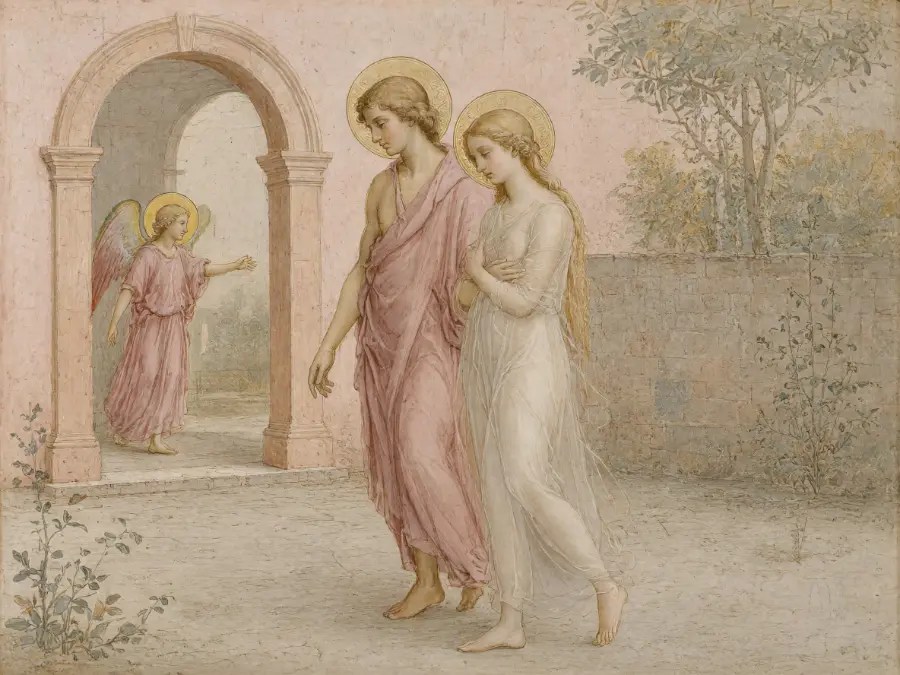
From parlours like that one the custom travelled, household by household, all the way to St Peter’s Square. The Catholic bishops of the United States trace it further back still, to a tree on the first pages of Scripture. Eden had two trees at its heart, “the tree of life also in the midst of the garden, and the tree of knowledge of good and evil” (Genesis 2:9), and Adam and Eve reached for the second and lost the way to the first. In the old church calendars 24 December was their day, the eve of the birth of the Child who came to restore what they lost. The religious plays of the Middle Ages set the tree of paradise before the people, and the bishops write of our tree: “Its origins are found in the medieval mystery plays that depicted the tree of paradise and the Christmas light or candle that symbolized Christ, the Light of the world.” In their telling, the tree in our front rooms begins as a memory of the garden we lost.
What does the Christmas tree mean to Christians?
Every winter the fir keeps its needles while the trees around it stand bare, and Christians have long seen in that green the life that winter cannot kill. Pope John Paul II said so at the Angelus on the Fourth Sunday of Advent, 19 December 2004: “in the winter season the evergreen fir becomes a sign of undying life.” He went on to the tree of life in Eden, “a figure of Christ, God’s supreme gift to humanity”, and then he drew from the green branches a lesson for every one of us: “life stays ‘evergreen’ if we make a gift of it.”
The wood carries a second meaning, because the New Testament calls the cross a tree. Peter writes of Christ, “Who his own self bare our sins in his own body on the tree, that we, being dead to sins, should live unto righteousness” (1 Peter 2:24). The old Passiontide hymn Pange lingua speaks to the cross as though it could hear: “Faithful Cross! above all other, One and only noble tree!” So the story that went wrong at a tree in Eden is put right on a tree at Calvary, and the Catholic household blessing for a Christmas tree asks that “this tree of lights may remind us of the tree of glory on which Christ accomplished our salvation.” Prayed over that way, the tree we dress each December becomes a reminder of the cross.
Candles reached the branches later than the paper roses and the apples, and they gave the tree the meaning most of us know best. “I am the light of the world,” Jesus says; “he that followeth me shall not walk in darkness, but shall have the light of life” (John 8:12). A tree lit in the longest nights of the year says what John says of the Word made flesh: “the light shineth in darkness; and the darkness comprehended it not” (John 1:5). The star on top recalls the star the wise men followed, and the angels on the branches recall the angels who brought the news to the shepherds.
Where did the Christmas tree come from?
The oldest firm records of the Christmas tree come from German-speaking towns in the 1500s and 1600s, many of them in Alsace, on the Upper Rhine. In Sélestat the town’s account book for 1521 records four schillings paid to foresters to guard the trees on St Thomas’s day, 21 December. The entry names no decorations, so we cannot see the trees themselves. The town reads it as a sign that people were already going out on that day to cut firs and decorate them, and we can still see the town in its own accounts, paying men to watch its woods four days before Christmas.
The first tree we can see inside a house stood in Strasbourg in 1605. An unnamed citizen of the city wrote that at Christmas “they set up fir-trees in the parlours at Strasburg and hang thereon roses cut out of many-coloured paper, apples, wafers, gold-foil, sweets.” We do not know his name, but anyone who has dressed a tree with children will know his list. Nearly everything on it could be cut out at the kitchen table or eaten when the evening was over.
Johann Konrad Dannhauer, who preached at Strasbourg Cathedral, did not like these trees at all. In the middle of the 1600s he called them “child’s play” and wrote, “Far better were it to point the children to the spiritual cedar-tree, Jesus Christ.” The children won that argument, and his wish came true by another road. Ezekiel heard God promise a cedar of his own planting: “I will crop off from the top of his young twigs a tender one, and will plant it upon an high mountain and eminent” (Ezekiel 17:22). That is the passage the Catholic blessing now offers as a reading over the Christmas tree, so the cedar the preacher wanted the children to see is read aloud beside the tree he complained of.
| Year | Place | What the record says | How sure |
|---|---|---|---|
| 1419 | Freiburg | Bakers’ apprentices note a tree hung with apples and wafers | Doubted: firm evidence starts in 1625 |
| 1441 | Tallinn | The Blackheads, a merchants’ guild, set up a tree for a dance | Disputed: the word may mean a pole |
| 1510 | Riga | The Blackheads set up a tree, then burn it; one account says it was for the winter solstice | A civic claim, unproven |
| 1521 | Sélestat | Foresters paid to guard trees on 21 December | Recorded; no decorations named |
| 1570 | Bremen | A guild hall tree with apples, nuts and paper flowers | Recorded |
| 1605 | Strasbourg | Fir trees in family parlours, hung with paper roses, apples and wafers | Recorded: the first home tree |
| 1737 | Germany | Candles lit around children’s trees | Recorded |
| 1848 | England | The royal family’s tree in the Illustrated London News | Recorded |
| 1982 | Rome | The first tree in St Peter’s Square | Recorded |
If you look these dates up, you will find the oldest ones offered with the most confidence, and they are the weakest of all. The scholar Klaus Graf finds firm evidence at Freiburg only from 1625, the Tallinn record uses a word that may mean a pole, and the Riga date is the city’s own claim. Even if they held, a guild’s tree in a public square is not yet a family’s tree in a parlour, and the parlour tree is the one most of us mean when we say “Christmas tree”.
Was the first Christmas tree in Riga or Tallinn?
Both cities claim the first Christmas tree, and neither can prove it. Tallinn points to 1441 and Riga to 1510, and both give the honour to the same guild, the Brotherhood of Blackheads, merchants who kept a house in each city. Bernd Brunner, in his book Inventing the Christmas Tree, notes that the Tallinn record is unclear, because the Middle Low German word it uses, bom, could also mean a decorated mast or pole. Riga marks its spot with a plaque, and yet its mayor said in 2015, “Honestly speaking, we have no idea when precisely the first Christmas tree was decorated in Riga.” We can be grateful to a mayor who would say that beside his own city’s plaque. It leaves the first trees we can date with confidence where the records put them, in the German towns of the 1500s and 1600s.
How were the first Christmas trees decorated?
Look again at the Strasbourg list of 1605 and you have the first decorations: paper roses, apples, wafers, gold foil and sweets, things to eat and things that shone. The tree was there to be emptied as well as admired. In Bremen in 1570 the guild let the children shake their tree as they would shake a fruit tree at harvest, and Dannhauer’s Strasbourg neighbours hung dolls on theirs as well as sweets, and afterwards shook it and stripped it.
Candles enter the records in 1737, when Kissling, a scholar of the University of Wittenberg, described a country lady who set up a little tree for each of her children, lit candles on or around the trees and laid their presents underneath. Most of what we still do on Christmas Eve is in that one sentence: the tree, the candles and the presents waiting beneath. By Queen Victoria’s day the branches held candles and artificial snow, and the queen wrote in her journal of her seven children “jumping & shouting with joy over their toys & other presents.” A German country lady and a queen of England, generations apart, kept the same evening for their children.
How did the Christmas tree spread?
Through the 1700s the tree spread first among Protestants, and German writers began to mention it, Goethe and Schiller among them. By about 1800 it seems to have been fairly common in German homes, though it was slow to take hold in Catholic regions, and in the countryside of Old Bavaria it was still unknown in 1855. The custom that Protestants carried first is now blessed in Catholic homes, with a rite the Catholic bishops of the United States provide, and we can take that as a small sign of how much Christians share.
By 1830 the tree was known in Denmark and Norway, and royal households carried it further. Princess Helene of Mecklenburg brought it to Paris in 1840. In England, Queen Charlotte, the German wife of George III, brought the custom from her native Germany and set up a yew late in the 1700s, so England had a royal tree before it had a popular one. Queen Victoria and Prince Albert had a Christmas tree in 1840, and in 1848 the Illustrated London News printed an engraving of the royal family gathered round theirs, which the Royal Collection Trust credits with “inspiring households across the country.” What a palace custom had not done, one picture in a newspaper did.
Until 1982 there was no Christmas tree in the Vatican. That year a Polish farmer brought one all the way to Rome as a gift for Pope John Paul II, and since then a tree has stood every Christmas in St Peter’s Square, beside the nativity scene. From the Strasbourg parlours of 1605 to St Peter’s Square took 377 years, and the last step was a farmer’s gift. A custom that began in the homes of ordinary Christians was carried into the heart of the Church by one of them.
Did Saint Boniface or Martin Luther start the Christmas tree?
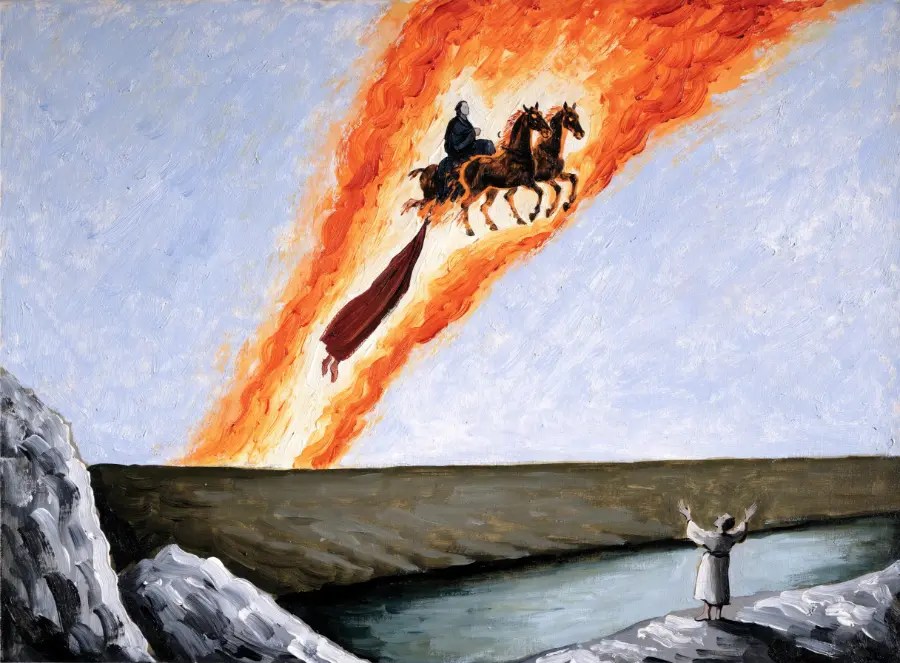
Neither man started it, though both stories are told every December, and the oldest account of Boniface turns out to be stranger than the version usually retold. Willibald wrote the first life of Boniface in the eighth century. He tells how the missionary began to cut down a great oak, called the Oak of Jupiter, at a place Willibald calls Gaesmere, and how a wind from above brought it down in four pieces, and how Boniface built an oratory of St Peter from its timber. There is no fir tree in Willibald’s story, and it hardly needs one: a wind from above finishing what the axe began, and a chapel built from the fallen wood, is wonder enough. The fir comes from later retellings, best known in Henry van Dyke’s 1897 story The First Christmas Tree, where Boniface points to a young fir among the ruins of the oak and names it the tree of the Christ-child.
The Luther story says that the reformer, walking home under the stars one Christmas Eve, set candles on a tree to show his children the night sky. No record from Luther’s own time ties him to a tree. The familiar picture of Luther with his family round a lighted tree comes from an engraving by Carl August Schwerdgeburth dated 1843. The Landesmuseum Württemberg, which holds a later print of the scene, says the picture served Protestant families as a model of how Christmas should look, and adds that Christmas in Luther’s time most likely looked different. We can love the picture and still see what it is: Christmas as families of the 1800s hoped to keep it, with Luther in the middle of it.
Is the Christmas tree pagan?
Nothing in the records joins the Christmas tree to a pagan rite. Long before any of these trees, households across the Roman world put up greenery for the New Year, and that custom is older than the tree and stands apart from it. The first decorated trees we can date with confidence stood in Christian towns: the guild hall tree in Bremen in 1570, hung with apples, nuts and paper flowers, and the parlour firs a citizen of Strasbourg saw at Christmas in 1605. Sélestat’s payment to its foresters in 1521 is an earlier hint, though its entry names no decorations. If the charge has troubled you, the case for a pagan root and the evidence against it are weighed in are Christmas trees pagan?
Is the Christmas tree in the Bible?
The Bible never mentions the Christmas tree, and no verse forbids it. The tree in Jeremiah 10:3–5, which people often quote,, cut from the forest and decked “with silver and with gold,” is an idol a workman carved, and the prophet’s whole passage is read in is the Christmas tree in the Bible?
Is a Christmas tree a religious symbol?
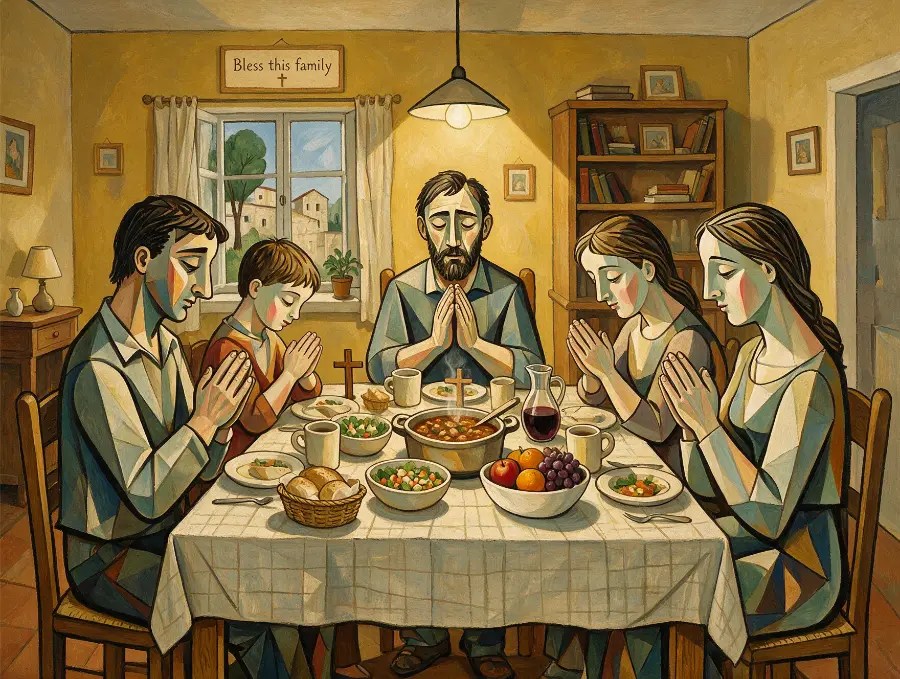
For many Christians it is, and the Church gives them the words to make it one. In some homes the tree is a lovely thing to have in December and no more; in others it is blessed and prayed over. The Catholic rite, which a parent or another family member may lead on Christmas Eve or Christmas Day, asks that “all who delight in this tree come to the knowledge and joy of salvation.” Some Christians keep no tree at all, out of conscience.
The Vatican’s Directory on Popular Piety and the Liturgy, issued in 2001, asks one more thing of the families who do keep one: “among the gifts placed under the tree, something should be included for the poor since they belong to every Christian family”. That is John Paul II’s lesson of the evergreen, set down on the floor where the presents go.
When Adam and Eve were sent out of Eden, God set cherubim at the east of the garden “to keep the way of the tree of life” (Genesis 3:24). The Child whose birth the Church keeps the night after Adam and Eve’s day came to open that way again, and the tree we light in our own homes, green through the winter, says every evening that the way is open still. The last book of the Bible promises the tree to everyone who overcomes, “the tree of life, which is in the midst of the paradise of God” (Revelation 2:7), and shows it growing by the river of the holy city: “the leaves of the tree were for the healing of the nations” (Revelation 22:2).
Related reading
- The Christian symbols of Christmas and what they mean
- What Christmas bells, lights and wreaths mean to Christians
- What was the Star of Bethlehem?
- Is holly in the Bible?
- What does the Advent wreath symbolize?
- Is it a sin to celebrate Christmas?


Leave a Reply