
 English
 Chinese
 Dutch
 Arabic
 Spanish
 Portuguese
 Russian
 French
 Italian
 German
 Japanese
Catholics, Eastern Orthodox and Coptic Orthodox Christians go to a priest, tell him their sins and hear him absolve them, and all three count that a sacrament of the church. Lutherans and Anglicans have kept private confession too, and today they will hear anyone who asks without requiring it of anybody. Methodists, Presbyterians, Baptists, Pentecostals and most other Protestants have no such rite, so they take their sins to God directly, to the people they have hurt, and to the prayers of the congregation. Latter-day Saints take serious sins to a bishop.
Set the two ends of that list side by side and we hear them saying nearly the same thing about who forgives. “Only God forgives sins,” says the Catechism of the Catholic Church. The Orthodox Church in America holds “that only God can forgive sins,” and Jehovah’s Witnesses, who teach that no priest can absolve anyone, write that “only God can forgive sins.” What divides us is who else is in the room when we say we are sorry, and whether God has given that person anything to say back to us.
| Church | Confess to a priest or pastor? | In its own terms |
|---|---|---|
| Catholic | Yes, required for serious sins | “An essential part of the sacrament of Penance”; at least once a year |
| Eastern Orthodox | Yes, a sacrament; necessary before Communion after grave sins | Made “in the presence of the pastor,” then a prayer of absolution |
| Coptic Orthodox | Yes, a sacrament | “Verbal confession to a priest is necessary for the forgiveness of sins” |
| Lutheran | Offered, not required today | “Private Absolution ought to be retained in the churches” |
| Anglican and Episcopal | Offered, not required | “All may, none must, some should” |
| Presbyterian and Reformed | No | “Not necessary”; confess to God and make peace with your neighbor |
| Methodist | No | Confessions “made directly to God through Jesus Christ” |
| Pentecostal and Oneness Pentecostal | No | “Directly to the Savior”; “directly to God” |
| Churches of Christ | No | Confess to those wronged, and “to whatever extent it is known” |
| Baptist, Nazarene, nondenominational | Statements do not address it | Repentance and Christ the “One Mediator” |
| United Church of Christ, Disciples of Christ, Mennonite, Quaker, Salvation Army, Adventist | None named in their statements | Direct access to God, confession in worship or “to one another” |
| Latter-day Saints | Serious sins, to a bishop | All sins to the Lord; serious sins “to a Church official” |
| Jehovah’s Witnesses | No priest or absolution; serious sins to someone qualified to help | “No human is now authorized to forgive” |
Our free tool, Compare Christian Denominations, sets any two of 23 churches side by side on this question and 54 others.
Is confession to a priest in the Bible?
Ask the churches that keep it where it comes from and they will take us back to the evening of the first Easter. The disciples were behind shut doors and afraid, and the risen Jesus came and stood among them, breathed on them and said, “Receive ye the Holy Ghost: Whose soever sins ye remit, they are remitted unto them; and whose soever sins ye retain, they are retained” (John 20:22–23). Catholics, Coptic Christians, Lutherans and Anglicans all hear in those words a charge that went on after the people in that room had died, and the Coptic Orthodox Church draws out what follows with a plain question: “How can the fatherly priests forgive or retain sins if they are not aware of them?” Somebody has to know what the sin is before it can be forgiven or held, the Copts reason, in the same way that a judge has to hear a case before he can decide it.
Jehovah’s Witnesses read that same evening and find a gift that stopped with those who received it. Jesus, they say, “was describing a unique authority that he would give to the apostles,” and it “ceased after the death of the apostles.” Reformed Christians keep the power and carry it to the pulpit. Their Second Helvetic Confession of 1566, which the Presbyterian Church (U.S.A.) holds in its Book of Confessions, says that ministers “rightly and effectually absolve when they preach the Gospel of Christ and thereby the remission of sins, which is promised to each one who believes,” and it denies that absolution becomes any “more effectual by being murmured in the ear” of one person.
Then there is the end of the letter of James, where a sick man is told to “call for the elders of the church,” and all of us are told, “Confess your faults one to another, and pray one for another, that ye may be healed” (James 5:14, 16). A good deal of the Protestant case hangs on those words “one to another,” since a confession made that way runs in both directions, and Christian Courier, a teaching site in the Churches of Christ, says so in a line: “Note that the confession in James 5:16 is reciprocal.” The Coptic Orthodox Church reads the same verse the other way. James “does not mean for priests to confess to laymen, as laymen confess to priests,” it says, and in those words “he means the congregation should confess to those who have the authority of forgiving sins.” Both sides of this argument also lean on the same promise, “If we confess our sins, he is faithful and just to forgive us our sins, and to cleanse us from all unrighteousness” (1 John 1:9), which the Coptic Church sets over its teaching on confession before a priest and the Assemblies of God uses to teach confession straight to Jesus. It is one of many Bible verses on confession and repentance that all of these churches read and pray.
Which churches require confession to a priest?
The Catholic Church teaches that “Confession to a priest is an essential part of the sacrament of Penance,” and its Catechism says that each Catholic, “after having attained the age of discretion,” is “bound by an obligation faithfully to confess serious sins at least once a year” (paragraphs 1456–1457). The small faults of every day need not be taken there, though the Church says that confessing them is “strongly recommended.” Someone in grave sin whose sorrow comes from “a love by which God is loved above all else” is not left waiting outside the door until a priest can be found, because that perfect contrition “obtains forgiveness of mortal sins if it includes the firm resolution to have recourse to sacramental confession as soon as possible” (paragraph 1452), so the walk to the priest is still part of being sorry. The Catechism’s reason goes straight back to that Easter room, for Jesus forgave sins by divine authority and “he gives this power to men to exercise in his name” (paragraph 1441). What to say once we are there is set out in how to go to confession.
Eastern Orthodox Christians receive confession as a sacrament too, and it asks three things of them: “a sincere sorrow for sins,” “an open and heartfelt confession of sins,” and “the formal prayer of absolution.” The room was once much bigger. The Orthodox Church in America teaches in its book The Orthodox Faith, “At one time this confession was done publicly before all men in the midst of the Church, but in recent times it is usually done only in the presence of the pastor of the Church who stands in behalf of all.” So the priest is listening for the whole congregation that the sin has wounded, and everyone is in the room through him. Orthodox Christians do not carry every sin there, since “Christians are never completely without sin,” but the same book teaches that penance “is necessary for those receiving Holy Communion when they have committed grave sins,” and for anyone who has stayed away from Communion a long time. They are expected to come periodically in any case.
The Coptic Orthodox Church teaches that confession is “a holy sacrament, by which the sinner returns to God, confessing his sins before the priest to be absolved by the priest through the authority granted to him by God.” The Copts also say outright, “Verbal confession to a priest is necessary for the forgiveness of sins,” and they find the pattern long before that Easter evening, in the sinner of the old covenant who “confessed his sins to God before the priest,” and after it, in the crowd at Ephesus, where “many that believed came, and confessed, and shewed their deeds” (Acts 19:18).
How did confession become private?
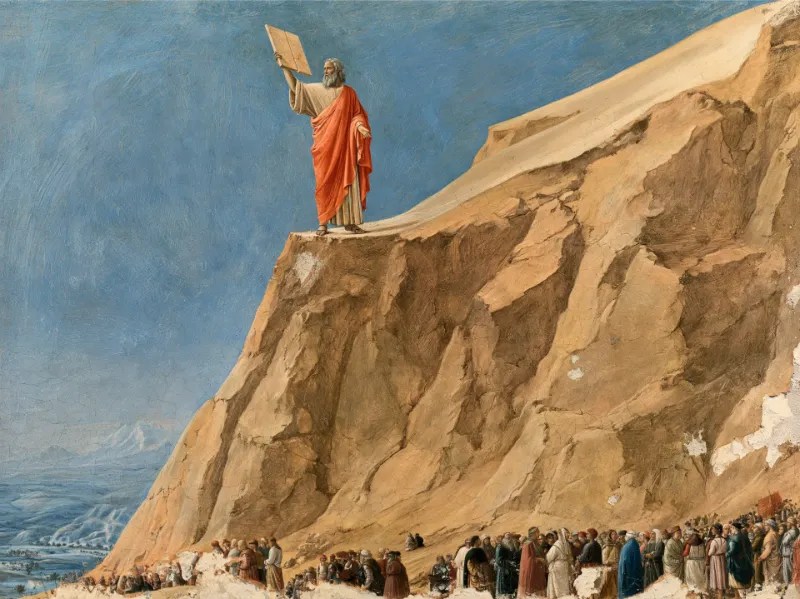
An early Christian teaching called the Didache, attributed to the twelve apostles, puts the confessing in front of the whole church. “In the church you shall acknowledge your transgressions,” it says, and it has Christians gather on the Lord’s day “after having confessed your transgressions.” The Catechism tells us how hard that could become. Christians guilty of sins such as “idolatry, murder, or adultery” had to “do public penance for their sins, often for years, before receiving reconciliation,” and in some regions a person could be admitted to that discipline “only once in a lifetime.” Then, “during the seventh century Irish missionaries, inspired by the Eastern monastic tradition, took to continental Europe the ‘private’ practice of penance,” and this new way “envisioned the possibility of repetition,” which meant that someone who fell could come back, and come back again, and tell it to one priest.
What the Irish carried across the sea became church law across the Western church in 1215, when the Fourth Lateran Council decreed that “All the faithful of either sex, after they have reached the age of discernment, should individually confess all their sins in a faithful manner to their own priest at least once a year.” When the Reformation came, Martin Luther kept the practice, and of confession before Communion he wrote that “it neither is necessary nor should be demanded. Nevertheless, it is useful and should not be despised.” The Reformers rejected the demand to list every sin, and some taught that confession to a priest was man-made. The Catholic bishops at the Council of Trent answered both charges in November 1551. They condemned anyone who denied that it was “necessary, of divine right, for the remission of sins, to confess all and singular the mortal sins” a person can remember, and anyone who called confessing secretly to a priest “a human invention.” Fifteen years later the Second Helvetic Confession said of murmuring sins in a priest’s ear that “there is neither a commandment nor an example of this in Holy Scriptures.” Christians who love the same Lord have stood on one side or the other of that argument ever since.

Do Lutherans have confession?
Lutherans teach in the Augsburg Confession of 1530 “that Private Absolution ought to be retained in the churches, although in confession an enumeration of all sins is not necessary,” and for that last clause the Confession borrows a question from the psalm, “Who can understand his errors?” (Psalm 19:12). At first people were expected to use it, for the same Confession says that “it is not usual to give the body of the Lord, except to them that have been previously examined and absolved.” So Lutherans on their way to Communion came to the pastor first and confessed, and he laid his hands on them and pronounced forgiveness. Luther gave them the words for it in his Small Catechism: “Confession embraces two parts: the one is, that we confess our sins; the other, that we receive absolution, or forgiveness, from the confessor, as from God Himself, and in no wise doubt, but firmly believe, that our sins are thereby forgiven before God in heaven.” There is the thing said back to us, and the catechism tells the one who hears it to take it as coming from God himself.
The custom did not last. Prussia’s ruler tried to do away with it, a preacher in Berlin called the confessional stool “the bottomless pit of hell,” and, as one Lutheran paper tells it, “Private confession slowly fell into disuse.” Lutherans in America today want it neither forced nor forgotten. The Lutheran Church–Missouri Synod put both halves in one line in a 2019 guide, “We must never require private confession and absolution, but neither should we lose it from neglect.” The Evangelical Lutheran Synod says it “should not become a legalistic demand in our midst,” and the Evangelical Lutheran Church in America says in its 1997 statement on worship that its congregations “are called to make faithful use of corporate and individual confession of sins and holy absolution.” So a Lutheran who wants to sit with a pastor and hear those words may ask for them, and a Lutheran who never does has broken no rule.
Do Anglicans and Episcopalians go to confession?
Some of them do, and the prayer book has made room for them for centuries. The English Book of Common Prayer of 1662 tells the minister at a sickbed that the person should be “moved to make a special confession of his sins, if he feel his conscience troubled with any weighty matter,” and it gives the priest the words “by his authority committed to me, I absolve thee from all thy sins.” Its Communion service invites anyone who cannot quiet his conscience to “come to me, or to some other discreet and learned Minister of God’s Word, and open his grief; that by the ministry of God’s holy Word he may receive the benefit of absolution.” Yet the Thirty-Nine Articles put Penance among the five rites “not to be counted for Sacraments of the Gospel,” and Anglicans still differ over what to call it, the Episcopal Church’s dictionary naming it “a sacramental rite” and one Anglican guide saying that “most Anglicans do not consider the rite a sacrament.”
The Episcopal Church’s Book of Common Prayer of 1979 says, “The Reconciliation of a Penitent is available for all who desire it.” It goes on to say that “Confessions may be heard anytime and anywhere,” that absolution “may be pronounced only by a bishop or priest,” and that “Another Christian may be asked to hear a confession” and give a declaration of forgiveness. Anglicans and Episcopalians sum up private confession in an old saying, “All may, none must, some should,” which has been credited to Richard Hooker and which people repeat with the last two parts in either order. Not many take up the offer. The Living Church, an Anglican journal, says that “few Anglicans today make use of it,” and the guide Anglican Compass says that “Confessing privately to God is still the way most Anglicans will practice repentance.”

Can a priest or pastor repeat what you confess?
Before we say the worst thing we have ever done to another person, we may well want to know this, and the churches that hear confessions bind the listener in very strong words. The Catholic Catechism speaks of “This secret, which admits of no exceptions” (paragraph 1467). The Episcopal prayer book says that “The secrecy of a confession is morally absolute for the confessor, and must under no circumstances be broken.” The Evangelical Lutheran Synod holds that a confession “must not be revealed, even if the act was criminal and even if the law may compel its disclosure.” Among other Anglicans the practice is less uniform, for Anglican Compass reports that in the guidance of many dioceses “an exception may occur when the life or well-being of the penitent or another person is in potential danger.” It says the exception is spreading “as many states have attempted to pass laws that compel clergy to breach confessional privilege in these situations,” and it tells people to ask their clergy about their practice.
Why do most Protestants confess without a priest?
They begin with the Letter to the Hebrews, which calls Jesus “a great high priest” and goes straight on to say, “Let us therefore come boldly unto the throne of grace, that we may obtain mercy, and find grace to help in time of need” (Hebrews 4:16). Paul gives them the next piece, “there is one God, and one mediator between God and men, the man Christ Jesus” (1 Timothy 2:5), and Peter calls the whole church “a royal priesthood” (1 Peter 2:9). Protestants have long taken their picture of confessing straight to God from two Gospel stories, and the Second Helvetic Confession says that “the prodigal son and the publican in the Gospel, when compared with the Pharisee, present us with the most suitable pattern of how our sins are to be confessed to God.” The publican, “standing afar off,” had seven words to say, “God be merciful to me a sinner” (Luke 18:13).
The Presbyterian Church (U.S.A.) holds in its Book of Confessions that “it is not necessary for anyone to confess his sins to a priest,” and that “it is necessary that we confess our sins to God our Father, and be reconciled with our neighbor if we have offended him.” The same passage leaves a door open for anyone weighed down who wants to talk it through “either from a minister of the Church, or from any other brother who is instructed in God’s law,” and of that it says, “we do not disapprove.” The Westminster Confession, in that same book, teaches that “every man is bound to make private confession of his sins to God.” The United Church of Christ, which grew partly from this Reformed stream, says in its account of itself that all its members have “direct access to the mercies of God through personal prayer and devotion.”
Methodists bring no priest into it, and yet they do hear something said back to them. The United Methodist Church says, “United Methodists understand that Jesus is our High Priest (Hebrews 3:1) and our confessions are made directly to God through Jesus Christ without the need of an additional mediator (1 Timothy 2:5-6).” In worship they often pray a confession together and then hear a pardon that may be as simple as “In the name of Jesus Christ, you are forgiven!” The pastor says it to the people and the people say it back to the pastor, and they are careful about what that means, since, in their words, “The pastor has no special authority to forgive sin.”
The Assemblies of God speaks for many Pentecostals when it says, “Nowhere does God’s Word tell us to confess our sins to a clergyman or human mediator in order to receive God’s forgiveness.” It teaches that this is to be done “from the repentant heart of the sinner directly to the Savior–Jesus Christ,” and it reminds us that the critics who asked who could forgive sins but God were right on that point and wrong only about who Jesus was (Mark 2:7). When we have hurt someone, it tells us to go to that person privately, and it gives a rule many of us could use, that “the circle of confession should be limited to the circle of the sin.” Oneness Pentecostals in the United Pentecostal Church International say in a 2019 position paper, “As priests, we confess sins directly to God in the name of Jesus and by the blood of Jesus.”
In the Churches of Christ, the teaching site Christian Courier says, “When one has sinned against another, in the presence of another, or simply against God, he must confess it to whatever extent it is known,” and it calls confessing to a priest “a practice with no scriptural support.”
In other churches the confessing happens with other people around. The Disciples of Christ, in a General Assembly study document of 1997, say of the church at worship that “it confesses its sin and embraces the forgiving grace of God,” so there it is something the whole congregation does together, alongside the preaching and the Lord’s Supper. Mennonite Church USA teaches in its Confession of Faith, “Confessing our sins to one another and receiving forgiveness, we are to come as one body to the table of the Lord,” and those words come in its article on the Lord’s Supper, so for Mennonites the confessing goes on between neighbors on their way to the table. Salvationists take their repentance to a place of their own, the mercy seat, “a wooden bench at the front of a worship hall” that people step forward to after the sermon. The Salvation Army’s Handbook of Doctrine says that the mercy seat “is not only a place for repentance and forgiveness, but also a place for communion and commitment,” and that it “may be used by anyone, at any time.”
Others speak of the believer going straight to God. Quakers of the Evangelical Friends Church, Mid-America Yearly Meeting, teach in their Faith and Practice that “By the individual priesthood of believers, everyone stands equal before God and may approach Him directly (1 Peter 2:9; Hebrews 4:16).” Seventh-day Adventists, explaining Christ’s ministry in the heavenly sanctuary, teach that Jesus “serves as our Advocate and Intercessor,” and that he “connects us directly to the Father.” Neither these statements nor the United Church of Christ’s sets out a rite of confession to a minister.
Do Baptists and nondenominational churches have a teaching on this?
The Baptist Faith and Message, the statement of the Southern Baptist Convention, says nothing about confessing to a minister. It has no article on confessing sins, and its seventh article takes up only baptism and the Lord’s Supper. The closest it comes is to call Christ “the One Mediator, fully God, fully man, in whose Person is effected the reconciliation between God and man.” The Church of the Nazarene’s Articles of Faith say that repentance, “which is a sincere and thorough change of the mind in regard to sin, involving a sense of personal guilt and a voluntary turning away from sin, is demanded of all who have by act or purpose become sinners against God,” and those articles say nothing about confessing to a minister either. Nondenominational and evangelical churches have no shared rule on it. The evangelical Lausanne Movement’s Cape Town Commitment of 2010 says that “True and lasting reconciliation requires acknowledgment of past and present sin, repentance before God, confession to the injured one, and the seeking and receiving of forgiveness.” It says that about peace between divided peoples, and it does not take up confession to clergy.

Do Latter-day Saints or Jehovah’s Witnesses confess to anyone?
Both do, though only one of them names an office for it. The Church of Jesus Christ of Latter-day Saints teaches in its Guide to the Scriptures, “It is a duty of all persons to confess all their sins to the Lord and obtain His forgiveness (D&C 58:42–43). When necessary, sins should be confessed to the person or persons sinned against. Serious sins should be confessed to a Church official (in most cases the bishop).” So everything goes to the Lord, and the serious things go to a bishop as well.
Jehovah’s Witnesses teach on their own site, jw.org, “No human is now authorized to forgive a fellow human for sins against God. Although confessing to another person can help a sinner to recover, only God can forgive sins.” The same page does not leave the sinner alone with it. “If your sin is serious, speak to someone who is qualified to provide the spiritual help you need and who can pray in your behalf,” it says, and it points to James 5:14–16, the passage where the sick call for the elders of the church.
That line about helping a sinner to recover comes from a church that rejects priestly absolution, and a Catholic or a Lutheran could say it just as well. David knew why long before any of these churches existed: “When I kept silence, my bones waxed old through my roaring all the day long” (Psalm 32:3). We go to different rooms to break that silence, to a priest, to a pastor, to the person we hurt, to a mercy seat or to our own knees at the side of the bed, and in every one of them we are doing what David did when he said, “I will confess my transgressions unto the LORD” (Psalm 32:5), and was forgiven.
Related reading
- Compare Christian Denominations: what 23 churches teach on 55 questions
- Episcopal vs Catholic: the differences, compared
- Lutheran vs Eastern Orthodox: Scripture, salvation and Communion
- Baptist vs Catholic beliefs on baptism, Communion and salvation
- Pentecostal vs Catholic: authority, sacraments and tongues
- Prayers of repentance, from Psalm 51 to short prayers
- Can Priests and Pastors Marry? What Each Church Allows


Leave a Reply