
 English
 Chinese
 Dutch
 Arabic
 Spanish
 Portuguese
 Russian
 French
 Italian
 German
 Japanese
No one named Cordelia appears in the Bible. The name comes from British legend: in a history written about 1136, Geoffrey of Monmouth called King Leir’s youngest daughter Cordeilla, and Shakespeare made her the heroine of King Lear. Its meaning is uncertain, though it is often linked to the Latin cor, “heart.”

Is Cordelia a biblical name?
No. Cordelia does not occur in the Hebrew or Greek text of the Bible or in any translation. It is not a Hebrew name, so it has no Hebrew meaning. The earliest Cordelia in writing is a character in Geoffrey’s History of the Kings of Britain, which sets her story long before the Roman conquest of Britain. No other source shows that she existed.

Where does the name Cordelia come from?
In Geoffrey’s account, Leir divides his kingdom among his daughters according to how much each says she loves him. Cordeilla, the youngest, will not flatter him, and he gives her no land and no dowry. She marries Aganippus, a king of the Franks, and years later raises an army that restores her father to his throne. After his death she rules Britain as queen until her sisters’ sons rebel against her. They imprison her, and she takes her own life.
When Edmund Spenser retold the story in The Faerie Queene (1590), and Shakespeare in King Lear (1606), the name took the form Cordelia.

What does Cordelia mean?
No one knows for certain. Wikipedia’s article on the name calls it “of uncertain origin” and says it is popularly associated with the Latin cor (genitive cordis), “heart.” That is the meaning most often given, but it rests on resemblance, not on any record of how Geoffrey formed the name.
Behind the Name suggests that Geoffrey may have based it on Creiddylad, a young woman in the medieval Welsh tale Culhwch and Olwen. The meaning of her name is also uncertain; it may come from the Welsh craidd, “heart, center,” or crau, “blood,” joined to dylad, “flood.” Scholars have doubted that Cordelia and Creiddylad are the same figure. The meanings “jewel of the sea” and “daughter of the sea,” often given for Cordelia online, rest on a claimed meaning of Creiddylad that name references do not confirm.

Who is Cordelia in King Lear?
In Shakespeare’s play, Lear asks his three daughters which of them loves him most, so that he can give her the largest share of his kingdom. Goneril and Regan answer with lavish speeches. Cordelia says, “Nothing, my lord,” and then: “Unhappy that I am, I cannot heave / My heart into my mouth. I love your Majesty / According to my bond, no more nor less.” Her bond is the duty a child owes a parent, and she keeps it when her sisters do not.
Lear disinherits and banishes her, and the King of France marries her without a dowry. When her sisters turn their father out, Cordelia comes back with a French army to help him. She is captured with Lear and hanged in prison, and Lear dies grieving over her body.
Does Cordelia have a biblical meaning?
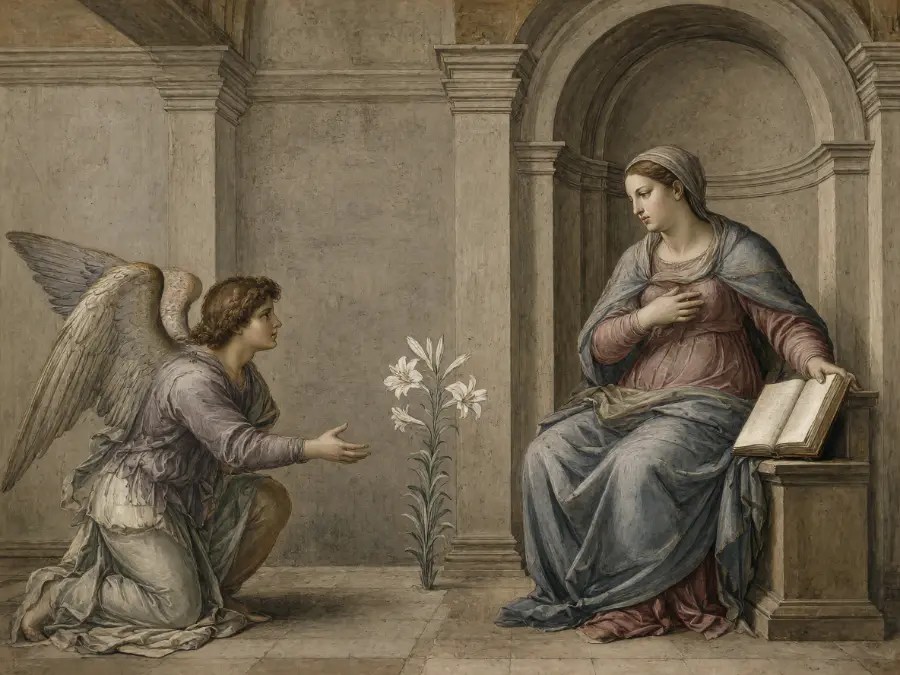
The name has none, but one of Cordelia’s lines echoes the Gospel. Leading the French army into Britain, she says, “O dear father, / It is thy business that I go about.” In the Geneva Bible, the English translation of Shakespeare’s day, the twelve-year-old Jesus answers his parents when they find him in the Temple: “knew ye not that I must go about my Father’s business?” (Luke 2:49). R. A. Foakes, who edited the play for the Arden Shakespeare, called Cordelia’s line its “most direct Christian reference.”
Many readers have seen Cordelia, who suffers for telling the truth and dies trying to save the father who wronged her, as a figure of Christ. The play itself is set in pagan Britain, and its characters swear by Apollo and Jupiter.

How popular is the name Cordelia?
In the United States Cordelia was most common in the late 19th century. It ranked 204th among girls’ names in 1880, the first year of Social Security records, and declined from there. It left the top 1,000 after 1950, returned briefly in 2014 and 2015, and ranked 980th in 2025.



Leave a Reply