
 English
 Chinese
 Dutch
 Arabic
 Spanish
 Portuguese
 Russian
 French
 Italian
 German
 Japanese
Most Quakers do believe in Jesus and call themselves Christians. In 2017 nearly two in three lived in Africa and Latin America, many in evangelical and pastoral churches like those of Friends United Meeting and Evangelical Friends Church International. In Britain’s silent meetings and North America’s liberal ones, many Friends follow Jesus, and some do not call themselves Christian.
Even the name they give one another comes from him. “Ye are my friends, if ye do whatsoever I command you,” Jesus told his disciples (John 15:14), and Quakers took that word for themselves. The Friends World Committee for Consultation, which links Quaker yearly meetings around the world, says plainly that the Religious Society of Friends “is a Christian religion.” Friends General Conference, which serves liberal meetings in the United States and Canada, is just as honest about its own people: “Many Quakers consider themselves Christian, and some do not.” The story behind both sentences begins with a young man who went from preacher to preacher and found no one to help him, until he heard of one who could.
| Branch | Worship | Main bodies | On Jesus |
|---|---|---|---|
| Evangelical Friends | Programmed, with pastors | Evangelical Friends Church International | “the only begotten Son of God” |
| Pastoral Friends | Programmed or semi-programmed | Friends United Meeting | “Teacher and Lord” |
| Conservative Friends | Silent, unprogrammed | Ohio, Iowa and North Carolina yearly meetings (Conservative) | “The Light is Christ” |
| Liberal and other unprogrammed Friends | Silent, unprogrammed | Friends General Conference (liberal); Britain Yearly Meeting (unprogrammed) | Views vary; the faith is “rooted in Christianity” |
What do Quakers believe about Jesus?
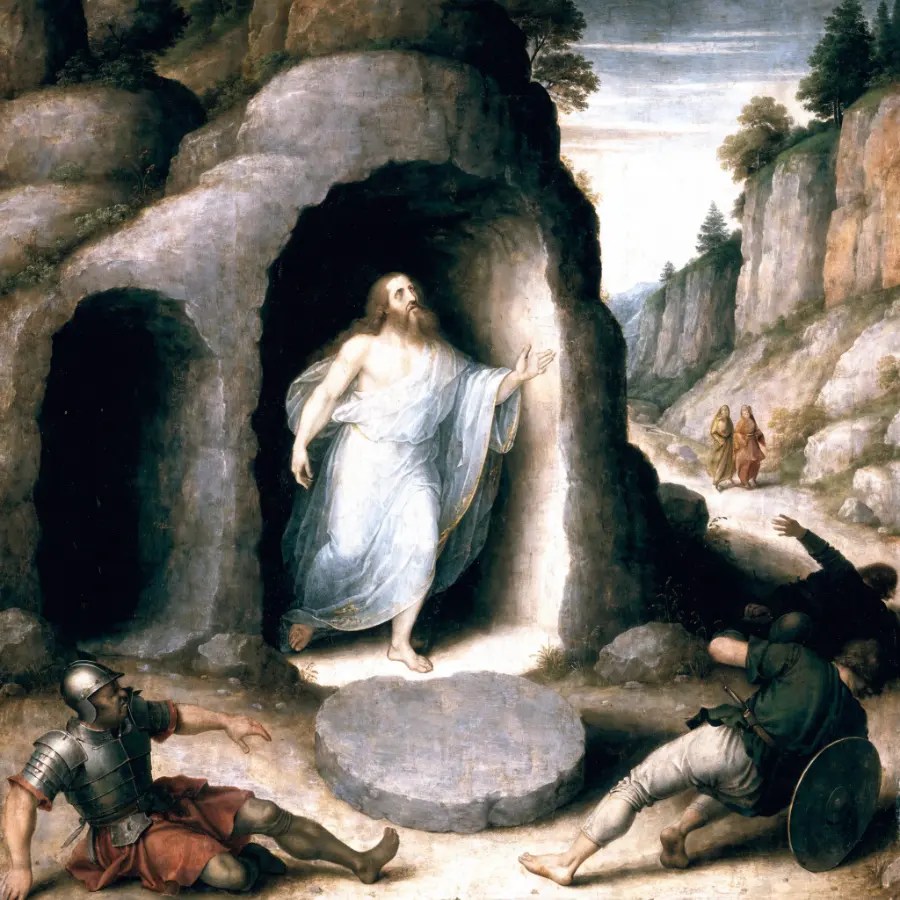
The Quaker movement began with an experience of Christ. George Fox, its founder, spent four years going from one preacher to another and found none who could “speak to my condition.” Then, he wrote in his Journal for 1647, “I heard a voice which said, ‘There is one, even Christ Jesus, that can speak to thy condition’, and when I heard it my heart did leap for joy.” Friends United Meeting echoes it today. Friends, it says, “keep rediscovering an essential and enduring truth: There is one who speaks to our most basic needs and most significant hopes—Christ Jesus the Lord.”
Fox also set out in writing what Friends believed about Christ. In a letter to the Governor of Barbados in 1671 he wrote: “We own and believe in Jesus Christ, His beloved and only-begotten Son, in whom He is well pleased; who was conceived by the Holy Ghost, and born of the Virgin Mary; in whom we have redemption through His blood, even the forgiveness of sins.”
Early Friends spoke of Christ as a Light within every person, and Fox identified that Light with the opening of John’s Gospel: “That was the true Light, which lighteth every man that cometh into the world” (John 1:9). In 1656 he urged Friends to “walk cheerfully over the world, answering that of God in every one.” Quakers in many branches still use the phrase “that of God.”
Where the branches part is over what that Light is and who Jesus was. The Declaration of Faith issued at Richmond, Indiana, in 1887, which Friends United Meeting last reprinted in 1974, calls Jesus “true God and perfect man” and says “He was buried and rose again the third day,” and Evangelical Friends Church International confesses that he “combines within Himself both the nature of God and the nature of man.” Conservative Friends in Ohio speak of the Light as someone who knows us: “The Light is Christ, who reveals our darkest secrets and then turns us away from them and to Himself.” Liberal Friends use many names. Friends General Conference lists “God, the Light Within, Christ, Spirit, Seed, and Inward Teacher” among the names Quakers use, and says that many Quakers “strive to follow the example of Jesus.”
Are Quakers Christian?
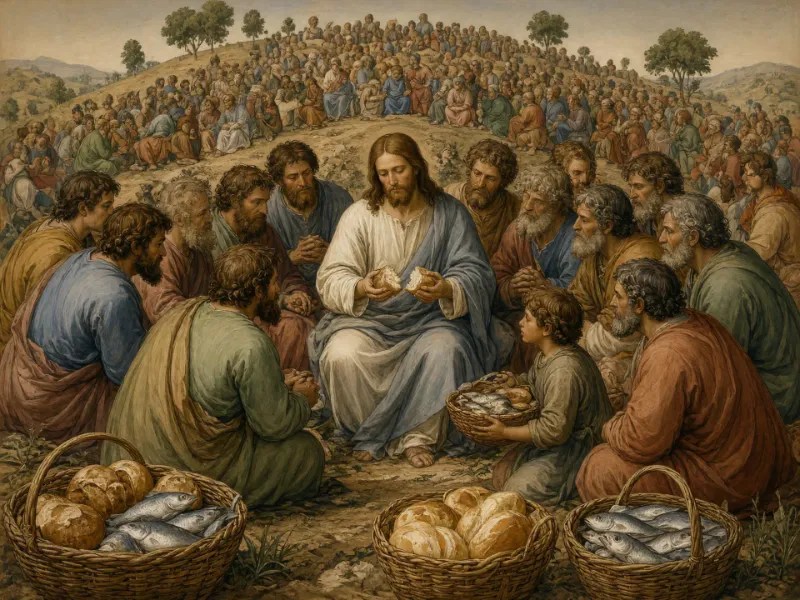
By history, yes, and most Quakers still say so. Britain Yearly Meeting calls its book Quaker faith & practice “The book of Christian discipline” of British Friends, and one of the advices it asks every Friend to consider reads: “The Religious Society of Friends is rooted in Christianity and has always found inspiration in the life and teachings of Jesus.” The questions that follow are personal: “How does Jesus speak to you today? Are you following Jesus’ example of love in action?”
In liberal and other unprogrammed meetings, Christian faith is common but not required. Friends General Conference says the Quaker way “has deep Christian roots,” and that some Friends draw instead on “Buddhism, Judaism, Islam, Hinduism, and the nature religions.” Some members or attenders, its page on nontheism says, “may be nontheists or atheists.” Quakers in Britain put their own position in one line: “Our faith is rooted in Christianity, but we take inspiration and insights from other faiths.” In 1985 John Lampen, in words Britain Yearly Meeting keeps in its book, asked whether the Society of Friends is Christian and answered: “In the historical sense the answer is Yes: but that does not preclude the possibility that we may now be called to a new and wider perception of the Truth.”
Some ask whether the Quakers are a sect. They do not claim to be the only true church: early Friends, Friends United Meeting says, “believed authentic followers of Christ were found within many traditions.” They have no single leader either. There is no Quaker “pope” and no single spokesperson for “what Friends believe,” and the Friends World Committee for Consultation works alongside other churches through the World Council of Churches.
Who are the Quakers, and why are they called Friends?
Quakers are members of the Religious Society of Friends, a movement that grew in England in the 1640s and 1650s around George Fox (1624–1691). They call one another Friends after Jesus’ words to his disciples: “Ye are my friends, if ye do whatsoever I command you” (John 15:14).
The name Quaker began as an insult. Fox recorded that a magistrate in Derby, Justice Bennet, “was the first that called us Quakers, because I bid them tremble at the word of the Lord. This was in the year 1650.” Friends United Meeting says the mockery “was soon embraced,” and that today the two names are “essentially synonymous.”
Friends United Meeting explains that Quakers are often confused with the Amish, probably because Friends were once known for plain dress, and that the two movements “arose at different times and with unique emphases as renewal movements within the broader Christian tradition.”
What are the main branches of Quakers?
Quakers differ first in how they worship. The Friends World Committee describes programmed worship as having “a structured programme with music, readings, and a sermon – often with a pastor to lead the service.” Unprogrammed worship “is based on silence,” and anyone may speak “if they feel moved by God.” Semi-programmed meetings join the two. The branches also differ in belief.
Evangelical Friends
Evangelical Friends Church International began in 1947 as the Association of Evangelical Friends and has churches in Africa, Asia, Europe, Latin America and North America. Its statement of faith is plain: “We believe Jesus Christ to be the only begotten Son of God; that He was conceived by the Holy Spirit and born of the virgin Mary.” Its churches hold programmed worship led by pastors.
Pastoral Friends
Friends United Meeting gathers yearly meetings and associations in Africa, the Caribbean, North America and Palestine. Its About page counts thirty-seven, its list names 38, and about half of those named are in Kenya. It calls itself “a collection of Christ-centered Quakers,” and its mission is to gather people “into fellowships where Jesus Christ is known, loved, and obeyed as Teacher and Lord.” Its meetings range from silent worship to services led by pastors. Programmed worship, it says, “will often look like a more typical protestant-evangelical worship service,” though it almost always includes some silence.
Conservative Friends
Conservative Friends keep the older silent worship. The word, Ohio Yearly Meeting explains, has “no connection to the politics of the world.” Rather, “we work to conserve the True Christianity re-discovered by our 17th Century forebears in England.” Friends General Conference names three Conservative yearly meetings, in Iowa, Ohio and North Carolina, and describes them as keeping silent worship, “some instances of plain dress, and a Christian identity.”
Liberal Friends
Liberal Friends worship in silence, without pastors, and keep no creed. Friends General Conference “does not tell meetings what they must believe.” Britain Yearly Meeting also worships in silence and says: “We don’t offer neat creeds or doctrine.” Britain Yearly Meeting lets seven of its members say what God means to them. One writes that in the silence, “I hear the stories of Jesus again as if for the first time.” Another writes: “I don’t have any great faith or belief in God.”
How many Quakers are there today?
About 370,000 at the last count. In March 2017 the Friends World Committee for Consultation published a map, Finding Quakers Around the World, that counted 367,243 Friends worldwide. Its website now rounds that 2017 count up to “approximately 400,000 Quakers worldwide dispersed over 87 different countries,” and a new map is due in 2027.
| FWCC section (2017) | Friends | Share |
|---|---|---|
| Africa | 181,396 | 49% |
| The Americas | 131,116 | 36% |
| Europe and Middle East | 32,121 | 9% |
| Asia-West Pacific | 22,610 | 6% |
| Total | 367,243 | 100% |
Kenya had more Quakers than any other country, 119,285, followed by the United States with 76,360, Burundi with 47,600 and the United Kingdom with 23,067. The map gives 21% of the world’s Friends to North America and 15% to Latin America and the Caribbean, where Bolivia had 21,400 and Guatemala 19,635. Africa, Latin America and the Caribbean together held nearly two in three. Ireland Yearly Meeting notes that evangelical Friends “have gained many adherents in Central and South America, and in Kenya,” with worship that has “pastors, sermons and hymns.”
How do Quaker beliefs differ from other Christians’?
The main differences lie in worship and practice. Evangelical Friends’ statement of faith and the Richmond Declaration confess the beliefs about God and Christ that most churches share. What sets Quakers apart is what they leave out: outward sacraments, priests, oaths and war.
| Topic | Quaker practice | Where it varies |
|---|---|---|
| Creeds | None in silent meetings | Evangelical and pastoral bodies publish statements of faith |
| Baptism and Communion | Inward and spiritual, without water, bread or wine | Some evangelical Friends use the outward rites |
| Ministers | No priests | Programmed churches have pastors |
| War | Refused, as the peace testimony | Left to each Friend’s conscience in liberal meetings |
| Christmas and Easter | Not kept by early Friends | Many Friends now keep Christmas |
Most Quakers keep no outward baptism or Communion and understand both inwardly. For the Richmond Declaration the one baptism of believers is “not an outward baptism with water, but a spiritual experience,” and for Evangelical Friends Church International baptism and communion are “spiritual realities which are not dependent upon physical and outward ordinances.” Friends United Meeting says that “most Quakers do not practice the outward rite of water baptism,” and it speaks kindly of the churches that do: Quakers “do not argue that water baptism is in any way wrong—it is simply insufficient.” Some Friends keep the rites too. Evangelical Friends in North America, Friends General Conference says, “participate in sacraments such as baptism and communion.”
On war, Friends declared to King Charles II in 1660: “All bloody principles and practices we do utterly deny, with all outward wars, and strife, and fightings with outward weapons, for any end, or under any pretence whatsoever.” Friends General Conference says meetings generally still hold to peace, but leaves the choice “to the individual as conscience dictates.” Friends also refuse oaths, because of Jesus’ words: “But I say unto you, Swear not at all” (Matthew 5:34). The Richmond Declaration applies that command “not to profane swearing only, but to judicial oaths also.”
Silent meetings keep no creed, yet Fox’s letter of 1671, the Richmond Declaration and Evangelical Friends’ statement of faith confess the virgin birth, the cross and the rising of Christ. A free course, Christianity: What Christians Have Believed for 2,000 Years, explains the beliefs Christians have held in common, lesson by lesson.
Do Quakers believe in the Trinity?
Evangelical Friends do, and so does the Richmond Declaration of 1887, which names the Father, the Son and the Holy Spirit and confesses “that these three are one in the eternal Godhead.” Evangelical Friends Church International says that “in the unity of the Godhead, there exists three persons; Father, Son, and Holy Spirit, inseparable in divinity, power, glory and eternity,” and calls the Holy Spirit “the third person of the Trinity.”
Early Friends described God in their own words. Jo Farrow wrote in 1994 that in trying to express their experiences of God, “within them, as spirit, inward light, seed, inward teacher,” the first Quakers “used words and phrases which sounded strange and audacious to their contemporaries.” Liberal meetings today keep no statement on the Trinity, and their members describe God in many ways.
Do Quakers believe in the resurrection and in heaven?
Evangelical Friends believe in both, and so does the Richmond Declaration of 1887. The Declaration says of Christ that “He was buried and rose again the third day,” and adds: “We believe, according to the Scriptures, that there shall be a resurrection from the dead, both of the just and of the unjust.” Evangelical Friends Church International says that at Christ’s coming “the judgment of the blessed shall be unto heaven, and the judgment of the lost shall be unto hell.” Friends United Meeting traces the whole movement to the risen Christ: the first Quakers “were awakened to the reality that Christ is, indeed, risen and living.”
Ohio Yearly Meeting, a Conservative body, writes that “Our Lord has taught us not to look for heaven in some distant time and place,” and quotes Jesus: “behold, the kingdom of God is within you” (Luke 17:21). Friends General Conference, for liberal Friends, says that “the emphasis of a Quaker’s life is on present time” and that “Individual Quakers hold a variety of beliefs about what follows our lives on earth.”
Do Quakers read the Bible?
Yes. There is no separate Quaker Bible; in a British meeting house, “The Bible and copies of a book called Quaker faith & practice will be available on a table.” What differs is the authority Friends give it. Evangelical Friends hold that “the 66 books of the Holy Bible were given by the inspiration of God; that there can be no appeal from these Scriptures to any other authority whatsoever.” Friends United Meeting calls the Bible “the written word of God” and says it “points us in the way we should go.”
Early Friends put the Spirit first. Robert Barclay, who wrote the first systematic account of Quaker theology, called the Scriptures “a Secondary Rule, subordinate to the Spirit.” Margaret Fell remembered Fox preaching in the church at Ulverston in 1652: “You will say, Christ saith this, and the apostles say this; but what canst thou say?” Among liberal Friends, Friends General Conference says, “Most Quakers do not consider the Bible to be the final authority or the only source of sacred wisdom.”
Do Quakers celebrate Christmas and Easter?
Early Friends did not. Quakers in Britain say the first Friends taught “there was no need for churches, rituals, holy days, or sacraments, to practice religion.” Janet Scott, in a passage of 1994 that Britain Yearly Meeting keeps in Quaker faith & practice, explained their testimony against keeping “times and seasons”: what God has done “should always be remembered and not only on the occasions named Christmas, Easter and Pentecost.” She also noted that “Many Friends, involved with family and the wider society, keep Christmas.” Friends generally gather for worship on Sunday, which some call First Day.
For the first Friends, then, every day was a day to remember what God had done. Their name carries the reason, in the words Jesus spoke on the night before he died: “Henceforth I call you not servants; for the servant knoweth not what his lord doeth: but I have called you friends; for all things that I have heard of my Father I have made known unto you” (John 15:15).


Leave a Reply