
 English
 Chinese
 Dutch
 Arabic
 Spanish
 Portuguese
 Russian
 French
 Italian
 German
 Japanese
Scripture speaks of lies and lying 154 times in the King James translation. That count takes in lie, lies, lying, lied, liar and liars wherever they mean a falsehood, and leaves out every “lie” that means to lie down. Most are in the Old Testament, and Jeremiah has the most.
Is lying a sin? Yes. “Lie not one to another,” Paul tells the Colossians, “seeing that ye have put off the old man with his deeds” (Colossians 3:9), and the law of Moses already said, “neither lie one to another” (Leviticus 19:11). Christians do differ over one hard case, a lie told to save a life, and we come to it below with Rahab. The full answer, with what the churches teach, is in is lying a sin?
What stands out when we read all 154 is how often a lie is something people lean on. Jeremiah pleads with Jerusalem, “Trust ye not in lying words” (Jeremiah 7:4), and tells a false prophet to his face, “thou makest this people to trust in a lie” (Jeremiah 28:15). Isaiah hears the rulers boast, “we have made lies our refuge, and under falsehood have we hid ourselves”, and God answers that “the hail shall sweep away the refuge of lies” (Isaiah 28:15, 17). A lie promises shelter, and in Scripture it never holds.
How many times is lying mentioned in the Bible?
In the King James Version the words split like this:
| Word (KJV) | Meaning a falsehood | Other meanings |
|---|---|---|
| lie | 44 | 111 |
| lies | 51 | 0 |
| lying | 34 | 23 |
| lied | 4 | 0 |
| liar | 13 | 0 |
| liars | 8 | 0 |
| All six | 154 | 134 |
The “other meanings” are such things as lying down, lying with someone, lying in wait, and the shepherds’ sign of “the babe wrapped in swaddling clothes, lying in a manger” (Luke 2:12). One verse holds both senses. Zephaniah promises a people who will not “speak lies”, and then, “they shall feed and lie down, and none shall make them afraid” (Zephaniah 3:13). Together the six words come 288 times, whole words in the King James text without the Apocrypha. We read every one and kept only the 154 that mean a falsehood, which is why a plain word search, counting every “lie down” too, gives you a bigger number. Other translations word these verses differently and give other totals.
Of the 154, 119 are in the Old Testament and 35 in the New. Jeremiah has 22, most of them about prophets who “prophesy lies in my name” (Jeremiah 14:14). Then come Proverbs with 19, the Psalms with 18, Isaiah with 13 and Ezekiel with 10. In the New Testament, 1 John speaks of lies and liars most, 8 times. Scripture has other words for the same sin: “deceit” comes 34 times, “falsehood” 14 times, and the phrase “false witness” 19 times. Many of these verses are gathered in 23 Bible verses about liars.

Who lied in the Bible?
The first lie is the serpent’s, “Ye shall not surely die” (Genesis 3:4). The word “lie” is not in that verse, but Jesus later names its speaker: the devil “abode not in the truth, because there is no truth in him. When he speaketh a lie, he speaketh of his own: for he is a liar, and the father of it” (John 8:44).
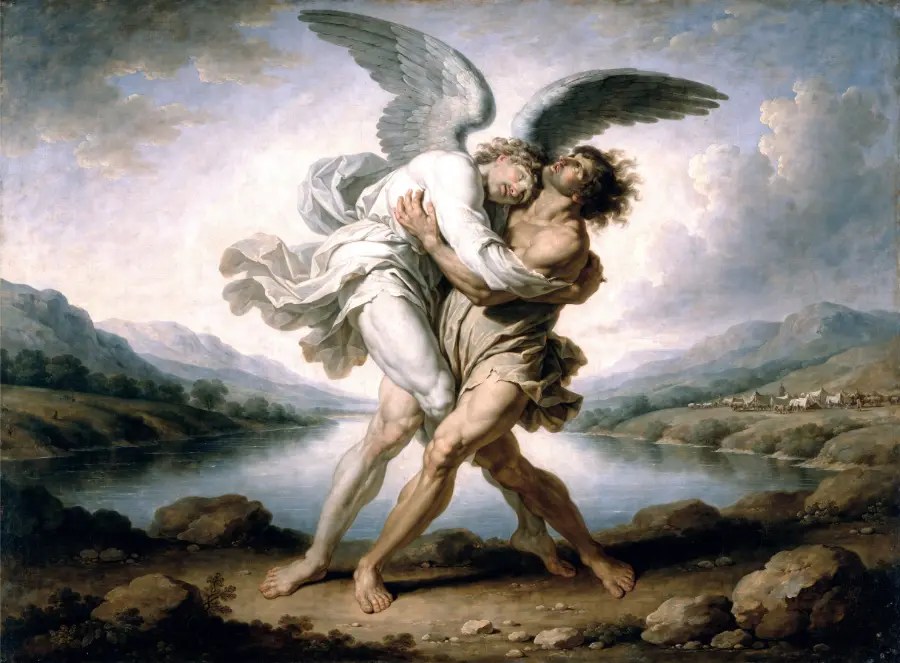
After that, the Bible tells the truth about its own heroes. Abram, afraid in Egypt, asks Sarai, “Say, I pray thee, thou art my sister” (Genesis 12:13), and years later, as Abraham, he does it again in Gerar (Genesis 20:2); it was a half-truth, since she was “the daughter of my father, but not the daughter of my mother” (Genesis 20:12). Jacob, dressed in his brother’s clothes, tells his blind father, “I am Esau thy first born” (Genesis 27:19). An old prophet of Bethel invents a message from an angel to bring another prophet home, “But he lied unto him” (1 Kings 13:18). Elisha’s servant Gehazi takes money and clothes from Naaman and tells his master, “Thy servant went no whither”, and he walks out “a leper as white as snow” (2 Kings 5:25, 27).
In the New Testament, Peter denies Jesus three times, the second time “with an oath, I do not know the man” (Matthew 26:72); why Peter denied Jesus takes up that night. Ananias and Sapphira keep back part of the price of their land and bring the rest to the apostles, and Peter tells Ananias, “thou hast not lied unto men, but unto God” (Acts 5:4). And Jesus himself was condemned on lies: the council “sought false witness against Jesus, to put him to death” (Matthew 26:59).
What did Jesus teach about lying?
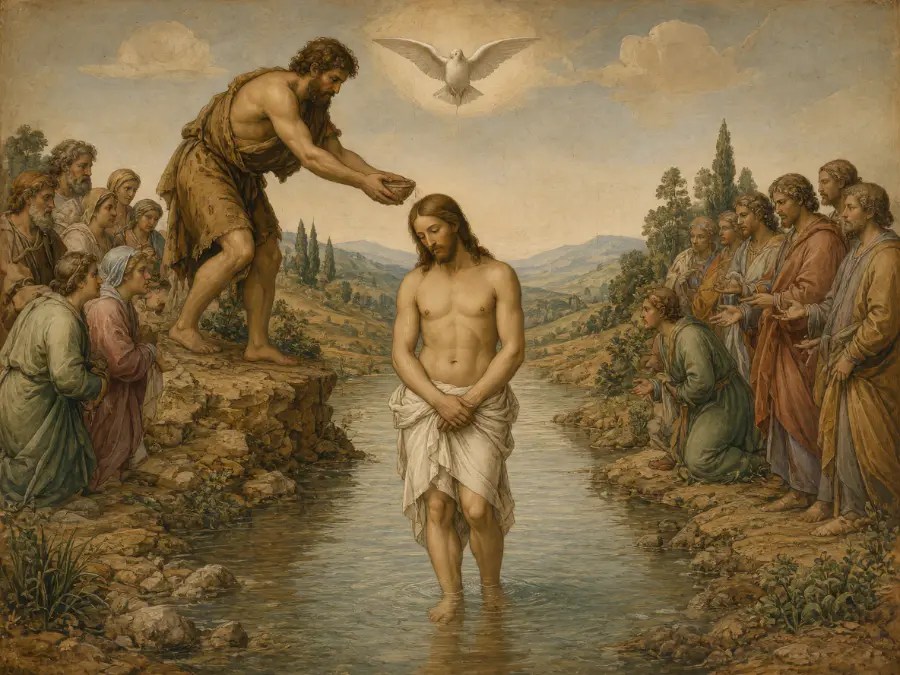
He asked for plain speech: “let your communication be, Yea, yea; Nay, nay: for whatsoever is more than these cometh of evil” (Matthew 5:37). He traced a lie back to the heart it comes from, “For out of the heart proceed evil thoughts, murders, adulteries, fornications, thefts, false witness, blasphemies” (Matthew 15:19), and further back still, to the devil, the liar who is “the father of it”. Against all of it he set himself: “I am the way, the truth, and the life” (John 14:6). Every lie, however small, walks away from him.
Did God approve of Rahab’s lie?
Scripture praises Rahab’s faith and her works (Hebrews 11:31; James 2:25), but it never calls her lie right. Hers is one of two stories that make readers ask whether a lie can be right. When Pharaoh ordered the Hebrew midwives to kill every newborn boy, they let the boys live and told him the Hebrew women “are delivered ere the midwives come in unto them” (Exodus 1:19), and “God dealt well with the midwives” (Exodus 1:20). Rahab hid Israel’s spies on her roof and told the king’s men, “whither the men went I wot not” (Joshua 2:5).
Christians have long disagreed about these stories. Augustine held that every lie is a sin, and that God rewarded the midwives and Rahab “not because they lied, but because they were merciful to God’s people”: what was rewarded was “not their deceit, but their benevolence”. John Calvin agreed. In his commentary on Joshua he wrote of Rahab’s words, “As to the falsehood, we must admit that though it was done for a good purpose, it was not free from fault”, and concluded that “it was the will of God that the spies should be delivered, but he did not approve of saving their life by falsehood.” Martin Luther judged these lies more gently. Preaching on Exodus in 1524, he called a lie told “not in order to injure anyone but for his profit and advantage” a “lie of service”, and named the midwives and Abraham as examples; in his later lectures on Genesis he called Abraham’s words in Egypt “a lie of service, a praiseworthy act of prudence”. (These are Luther’s words as translated in Hartmann Grisar’s Luther.) Allen Verhey, a Christian ethicist writing in Christianity Today in 1999, put the plain facts first: “Rahab lied. That’s the simple truth.” The Bible, he noted, neither justifies her lie nor condemns it. His own view was that in a broken world a lie can sometimes be justified, though even that lie is “a sad reminder of our brokenness”.
Is bearing false witness the same as lying?
It is one kind of lie. The commandment says, “Thou shalt not bear false witness against thy neighbour” (Exodus 20:16), and a witness speaks in court, where a false word can condemn the innocent. The Catholic Church counts it as the eighth commandment, and its Catechism says that a statement against the truth made in court “becomes false witness”, and under oath, perjury (paragraph 2476). The Westminster Shorter Catechism, which counts it as the ninth, reads the commandment broadly: it “forbiddeth whatsoever is prejudicial to truth, or injurious to our own or our neighbor’s good name”. Both teach that the commandment reaches every lie. The Catechism defines a lie in Augustine’s words, “speaking a falsehood with the intention of deceiving” (paragraph 2482).

What happens to liars, according to the Bible?
It speaks plainly. Among the seven things the LORD hates are “a lying tongue” and “a false witness that speaketh lies” (Proverbs 6:17, 19). “Lying lips are abomination to the LORD: but they that deal truly are his delight” (Proverbs 12:22). “He that speaketh lies shall not escape” (Proverbs 19:5). The last pages of the Bible name “all liars” among those who have their part in the lake of fire (Revelation 21:8), and leave outside the holy city “whosoever loveth and maketh a lie” (Revelation 22:15).
And 1 John, the New Testament book that speaks most of liars, says this to everyone who has sinned: “If we confess our sins, he is faithful and just to forgive us our sins, and to cleanse us from all unrighteousness” (1 John 1:9). Peter lied three times on the night Jesus was arrested, and after the resurrection Jesus asked him three times, “lovest thou me?” (John 21:15–17). Paul’s reason for telling the truth looks to the people beside us: “Wherefore putting away lying, speak every man truth with his neighbour: for we are members one of another” (Ephesians 4:25).
The lies we build to hide in will be swept away, as Isaiah said. God offers another shelter, and he does not lie. “By two immutable things, in which it was impossible for God to lie, we might have a strong consolation, who have fled for refuge to lay hold upon the hope set before us” (Hebrews 6:18).



Leave a Reply